

























In Stardew Valley, an unfinished chore can become tomorrow’s problem because the clock keeps running while you work. The Abbess Garden puts the end of a chapter in your hands. You can turn the wheel when you’re ready to move on, or stay in the garden and find a better spot for a plant that’s struggling. If you’re used to fitting one last task into a farming sim’s day, it takes a little while to get used to the idea that walking back across the garden costs you only the time you choose to spend there.
The growing season still matters. You can hold on to seeds until conditions suit them, and planting without a grid gives you room to make decisions about soil, moisture, and what’s already growing nearby. A disappointing patch can be worth revisiting because you can move a plant and see how it fares elsewhere. That makes a small garden worth learning in detail. The pleasure is closer to figuring out why one corner suits a plant better than another than to working out how many jobs you can squeeze into an afternoon.
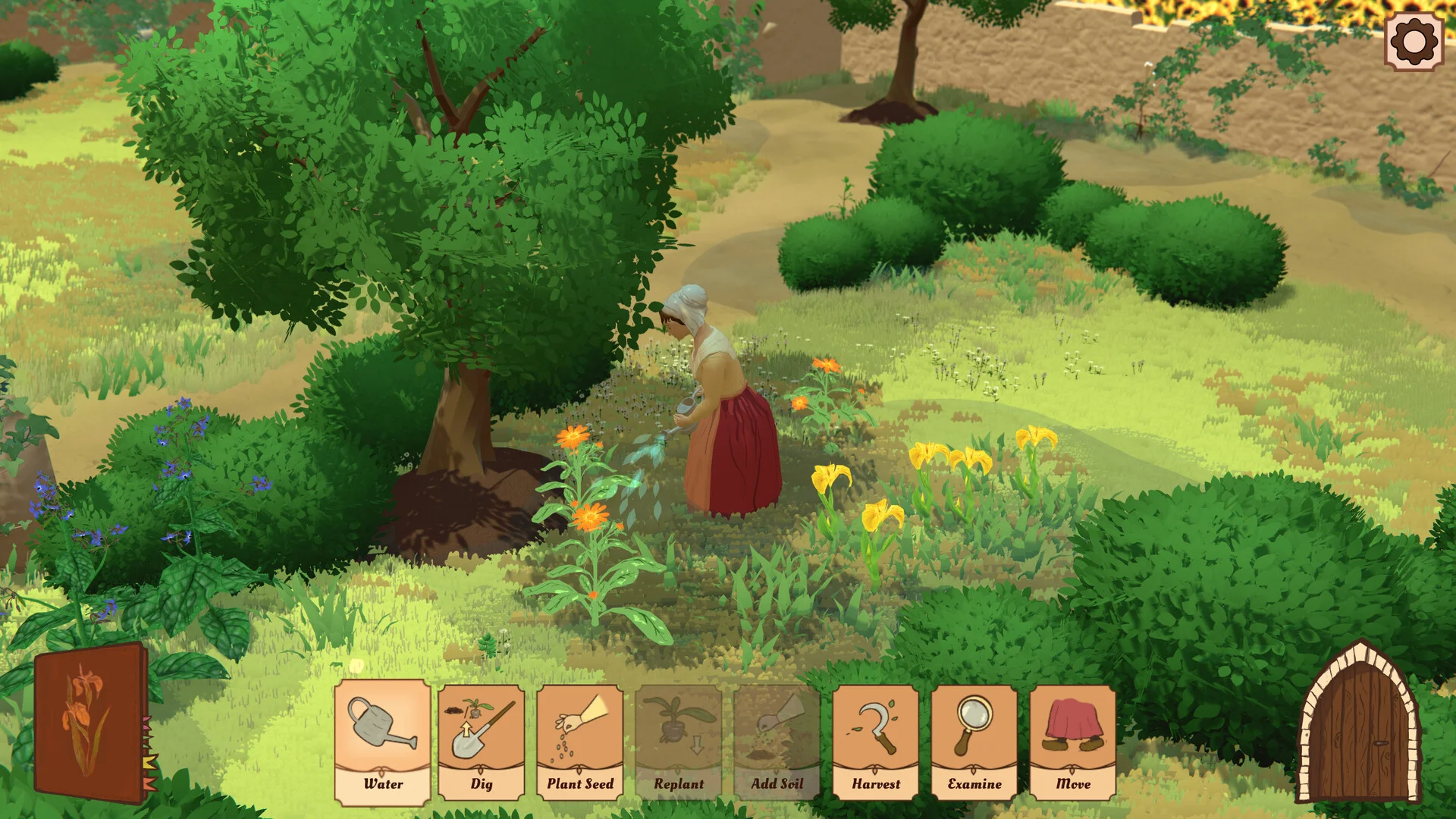
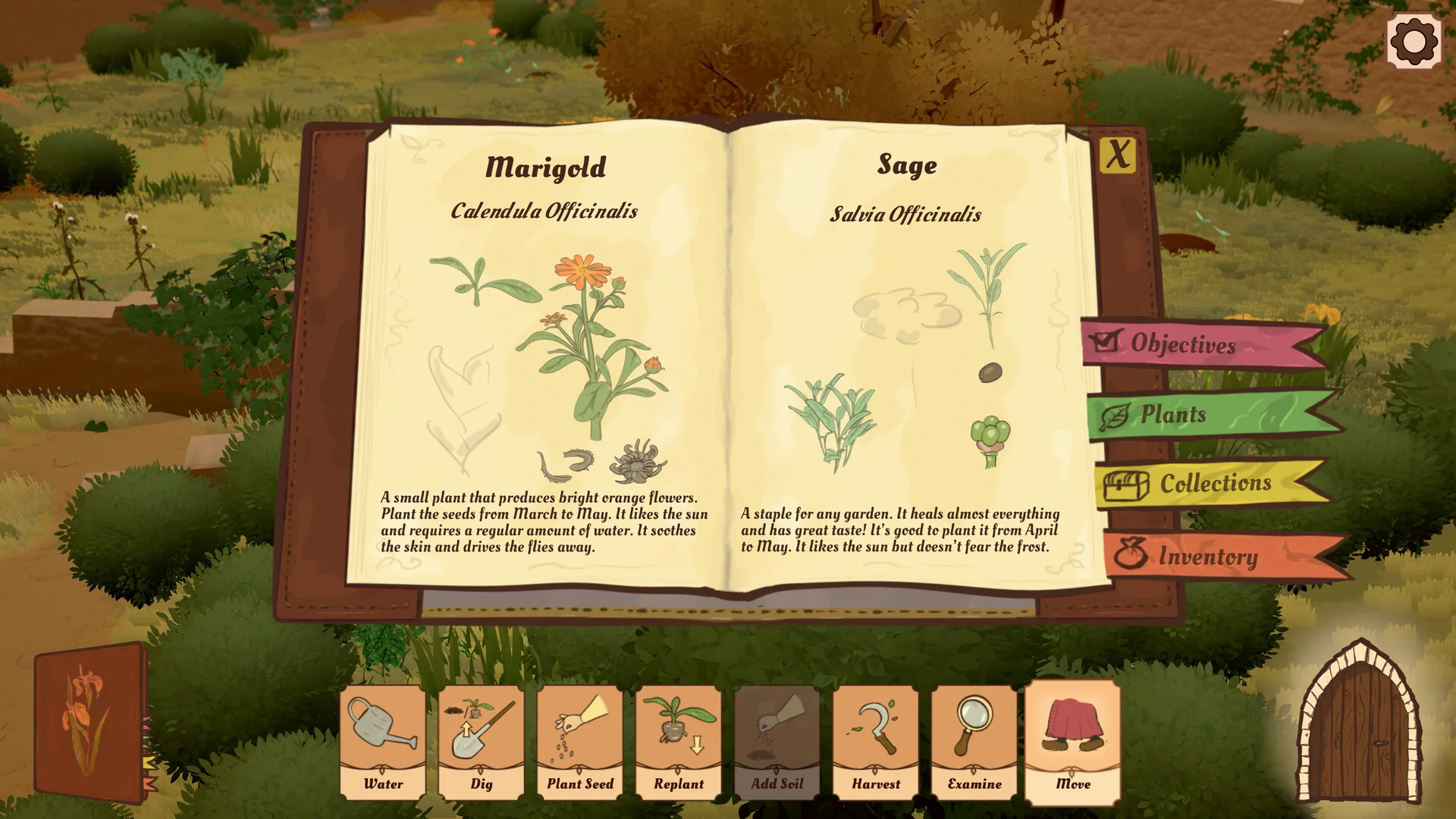
The illustrated field book gives that learning a visible record. Sketches fill in as you discover plants at different stages of growth, so seeing a familiar plant change can tell you something new. The shimmering highlights are useful in a different way. They let you see at a glance which plants need attention, a welcome shortcut when several need watering. They do too much of the work when finding a particular plant is the task itself. Following a shimmer straight to the target leaves little reason to use the eye the field book is helping you develop.
The garden belongs to the Abbess of Port-Royal-des-Champs, who entrusts its restoration to a young peasant named Agnès in 1643. The game gives her two distinct places to work. On the illustrated map, selecting a portrait starts a conversation with someone from the community.
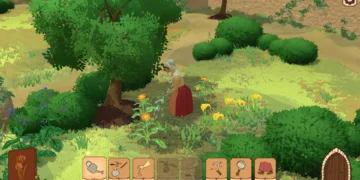
Selecting the abbey door takes her into the 3D garden, where the requests she’s heard become things she can act on. The move from portraits to a space she can walk around makes the division clear, and what happens on either side of that door varies enough to make the return trip matter.
Consider a request to harvest plants for something a member of the community needs. It gives you a reason to pay attention to a particular plant, and the dialogue later tells you what was made from it. The relationship between the two halves is stronger when you find something in the grounds that gives Agnès a new reason to speak to someone.
The book left behind by a dead spy is the biggest instance of that exchange. The community helps make sense of what the garden has yielded, and Agnès’s access to a place she was given to care for makes her useful in a story that reaches beyond it.
Early on, the pattern of selecting portraits, reading through conversations, and returning to tend plants can feel predictable. The conversations ask for a fair amount of reading, and their requests can send you back to repeat work whose rhythm you already know.
As the spy plot picks up, the same trip through the abbey door starts to feel different. There’s some pleasure in setting aside a political mystery to see how your plants are doing. The alternation works best once the story gives you something to think about while you water, and the garden gives you something worth bringing up when you next visit the map.
Watering is also where control over the chapter runs up against control over the next few seconds. You select a plant, wait for the action to finish, then do it again. The lack of an action queue matters little when you’re tending a single specimen.
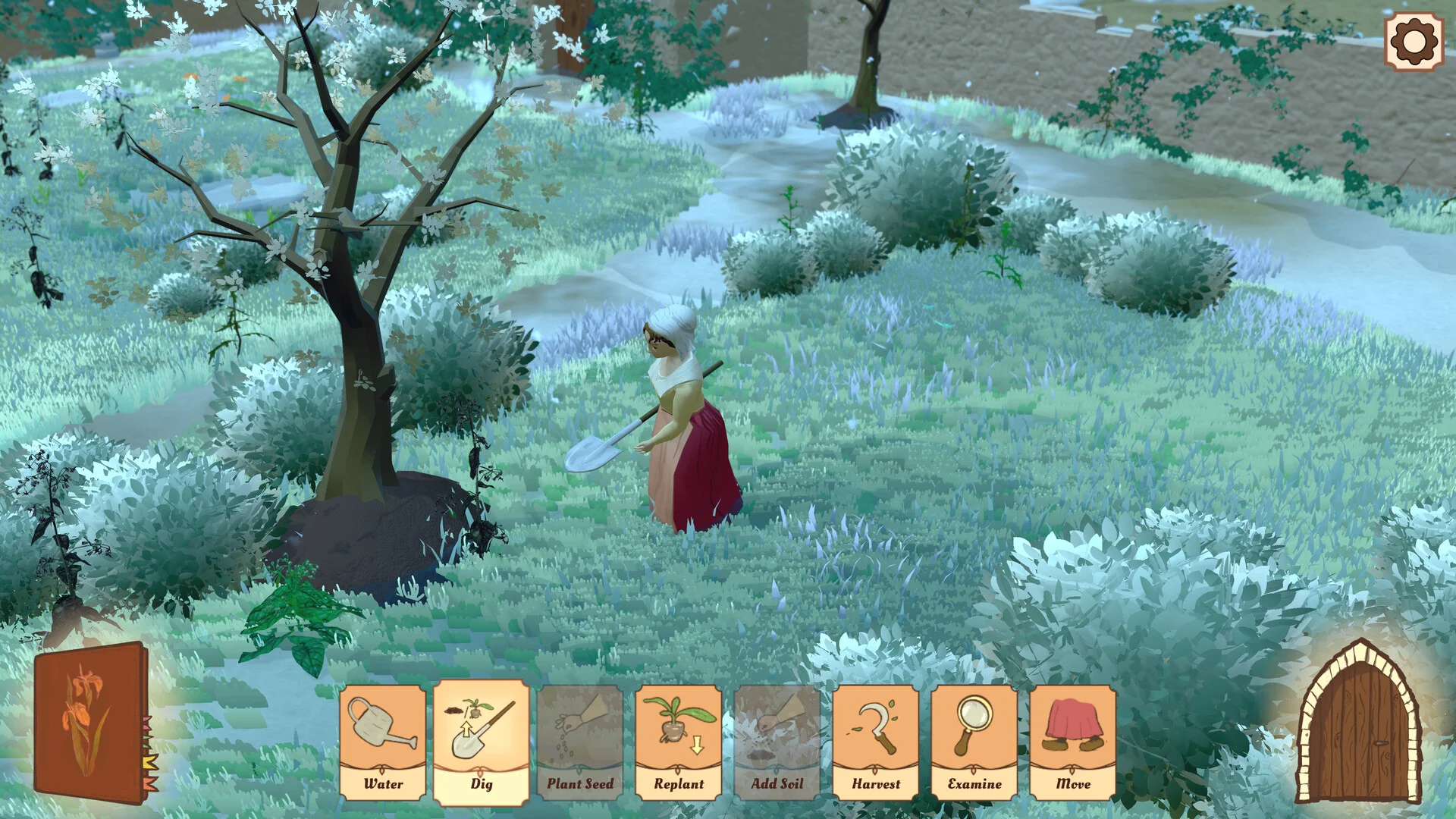
Across several plants, it leaves you waiting to issue a decision you’ve already made. A farming sim with a running clock can make a long list of chores a scheduling problem. Here, with the chapter waiting for you anyway, the pauses between routine clicks are harder to account for.
Transplanting is ordinarily one of the garden’s better ways to test an idea about where something will grow. In one reported case, the flowers were already in the ground and the planting objective still showed as incomplete. It was the counter that needed them moved.
The Review
The Abbess Garden
Where Stardew Valley asks how much you can get done before bed, The Abbess Garden gives you time to work out why a plant would fare better across the path. That freedom pays off in the illustrated field book and in discoveries that give Agnès a reason to return to the village map. The spy plot gives the garden visits a welcome change of rhythm once it gathers pace. One-at-a-time watering wears thin, and shimmering markers can give away the very plants you’re meant to find.
PROS
- Player-controlled chapter progression leaves room to experiment.
- Free-form planting makes soil, moisture, and placement matter.
- The illustrated field book rewards observing plants as they grow.
- Garden discoveries give Agnès new leads in the spy plot.
CONS
- Watering several plants means waiting for each action to finish.
- Shimmering markers can make search objectives automatic.
- Early dialogue and gardening cycles can feel repetitive.