





















Sonny Lauzon’s ease with a modern camera surprises his younger mentor. The surprise deserves some scrutiny. An amateur videographer who already helps other seniors make videos, Sonny arrives with experience that the category “elderly beginner” fails to register. Sean Cisterna’s documentary Silver Screamers places him among eight older volunteers recruited to crew a short horror film, yet his familiarity with the work complicates the experiment’s apparent novelty. The equipment has changed; his interest in making images has a history.
The younger mentors serve practical purposes, including satisfying insurance and equipment-rental requirements. Teaching unfamiliar procedures is a reasonable part of making a film with novices. Still, Sonny’s competence exposes the distance between assessing someone’s experience and making age stand in for that assessment. Cisterna also records adjustments that receive less ceremonial attention: scripts need larger lettering, and instructions need to be delivered loudly enough to be heard. Such details give the documentary’s welcome substance. Participation requires someone to consider the conditions under which a person can read the page and follow the direction.
A funding opportunity tied to senior involvement helps set the project in motion. Cisterna directs both the documentary and its subject, The Rug, drawing his crew from retirement residences and community organizations in Ontario. This arrangement gives him a film to make and a production process to document, an overlap the viewer can recognize without assigning him a concealed motive. His recruitment efforts also meet disinterest. Those refusals matter. An invitation retains its generosity when declining it remains a perfectly respectable response. Nobody should have to help manufacture a carnivorous carpet to establish that retirement has left their curiosity intact.
Cisterna’s strongest choice is to give the volunteers histories that exceed the assignment. The production footage shows people attending to tasks; the individual interviews allow other demands and desires to enter the frame. First assistant director Bari-Lynne joins while her husband is receiving treatment for prostate cancer. Her account gives the shoot a particular emotional scale. An activity that might look like a pleasant diversion from outside can provide precious space within a life organized around care. The documentary lets that need coexist with her responsibility on set. Her circumstances explain something about her presence without consuming her identity.
Sonny’s earlier withdrawal from a major multimedia opportunity after a health scare gives his camera work another dimension. Creativity has already been interrupted in his life, and it has also continued through his work with other seniors. Cisterna benefits from allowing those facts to sit together. They resist the convenient story of a dormant person awakened by a filmmaker’s invitation. Likewise, ninety-six-year-old sound recordist Audrey Cameron recalls seeing the Charles Laughton Hunchback of Notre Dame as a child. Her memory places the present assignment within a long relationship with cinema. She has been a spectator, has retained an encounter with a film across decades, and now has another way to participate.
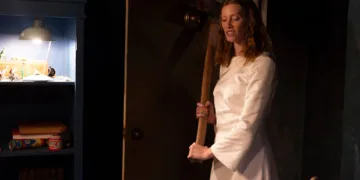
The assignment itself helps keep the film grounded. Adapted from material by Edo Van Belkom, The Rug concerns an elderly woman and a carpet with an appetite for human flesh. Its absurdity generates surprisingly exact demands. Prop master Anthony Garramone has to find the thing, bringing his enthusiasm for collecting into the selection process. Special-effects participant David Swift must work out how it can consume people and move on stairs. A ridiculous monster still needs convincing movement. The volunteers have problems to solve, choices to make, and departments whose work must fit together.

Cisterna makes those connections visible by moving between completed effects footage and the work behind it. The relationship gives the making-of material a purpose beyond recording cheerful participation. Viewers can connect an apparent action on screen with the labor required to produce it. The carpet’s menace becomes divisible into manageable contributions, allowing the documentary to distribute attention across people usually absorbed into the finished illusion. The modest scale helps: a demanding piece of décor offers a comprehensible problem around which different skills can gather.
The humor becomes especially welcome when enthusiasm gives way to ordinary workplace impatience. Anthony and a costume participant, with their immediate duties largely finished, complain about how long the shoot is taking. Their restlessness loosens the inspirational frame. These people can enjoy the opportunity and still find waiting tedious. Cisterna’s mostly calm production leaves room for that sociability, with grumbling becoming part of the day’s companionship. The amusement comes from the familiar mismatch between one department’s readiness and everybody else’s unfinished business. Their age supplies little of the joke.
Sound work offers an even freer kind of play. Making the carpet’s eating noises asks the participants to lend their bodies to an impossible creature, supplying an appetite that the prop itself cannot possess. The foley sequences let pleasure and concentration occupy the same activity. There is something satisfyingly undignified about the task, which requires adults to take an absurd sound seriously enough to make it work. The image needs a noise; someone has to imagine the texture of a mouthful, produce it, and listen to how it fits a rug eating a person.
Silver Screamers premiered at Fantastic Fest on September 19, 2025, with distribution by Blue Ice Pictures. Directed by Sean Cisterna, the heartwarming Canadian documentary follows a passionate group of senior citizens who unite to script, produce, and star in their own low-budget horror film adaptation of a short story about a flesh-eating rug.
Where to Watch Silver Screamers (2025) Online

Full Credits
Title: Silver Screamers
Distributor: Blue Ice Pictures
Release date: September 19, 2025 (Fantastic Fest)
Running time: 1 hour 34 minutes (94 minutes)
Director: Sean Cisterna
Writers: Sean Cisterna, Edo van Belkom
Producers and Executive Producers: Ivonete de Sousa, Sean Cisterna
Cast: Diane Ament, Bari-Lynne Butters, Audrey Cameron, Anthony Garramone, Sonny Lauzon, David Swift, Edo van Belkom, Jayne Eastwood
Director of Photography (Cinematographer): Danny Dunlop
Editors: Lee Walker
Composer: Janal Bechthold
The Review
Silver Screamers
Silver Screamers earns its affection by attending to the lives and skills its volunteers bring to the set. Practical accommodations, personal histories, and the exacting business of animating a hungry carpet give its warmth substance. Cisterna allows competence, caregiving, curiosity, and impatience to coexist. The pleasure comes from watching distinct people make something ridiculous together, with room for both serious concentration and cheerful grumbling.
PROS
- Individual portraits resist sentimental stereotypes.
- Practical details give participation concrete meaning.
- Effects demonstrations reveal collaborative craft.
- Workplace humor preserves the crew’s personalities.
CONS
- The approved review establishes no specific weaknesses.