

























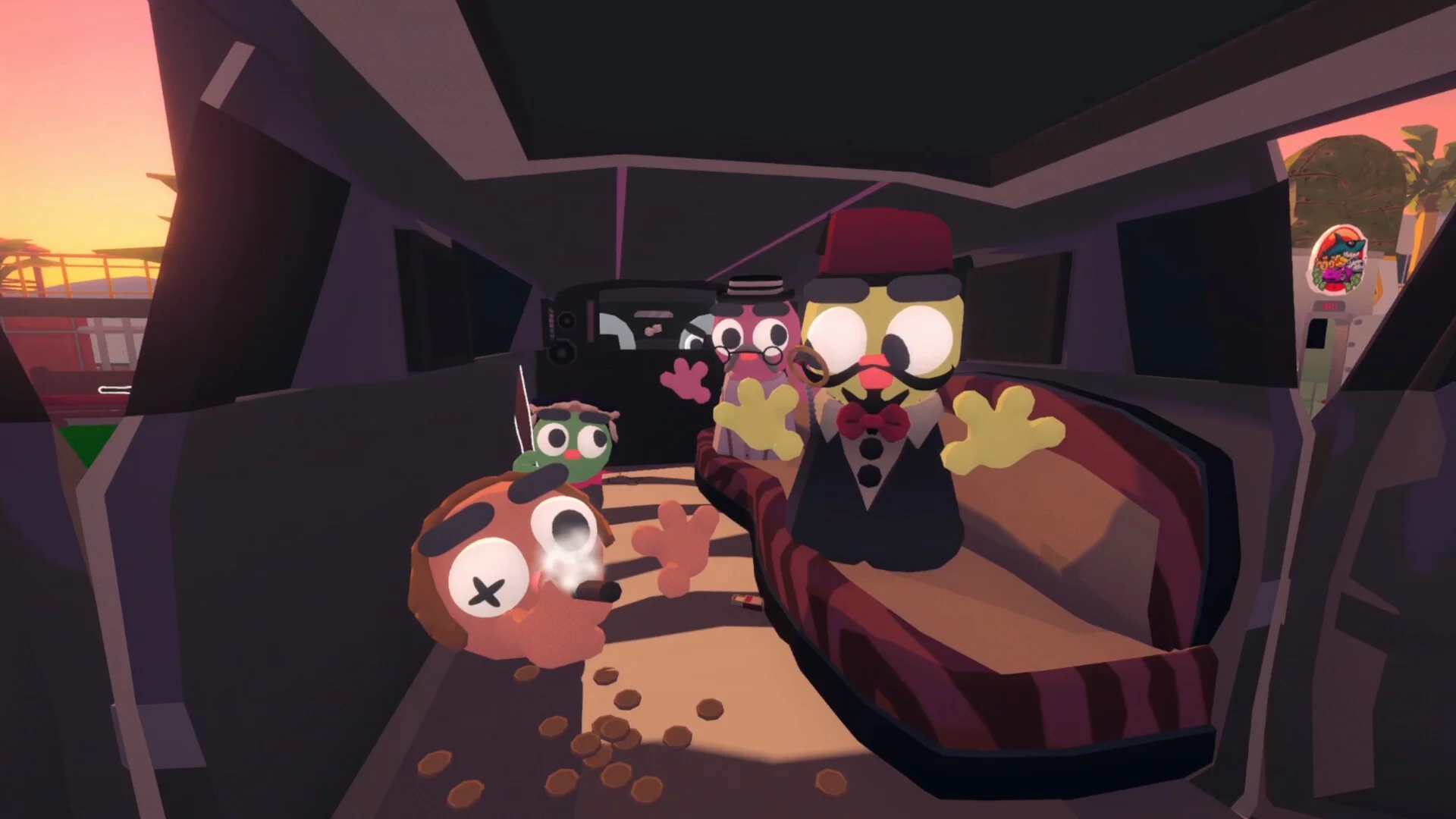

Blackjack gets a one-sentence explanation in Gamble With Your Friends, which is sufficient only if someone has already done the teaching. The casino treats familiarity with its games as knowledge the visitor brings along. A player who understands the rules can start weighing bets; a newcomer must first work out what the available decisions mean. That distinction matters in a game built for an evening with friends. Knowing how to join a lobby does not supply the education that the tables quietly expect.
Crash makes a useful comparison. Its digital rocket climbs, the possible payout grows, and the player must collect before the ascent ends in disaster. The moving image makes the invitation to wait immediately legible, even without a background in card games. Traditional tables and this little spectacle occupy the same casino, but they communicate through different kinds of familiarity. The collection borrows widely from gambling culture without giving each visitor equally good directions through it.
Learning also consumes time that the fiction makes precious. One to six players owe money to loan sharks and visit Jeff Booth’s casino to earn a rising daily quota. Roughly five minutes separate entry from the reckoning. Explaining blackjack to a friend therefore competes with the business of keeping everyone alive. The premise gives a casual gathering an absurd urgency, though it also makes the scant instruction irritating: uncertainty about a bet is entertaining; uncertainty about how to participate is an avoidable obstacle.
Once the rules are understood, the common bankroll changes their social meaning. The familiar casino promise of taking a chance with your own money becomes a situation in which someone else can spend your security. Reaching quota permits an early departure, but continuing offers the temptation of further winnings. The cautious player and the person convinced that another wager will improve things have competing claims on the same funds. Cooperation leaves considerable room for disagreement over what counts as helping.
Proximity voice chat gives that disagreement a location. Friends can spread across the floor, making separate decisions whose consequences arrive in a shared balance, while reactions carry from elsewhere in the room. The casino becomes a social space through the gap between personal activity and collective exposure. Solo play preserves the bets but removes much of this friction. There is nobody whose confidence must be trusted, whose spending must be tolerated, or whose distant reaction makes the shared finances suddenly interesting.
Purchasable aids offer some control over that exposure. The Holy Statue prevents losses while active; the Devil Reel offers to triple the previous win at the risk of surrendering it. One temporarily suspends the casino’s threat, while the other invites players to renew it after success. Their coexistence neatly captures the disagreement the shared account encourages. Choosing protection, choosing a game, and choosing when to leave all matter, but none supplies a dependable route through every day. Luck can still undo a sensible approach.
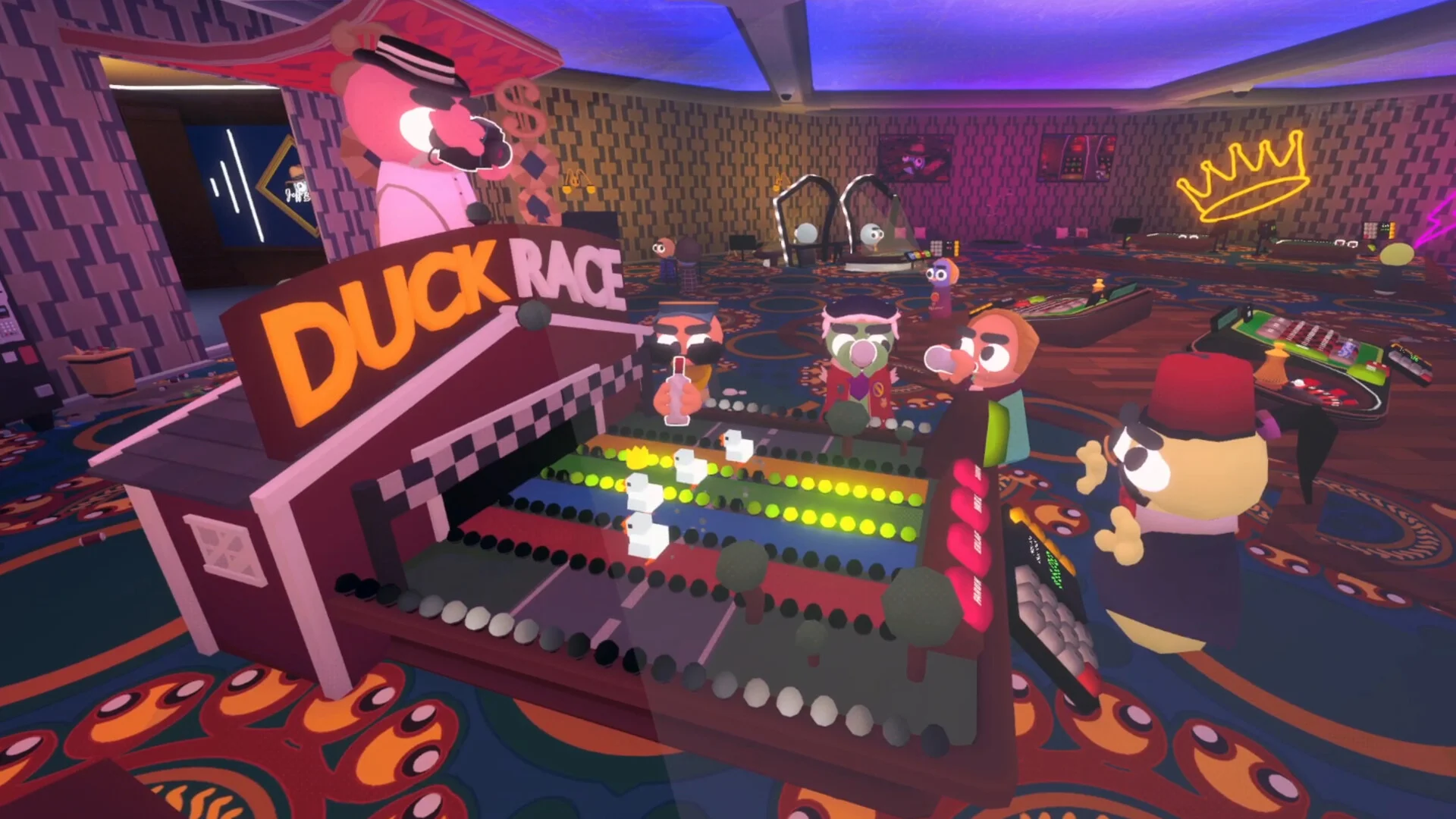
The debt premise becomes considerably stranger when tickets for purchases can be obtained by surrendering body parts. Selling the mouth disables in-game speech until a replacement is bought. Within the game’s own voice system, a player can help fund the group by giving up the means of joining its conversation. The transaction damages precisely the social activity that makes the casino enjoyable. Debt is expressed through a practical loss of participation, with an unpleasant little question attached: how useful must someone become before the group can afford to hear them again?
Giving up an eye obscures part of the screen, taking the same transaction into perception. Money disappears as a number; an eye leaves an absence the player must keep looking through. The cartoon treatment allows these exchanges to remain grotesquely funny, particularly when severe bodily loss leaves a character rolling around instead of walking. A gun that removes another player’s body part further unsettles the arrangement. Sacrifice need not remain a private decision, and friendship can accommodate a startling amount of coercion when the proceeds are useful.
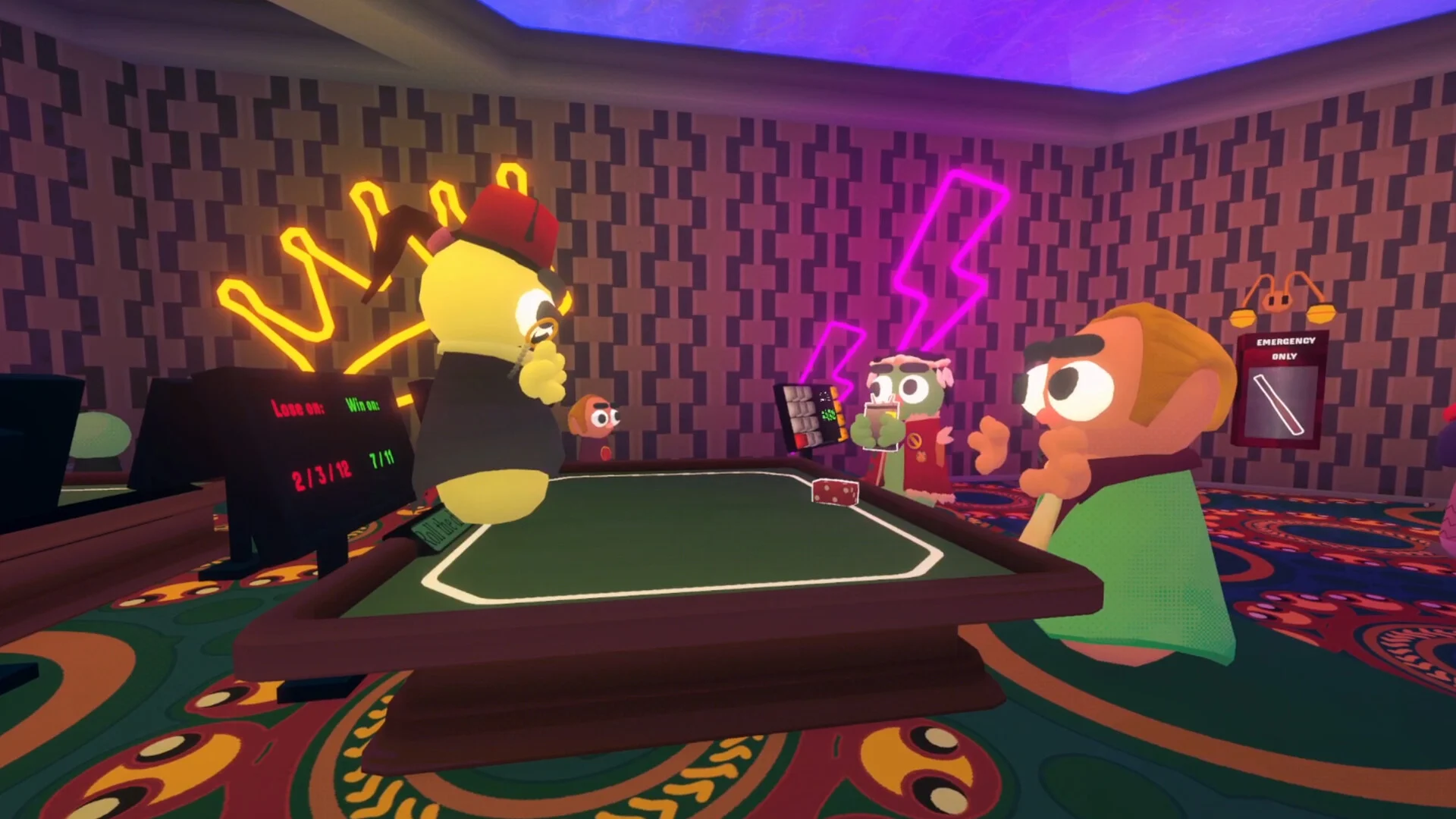
These bodily changes provide variation that the casino activities struggle to sustain. Seventeen games across four themed floors make reaching another level an attractive early goal, especially as minimum wagers and possible payouts rise. Moving upward carries the familiar promise of admission to higher stakes, repurposed here as another stage of compulsory debt repayment. Access expands without delivering much security. The loan-shark setup and the increasing financial demands keep the ascent from feeling like simple enrichment.
Yet a larger wager does not necessarily ask for a new understanding of the game beneath it. The activities remain fixed between runs, so the distinction between discovering another floor and returning to one already visited grows significant. The body-part economy can complicate a familiar visit, but it cannot keep introducing unfamiliar casino games. Friends can generate fresh disputes around known rules, which suits an inexpensive game for occasional evenings together. Sustained play places a heavier burden on their ability to entertain one another.
Luck-driven resets expose that dependence most sharply. There are choices worth reconsidering after failure, from the wagers to the timing of departure, but a bad result does not always reveal a mistake that can be corrected. Sometimes the next attempt simply requires doing familiar things again and hoping they pay differently. Brief casino visits keep an individual setback manageable; several setbacks can still mean repeatedly passing through the same early activities before regaining access to the desired floor. The clock keeps those returns hurried even after the tables have little left to teach.
The Review
Gamble With Your Friends
Gamble With Your Friends turns casino individualism into collective liability: one player’s appetite can spend everyone’s safety. Shared funds and proximity chat give familiar bets social bite, while selling sight or speech makes the debt premise grotesquely tangible. Thin instruction assumes too much familiarity, and fixed games leave friends supplying an increasing share of the entertainment. It suits occasional group evenings, with less to sustain solitary players or repeated returns through the same floors.
PROS
- Shared bankroll creates lively conflicts over risk.
- Body-part trades give debt tangible consequences.
- Proximity chat connects players across the casino.
CONS
- Scant instruction makes timed visits harder for newcomers.
- Fixed games limit lasting replay appeal.
- Solo play loses much of the social tension.