









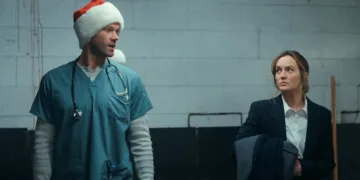











How long can helplessness stay frightening once you start enjoying the search for an explanation? The anxiety in Dead Drop comes from being told to follow instructions that never arrive. A voice has taken charge, yet it gives nobody a useful next step. That gap between obedience and action is an effective place to keep an audience. You listen for something you can use, and the recurring intercom starts to feel threatening before its purpose becomes clear.
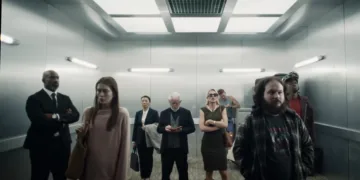
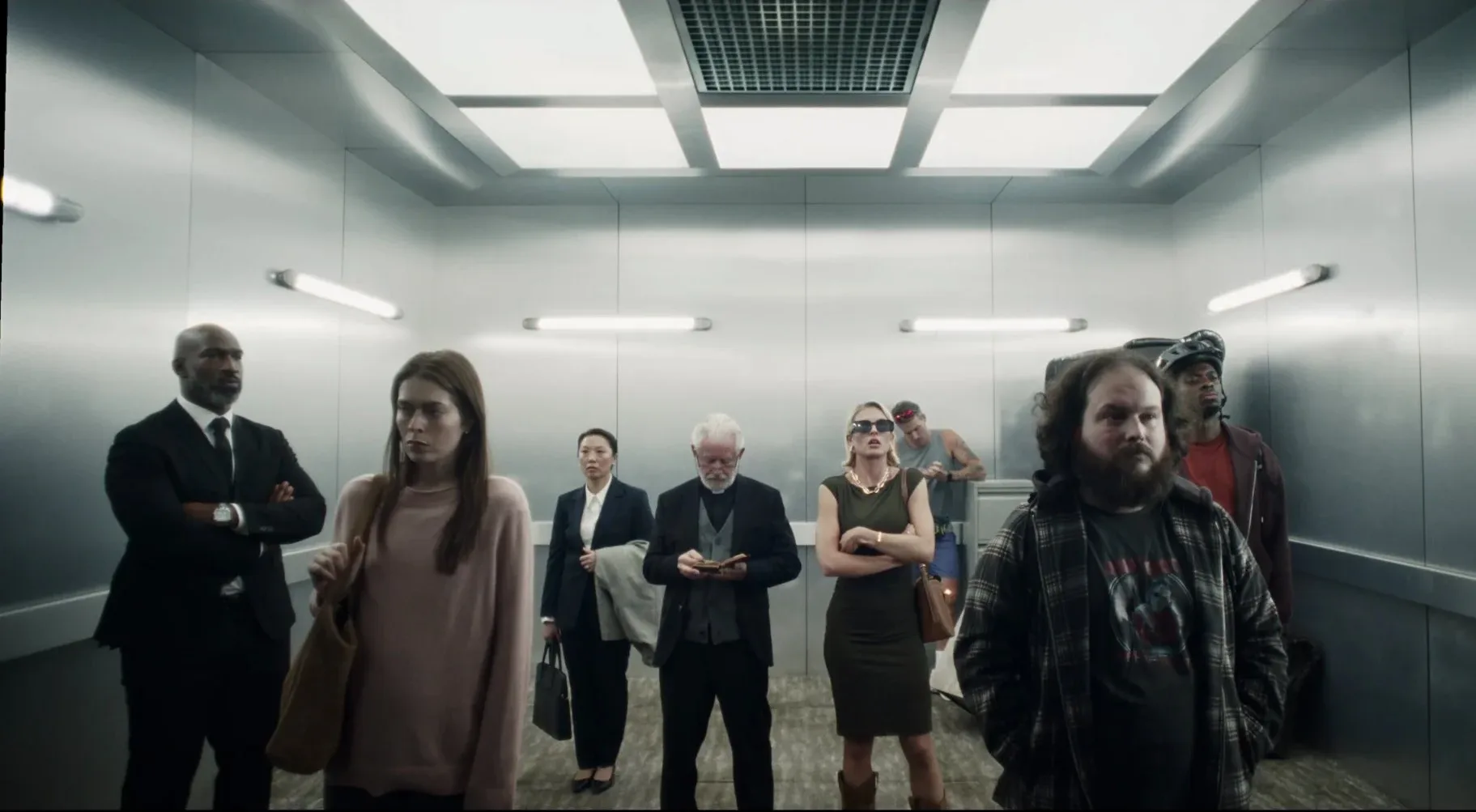
Trying to leave makes that uncertainty worse. Writer-director Ned Crowley has eight strangers take a freight elevator when the regular lift fails to arrive, then makes their attempts to escape increasingly dangerous. Prying at the doors and trying the roof are practical responses to confinement. Once those options become hazardous, attention turns inward, toward the compartment and the people sharing it. The movie starts recruiting us into the passengers’ speculation.
I’d recommend this nasty little puzzle thriller for the pleasure of that recruitment. Across 88 minutes, Crowley keeps giving you reasons to reconsider the situation, interrupting arguments with sudden violence before the speculation grows stale.
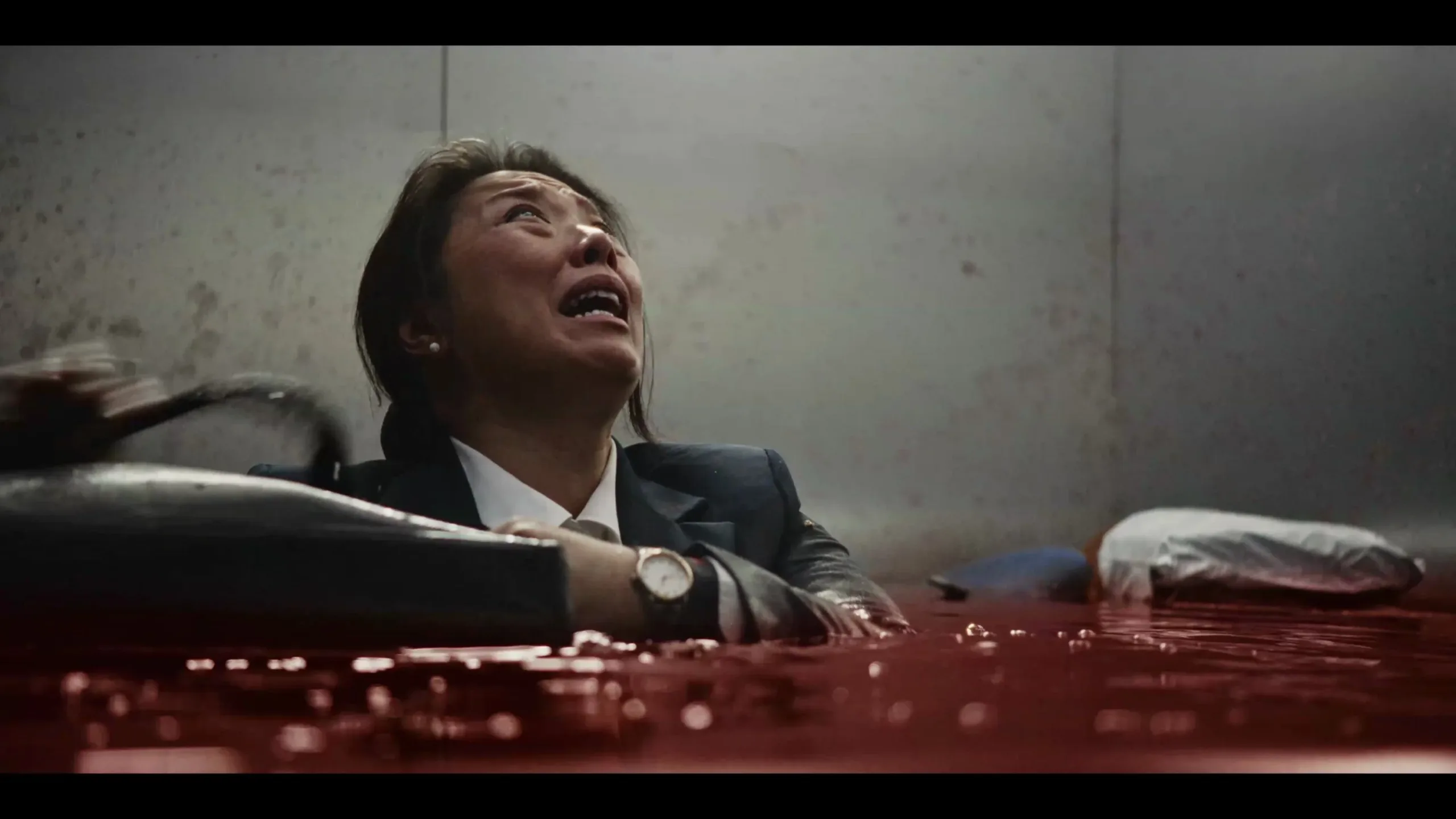
The emotional investment is thinner. I wanted to understand the trap much more urgently than I wanted to know most of its occupants, and the film’s enthusiasm for grotesque jokes encourages that distance. If a compact horror film full of awful surprises sounds like a good evening, there is plenty here to enjoy. Expecting the deaths to hurt may leave you waiting.
The elevator makes a persuasive object of suspicion. Its panel has nine floor buttons, an alarm, and a penthouse button, enough ordinary detail to invite scrutiny once ordinary explanations stop helping. Production designer Rositsa Trayanova gives the viewer things to examine inside the metal box. The pleasure is familiar from escape-room stories: you start looking at a functional object as a possible clue. Crowley keeps that impulse active alongside the immediate problem of escape. Doors, ceiling access, and the speaker each offer contact with something outside the compartment, and none provides dependable reassurance.
That is where the sound does some of its best work. The intercom’s unsettling changes make it difficult to settle into simply waiting for assistance. Hearing it again brings a little apprehension, because its earlier demand has already failed to explain what anybody should do. The passengers fill the missing information themselves.
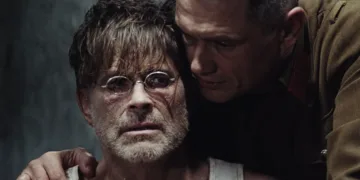
The priest, played by John O’Mahony, thinks they are undergoing a religious test and advocates patience. Victor Rivera’s IT troll keeps generating other explanations, including aliens. The script, developed from a story by Crowley and David Martin, gets useful friction from those competing responses. Waiting can look sensible to one person and intolerable to the next. Rivera adds a further irritant through pop-culture references and insensitive remarks; his character keeps talking at precisely the point when being confined with him already seems exhausting. His theories offer possibilities to consider, but his provocation makes it harder for the group to consider anything together.
The unease becomes personal when Melissa Neal’s pregnant teacher recognizes a possession carried by the priest. A shared space starts to look like evidence of a shared past. Neal gives the film a useful human focus here, because recognition requires a different kind of attention from another theory about the elevator. Later connections involving other passengers extend that suspicion through the group.
I wish the film stayed with that discomfort a little longer. The credits identify these people by types rather than names, and the characterization often works at the same speed: priest, lawyer, model, fitness enthusiast, troll. You can quickly understand who might clash, and the racial, sexist, and class hostility gives their quarrels an unpleasant familiarity. Those shortcuts also make it easy to watch the ensemble as a selection of possible culprits and victims. Discovering a connection changes a passenger’s importance to the mystery faster than it changes our attachment to them. The teacher’s recognition has weight; several other revelations chiefly supply the next thing to work out.
Then comes the uneasy amusement. One death joins facial destruction to an obscene bodily gag, asking for a wince and a laugh in the same burst. It is a blunt declaration of the movie’s appetite. Crowley enjoys taking a roomful of bickering people and doing something horribly excessive to it, and the interruption has enough force to break the conversational rhythm.
Waiting becomes anticipation of the next eruption. That is entertaining, but it leaves little room for grief over the person who has just supplied the joke.
There is a place for a small horror film this committed to keeping its one room active. You do not need a deep acquaintance with the genre to appreciate the changing uses of that room: a shortcut, a stalled lift, a space to search, a place where attempted escape can get someone killed. Those changes give the confined premise variety. The short running time helps, too. Crowley lets irritation develop through competing theories, then brings a physical threat into a conversation that could otherwise continue indefinitely. The limited setting keeps the consequences close to everyone who has been arguing.
As the teacher brings up Dante’s Inferno and the priest’s religious explanation gains company, the mystery becomes easier to approach through a particular set of expectations. Some of the strangeness gives way to the satisfaction of placing clues.
That shift costs the film a little of the intercom’s early, directionless dread, yet it gives those conversations something to build toward. The priest’s appeal for patience becomes especially uncomfortable to reconsider. By then, the film has shown what can happen to people who attempt to leave, and his proposed alternative is still to remain inside and trust an authority that has offered them almost nothing usable.
Dead Drop had its world premiere at the 33rd Oldenburg International Film Festival in September 2026 and screened in the U.S. at the Nightmares Film Festival in October 2026, without a wide commercial streaming release yet available. Written and directed by Ned Crowley, the horror-thriller traps a group of strangers inside a freight elevator where escalating danger reveals sinister, supernatural connections binding them together.
Full Credits
Title: Dead Drop
Distributor: Lamb Bone Films (Festival / Independent Release)
Release date: September 18, 2026 (Oldenburg International Film Festival), October 18, 2026 (Nightmares Film Festival U.S. premiere)
Running time: 1 hour 28 minutes (88 minutes)
Director: Ned Crowley
Writers: Ned Crowley, David Henri Martin
Producers and Executive Producers: David Henri Martin, Lisa Sepp-Wilson, Ned Crowley
Cast: Melissa Neal, Daniel Adeosun, Roger Ajogbe, Alexandra Kate, Victor Rivera, John O’Mahony, Christina Tam, Elijah Craft
Director of Photography (Cinematographer): Aidan Gault
Editors: Gregory T. Evans, Maedeh Moayyednia
Composer: Andy Fosberry
The Review
Dead Drop
Dead Drop makes helplessness feel prickly through an intercom that demands obedience and withholds guidance. Its sudden, grotesque interruptions turn that anxiety into gleeful anticipation. I enjoyed guessing at the trap’s logic far more eagerly than I cared about its passengers, whose stock personalities and comic deaths keep grief at a distance. Still, this resourceful little horror film earns your evening if nasty surprises and a brisk puzzle are what you’re after.
PROS
- Withheld instructions create immediate unease.
- Inventive use of the confined setting.
- Brisk pacing and grotesque surprises.
- Melissa Neal gives the mystery a human focus.
CONS
- Stock characters limit emotional attachment.
- Comic deaths leave little room for grief.
- Religious clues weaken the early uncertainty.