

















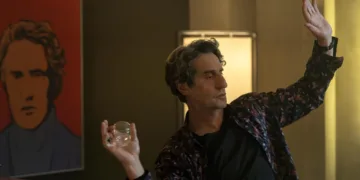












Michael Keaton dons the director’s cap once more with “Knox Goes Away,” a brooding neo-noir that thrusts us into the grim world of John Knox, a methodical contract killer confronting a ticking timebomb – his own deteriorating mind. As the film unravels, we bear witness to Knox’s descent into the murky depths of dementia, a condition that robs him of his most invaluable asset: his razor-sharp mental faculties.
The story wastes no time in establishing the stakes. Knox, an erudite yet lethal assassin with a penchant for literature, receives a harrowing diagnosis – he has Creutzfeldt-Jakob disease, a rapidly progressive neurological disorder that will render him incapacitated within mere weeks. Just as he grapples with this grim reality, his estranged son Miles (James Marsden) arrives on his doorstep, bloodied and desperate, seeking his father’s expertise to cover up a brutal murder.
With his mind slipping and the police closing in, Knox concocts an intricate scheme to exonerate his son while confronting the inescapable deterioration of his once-formidable intellect. Keaton, who previously explored similar thematic territory in his 2008 directorial debut “The Merry Gentleman,” handles the weighty subject matter with a deft hand, crafting a taut psychological thriller that doubles as a poignant meditation on mortality and redemption.
Donning the somber hues of classic noir, “Knox Goes Away” invites viewers to traverse the dimly lit alleys of a fading mind, where every flicker of lucidity is a hard-won battle against the unrelenting march of time. Keaton’s daring vision promises a thought-provoking and visceral cinematic experience that dares to ask: In the twilight of one’s existence, is it ever too late to atone for the sins of the past?
A Mind Unraveling, A Son’s Redemption
At the heart of “Knox Goes Away” lies John Knox, a brilliant yet morally compromised hitman whose world is upended when he receives a devastating medical diagnosis. In the opening scenes, we learn that Knox suffers from Creutzfeldt-Jakob disease, an aggressive form of dementia that will rapidly strip him of his cognitive abilities within a matter of weeks.
The signs of Knox’s affliction manifest insidiously at first. During a routine hit, his momentary lapse in memory leads to the accidental killing of his partner, forcing him to hastily stage the crime scene as a murder-suicide. This jarring incident foreshadows the mental unraveling that awaits the once razor-sharp assassin.
As Knox’s condition deteriorates, his carefully constructed world is further shaken by the arrival of his long-estranged son, Miles (James Marsden). Miles stumbles into Knox’s life, drenched in blood and terror, having committed a vengeful murder against the man who preyed upon his teenage daughter. Faced with his own mortality and a son in desperate need, Knox formulates an intricate plan to exculpate Miles from the crime.
What ensues is a high-stakes game of cat-and-mouse, as Knox meticulously plants false evidence and manipulates crime scenes, all while struggling to retain his tenuous grip on reality. With each passing day, his mental faculties slip further, necessitating the use of coded notebooks to guide him through the labyrinthine machinations of his audacious scheme.
Keaton’s nuanced portrayal of Knox’s cognitive decline is both poignant and unsettling. We witness his frustration mount as simple words elude him, familiar faces blur into unrecognizable visages, and the very fabric of his memory frays. Yet, even as his mind betrays him, Knox’s unwavering determination to secure his son’s freedom burns bright, fueling his every calculated move.
Complicating matters further is the relentless pursuit of Detective Emily Ikari (Suzy Nakamura), a tenacious investigator who begins to unravel the threads of Knox’s intricate web. As the lines between truth and deception blur, Knox finds himself in a race against time – both to outsmart the law and to complete his mission before his mind succumbs to the ravages of the disease.
In “Knox Goes Away,” Keaton crafts a tense, cerebral thriller that explores the depths of paternal love and the lengths one might go to in the face of certain oblivion. With each nail-biting twist and turn, we bear witness to a man’s desperate struggle to preserve his legacy, even as the sands of his existence slip through his fingers.
Descent into Shadows
In the director’s chair, Michael Keaton navigates the murky depths of “Knox Goes Away” with a sure hand, expertly wielding the stylistic tools of the neo-noir genre. His direction is a masterclass in restraint, allowing the weight of the narrative to simmer beneath the surface while punctuating key moments with flourishes of visual flair.

Keaton’s strengths lie in his ability to maintain an atmosphere of brooding tension, meticulously crafting each frame to reflect the psychological unraveling of his tortured protagonist. The film’s muted color palette and judicious use of shadow and light, expertly orchestrated by cinematographer Marshall Adams, create a palpable sense of dread that seeps into the very fabric of the story.
As Knox’s grip on reality loosens, Keaton and Adams employ a series of disorienting camera techniques to convey the character’s deteriorating mental state. Quick cuts, jarring angle shifts, and moments of overexposure plunge the audience into a disquieting subjectivity, forcing us to confront the fragility of human cognition.
Yet, amidst the stylistic flourishes, Keaton exercises admirable restraint, allowing the performances to breathe and the narrative to unfold organically. His direction strikes a delicate balance between visual flair and raw emotional resonance, ensuring that the film’s exploration of mortality and redemption never succumbs to mere gimmickry.
In “Knox Goes Away,” Keaton demonstrates a deft command of the cinematic language, crafting a neo-noir that is equal parts haunting and introspective. With each haunting frame, he invites us to peer into the abyss of a mind unraveling, challenging us to confront the fragility of our own existence and the lengths to which we might go to preserve our legacy.
Keaton’s Tour de Force Anchors Stellar Ensemble
At the core of “Knox Goes Away” lies a tour de force performance by Michael Keaton, who inhabits the role of John Knox with a mesmerizing blend of steely resolve and simmering vulnerability. From the outset, Keaton commands the screen with a powerful presence, imbuing his hitman persona with a quiet intensity that hints at the depths lurking beneath the surface.
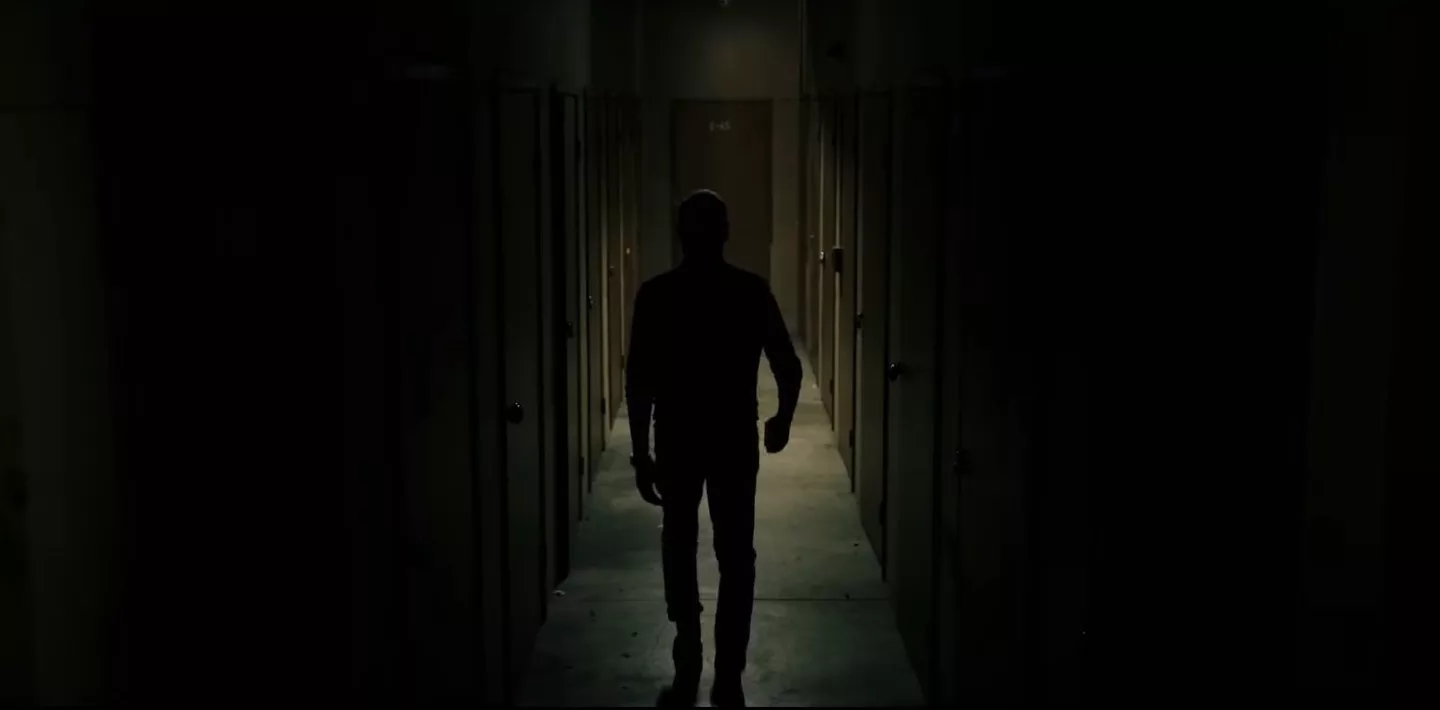
As Knox’s mental faculties gradually disintegrate, Keaton’s nuanced portrayal takes on an added poignancy. With each faltering step and momentary lapse in memory, we bear witness to the erosion of a once-formidable intellect, rendered all the more heartbreaking by Keaton’s unwavering commitment to the emotional truth of the character.
Yet, amidst the stark exploration of dementia’s ravages, Keaton never loses sight of Knox’s core humanity. In fleeting moments of lucidity, we catch glimpses of the man he once was – a devoted father, a lover of literature, a soldier haunted by the ghosts of his past. It is this multidimensional portrayal that elevates Keaton’s performance beyond mere technical mastery, cementing his place as one of the most gifted actors of his generation.
Surrounding Keaton is a stellar supporting cast, each member contributing their own unique hues to the film’s rich tapestry of characters. James Marsden brings a raw intensity to the role of Miles, Knox’s estranged son, deftly navigating the emotional whirlwind of regret, desperation, and filial devotion that drives his actions.
Suzy Nakamura, as the relentless Detective Ikari, imbues her character with a steely determination that belies the complexities simmering beneath the surface. Her portrayal hints at deeper layers of cultural identity and personal struggle, adding nuance to what could have been a one-note antagonist.
And in a scene-stealing turn, Al Pacino lends his inimitable charisma to the role of Xavier Crane, Knox’s mentor and confidant. Pacino’s presence is a masterclass in understated gravitas, his every line delivery and movement infused with a knowing wink that hints at the character’s own shadowy past.
While the central performances are undoubtedly the film’s driving force, it is the ensemble’s collective commitment to exploring the emotional complexities of their characters that elevates “Knox Goes Away” from a mere thriller to a poignant meditation on mortality, family, and the enduring power of redemption.
Mortality’s Reckoning, Fatherhood’s Redemption
Beneath its taut, neo-noir veneer, “Knox Goes Away” grapples with profound existential themes that linger long after the final credits roll. At its core, the film is a searing exploration of mortality – a unflinching reckoning with the fragility of human existence and the inevitable deterioration that awaits us all.
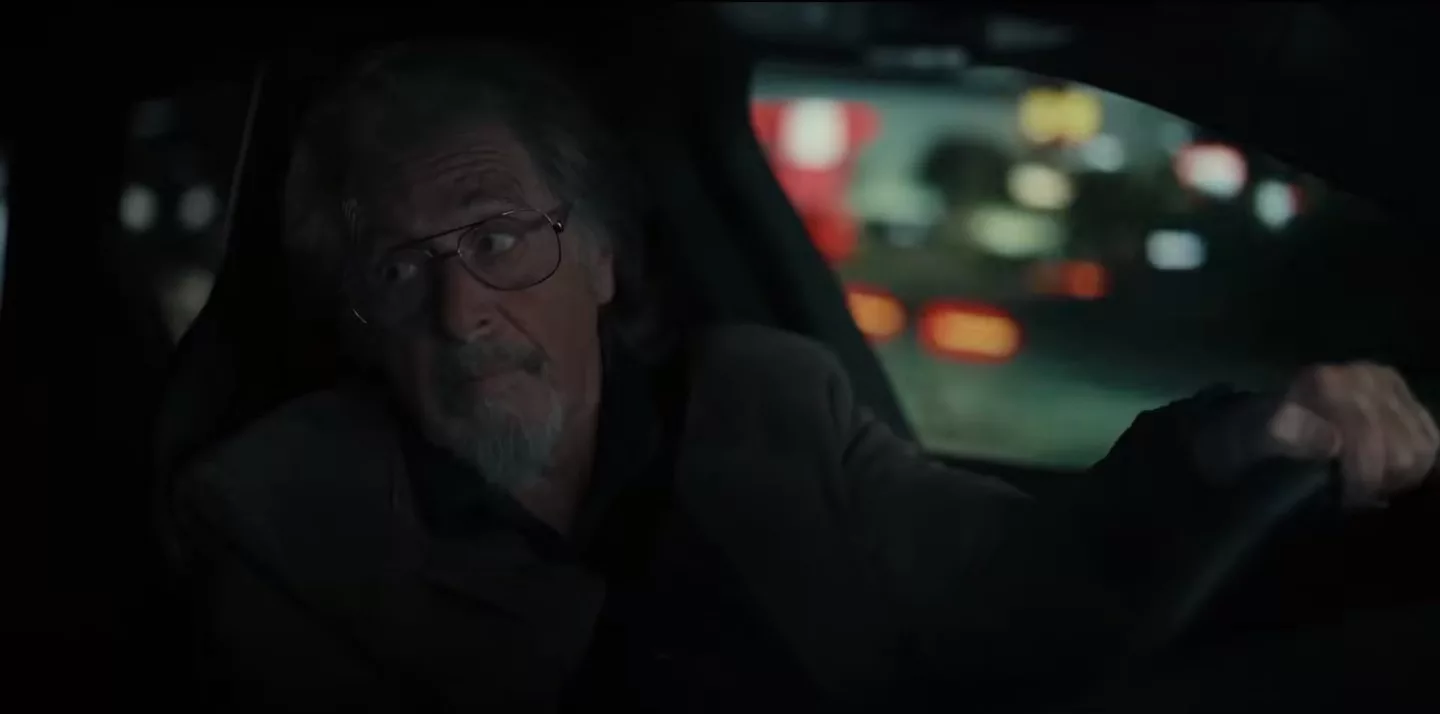
Through the lens of John Knox’s harrowing descent into dementia, Keaton and his collaborators confront the harsh realities of Creutzfeldt-Jakob disease with remarkable sensitivity and authenticity. Knox’s struggles to retain his grip on reality, punctuated by fleeting moments of lucidity and heartbreaking lapses in memory, offer a poignant glimpse into the anguish of those afflicted by this cruel condition.
Yet, even as it delves into the grim specter of cognitive decline, “Knox Goes Away” finds glimmers of hope in the enduring bonds of family and the redemptive power of fatherhood. Knox’s motivations, driven by a desperate desire to atone for his failures as a parent and secure his son’s future, imbue the film with a profound emotional resonance that transcends its genre trappings.
In this regard, Keaton’s film succeeds as a richly layered character study, peeling back the layers of Knox’s enigmatic persona to reveal the complex tapestry of regret, guilt, and love that underpins his actions. Through Keaton’s nuanced performance, we bear witness to the unraveling of a man’s psyche, yet also catch tantalizing glimpses of the soul that lies beneath – a soul yearning for redemption in the twilight of its existence.
It is this deft interweaving of noir thriller elements and intimate family drama that lends “Knox Goes Away” its distinctive depth and texture. Keaton deftly navigates the tonal shifts, seamlessly transitioning from nail-biting set pieces to introspective character beats with a deft touch that never allows the narrative to become unbalanced.
In the end, “Knox Goes Away” emerges as a haunting meditation on the human condition – a searing exploration of the fragility of the mind and the enduring power of paternal love. Through its unflinching lens, we are forced to confront our own mortality, and to ponder the lengths to which we might go to secure a lasting legacy for those we leave behind.
Noir Trappings Cloak Existential Depths
On a technical level, “Knox Goes Away” deftly captures the moody, shadowy essence of classic noir cinema. The film’s production design, characterized by muted color palettes and stark lighting contrasts, creates an atmosphere of brooding unease that permeates every frame. Keaton’s judicious use of shadow and darkness evokes the noir aesthetic while also serving as a potent metaphor for the encroaching oblivion that threatens to consume Knox’s mind.

The costuming choices, too, reinforce the film’s noir sensibilities, with Knox’s crisp suits and fedoras projecting an aura of vintage cool that belies the moral ambiguity of his profession. Yet, even as the production values adhere to genre conventions, they never descend into mere pastiche, instead functioning as a stylistic canvas upon which the film’s more profound existential ruminations unfold.
Complementing the visual elements is a haunting jazz-infused score that infuses the proceedings with a sense of melancholic yearning. The music’s improvisational rhythms and bluesy inflections mirror the film’s exploration of memory and identity, punctuating pivotal moments with a soulful poignancy that reverberates long after the final notes have faded.
Through this deft synthesis of noir aesthetics and substantive thematic explorations, “Knox Goes Away” transcends its genre trappings, emerging as a richly textured tapestry that invites audiences to contemplate the depths of the human condition while reveling in the stylistic trappings of a bygone era.
Fading Embers of a Cinematic Triumph
In the annals of Michael Keaton’s filmography, “Knox Goes Away” will stand as a haunting testament to the actor’s multifaceted talents, both in front of and behind the camera. While not without its flaws, this neo-noir exploration of mortality and redemption ultimately coalesces into a powerful, thought-provoking cinematic experience.

Keaton’s tour-de-force performance as the doomed hitman John Knox anchors the film, imbuing his character with a depth of emotion that transcends the confines of the genre. Supported by a stellar ensemble, including standout turns from James Marsden and Al Pacino, the acting prowess on display is a master class in nuanced, layered character work.
Where the film stumbles, however, is in its occasional overreliance on stylistic flourishes that, while initially arresting, can become repetitive and detract from the emotional impact of the narrative. Keaton’s directorial choices, while largely effective in capturing Knox’s deteriorating psyche, at times veer into heavy-handedness, threatening to dilute the subtlety of the central performances.
Yet, these minor missteps are ultimately overshadowed by the film’s thematic richness and its unflinching exploration of profoundly human experiences – love, loss, guilt, and the inexorable march of time. “Knox Goes Away” is a searing reminder of our own mortality, challenging us to confront the fragility of existence while offering a glimmer of hope in the redemptive power of familial bonds.
For those seeking a thought-provoking, emotionally resonant cinematic experience, “Knox Goes Away” is a must-see. Keaton’s latest effort cements his status as a consummate storyteller, deftly blending genre thrills with existential ruminations to create a haunting, indelible portrait of a mind in the twilight of its existence.
The Review
Knox Goes Away
"Knox Goes Away" stands as a triumph of acting and thematic exploration, even if its stylistic ambitions occasionally outstrip its execution. Michael Keaton's phenomenal central performance, bolstered by a stellar supporting cast, grounds the film's loftier existential musings in raw, visceral emotion. While not without its flaws, this neo-noir character study leaves an indelible mark, forcing audiences to confront the fragility of human existence while offering a glimmer of hope in the redemptive power of paternal love. A captivating, brooding meditation on mortality and family bonds that cements Michael Keaton's status as a consummate actor and filmmaker.
PROS
- Michael Keaton's powerful, nuanced lead performance
- Thought-provoking exploration of mortality, dementia, and fatherhood
- Stylish neo-noir aesthetics and moody cinematography
- Tense, well-crafted thriller plot with clever twists
- Strong supporting cast, especially James Marsden and Al Pacino
CONS
- Occasional heavy-handed directing choices distract from emotional impact
- Some tonal shifts between noir thriller and family drama feel uneven
- Lacks depth in exploring Knox's backstory and motivations as a hitman
- Pacing lags in the middle portion as the plot gets convoluted