




























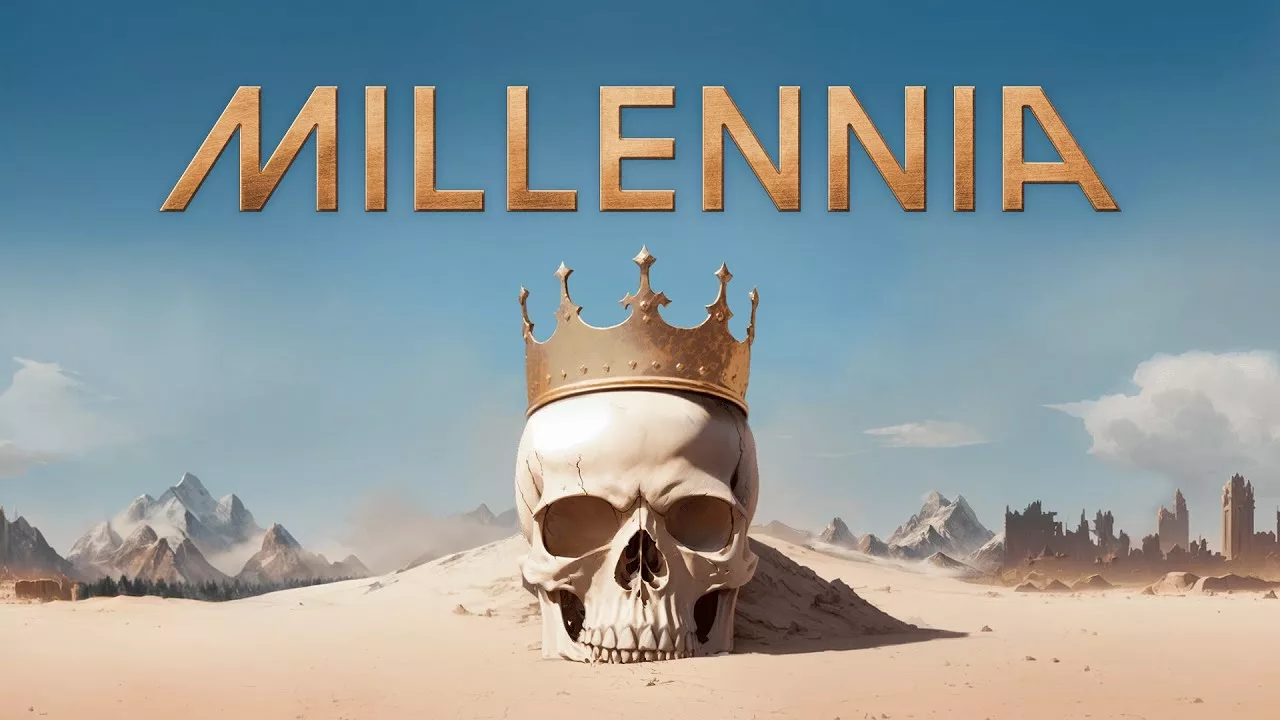

The realmMillennia of historical 4X strategy games remains a well-trodden domain ruled by an undisputed sovereign – the Civilization series. For decades, Sid Meier’s magnum opus has reigned supreme, setting the gold standard that all contemporaries are inevitably measured against. Periodically, ambitious contenders emerge, audaciously vying to usurp the king and claim the throne for themselves.
The latest to stake its claim is Millennia, a bold newcomer from developer C Prompt Games. Boasting an innovative “Ages” system and liberating players from adhering strictly to humanity’s recorded timeline, it promises an epic civilization-building experience unshackled by the constraints of history. But does it merely mimic the form of its muse, or transcend it with brilliant new substance?
On a maiden voyage through Millennia’s annals, one discovers a realm both hauntingly familiar yet edged with revisionist surprise. Its core tenets honoring city development, technological ascension, and warmongering conform to the genre’s well-worn dogma. However, undercurrents of fresh philosophies tease with deviations from the canonical 4X path. Whether these new ideas culminate in a cogent, compelling identity or scatter as shallow gimmickry remains to be discerned. Grab your cartographer’s quill – our dissection of Millennia’s triumphs and stumbles is about to commence.
Culture Cultivation: Millennia’s Distinctive Civilization Cycle
At its core, Millennia adheres to the fundamental 4Xloop embraced by its inspirational predecessors. Players cultivate embryonic settlements into bustling metropolitan capitals through meticulous resource management and construction prioritization. Farms, forges, and factories gradually interlock, fueling society’s ascent through the epochal technology tree. Martial endeavors contribute additional pathways to glory, with conquering armies forging an empire from the spoils of war.
Yet this familiar framework serves as mere overture to Millennia’s symphony of distinctive strategic concepts. The headliner is its ingenious “Ages” system which governs the progression and potential diversion of history’s predetermined course. Instead of adhering to a linear timeline, players collaboratively sculpt an alternate future by steering their civilizations into newly researched “Ages” – be they canonical historical epochs like the Renaissance or speculative brushstrokes such as an alien-afflicted “Age of Cosmos.”
Who ascends into the next age is not democratically determined, however. The first realm to complete a prerequisite number of current age technologies mandates the subsequent era for all. This simple mechanism fosters captivating decision branches. Do you rush headlong for the prestige of agenda-setting? Or consciously stall, gambling that a dreaded “Crisis Age” like famine or plague will be forestalled? The adrenaline of shaping galactic affairs based on such weighty choices never wanes.
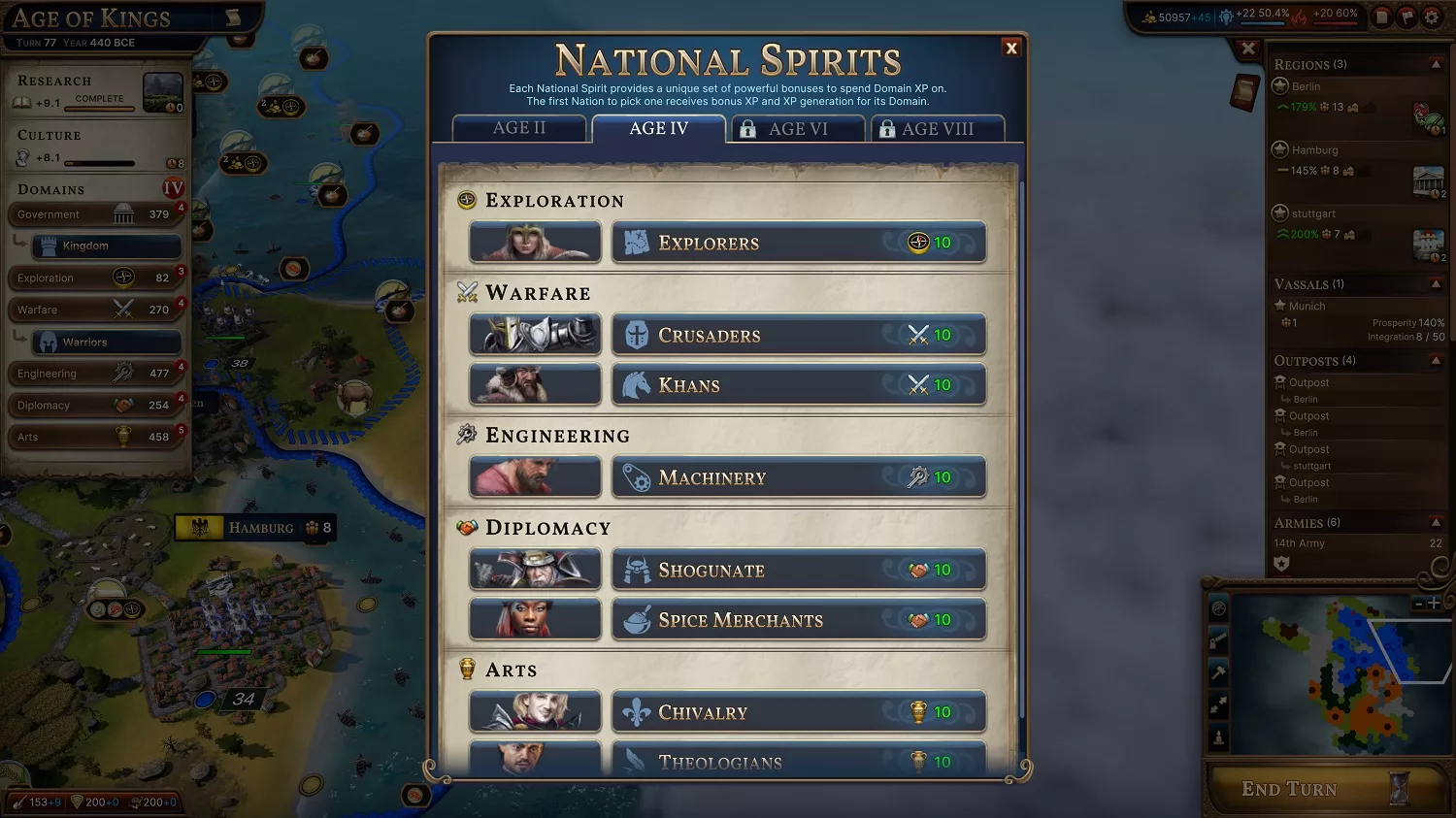
Equally instrumental in Millennia’s quest to establish a unique identity is its “National Spirits” ideological system. As societies mature, players channel resources into various cultural, economic, and martial ethos “domains” to adopt paradigms like Egyptian Monumentalism or Arabian Caliphates. While generic in description, these spiritual essences manifest key buffs, wonders, and elite unit options that steadily sculpt divergent national identities over the campaign’s breadth.
The tile improvement economy represents Millennia’s third pillar of distinction. City expansionism involves fastidiously developing surrounding terrain into resource-generating complexes. Simple dwellings ultimately catalyze into specialized refineries where agriculture processes into consumables, minerals transmute to munitions, and forests metamorphose into factories. A well-oiled empire hums with intersecting supply chains, transforming nature’s bounty into the materiel of hegemony.
Regrettably, such conceptual originality too often stumbles in execution. The Ages system’s abrupt upheaval effects coupled with minimal player input undermine its narrative potential. Rather than gradually foreshadowing tumultuous societal shifts, debilitating events like plagues and climate crises manifest with jarring, gameplay-demolishing abruptness lacking appropriate foresight or recourse. National Spirits, while visually distinct, tend to feel mechanically indistinct beyond generic stat boosts. And the tile system’s necessity of utterly terraforming every mile of your domain into industrial grids strays perilously towards tedium over tactical engagement.
These lukewarm results from such promising premises hint at an endeavor rushed from inspiration to actualization. But Millennia’s core ambition to plant its legacy beside rather than subordinate to its inspirations glows brilliantly, even when its execution fizzles. For every disappointment, an intriguing decision point or alternate reality beckons with revitalized allure.
Millennia’s Polish Belies Its Ambitious Scope
While Millennia confidently wades into uncharted strategic waters, its aesthetic makeup remains firmly anchored to the staid, functional template pioneered by its turn-based strategical forebears. The visual presentation, while perfectly adequate for the lofty tasks of civilizational choreography, lacks the crisp graphical resplendence of its contemporaries. Units and terrain are rendered in a flatly simplistic style sacrificing unnecessary bells and flourishes at the altar of seamless usability. There’s a retro appeal to the charmingly minimalist art direction, but it fails to scale impressively with technological advancement epochs.
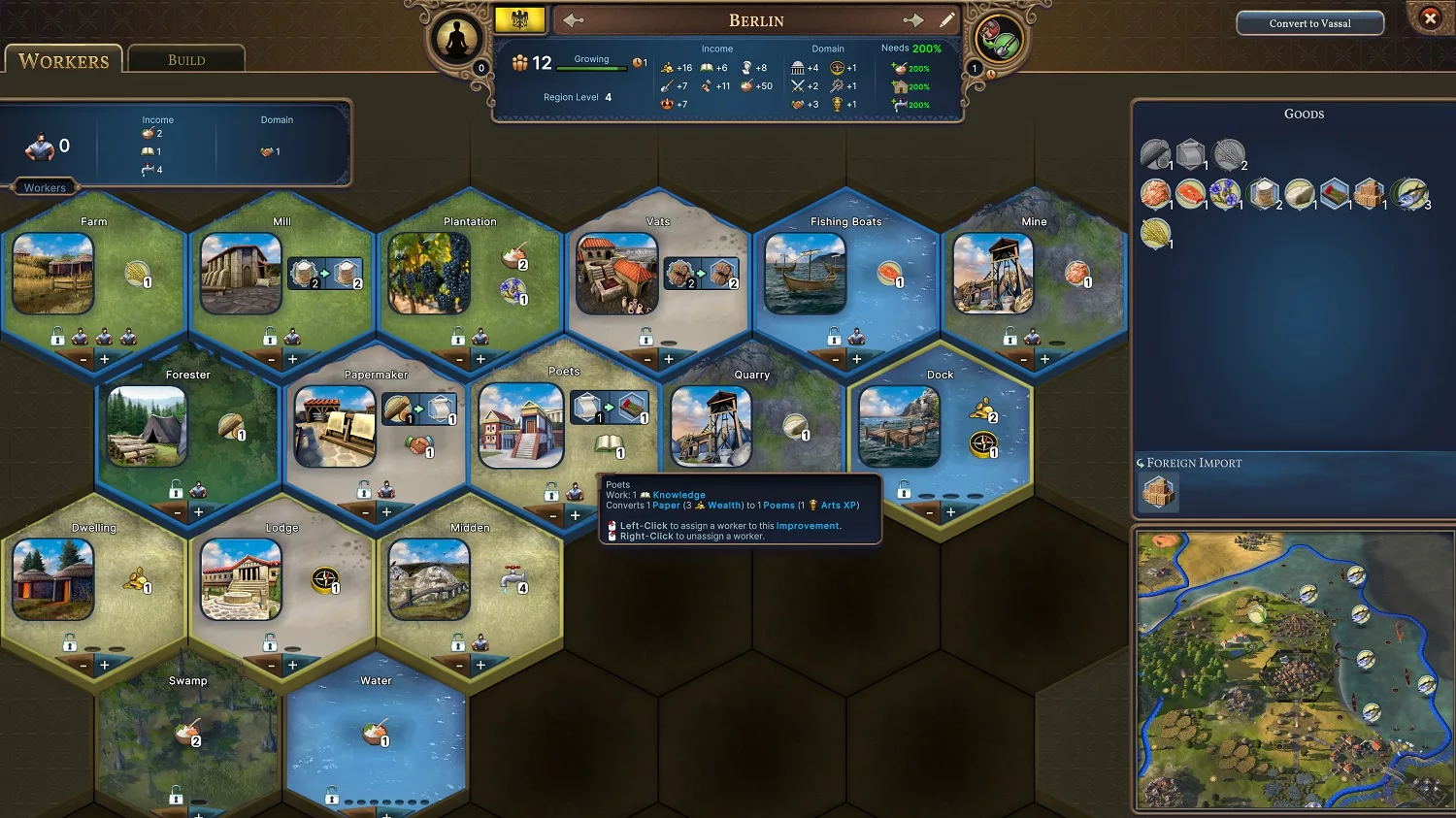
That pragmatic, “function over form” mindset permeates Millennia’s user interface as well. The typical 4X smorgasbord of resource trackers, diplomacy menus, and action prompts are served in a direct, no-frills buffet. Information is technically present and operational, but often scattered and lacking intuitive organization. It’s a repast most palatable for veteran strategy gamers, while newcomers may struggle initializing into the opaque ordering of its calorie-dense mechanics.
Unfathomably, Millennia’s most glaring deficiency manifests within the processing optimizations intended to digest its staggering scope. While earlier epochs operate with admirable fluidity, the late-game strain of managing a continent-spanning empire hammer the CPU’s into wheezing submission. Even modest army stacks drag every action prompt into agonizing lag territory, inducing both frustration and immersion-shattering impatience. It’s a perplexing oversight, severely limiting Millennia’s capacity for grand, epic strategizing.
The audiovisual accompaniment is a tale of two sonic philosophies meandering in muddled harmony. The orchestral score favors rousingly cinematic grandeur, its soaring melodies aptly coronating your civilizational triumphs with fittingly magniloquent pomp and circumstance. In stark dichotomy, the sound effects catalog heavily skews towards underwhelming minimalism marked by wheezy battle grunts and rickety construction effects barely ascending beyond 8-bit fidelity. The juxtaposition is jarring, leaving much to be desired in harmonizing suitably epic ambiances for Millennia’s apocalyptic scope.
Millennia’s Grandest Victories
Despite its scattered imperfections, Millennia’s accomplishments in pushing the 4X genre’s creative boundaries shine brilliantly. The shining paragon is undoubtedly its visionary “Ages” system – an ingenious metastrategy layer challenging players to not just conquer history, but actively rewrite it. The tantalizing prospect of diverting into ahistorical alt-realities like time-displaced alien invasions or industrialized steampunk upheavals completely recontextualizes the standard tech tree progression. No two campaigns need ever unfurl identically as Ages constantly reshape environments, resources, and victory conditions.
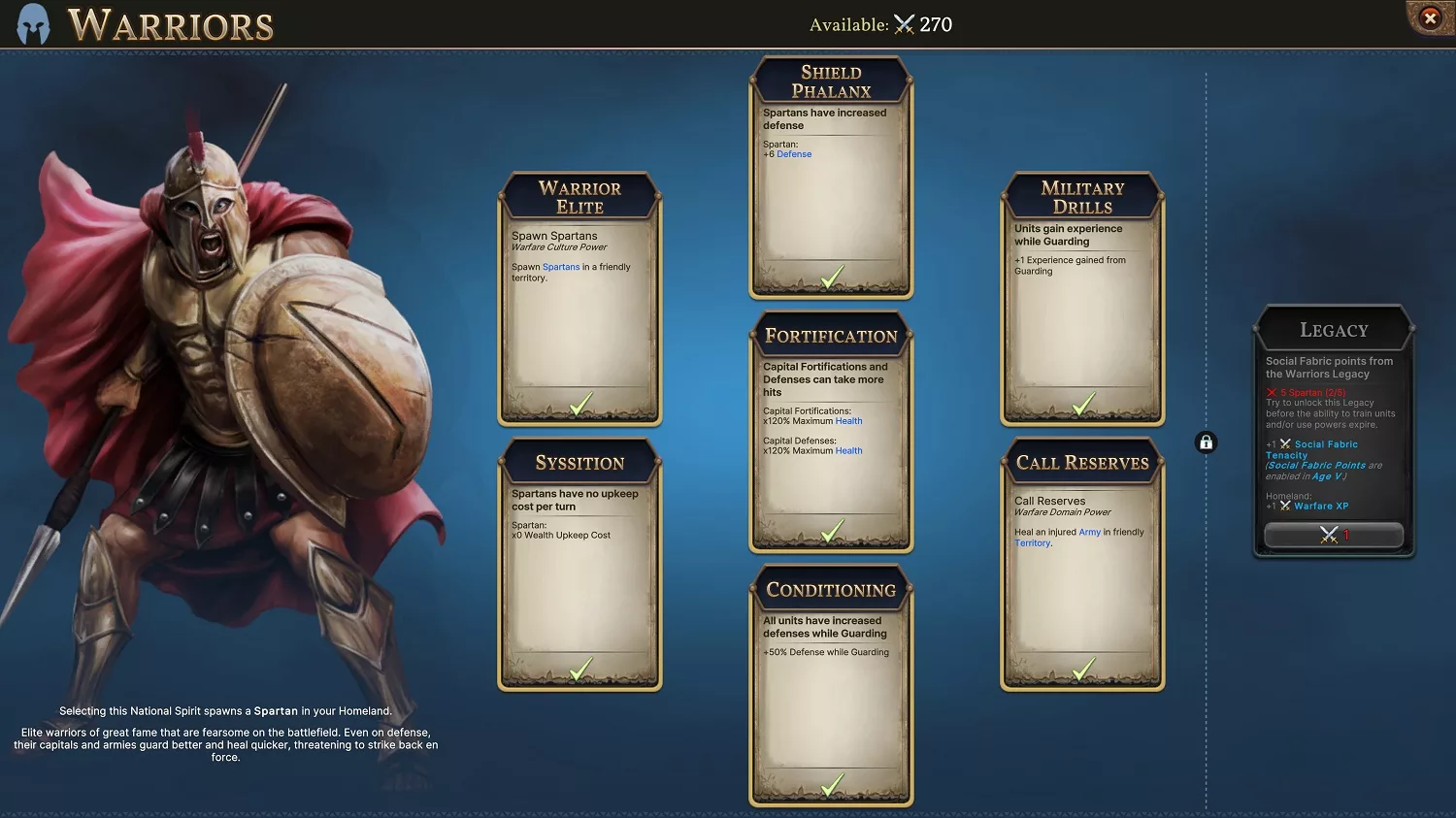
This chronological malleability expertly intertwines with Millennia’s distinctive approach to organic cultural evolution. Rather than selecting monolithic civilizations, you cultivate societies from humbler origin points before philosophically defining their national ethos through “Spirits” like Conquerors, Philosophers, or Merchant Princes. Genealogical roots stay fluidly adapting to your strategic decisions, culminating in unique identities that emerge organically over time rather than being static archetypes. It neatly emulates the real-world blending and remixing of cultural influences across eras.
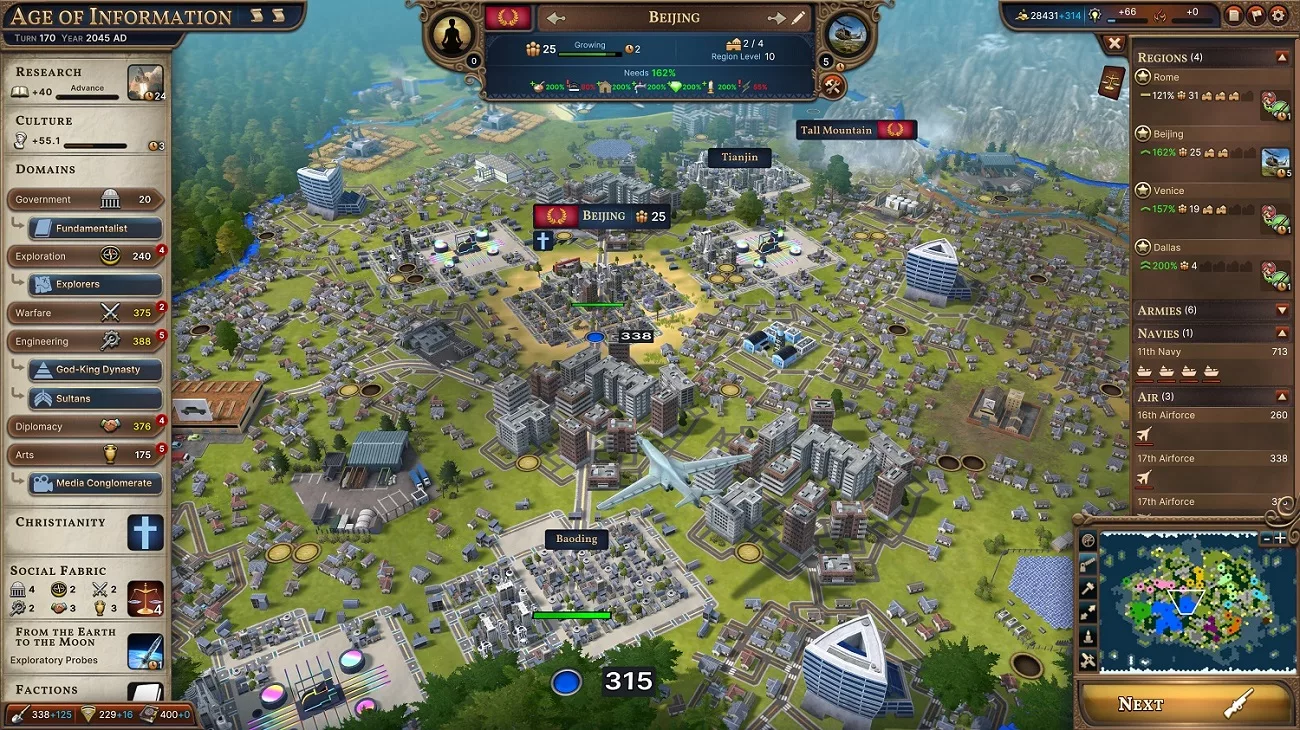
Beyond these headlining deviations, Millennia shrewdly recontextualizes traditional 4X precepts to remain freshly engaging for veterans. City expansionism is ingeniously repurposed into a logistical puzzle of interlocking tile improvements generating resource supply chains across entire regions. Optimizing these networksmeans cleverly transforming raw materials into consumer goods and crucial capital through specialized refineries, factories, and workshops. It’s a delightfully granular reinvention of time-honored growth mechanics, inspiring creative intellectual investment into domain maximization.
Such conceptual novelties manifest emergent strategic depth and boundless replayability. Millennia presents an ever-evolving sandbox ecosystem where every campaign sprouts unique narratives based on which Ages manifest and which economies coalesce. Pursuing aggressive theocratic expansionism in the “Age of Zealots” will radically re-context your civilization’s identity and victory conditions from, say, fending off cosmic obliteration in the “Age of Cosmos.” It’s an open galaxy of endless possibility encapsulated within a reasonably sized strategy package.
Where Millennia’s Ambitions Overstep
For every stroke of ingenuity, Millennia’s design canvas is marred by amateurish blemishes that undermine its grand ambitions. Chief among them is the uneven execution of its brilliant “Ages” concept. While the system tantalizes with visions of rewriting the cosmic timeline, too often it simply enforces harsh, disruptive pivots with minimal player agency. Debilitating crises like global plagues or climate catastrophes manifest with jarring, game-upending abruptness absent proper foreshadowing or opportunities for mitigation. Instead of organically steering cultural shifts, Ages frequently arrive as unwelcome party guests vomiting turmoil indiscriminately.
This lack of elegant narrative choreography plagues other mechanics as well. Despite positioning cultural diversity and evolution as a core philosophy, factions often feel indistinguishable beyond some arbitrary stat boosts and unit reskins. The “National Spirits” meant to shape societies into distinct Egyptian Monumentalists or Hellenic Philosophers rarely instill meaningful identity beyond generic economic bonuses. It reduces civilizations to interchangeable labels when more distinct racial, ethnic, and geopolitical identities were promised.
Further misalignments of scope and execution hamstring Millennia’s strategic depth across all phases. While its granular tile improvement system innovates resource management, it quickly devolves into boxy terrarforming tedium as optimal play demands transforming every square inch into industrial grids. Where others struck a balance between expansion and specialization, Millennia compels players to utterly deforest and deplete their environments in service of perpetual sprawl. An ingenious economy spoiled by lack of restraint or foresight.
Even waging war strays into frustrating ambiguity where unit capabilities, engagement ranges, and turn order dynamics remain opaque. The antiquated battle animations provide minimal clarity either, exuding more confused chaos than tactical spectacle. It leaves one of gaming’s most hallowed activities – military conquest – feeling like an overcomplicated tribal dance no one fully comprehends.
Perhaps Millennia’s gravest sin, however, is its disastrous lack of technical optimization. While earlier epochs scamper along respectably, late-game campaigns crumble under the weight of their own ambition. Simple actions become agonizing tests of endurance as even middling empire sizes inflict torturous lag spikes and interminable load stresses. For an experience meant to facilitate epoch-spanning civilizational upheavals, Millennia has incredibly narrow computational headroom for all that disruptive ambition to flourish.
Far too frequently, the game’s creative talent outpaces its practical refinement. Millennia bombards with exhilarating conceptual grenades only to fizzle upon their execution. Its vision is breathtaking, if obscured by an opaque smog of pacing imbalances, missed narrative opportunities, and rough technical hitches. An intuitive sense of identity forever seems just out of reach.
Millennia’s Fitting Among 4X Aristocracy
When evaluating a title’s long-term cultural impact, the obvious comparison point for Millennia is its primary inspiration and genre forebearer – the Civilization franchise. While lesser works may attempt superficial imitation, Millennia makes a concerted effort to blaze its own parallel civilizational path rather than simply retracing Sid Meier’s illustrious footsteps.
Its wildly innovative Ages system sets it apart as a sort of revisionist historical fabulist. Rather than progressing along humanity’s rigid, documented timeline, Millennia delights in deviating into speculative alt-historical what-ifs? Previously unthinkable epoch upheavals like alien invasions or steampunk industrial revolutions become playful narrative possibilities ripe for exploration across every campaign. Coupled with its philosophy of allowing societies to culturally evolve and redefine themselves through ideological “Spirits,” it institutes a sort of interactive, collaborative historical revisionism.
Where Millennia stumbles, however, is translating these lofty metanarratives into elegant mechanical payoffs. Too often its grand storylines beget abrupt, unearned disruption or simplistic cultural reskins barely distinguishable from the last do-over. It reaches for overarching relevance, but frequently settles for trite genericism that existing genre stables execute with more refinement and consistency.
In contrast to Civilization’s confident identity as the historically-grounded, go-to 4X generalist, Millennia oddly occupies a middle space of tactical nuance without adequate staying power for either hardcore grognards or mainstream palatability. It surpasses Civilization on granular, detailed economic loops like optimizing interlocking resource supply chains. But it also lacks the turn-to-turn addictive simplicity someone craving instant gratification might prefer.
This identity crisis, combined with considerable tech issues dragging performance to unacceptable nadirs as campaign scope escalates, make Millennia a difficult recommendation as a new genre staple. Its ambitions shine brilliantly in flashes, promising hitherto unseen cultural metamorphoses within an ever-evolving cosmic sandbox. But those flashes are in perpetual danger of being outshone by the steady, reliable star that is Civilization’s refined experience.
For now, Millennia stands as an intriguing cult curiosity – distinctive enough to warrant niche consideration from strategy aficionados, but lacking the consistent polish or universal appeal to dethrone its predecessor as a new household name. Flashes of foreshadowed brilliance suggest potential for future greatness…if only this ambitious rewrite of history can find its own definitive editorial voice first.
Millennia’s Forward Footprint Foreshadows Greater Futures
As our sojourn through Millennia’s twisted cosmic tapestry concludes, we are left with an experience brimming with uncompromising innovation fulfilling undeniable flashes of promised brilliance, while simultaneously teetering on the precipice of unrealized potential.
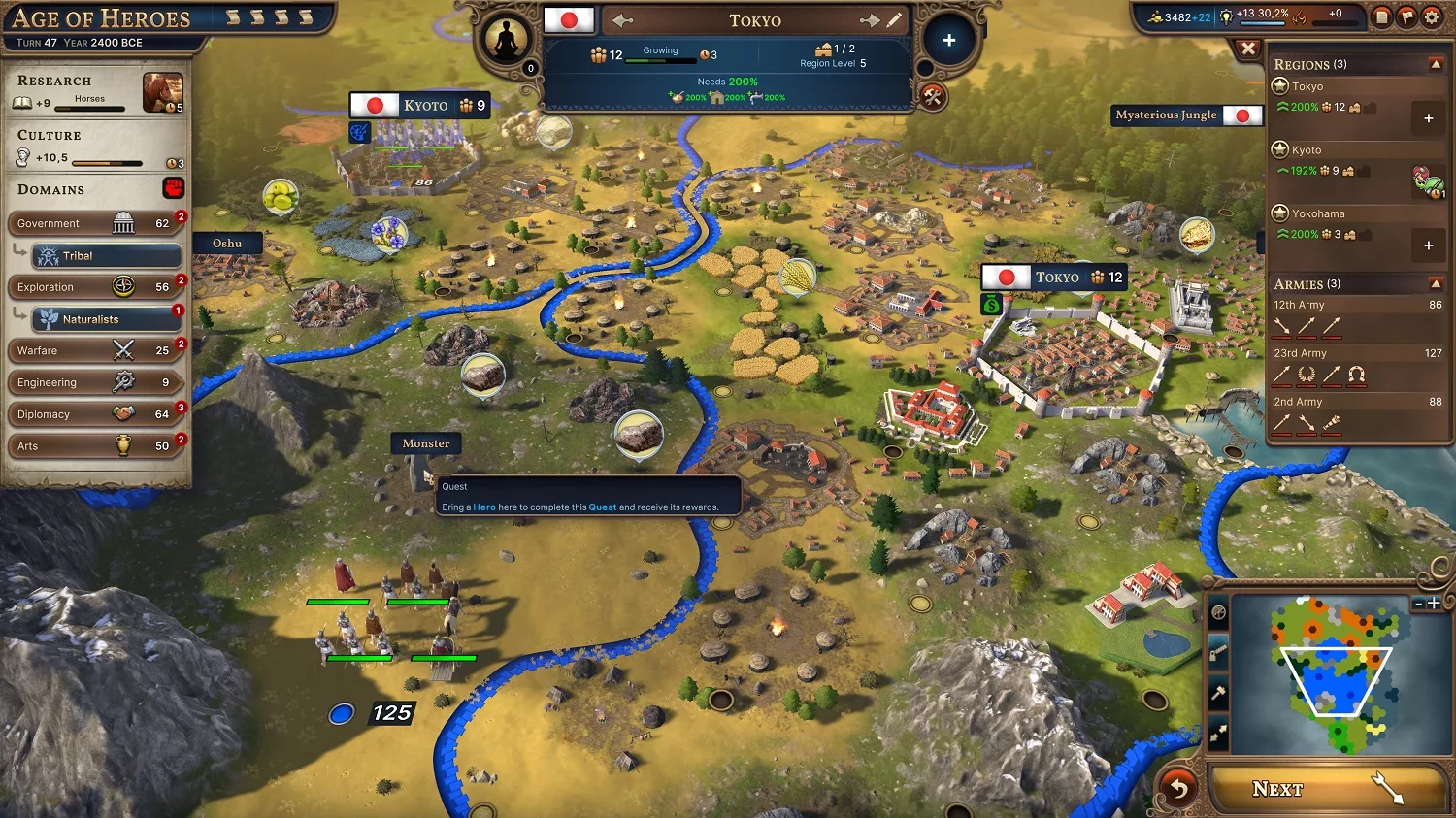
Make no mistake – in its conceptual philosophies of allowing civilizations to culturally evolve and divert into alt-historical fantasies, Millennia unequivocally shakes the 4X genre from its complacent cyclical slumber. The mere prospect of ancestral Egyptian warriors crossing paths with steampunk airships or extraterrestrial invaders is enough to catalyze even the most jaded strategist’s imagination. Matched with addictive supply chain optimization and nuanced cultural identity cultivation, the game abounds with unique hooks laudably bucking derivative conventions.
However, these wildly innovative ambitions ultimately prove too lofty for Millennia’s uneven execution to consistently fulfill. Immersion-shattering tonal whiplash, overly simplified cultural distinctions, and catastrophic late-game optimization woes persistently undermine the game’s boundless narrative aspirations. Like a Shakespearean play overflowing with metaphysical quandaries yet strained by doggedly literal staging, Millennia’s reach ambitiously exceeds its creative grasps.
For those thirsting for a truly alternative spin on historical civilization building brimming with untapped potential, Millennia scratches that iconoclastic itch sufficiently to merit a reserved recommendation. Its fresher concepts, when properly cultivated, foreshadow uncompromisingly bold new frontiers for the 4X formula to conquer. But those seeking a new genre vanguard to permanently displace the old guards may want to relegate this to the status of cult curiosity until more robust future iterations can comprehensively deliver on such tantalizing unorthodoxies.
Flawed yet tenaciously resolute in the face of its own overly heightened premise, Millennia demands to be experienced by any serious strategy enthusiast or world-builder longing to scribble in history’s margins. Just be prepared for a few charcoal smudges on those pages before finding your unique voice.
The Review
Millennia
Millennia is an ambitious and innovative entry in the historical 4X strategy genre that introduces intriguing concepts like the ability to divert into alternate historical ages and shape a civilization's cultural identity over time. However, its noble ambitions are undermined by uneven execution, tonal inconsistencies, oversimplified cultural distinctions, and severe technical issues in the late game. While the flashes of brilliance hint at untapped potential for the formula, Millennia ultimately struggles to deliver a consistently compelling or polished experience. It remains a cult curiosity best suited for hardcore strategists eager to explore new frontiers in civilization-building narratives.
PROS
- Innovative "Ages" system allows for alternate historical paths
- Cultural evolution and ideological "Spirits" add civilizational identity
- Engaging resource management with complex production chains
- Some great core concepts that push the genre in new directions
CONS
- Uneven execution and lack of narrative cohesion between concepts
- Technical optimization issues, especially in late-game
- Oversimplified cultural distinctions between civilizations
- Opaque and unsatisfying combat/warfare mechanics
- Interface lacks clarity and intuitive organization