



























Halfdan Ullmann Tøndel makes his directorial debut with Armand, a gripping piece of psychological drama filled with complex characters brought to life through raw emotion. Set almost entirely within a dark, foreboding school, the film tells the story of Elisabeth, a mother thrust into a tense confrontation over disturbing allegations involving her young son.
Portrayed with chilling intensity by Norwegian star Renate Reinsve, Elisabeth finds herself facing the parents of her son’s classmate amid murky accusations no parent wants to hear. As tensions rise in the closed-quarters meeting, long-buried secrets emerge regarding trauma in the past that still impacts the present. We also learn of fractured relationships and resentment, painting a backdrop of pain for these divided families.
Through it all, Reinsve captivates as a woman hovering between fragility and fury. But her searing performance is just one part of an ensemble that brings an unsettling realism to an emotionally charged drama exploring how the sins of parents can shape troubled children.
Tøndel guides us into this atmosphere of uncertainty and turmoil, raising important questions about truth, justice, and healing from old wounds that will linger with viewers. While answers remain elusive, one thing is clear: this is masterful work from a director who announces himself as a gripping new voice in cinema.
Behind Closed Doors
This drama centers around a dispute between two young students that spins into a much deeper conflict. Armand and Jon are six-year-old classmates who get into some kind of altercation, the exact nature of which remains mysterious. This sparks a meeting between the boys’ parents at their dreary, imposing school.

We’re introduced to our main players: Elisabeth is Armand’s single mother, a fragile yet fiery woman coping with her own demons. Sarah and Anders are married to Jon, but there’s clearly tension simmering beneath the surface. Overseeing things are the overwhelmed teachers, Sunna and Jarle, who seem ill-equipped to handle such a volatile situation.
When the parents gather, it’s evident that this won’t be a cordial discussion. Sarah wastes no time laying blame at Elisabeth’s feet, accusing Armand of sexual assault. Though Elisabeth struggles to believe such allegations about her son, she’s put on the defensive. Their argument is further complicated by the revelation that Elisabeth and Sarah also share an intricate past.
It comes out that Elisabeth was once married to Sarah’s brother, who tragically died. Old resentments are awakened, with Sarah convinced Elisabeth’s turmoil somehow influenced the boys. As more of the history spills out, fractures run even deeper between these divided families.
Adding confusion is the fact that he or she said it dynamically, as neither Armand nor Jon are present to provide their account. With assumptions and suspicion flying, controlling the volatile situation proves an impossible task. Tensions mount as dark secrets of the past continue to emerge in an unpredictable confrontation with no easy answers.
Style and Substance
Halfdan Ullmann Tøndel’s debut, Armand, boasts a masterful command of filmmaking craft that elevates the raw human drama at its core. Right from the opening scenes, he draws viewers deep into the story through deft direction that makes the most of every technical element.
Much of the film is confined to a single, dreary location: the boys’ school. But Tøndel and cinematographer Pål Ulvik Rokseth transform this into a setting that constantly tightens the vice on the characters. Shadowy lighting and tight close-ups emphasize how trapped everyone feels. The looming architecture, seen to have a have a claustrophobic effect, becomes almost a character in itself.
Within these tight spaces, Tøndel stages intimate scenes with nerve-racking intensity. You feel like a fly on the wall, observing real emotion, not acting. This raw power is a testament to the incredible ensemble, led by a mesmerizing Renate Reinsve. Their performances throb with visceral life despite the confined quarters.
Beyond the visuals, Tøndel layers in subtext through the ingenious use of sound. Creeps and echoes augment the inherent unease. Strange cues pull viewers beyond the surface drama into the psychological. Mats Lid Støten’s sound design proves to be a vital storytelling tool.
The film also veers into surreal flourishes that deepen its impact. Reinsve’s unexpected dance sequences tap into her character’s unraveling psyche. They reflect how Armand peels back layers of trauma until the truth arises like a nightmare. Through audacious creative choices, Tøndel transforms a tense drama into a fuller, more unshakable cinematic experience.
With a uniquely expressive blend of realistic drama and abstract artfulness, Armand feels at once deeply familiar yet hauntingly unique. Tøndel establishes himself as a formidable new directorial voice through his technical mastery and willingness to take bold risks. The result isn’t just a great film; it’s an event that will linger long after in viewers’ minds.
Inner Turmoil Outerized
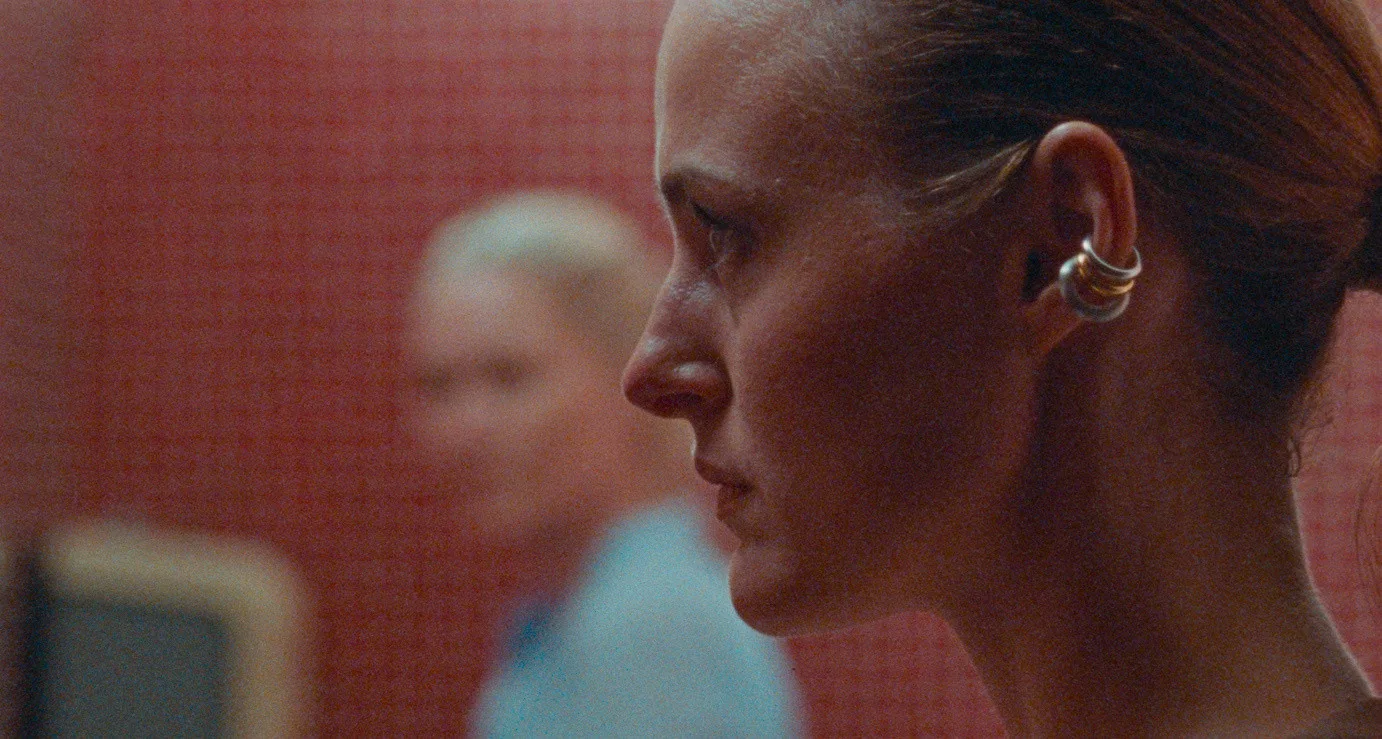
One need only observe Renate Reinsve for a few minutes in Armand to see she’s fully inhabiting a woman writhing in private anguish. Elisabeth remains an enigma, but through her raw vulnerability and daring creativity, Reinsve brings her turmoil, threatening to overflow with every meticulous gesture.
It’s at the school that Elisabeth’s walls first show cracks. Dressed to wound, she bolsters her defenses against accusations against her son. Yet simmering beneath scorn is a frail soul scarred by secrets from her past. As more surfaces, glimmers of a tired spirit emerge that don’t quite dissolve contempt.
Reinsve navigates these shifting tides masterfully. When laughter bubbles forth uncontrollably, it isn’t mere mockery but a broken thing’s final fray. Later, dance passages unlock doors to the haunted places her mind guards from prying eyes. We glimpse what agony daily shapes this “drama queen” caricatured by others.
Others, like Sarah, project their own interred pains onto Elisabeth. Sarah remains rigid, gripped by grudges, whereas Elisabeth stays fluid, for good or ill. Her fractured psyche pours out like a skinned knee. It makes her unpredictable, perhaps undeserving of trust, yet also striking in a raw display of the mess within.
Under Tøndel’s guidance, Reinsve flourishes, blooming with a thorny, troubled life. Elisabeth exists in the spaces between how we’re seen and who we are. Her humanity shines through the cracks in the “unreliable narrator” painted by other parents holding their own stories close.
In Armand’s fractured characters, we find reflections of fractured selves and the fractured ties binding traumatized souls together, however uneasily. It’s a credit to Reinsve that Elisabeth, for all her faults, remains a vessel for our own inner workings and shadow parts brought bursting into the light.
Hidden Depths Beneath the Surface
Armand excels at burying important ideas in layered subtext. Tøndel seems less intent on drawing neat conclusions than raising complex issues around truth, memory, and intergenerational trauma. What really happened between the boys remains frustratingly unclear.
By focusing on the difficult dynamics between parents and kids, he emphasizes how past shapes present. Elisabeth, Sarah, and Anders are pulled between guarding old wounds and forming new cracks. Their fraught history looms over judgment about new accusations, yet prior events are recalled differently too.
Tøndel invites interpretation over answers. Dark family secrets seep to the surface yet stay tantalizingly veiled. Neither do his surreal flourishes provide easy resolutions; dreamlike scenes serve to further blur reality. We glimpse fragmented pieces of a deeper psychological puzzle without visualizing the full image.
This fits a film exposing messy truths readily masked again. Even characters hide more than they show. Elisabeth appears to be a “drama queen,” yet she harbors private anguishes, just as an elaborate falsehood hides Sarah’s true motivations. Ambiguities linger where others demand closure.
Through dreamlike diversions into abstract realms, Tøndel pushes past surface tensions to excavate buried pains no conversation could reach. His open-ended storytelling acknowledges troubled lives as richly complex, with hurt shaped over years rather than a single incident. Some mysteries have no simple solutions; only more questions lead down.
By underlining open questions instead of answering, Armand echoes life’s uncertain nature. Underneath everyday interactions lie hidden undercurrents bearing unknown influence. Perhaps that is what leaves us thinking long after the final images fade.
Elisabeth and the Unresolved Mystery
Reinsve truly shines as the haunted and unknowable Elisabeth. Her explosive breakdowns grip you with their raw intensity. Elsewhere, subtle flinches speak volumes of private turmoil. Under Tøndel’s guidance, she crafts a blistering yet sympathetic portrait of a woman driven to the brink.
For all its complex performances, Armand sometimes tries juggling more ideas than its ending can fully grasp. Past secrets drip out, but key details stay veiled, leaving ambiguous what really drove the boys’ alleged incident. By the conclusion, more questions circle Elisabeth and Sarah than answers are provided.
Some find this unsatisfying, desiring closure. But Tøndel seems more interested in capturing life’s messy uncertainties. Often, the most troubled histories can’t be boiled down to simple solutions. And isn’t it a it a mystery what lingers longest in our minds?
Rather than resolve its knots, Armand leaves interpretation to viewers. In doing so, it invites ongoing discussion, much like the film’s post-screening debates no doubt spark. An evocative exploration of fractured relationships, it ends by acknowledging life’s open-ended nature, for better or worse. Ultimately, Elisabeth remains as unknowable as she began, a testament to Reinsve’s gripping performance in Tøndel’s thought-provoking drama.
Unpacking Ambiguity in Armand
Like Carnage and The Teachers’ Lounge, Armand dissects fractured relationships and the slippery nature of truth. However, where those films maintain a tight dramatic focus, Armand grows increasingly surreal and abstract by its conclusion.
In works like Carnage, ambiguity is cast through the lens of realism as disagreements emerge in a tense apartment meeting. Armand also starts in this realistic vein before realities fragment, as Elisabeth dances alone in the halls or supernatural figures surface. By the climax, interpretation runs rampant as clarity dissolves.
Some find this detracts from Armand’s ambitions for insight into human psychology. By veering toward surrealism and dreamlike imagery, did it lose grip of its insightful examinations of its characters? Or did this stylistic shift enhance the film’s exploration of repressed trauma surfacing in strange ways?
While its meaning grows cryptic, Armand undeniably captures the disorientation of lives unraveling under pressure. In this, it succeeds similarly to works examining how interpersonal tensions warp perceptions. But by doubling down on opacity in a way Carnage and The Teachers’ Lounge avoid, Armand risks leaving analysis unsettled rather than enlightened. Its success relies more on the individual reception of its oblique storytelling.
Reinsve’s Powerful Performance Defines an Unforgettable Debut
Armand Halfdan Ullmann Tøndel announces himself as a director to watch with this unsettling piece of psychological drama. At the heart of it is Renate Reinsve, who gives a tour-de-force performance that cements her status as one of cinema’s greatest actors.
As Elisabeth, Reinsve navigates the murky waters of trauma and instability. She switches from defiant anger to despair with raw vulnerability. Every breakdown feels wrenchingly real as Reinsve ensures full commitment to her character’s unraveling psyche. It’s a performance that lingers with viewers as Elisabeth’s fractured emotions burrow deep.
Under Tøndel’s unflinching direction, Armand probes the darkness woven into familial ties and the distortions untruths can cause. While not for those seeking straightforward answers, its lingering disquiet and provocations will spark much discussion afterward. Memorable and haunting, it challenges preconceptions through surrealism and invites reexamination of ambiguous depths within human nature.
Armand confirms Tøndel as an original new voice with the vision to unsettle and move audiences. Most of all, it proves Renate Reinsve is at the height of her immense powers to immerse viewers in fractured realities through her unforgettable work. For those open to existing beyond their depths, Armand presents an experience not soon forgotten.
The Review
Armand
In conclusion, Armand is a remarkable directorial debut that excels at unsettling its viewers and burrowing into the intricacies of human relationships under strain. Anchored by a tour-de-force-leading performance from Renate Reinsve, it proves a deeply unnerving psychological drama with surreal flourishes that will linger long after viewing. While not an entirely straightforward narrative, Halfdan Ullmann Tøndel's film succeeds in provoking thought and emotion, making it a memorable cinematic achievement.
PROS
- Exceptional lead performance from Renate Reinsve
- A thought-provoking exploration of human psychology under pressure
- Unsettling and surreal atmosphere that challenges viewers
- Provides great material for discussion post-viewing.
- Impressive debut from director Halfdan Ullmann Tøndel
CONS
- Narrative can get ambiguous and indirect at times.
- May frustrate some seeking a straightforward story.
- Dense film that requires close attention
- Not an easy or comfortable watch