





























In the brutal world of top-down shooters, “Viscera” stands out as a pulse-pounding symphony of destruction and survival. This twin-stick shooter does more than just invite players into its chaotic universe; it throws them headfirst into a never-ending battleground where monstrous hordes await, ravenous for murder.
Developed by Animation Logic Ltd., a team with 17 years of industry experience, “Viscera” is more than simply another arcade-style game. It’s a calculated dance of survival in which players must navigate progressively complicated and deadly landscapes while unleashing a magnificent armament against waves of mutant opponents.
Nestled solidly within the bullet heaven genre, “Viscera” takes unmistakable inspiration from modern classics such as Vampire Survivors while forging its unique route. The game asks players to do more than just shoot; it requires smart movement, quick reflexes, and an almost clairvoyant ability to predict and endure overwhelming odds.
At its core, “Viscera” is a high-octane experience that reinvents the twin-stick shooter structure as something familiar and delightfully new. Players aren’t just fighting; they’re performing a complex ballet of devastation, with every dodge, shot, and strategic decision determining the difference between triumphant survival and ultimate destruction.
The game promises an adrenaline-fueled trip that honors the arcade shooter tradition while pushing the genre’s boundaries. With its combination of furious action and intricate gameplay features, “Viscera” has the potential to become a standout title for people who enjoy intense, skill-driven gaming experiences.
Surviving the Swarm: Viscera’s Pulse-Pounding Gameplay Dynamics
“Viscera” captures the essence of action gaming at its most exciting. At its core, the game is a masterclass in survival choreography—a never-ending dance in which players navigate perilous terrain while unleashing devastating firepower on mutant hordes.
The control scheme exemplifies exquisite simplicity. Twin-stick mechanics offer an intuitive framework: one stick controls movement while the other unleashes destruction. This method ensures that even newbies can quickly understand the core rhythm of combat. At the same time, seasoned players can perform sophisticated tactical tactics with pinpoint accuracy.
As waves of mutants advance, the difficulty increases with surgical intensity. What starts as a controllable trickle of foes quickly becomes a tsunami of increasingly complicated and aggressive dangers. Each second becomes a high-stakes calculation: evade, shoot, or survive.
Power-ups emerge as vital lifelines in this harsh ecosystem. Speed boosts enable lightning-fast evasions, defensive barriers provide a brief respite, and freeze bombs create strategic breathing room in the most overpowering situations. These brief skills are more than just supplemental mechanics; they are the difference between magnificent survival and destruction.
The gameplay loop is incredibly simple yet surprisingly profound. Players do more than shoot; they calculate, adapt, and conquer. Each interaction feels like a micro-narrative of survival, with split-second choices determining final success.
Viscera requires players to survive and challenges them to transform into unstoppable forces of destruction, transforming mutant-infested battlefields into personal playgrounds of strategic mayhem.
Arsenal of Mayhem: Weaponry and Evolution in Viscera
In Viscera’s cruel environment, weapons are more than just tools; they are lifelines, transforming players from helpless survivors into unstoppable mutant-destroying robots. The game’s armament reads like a love letter to classic action gameplay, with everything from booming machine guns to precision laser beams, each giving its tactical flavor.
The weapon management system adds a strategic twist: players can carry two weapons simultaneously, swapping between them mid-fight with lightning-fast reflexes. This dynamic strategy ensures that no two confrontations are identical, keeping participants engaged and flexible.
Weapon acquisition becomes a high-stakes gamble for survival. Defeated mutants occasionally drop weapons, and randomization adds an exciting sense of unpredictability. Weapon tiers range from basic to amazing, creating a genuine thrill when a rare, powerful weapon appears in the commotion.
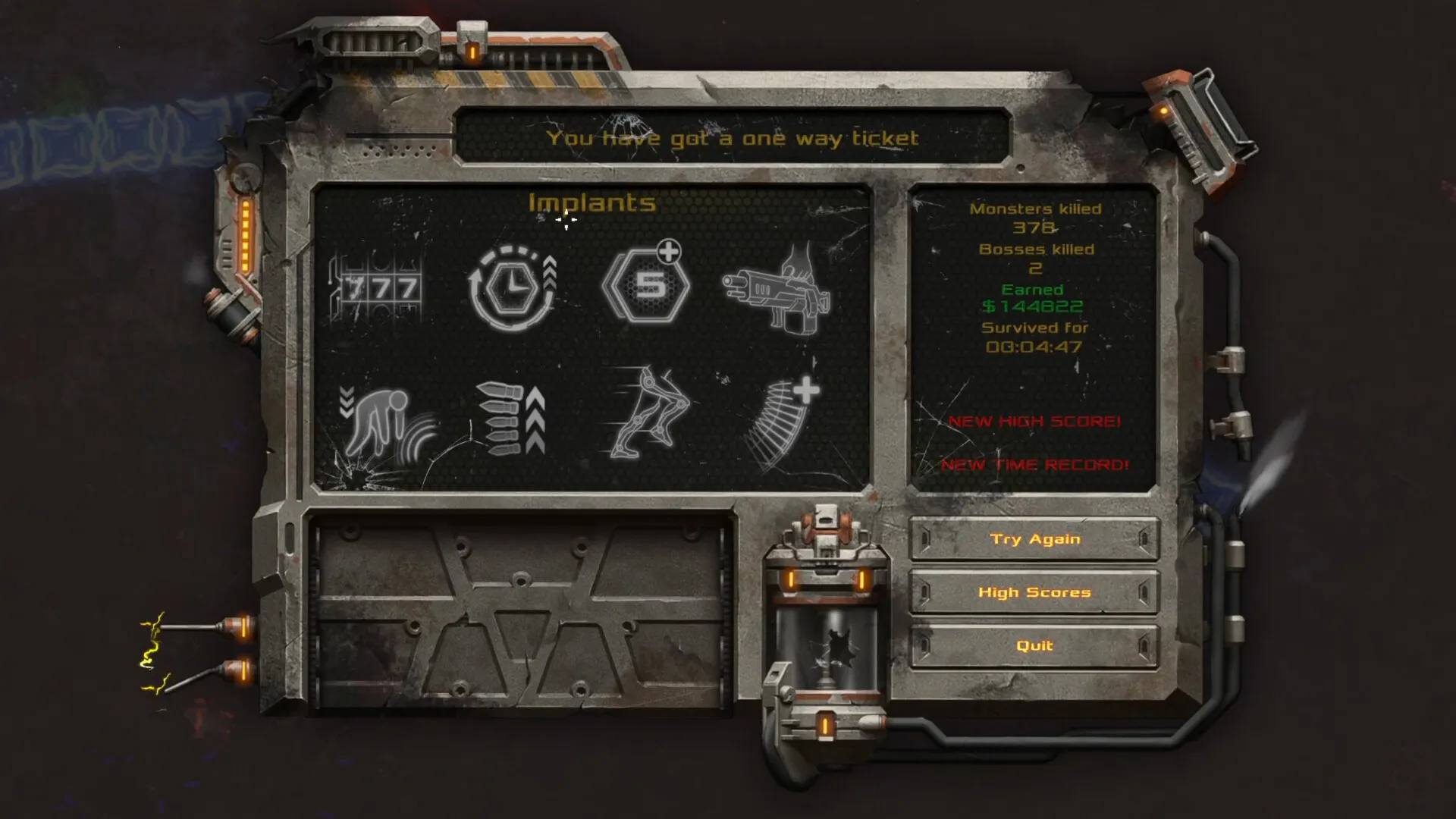
The upgrading system functions as the game’s evolutionary backbone. Experience points to power a complicated implant network, allowing players to improve crucial stats such as health, speed, and weapon power. Each upgrade seems like a significant advancement, upgrading basic abilities into superhuman potential.
Unlockables act as enticing carrots, encouraging gamers to push beyond their present capabilities. Specific in-game milestones unlock new weaponry and powers, creating an ongoing sense of progress and discovery. These accomplishments are more than numbers; they represent personal recognition of hard-earned military expertise.
Viscera’s weapon ecosystem transforms each playthrough into a distinctive narrative of devastation. In this strategy, luck and skill dance in a never-ending, pulse-pounding ballet.
Visceral Visions: Carnage and Aesthetic in Motion
Viscera does more than merely convey violence; it turns ruin into a horrific art form. The game’s visual world is a never-ending canvas of gore, with each pixel pulsing with raw, unfiltered ferocity. Blood splatters transform into surreal paintings; explosions sound like horrific symphonies, and rubble dances over battlefields in a macabre ballet of destruction.
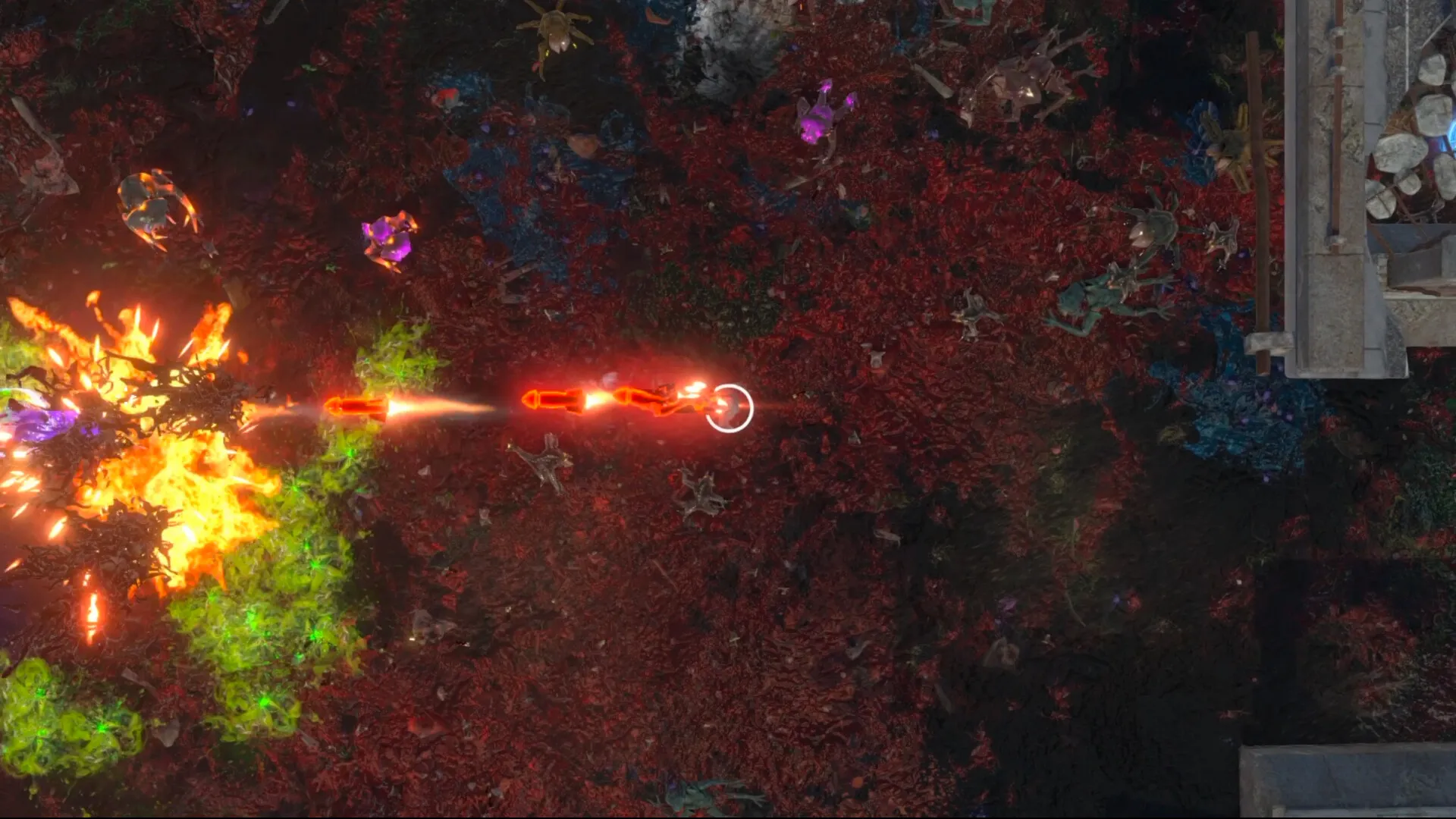
The protagonist emerges as a stark, minimalist figure, a white silhouette wandering through more chaotic surroundings. This purposeful design approach removes narrative intricacy, allowing players to immerse themselves in the character while keeping a clinical distance from the surrounding chaos.
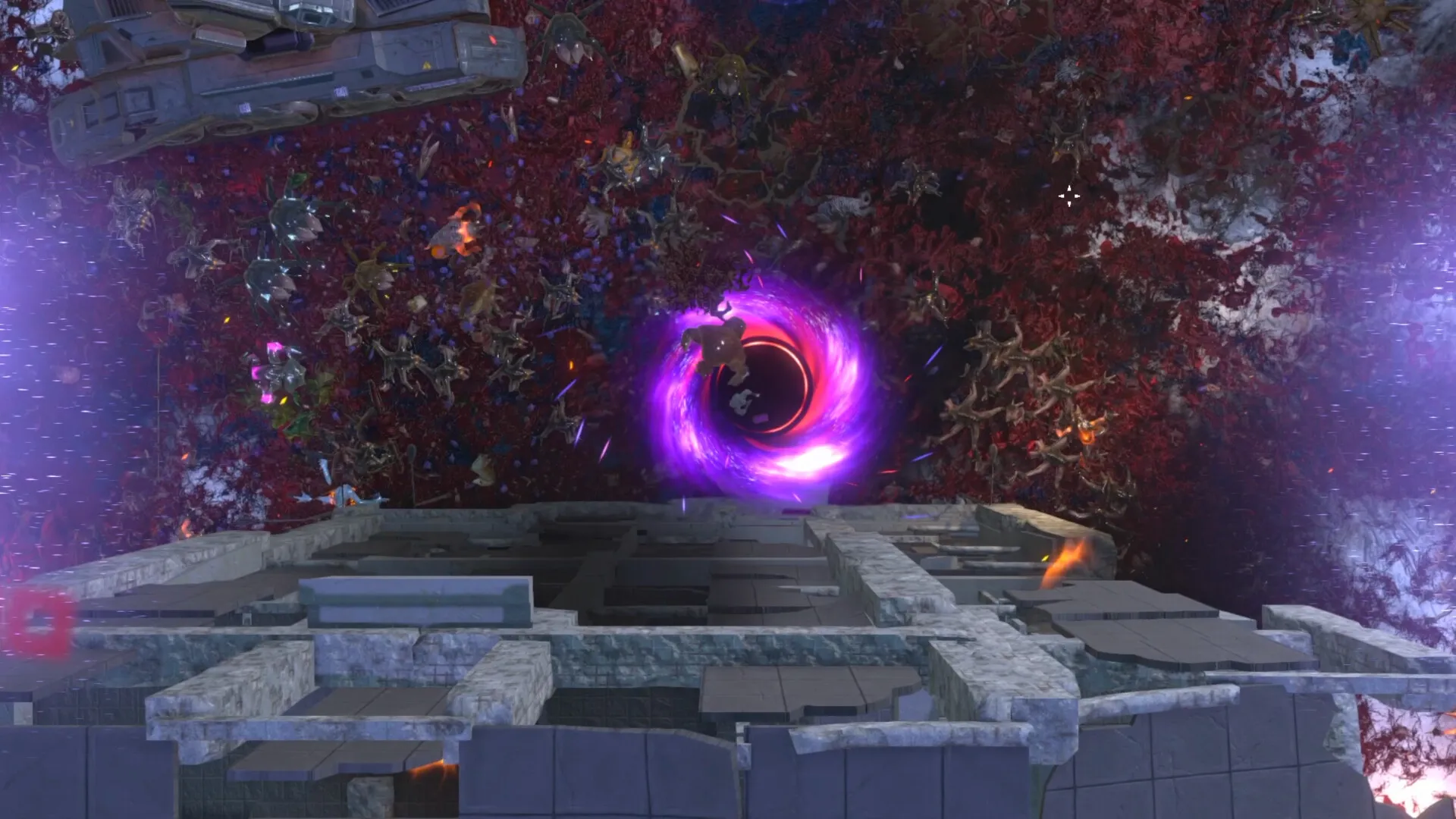
Environmental design communicates its own fragmented story. Four unique stages emerge in a deliberate repetition, with each landscape getting increasingly difficult and visually rich. The settings are more than just backgrounds; they play an active role in the horrific gameplay narrative.
However, this visual intensity poses technical hurdles. The screen frequently morphs into a kaleidoscope of carnage, making character tracking a mental challenge. Occasional frame rate reductions threaten to ruin the generally seamless visual experience, temporarily breaking the immersion spell.
Despite these minor technological issues, Viscera’s visual design is a testimony to controlled chaos—a blood-soaked ode to the skill of survival in a world built to devour the unprepared.
Sonic Warfare: Viscera’s Audio Landscape
Viscera’s aural universe is a loud echo chamber of destruction, with each sound delivering a violent hit to the auditory senses. The soundtrack beats with an industrial-electronic heartbeat, perfectly reflecting the game’s furious pace.
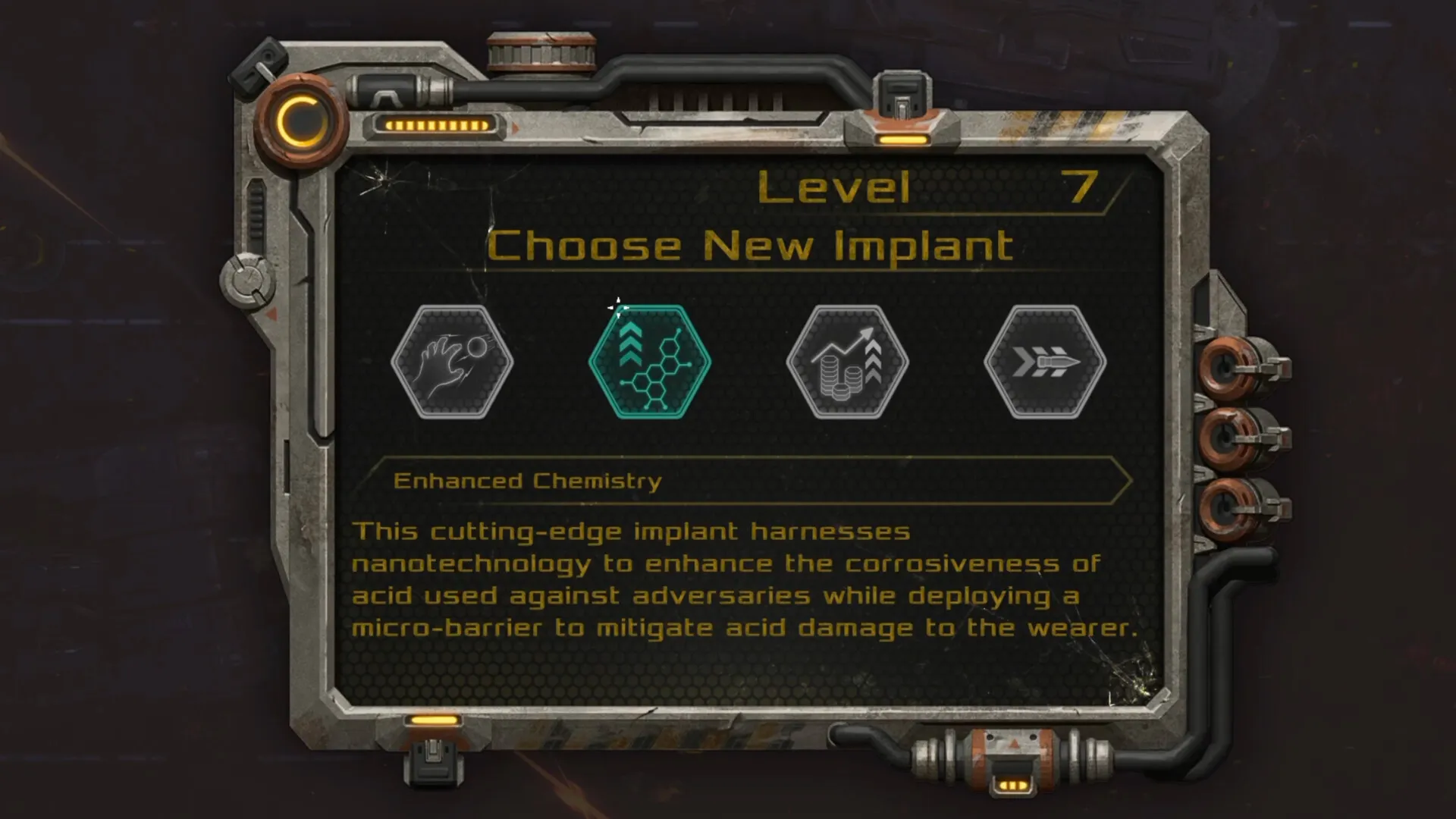
Gunfire morphs into a symphony assault, with each weapon providing a distinct sonic signature that is mechanically accurate and cinematically overdone. Explosions howl with primordial force, allowing gamers to feel the raw power of each detonation.
Enemy sounds rip through the auditory landscape like razor-sharp warnings, creating an atmosphere that keeps players on alert. The music design does more than just complement the visual pandemonium; it magnifies it, transforming each encounter into a multisensory battle experience.
Despite occasionally nearing sensory overload, Viscera’s audio serves an important gameplay function. It’s more than just background noise; it’s an essential communication system that gives tactical information in split seconds, transforming sound into a survival strategy.
The result is an aural experience that not only supports the action but also becomes it.
Command Central: Navigating Viscera’s Interactive Landscape
Viscera’s user interface balances minimalist design with vital information delivery. The primary interface is a stark, no-frills doorway into the unrest, removing superfluous complexity and focusing players on pure action.
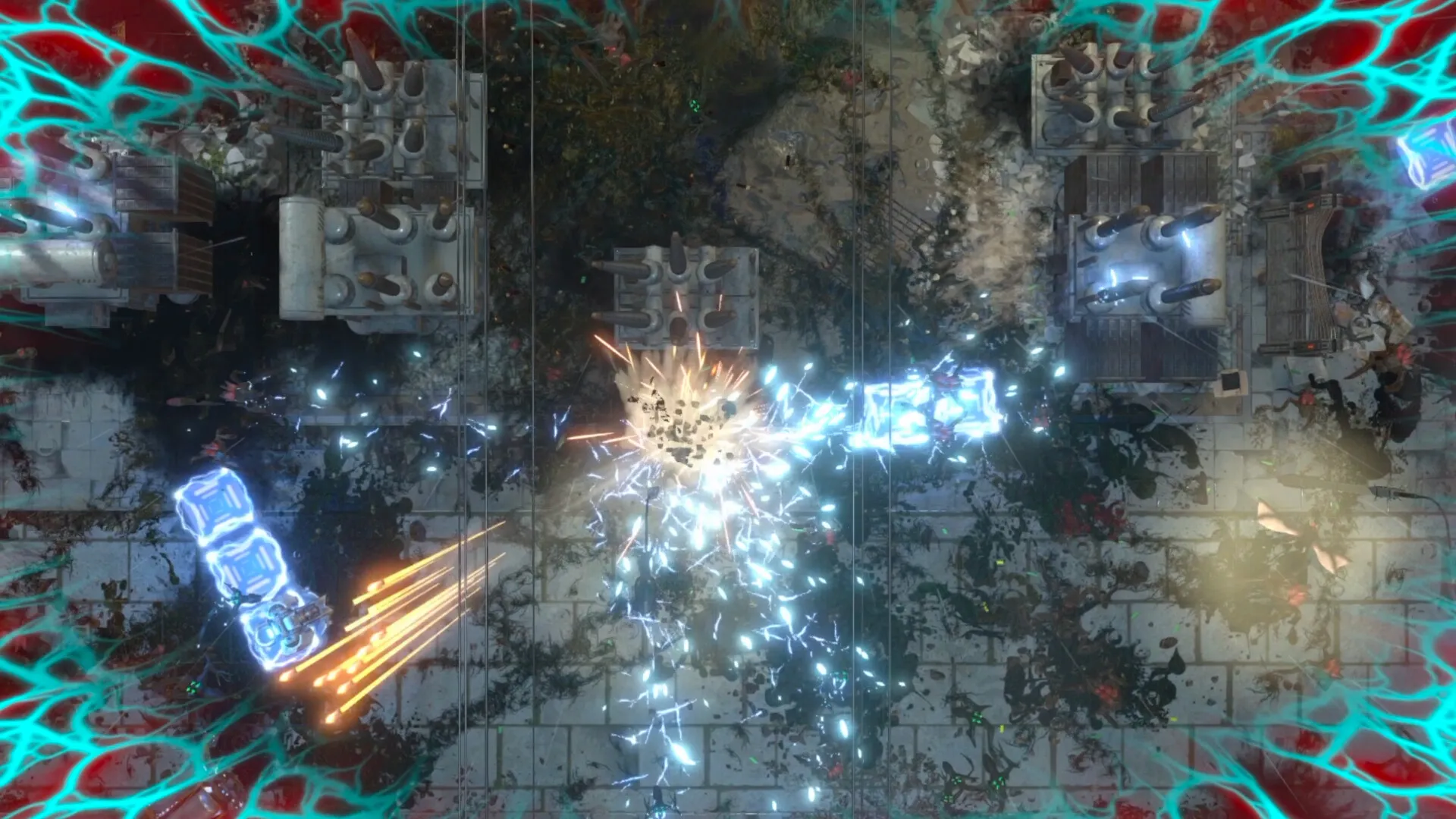
Upgrade selection panels provide a brief respite from the combat, but they are not without their oddities. Text formatting occasionally falters, creating brief periods of visual uncertainty that disrupt the usually fluid movement. It’s like attempting to read a map during a hurricane—difficult but not impossible.
The in-game HUD works with surgical precision. Health indicators pulse with an almost organic character, converting numerical data into an understandable visual language. Defeating opposing spawners and turrets becomes a tactile experience, with feedback mechanisms that make each destruction seem accurate and explosive.
Control responsiveness appears as the game’s mechanical heart. While mainly fluid, the odd input lag interrupts the smooth fighting pace. It’s similar to a high-performance sports vehicle with a slightly difficult transmission—mostly amazing, with only a few frustrating times.
These UI components are more than just aesthetic decisions; they are the invisible architecture that elevates Viscera from a simple shooter to a sophisticated survival experience. Each menu, button, and visual signal becomes an important thread in the game’s complex tactical tapestry.
The result is an interface that not only communicates but also communicates with attitude.
Survival’s Endless Echo: Viscera’s Progression Playground
Viscera transforms survival into a multi-layered chess match of destruction, where progress is more than just moving forward—it’s about mastering chaos. Four diverse levels unfold as progressively complicated battlegrounds, with each bringing fresh enemy types that necessitate tactical innovation.
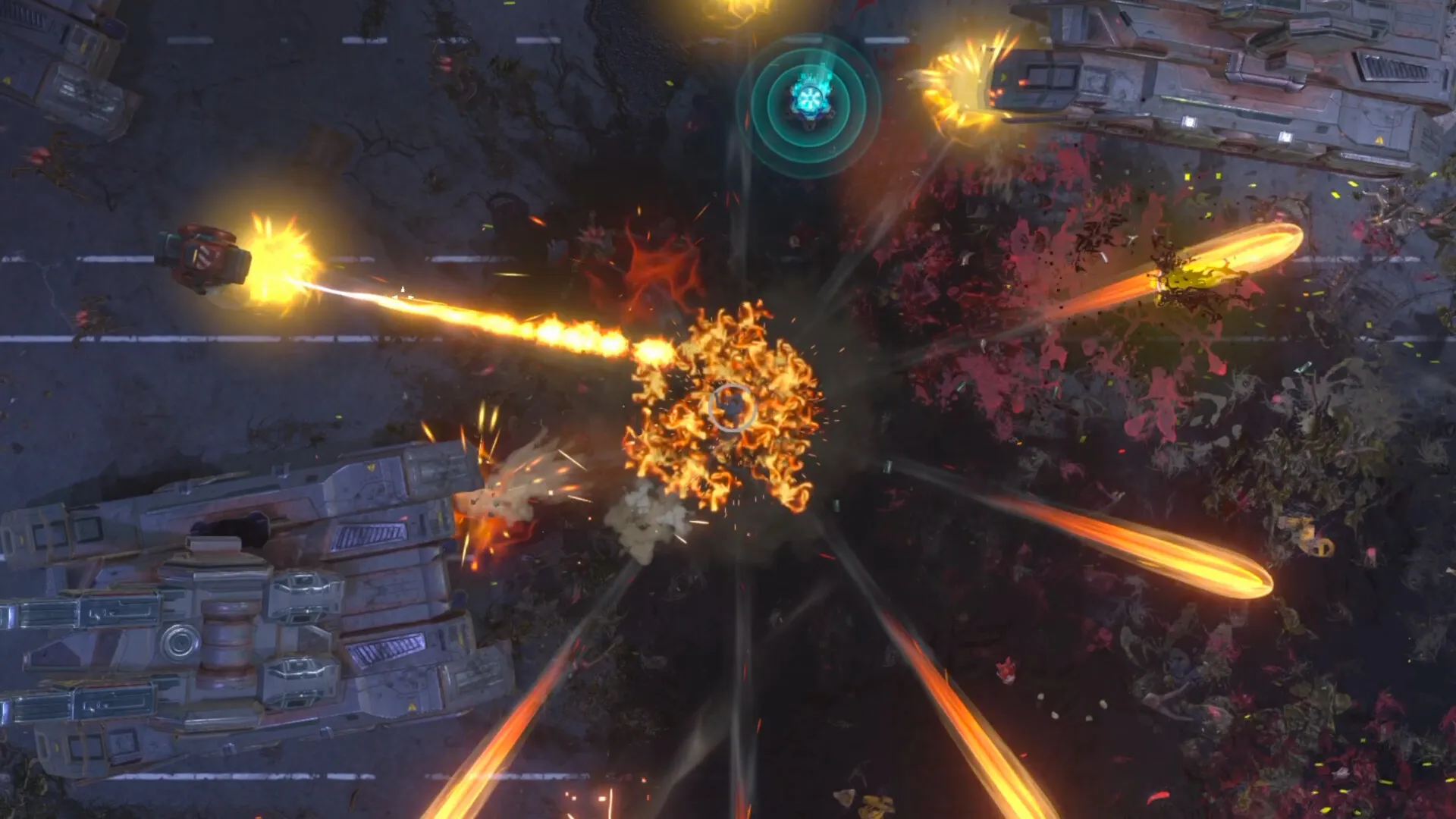
The scoring system elevates each playback to a high-stakes performance. Online leaderboards transform into digital coliseums in which participants fight not only with statistics but also with their survival abilities. Each point reflects a calculated risk, and each ranking demonstrates strategic brilliance.
Replayability is important to the game. Weapon drops transform into unexpected lottery tickets, with each run potentially presenting vastly different strategic options. Upgrade pathways branch like complicated neural networks, so no two surviving efforts feel the same. The limited amount of levels may appear to be restricting. Yet, the dynamic battle environment constantly breathes new life into familiar ground.
Achievements are more than digital badges; they serve as strategic route maps. Unlocking weaponry becomes a subtle task, turning boring development into a purposeful pursuit of tactical diversity. Each achievement feels like unlocking a complex code, exposing new possibilities within the game’s cruel environment.
Viscera doesn’t simply encourage repeated play; it forces it, creating an addictive loop in which survival becomes an art form and mastery is never completely achieved.
Technical Tightrope: Viscera’s Performance Pulse
Viscera walks a perilous technological tightrope where performance is as important as survival. Frame rate stability emerges as the game’s Achilles’ heel, with subsequent waves morphing into potential technical minefields. What starts as smooth, responsive gameplay can quickly become a stuttering problem, especially as screen anarchy hits its pinnacle.
Graphical performance communicates a story about ambition versus technical restrictions. The game’s visual intensity can often outweigh its optimization, creating situations in which visual clarity is sacrificed for design. It’s like witnessing a high-performance sports vehicle periodically misfire—brilliant, but not without mechanical issues.
Localization reveals even more flaws, with untranslated content occasionally creating comprehension hurdles. These linguistic speed bumps sometimes disturb an otherwise engaging experience.
Bugs and malfunctions dot the environment, not as game-ending disasters but as infrequent technical whispers that remind players of the game’s intricate underlying machinery. The developer’s reply shows that these are not permanent residents but temporary guests to Viscera’s terrible environment.
The result is a technically imperfect but captivating experience—a raw, unpolished treasure that requires player adaptation.
The Review
Viscera
Viscera emerges as a fierce, brutal twin-stick shooter that frustrates and excites. It's a raw, unpolished experience that embodies the essence of arcade-style survival gaming: flawed but utterly compelling. Despite occasional technological issues, the game provides a pulse-pounding combat engine that combines simple mechanics into intricate strategic engagements. The basic gameplay loop is its most valuable asset: a symphony of destruction in which players dance among mutant hordes, always adapting and overcoming. Weapon variety, upgrading systems, and dynamic battle mechanics create an engaging experience that calls for multiple playthroughs. Viscera's technical constraints, such as frame rate drops, occasional control response issues, and localization anomalies, prevent it from reaching its full potential. However, these flaws do not completely distract from its overall appeal.
PROS
- Intense, pulse-pounding gameplay
- Robust weapon upgrade system
- Dynamic combat mechanics
- Challenging and engaging progression
CONS
- Technical performance issues
- Frame rate drops in later waves
- Limited number of levels
- Occasional control responsiveness problems
- Localization inconsistencies