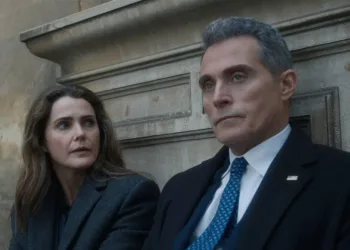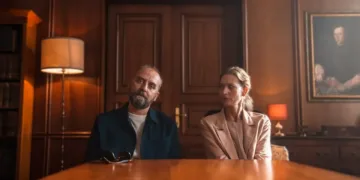
























Watching Michał Chaciński’s Divorce (Rozwodnicy) immerses you in a unique world where the sacred and profane mix with quiet absurdity. It depicts the story of Magosia (Magdalena Popawska) and Jacek (Wojciech Mecwaldowski), two amiable ex-lovers who set out on an unexpected journey to get a Church annulment nearly 20 years after their civil divorce. It is billed as a comedy with satirical elements.
What begins as a procedural requirement for Jacek to remarry inside the Church quickly becomes a complex exploration of bureaucratic absurdity—pushing both characters to confront the lingering shadows of their failed marriage and the institutional weight of religious traditions.
Divorce is set against the backdrop of Poland. In this country, Catholicism is both a present cornerstone and a ubiquitous shadow. It explores the tension between secular development and clerical doctrine.
The film does more than just parody the Church’s inflexible institutions; it dissects them with a whimsical yet razor-sharp scalpel, exposing the fragility of systems that insist on permanence in a transitory world. Chaciński’s directing weaves humour into this heavy tapestry, allowing the comedy to breathe while probing the darker philosophical concerns of love, obligation, and the human longing for freedom from the past.
Paper Saints and Fragile Realities: The Labyrinth of Love and Obligation
Divorce, at its core, tells a story of quiet absurdity and emotional reflection, weaving its narrative through the jagged spaces where personal freedom collides with institutional stability. The story opens with Małgosia and Jacek, a former couple whose amiable split, long settled in civil law, is abruptly resurrected by the relentless demands of the Church.
Jacek, eager to remarry his new partner Monika in a religious ceremony, must seek an ecclesiastical annulment. This process drags Małgosia, now happily remarried to Andrzej, into a Kafkaesque bureaucracy. What unfolds is a journey through the halls of canon law and the fractured remains of a once-existent relationship.
The stakes are deceptively simple but buried in existential intricacy. Jacek sees the annulment as a fresh start. In contrast, Małgosia sees it as a painful return to a past she has long forgotten. The Church, shown as absurdly hilarious and gently loving, becomes a third character in their story, with its complex procedures pushing the couple to face marital duties, forgotten grudges, and faint echoes of love. Their difficulties with this bureaucratic system feel less like a search for closure and more like an exploration of what it means to break a bond once thought to be eternal.
Chaciński adds subplots with subtle tension to the major storyline. Małgosia’s relationship with her adolescent daughter Ala is plagued with silent strife, which mirrors her struggle against the Church’s control. Meanwhile, her current marriage to Andrzej frays under the weight of her involvement with Jacek—an involvement that elicits old emotions and new anxieties. These narrative links, however subtle, parallel the film’s core theme: that the past, no matter how thoroughly buried, has a habit of rising and demanding to be reconciled with the present.
The Sacred Cage: Between Faith and Freedom
Divorce’s persistent tension between the sacred and secular is more than just a backdrop; it is a living, breathing force that transforms the lives of its characters. With its firm hold on tradition, the Church serves as both antagonist and existential symbol, a reminder of humanity’s hopeless endeavour to bind the flow of life with inflexible doctrine.
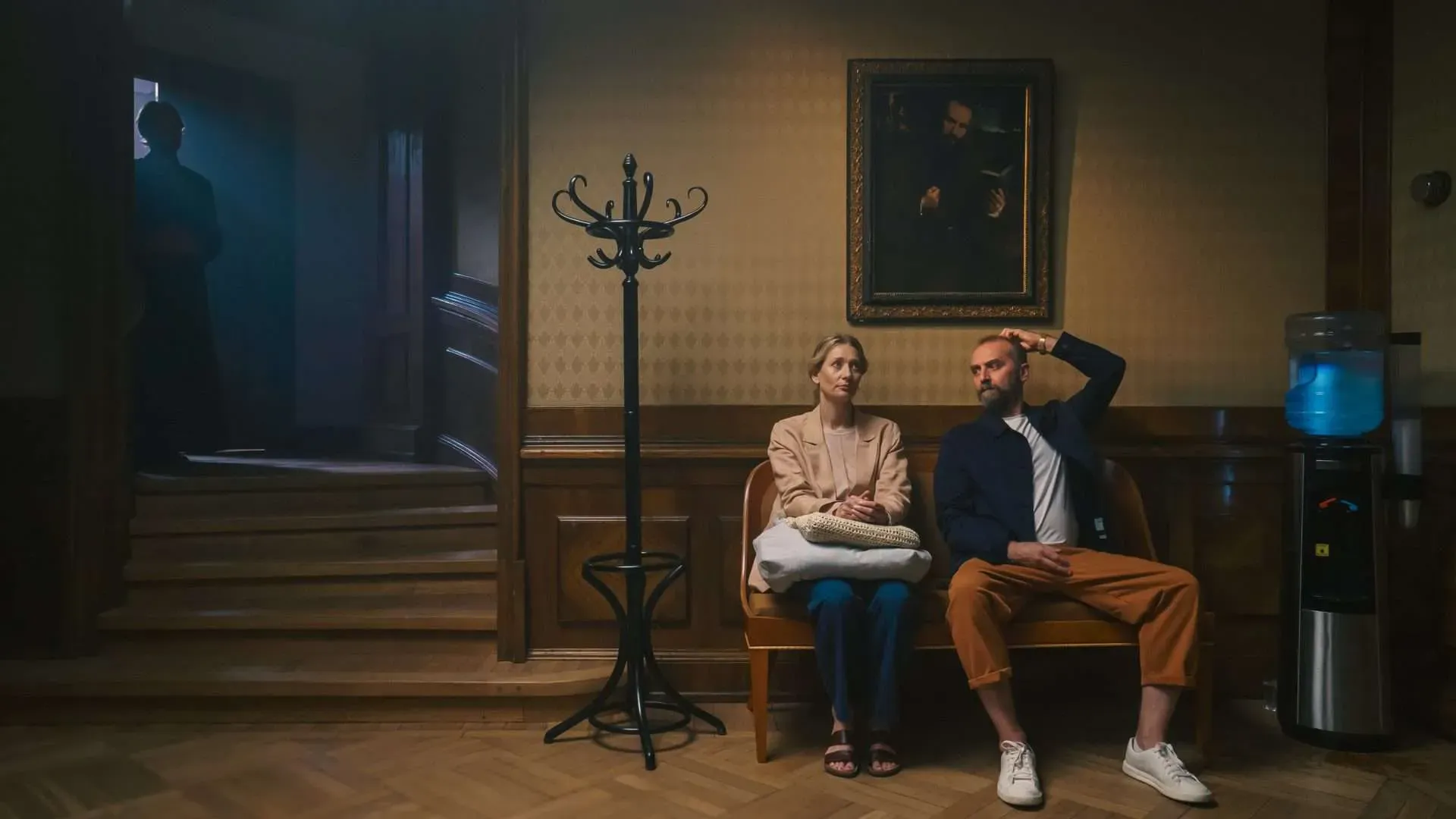
Chaciński criticizes the Church’s archaic attitudes on marriage and divorce with a quiet absurdity, exposing the inconsistency of sanctifying a long-dissolved bond. With its probing queries about marital duties and pronouncements of nullity, the convoluted bureaucracy of annulment feels like a relic from a world that refuses to face its demise. Here, the Church is less of a monster and more of an old, disintegrating institution fighting for relevance in a culture that has outgrown its absolutes.
However, underneath this cultural confrontation is a more intimate meditation on the nature of family and relationships. Małgosia and Jacek’s journey through clerical red tape reflects their shared past and desire to recover their future. Nostalgia penetrates their conversations, with charming flirtations and mournful silences implying a bond that, while shattered, lives on.
At the same time, the film raises questions about the cost of moving on. Małgosia’s poor relationship with her daughter Ala and subtle flaws in her present marriage to Andrzej highlight the quiet sacrifices required for personal freedom.
With its subtle satire, divorce raises a frightening question: Can we ever fully free ourselves from the institutions, relationships, and histories that define us? Are we, like Małgosia and Jacek, forever bound—by faith, memory, and the frail threads of human connection?
Fragments of the Self: Lives Shaped by Loss and Laughter
Małgosia, a woman caught between the weight of her past and the delicate equilibrium of her present, is the heart of Divorce. Magdalena Popawska portrays her with a quiet intensity, alternating between biting humour and wordless vulnerability, which is her ability to die.
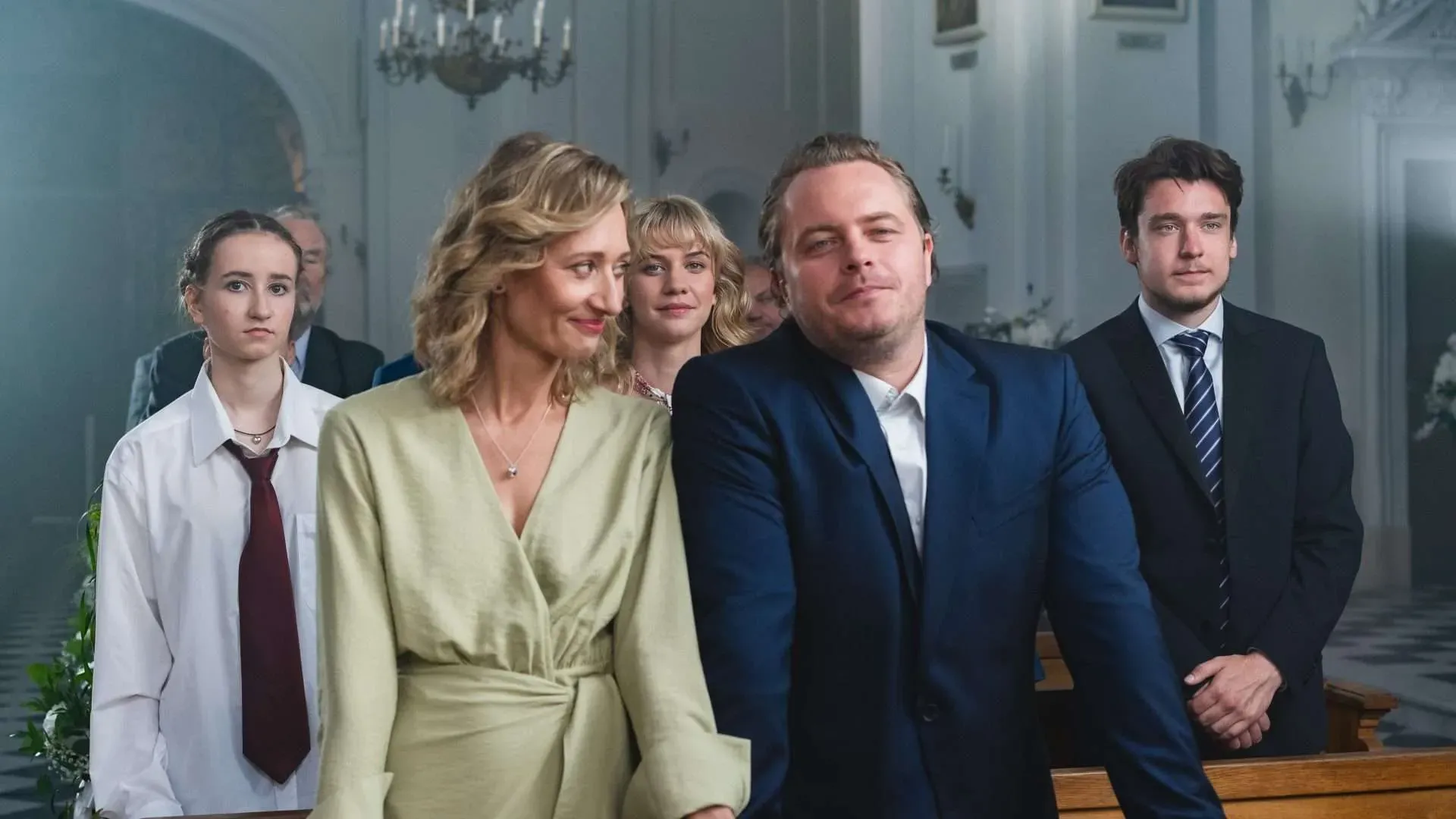
Małgosia is a study in resilience: a woman who has rebuilt her life but finds herself connected to the vestiges of an old relationship, not through love but due to institutional obligations. Popławska’s performance is rich, with her face a canvas for transient emotions like annoyance, nostalgia, and resistance, all rendered with understated grace. Magosia’s struggle is not just with the Church’s bureaucracy but also with the ghosts of her old existence, the version of her who lived with Jacek.
Wojciech Mecwaldowski’s portrayal of Jacek is charming and serves as a contrast to Małgosia. He is pleasant, flawed, and even selfish. Still, his moments of vulnerability—his yearning longing for closure—suggest a depth underlying his laid-back façade. Mecwaldowski and Popawska have a chemistry that feels lived-in, their banter flavoured with the intimacy of people who once knew each other well but now exist as fragments of a shared story. Their relationship is less of a romance than a quiet exploration of what it means to coexist with someone who once influenced your life.
The supporting cast adds layers to this exploration, with each character reflecting the film’s ideas. Andrzej (Tomasz Schuchardt) is the epitome of stability. Yet, his quiet frustrations at Małgosia’s entanglement with Jacek expose the fragility of even solid bonds. Magosia’s daughter Ala (Oliwia Drabik) represents revolt and the generational desire to end war and independence. Meanwhile, the Church officials, portrayed with exaggerated comedic flair, become parodies of institutional rigidity, their absurdity contrasting the key characters’ complex humanity.
Chaciski’s cast works unison, grounded yet laced with just enough fun to form the film’s melancholy tone. Popławska’s portrayal of Małgosia, a woman attempting to reconcile the fragmented pieces of her life, serves as the story’s anchor.
Laughter in the Labyrinth: The Absurdity of Sacred Systems
In Divorce, humour serves as both a knife and a shield, cutting through religious bureaucracy’s absurdities while easing its existential ramifications’ impact. Chaciski’s sarcasm finds its sharpest edge in the Church’s labyrinthine ceremonies, where every labyrinth and tribunal feels like a relic of a bygone period, doggedly clinging to relevance.
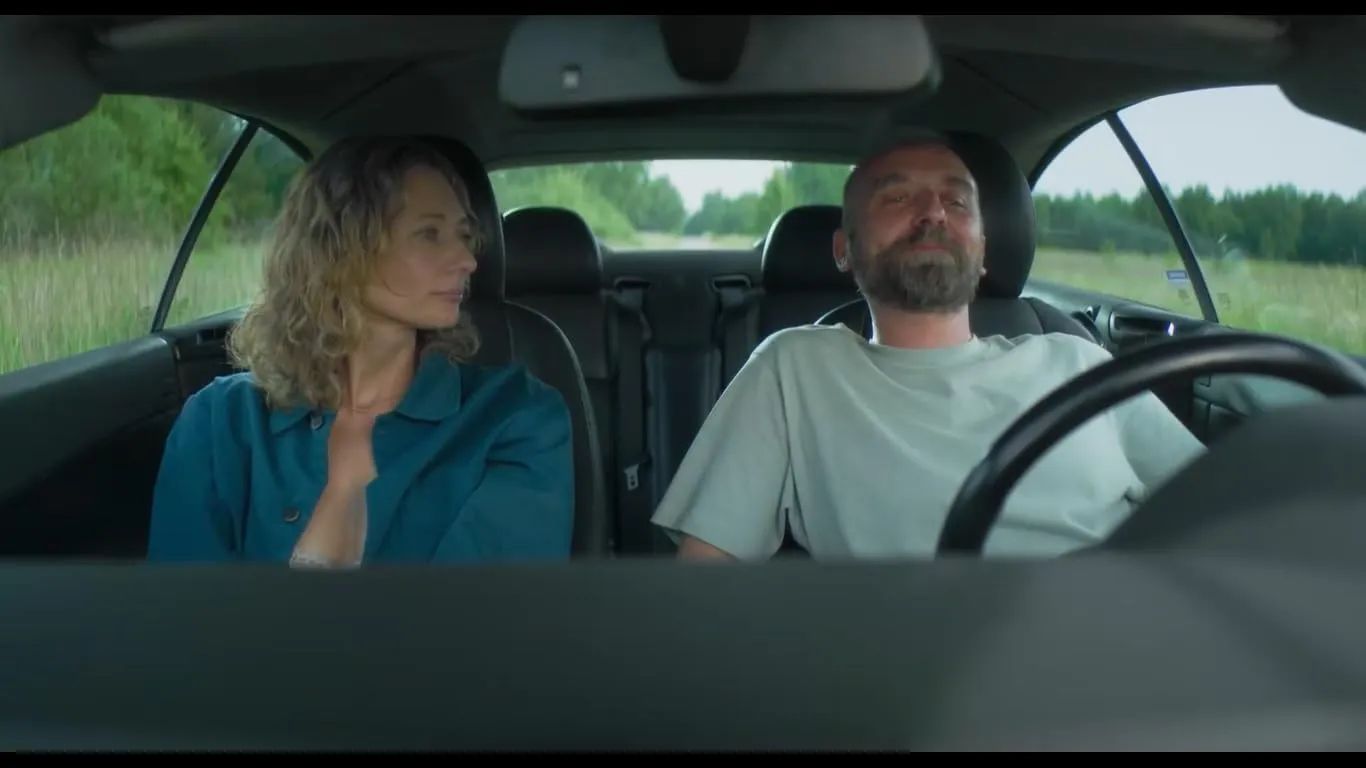
The humour is quiet but biting—Małgosia’s annoyance at filling out documents asking how often she performed “marital duties” or the absurdity of priests interrogating a decades-old marriage provokes laughter tinged with unease. Comedy thrives in the space between the sacred and the silly, where the Church’s power feels towering and slightly absurd.
However, the film never descends into open mocking. Its comic tone is one of polite irreverence, mocking the rigidity of religious systems without trying to strip them of their cultural weight. With their clumsy bureaucracy and misguided seriousness, the priests are less villains and more relics of an organization stuck in the shackles of its traditions. Moments like a “canon law lawyer” explaining the Church’s stance or a bishop grappling with an internet connection are not just amusing; they provide glimpses into the bizarre ways organizations exercise control over human lives.
The film’s success lies in its balance of comedy and drama. Chaciski uses humour as a tool of reflection, allowing audiences to chuckle even as they wrestle with the film’s deeper themes: What does it mean to submit to an organization that claims authority over our most private choices? How do we reconcile the sacred tales we inherited with the messy realities of everyday life? Divorce uses humour to lighten these problems, encouraging us to ponder them without demanding a decision.
A Gentle Light on Fractured Lives: The Elegance of Form and Subtlety
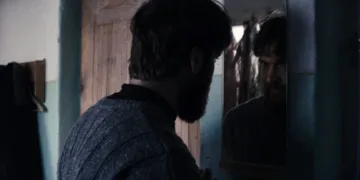
Divorce’s cinematography unfolds like a quiet hymn, with its soft palette and diffused lighting creating an otherworldly serenity that belies the fury beneath. Each frame feels carefully framed, as if the camera hesitates to interfere, allowing the characters and their surroundings to blend perfectly into a muted canvas of whites, pastels, and delicate shadows.

The interplay of light and color is deliberate yet inconspicuous, imbuing even the most commonplace moments—a hallway chat, a coffee machine sputtering—with a quiet brilliance. These decisions soften the edges of a story that may otherwise feel harsh, creating a visual language that mirrors the delicate balance between comedy and melancholy.
Chaciński’s directing is controlled, guiding the narrative with a light touch that never veers into melodrama. His refusal to resort to overt sentimentality or preachiness keeps the film grounded, even as it wades into serious issues. Instead, he lets the silences linger, the humor ripple gently, and the characters breathe within their contradictions.
This subtlety allows Divorce to be engaging without being demanding; its strength resides in what it does not say, in the spaces it leaves for the audience to reflect on the absurdities and tragedies of human connection. In Chaciski’s film, we find clarity by making murmurs when others could yell.
A Gentle Light on Fractured Lives: The Elegance of Form and Subtlety
Divorce’s cinematography unfolds like a quiet hymn, with its soft palette and diffused lighting creating an otherworldly serenity that belies the fury beneath. Each frame feels carefully framed, as if the camera hesitates to interfere, allowing the characters and their surroundings to blend perfectly into a muted canvas of whites, pastels, and delicate shadows.
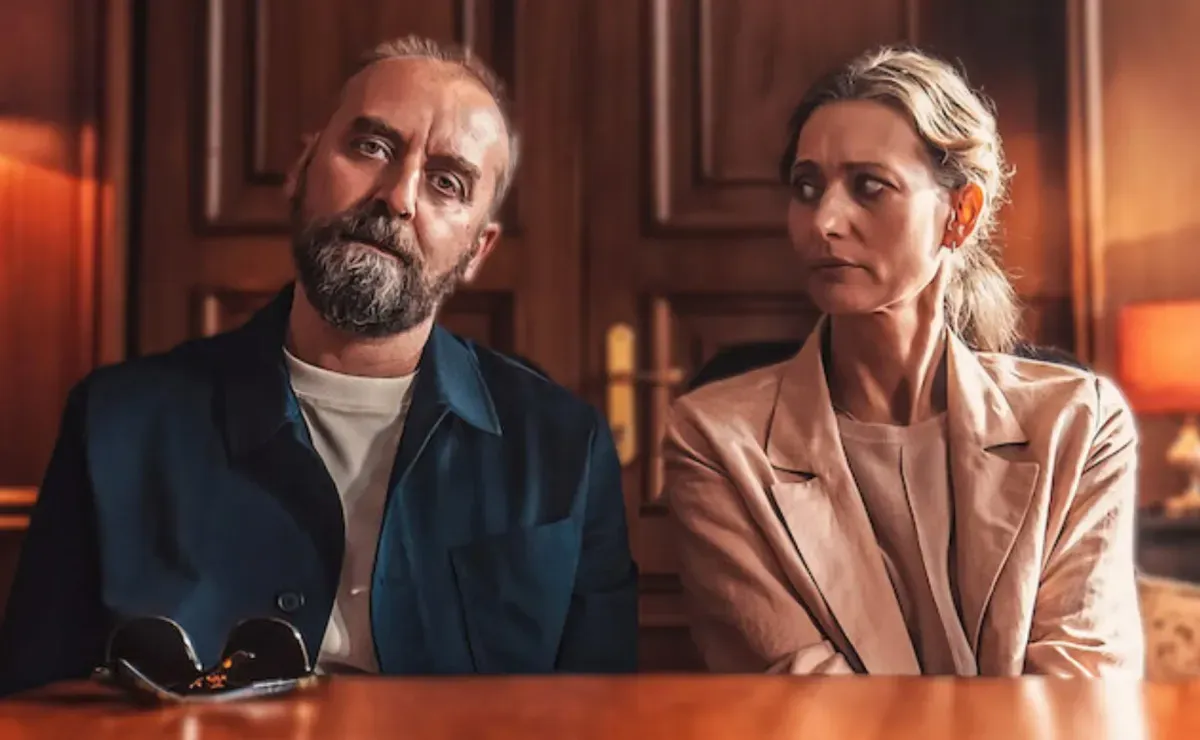
The interplay of light and color is deliberate yet inconspicuous, imbuing even the most commonplace moments—a hallway chat, a coffee machine sputtering—with a quiet brilliance. These decisions soften the edges of a story that may otherwise feel harsh, creating a visual language that mirrors the delicate balance between comedy and melancholy.
Chaciński’s directing is controlled, guiding the narrative with a light touch that never veers into melodrama. His refusal to resort to overt sentimentality or preachiness keeps the film grounded, even as it wades into serious issues. Instead, he lets the silences linger, the humor ripple gently, and the characters breathe within their contradictions. This subtlety allows Divorce to be engaging without being demanding; its strength resides in what it does not say, in the spaces it leaves for the audience to reflect on the absurdities and tragedies of human connection. In Chaciski’s film, we find clarity by making murmurs when others could yell.
The Weight of Laughter and the Shadows It Casts
Divorce walks a fine line between comedy and satire, its humor a subtle blade that cuts without drawing too much blood. Michał Chaciński’s film is a subtle study—a quiet unraveling of institutional absurdities and human frailties that earns your attention rather than demanding it.

The film’s merits lie in its tonal balance. The performances, particularly Magdalena Popławska’s layered portrayal of Małgosia, root the story in emotional authenticity. Wojciech Mecwaldowski’s whimsical charm provides fun to the philosophical undertones. The film’s cultural specificity—rooted in Poland’s complex relationship with Catholicism—gives it a distinct resonance. Still, the universal absurdities of love, bureaucracy, and faith ensure its messages transcend borders.
Despite its grace, Divorce may feel insignificant to those seeking heavier cuisine. While its lighter approach is effective, it sometimes brushes past the deeper cracks it alluded to, leaving moments of potential poignancy unexplored. The humor, while cutting, avoids piercing too deeply, opting instead to elicit a sardonic chuckle rather than a lingering ache. The film captivates the mind but only temporarily stirs the soul.
Divorce provides an accessible but thoughtful experience for audiences who enjoy light comedy with a sarcastic edge. Its attraction is especially great among people interested in Polish culture or the quirks of religious tradition in modern life. A subtle satire with a painterly touch, it leaves you entertained, reflective, and perhaps quietly wondering the systems we’ve built to contain the turmoil of human existence.
The Review
Divorce
Divorce strikes a fine balance between humor and satire, offering a playful yet thoughtful exploration of love, faith, and the absurdities of institutional control. Michał Chaciński's subtle direction and outstanding performances, particularly Magdalena Popławska's nuanced portrayal, ground this humorous tale in emotional sincerity. While the film's comic tone occasionally obscures larger existential themes, it remains a fascinating reflection on modern relationships and cultural traditions. It prefers mild irony to overt commentary, making it friendly yet quietly provocative. For those who love understated comedy with a philosophical edge, Divorce is a charming, if fleeting, experience.
PROS
- Strong performances, especially by Magdalena Popławska, who brings depth and vulnerability to Małgosia.
- Sharp yet understated humor that critiques bureaucracy and religious rigidity.
- Beautiful, soft cinematography that enhances the film’s ethereal tone.
- Subtle direction that balances comedy and drama without becoming preachy or sentimental.
- A unique cultural perspective on Poland’s relationship with Catholicism.
CONS
- Lacks deeper exploration of its existential and emotional themes.
- The lighthearted tone may feel insubstantial to viewers seeking heavier satire.
- Some subplots, like Małgosia’s relationship with her daughter, feel underdeveloped.
- The humor, while effective, doesn’t fully commit to biting social critique.