



















• Latest
  • Trending
Architecton Review

Architecton Review: Viktor Kossakovsky’s Ode to Ruins and the Illusion of Permanence

Peacock

Peacock Turns First Profit as Comcast Reports Second-Quarter Earnings

10 hours ago
Isabel Davis

BFI Names Isabel Davis Director of Its Filmmaking Fund

10 hours ago
Tom Holland Fred Astaire

Tom Holland Vows to Skip Dance Doubles for Fred Astaire Biopic

10 hours ago
2026 Venice Film Festival

Venice Film Festival Unveils Star-Studded 2026 Lineup, Led by Danny Boyle’s Murdoch Biopic

10 hours ago
Netflix

Netflix Returns to the ‘Parasyte’ Universe With New Series Led by Shioli Kutsuna

10 hours ago
Sophie Thatcher

Sophie Thatcher Says She’s Ready to Leave Natalie Behind as ‘Yellowjackets’ Nears Its End

10 hours ago
Travis Scott

Travis Scott Reveals Nerves Behind Nolan Casting Call for ‘The Odyssey’

10 hours ago
Go-Go Town! Review

Go-Go Town! Review: Building a Tourist Trap One Task at a Time

Pompeii: Out of Time with Tom Hiddleston Review

Pompeii: Out of Time with Tom Hiddleston Review: Ash, Evidence, and a Very Serious Corkboard

Hadestown: The Musical Review

Hadestown: The Musical Review: Love Walks Through the Dark

A Shop for Killers Season 2 Review (2)

A Shop for Killers Season 2 Review: Corporate Murder Gets an Upgrade

Elite Force Review

Elite Force Review: Tactical Precision, Familiar Damage

  • Home
  • Privacy Policy
  • Terms and Conditions
  • Gazettely Review Guidelines
Thursday, July 23, 2026
GAZETTELY
  • Home
  • Movie and TV News
    Peacock

    Peacock Turns First Profit as Comcast Reports Second-Quarter Earnings

    Isabel Davis

    BFI Names Isabel Davis Director of Its Filmmaking Fund

    Tom Holland Fred Astaire

    Tom Holland Vows to Skip Dance Doubles for Fred Astaire Biopic

    2026 Venice Film Festival

    Venice Film Festival Unveils Star-Studded 2026 Lineup, Led by Danny Boyle’s Murdoch Biopic

    Netflix

    Netflix Returns to the ‘Parasyte’ Universe With New Series Led by Shioli Kutsuna

    Sophie Thatcher

    Sophie Thatcher Says She’s Ready to Leave Natalie Behind as ‘Yellowjackets’ Nears Its End

    Travis Scott

    Travis Scott Reveals Nerves Behind Nolan Casting Call for ‘The Odyssey’

    Jacob Elordi

    Jacob Elordi Details Grueling Production of Nate’s Death on ‘Euphoria,’ Including Two Days Locked in a Coffin

    Kaylee Hottle

    Deaf Actress Kaylee Hottle, Star of ‘Godzilla vs. Kong’ Films, Dies in Car Accident at 18

  • Movie and TV Reviews
    Pompeii: Out of Time with Tom Hiddleston Review

    Pompeii: Out of Time with Tom Hiddleston Review: Ash, Evidence, and a Very Serious Corkboard

    Hadestown: The Musical Review

    Hadestown: The Musical Review: Love Walks Through the Dark

    A Shop for Killers Season 2 Review (2)

    A Shop for Killers Season 2 Review: Corporate Murder Gets an Upgrade

    Elite Force Review

    Elite Force Review: Tactical Precision, Familiar Damage

    Furious Review

    Furious Review: Female Rage Has an FBI File

    Stuart Fails to Save the Universe Review

    Stuart Fails to Save the Universe Review: Background Characters Take the Lead

    Pinocchio: Unstrung Review

    Pinocchio: Unstrung Review: Practical Magic Meets Splintered Storytelling

    A Toxic Love Story Review

    A Toxic Love Story Review: 88 Days Stolen by a Lie

    Star Trek Strange New Worlds Season 4 Review

    Star Trek: Strange New Worlds Season 4 Review: The Enterprise Changes Genre at Warp Speed

  • Game Reviews
    Go-Go Town! Review

    Go-Go Town! Review: Building a Tourist Trap One Task at a Time

    Cozy Grove: Camp Spirit Review

    Cozy Grove: Camp Spirit Review: Kindness Powers the Island

    Disgaea Mayhem Review

    Disgaea Mayhem Review: Breaking the Game Has Never Been Easier

    Splatoon Raiders Review

    Splatoon Raiders Review: Deep Cut Finds a New Battlefield

    K-pop Idol Stories: Road to Debut Review

    K-pop Idol Stories: Road to Debut Review: Practice Makes Predictable

    Heave Ho 2 Review

    Heave Ho 2 Review: Two Triggers, Four Friends, Endless Disaster

    70s-Style Robot Anime Geppy-X Review

    70s-Style Robot Anime Geppy-X Review: An Average Shooter With an Irresistible Soul

    The Mermaid Mask Review

    The Mermaid Mask Review: Detective Grimoire’s Sharpest Case Yet

    Culdcept Begins Review

    Culdcept Begins Review: Every Property Is a Battlefield

  • The Bests
No Result
View All Result
  • Home
  • Movie and TV News
    Peacock

    Peacock Turns First Profit as Comcast Reports Second-Quarter Earnings

    Isabel Davis

    BFI Names Isabel Davis Director of Its Filmmaking Fund

    Tom Holland Fred Astaire

    Tom Holland Vows to Skip Dance Doubles for Fred Astaire Biopic

    2026 Venice Film Festival

    Venice Film Festival Unveils Star-Studded 2026 Lineup, Led by Danny Boyle’s Murdoch Biopic

    Netflix

    Netflix Returns to the ‘Parasyte’ Universe With New Series Led by Shioli Kutsuna

    Sophie Thatcher

    Sophie Thatcher Says She’s Ready to Leave Natalie Behind as ‘Yellowjackets’ Nears Its End

    Travis Scott

    Travis Scott Reveals Nerves Behind Nolan Casting Call for ‘The Odyssey’

    Jacob Elordi

    Jacob Elordi Details Grueling Production of Nate’s Death on ‘Euphoria,’ Including Two Days Locked in a Coffin

    Kaylee Hottle

    Deaf Actress Kaylee Hottle, Star of ‘Godzilla vs. Kong’ Films, Dies in Car Accident at 18

  • Movie and TV Reviews
    Pompeii: Out of Time with Tom Hiddleston Review

    Pompeii: Out of Time with Tom Hiddleston Review: Ash, Evidence, and a Very Serious Corkboard

    Hadestown: The Musical Review

    Hadestown: The Musical Review: Love Walks Through the Dark

    A Shop for Killers Season 2 Review (2)

    A Shop for Killers Season 2 Review: Corporate Murder Gets an Upgrade

    Elite Force Review

    Elite Force Review: Tactical Precision, Familiar Damage

    Furious Review

    Furious Review: Female Rage Has an FBI File

    Stuart Fails to Save the Universe Review

    Stuart Fails to Save the Universe Review: Background Characters Take the Lead

    Pinocchio: Unstrung Review

    Pinocchio: Unstrung Review: Practical Magic Meets Splintered Storytelling

    A Toxic Love Story Review

    A Toxic Love Story Review: 88 Days Stolen by a Lie

    Star Trek Strange New Worlds Season 4 Review

    Star Trek: Strange New Worlds Season 4 Review: The Enterprise Changes Genre at Warp Speed

  • Game Reviews
    Go-Go Town! Review

    Go-Go Town! Review: Building a Tourist Trap One Task at a Time

    Cozy Grove: Camp Spirit Review

    Cozy Grove: Camp Spirit Review: Kindness Powers the Island

    Disgaea Mayhem Review

    Disgaea Mayhem Review: Breaking the Game Has Never Been Easier

    Splatoon Raiders Review

    Splatoon Raiders Review: Deep Cut Finds a New Battlefield

    K-pop Idol Stories: Road to Debut Review

    K-pop Idol Stories: Road to Debut Review: Practice Makes Predictable

    Heave Ho 2 Review

    Heave Ho 2 Review: Two Triggers, Four Friends, Endless Disaster

    70s-Style Robot Anime Geppy-X Review

    70s-Style Robot Anime Geppy-X Review: An Average Shooter With an Irresistible Soul

    The Mermaid Mask Review

    The Mermaid Mask Review: Detective Grimoire’s Sharpest Case Yet

    Culdcept Begins Review

    Culdcept Begins Review: Every Property Is a Battlefield

  • The Bests
No Result
View All Result
GAZETTELY
No Result
View All Result
Architecton Review

Mini City: Mayhem Review – Strategic Stacking Meets Urban Planning

It’s Raining Men Review: A Frothy, Body-Positive Romp Through Midlife Desire

Home Entertainment Movies

Architecton Review: Viktor Kossakovsky’s Ode to Ruins and the Illusion of Permanence

Architecton : How Viktor Kossakovsky Turns Concrete into a Eulogy for Civilization

Naser Nahandian by Naser Nahandian
1 year ago
in Entertainment, Movies, Reviews
Reading Time: 7 mins read
A A
0
Share on FacebookShare on TwitterShare on PinterestShare on WhatsAppShare on TelegramSummarize with ChatGPTSummarize with Perplexity

Viktor Kossakovsky’s Architecton is not merely a documentary but a requiem for a civilization teetering between ambition and annihilation. Like Koyaanisqatsi stripped of its hypnotic gloss, the film unearths the grotesque poetry of human endeavor—where the arrogance of permanence clashes with the inevitability of decay. 

Kossakovsky, whose lens has long fixated on humanity’s violent dance with nature (Gunda ’s slaughtered pigs, Aquarela ’s vengeful waters), turns his gaze to stone and concrete: materials we wield as testaments to progress, yet which ultimately entomb our hubris. Here, architecture is neither art nor utility but a mirror reflecting our existential dissonance—a paradox of fragility masquerading as strength.

The film’s premise is elemental: stone, the bedrock of ancient marvels (Baalbek’s monoliths, Greece’s temples), becomes complicit in modern ruin. Drone shots hover over Ukraine’s bombed husks and Turkey’s earthquake-shattered blocks, their skeletal remains echoing the cyclical futility of human ambition. 

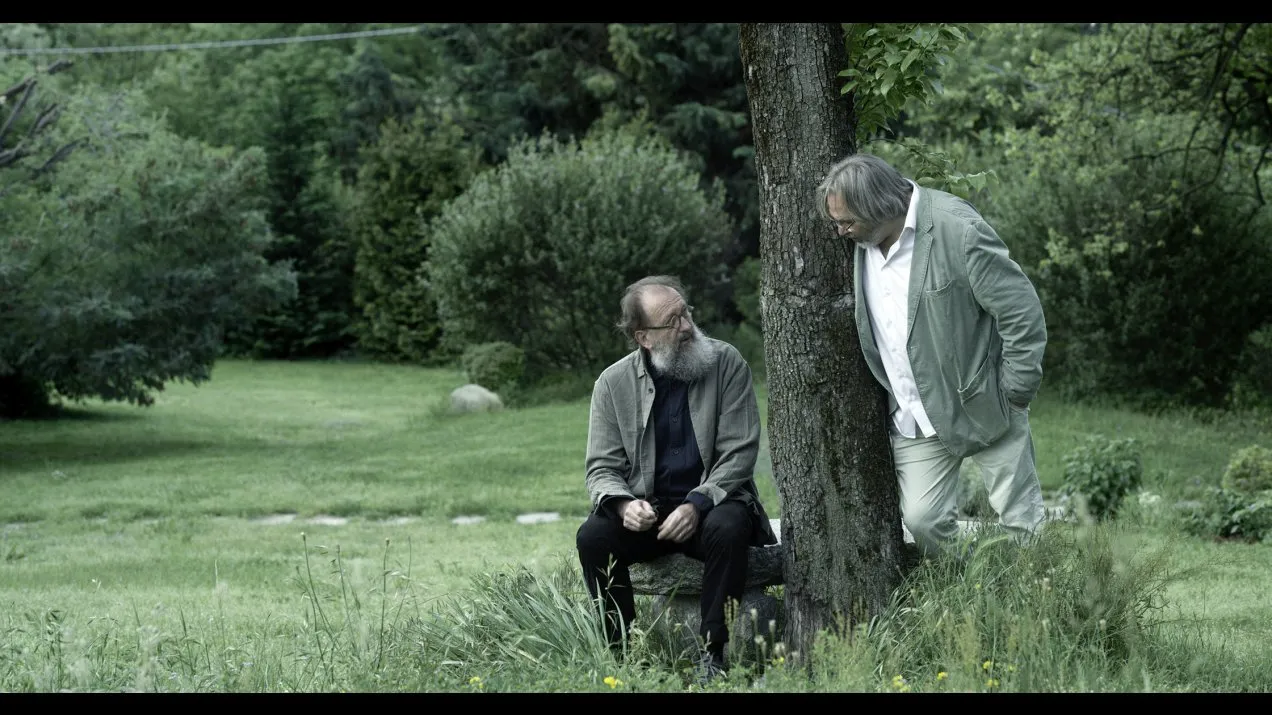
Amid this, Italian architect Michele De Lucchi constructs a stone circle in his garden—a futile altar to reverence, forbidden to humans except his dog. Kossakovsky’s camera lingers on avalanches of rock, quarries gnawing into earth, and concrete’s toxic alchemy, weaving a nonlinear meditation on creation as destruction. 

The score, a dirge of drones and brass, throbs like a planet’s heartbeat, while silence amplifies the scream of collapsing walls. This is cinema as autopsy: dissecting how we build not for eternity, but for the satisfaction of fleeting control.

Fragments of Hubris: The Architect’s Mirror to Mortality

Kossakovsky’s cinema is a silent symphony—a visual lexicon where stone speaks and concrete screams. In Architecton , he abandons exposition, letting the earth itself narrate through fractured walls and avalanches of rock. His camera lingers on decay, not as a passive observer but as an archaeologist of human folly. 

Also Read

  • Best Christmas Movies
    30 Best Christmas Movies to Watch This Holiday Season
  • Best 2025 Movies
    Gazettely's 30 Best Movies of 2025
  • best sci fi movies
    30 Best Sci Fi Movies Ever: Gazettely's Ultimate…
  • Best Horror Movies
    30 Best Horror Movies: The Horror Hall of Fame
  • Trillion Review
    Trillion Review: Analyzing the Sisyphean Labor of…
  • 30 Best Drama Movies
    30 Best Drama Movies to Watch Before You Die

Like Aquarela ’s vengeful waters or Gunda ’s slaughtered swine, this film weaponizes minimalism: no interviews, no explanations, only the guttural hum of machinery and the groan of collapsing structures. The soundtrack—a dirge of drones and brass—becomes a chorus of the damned, echoing Heidegger’s warning that “only where there is world is there earth, and only where there is earth is there world.”

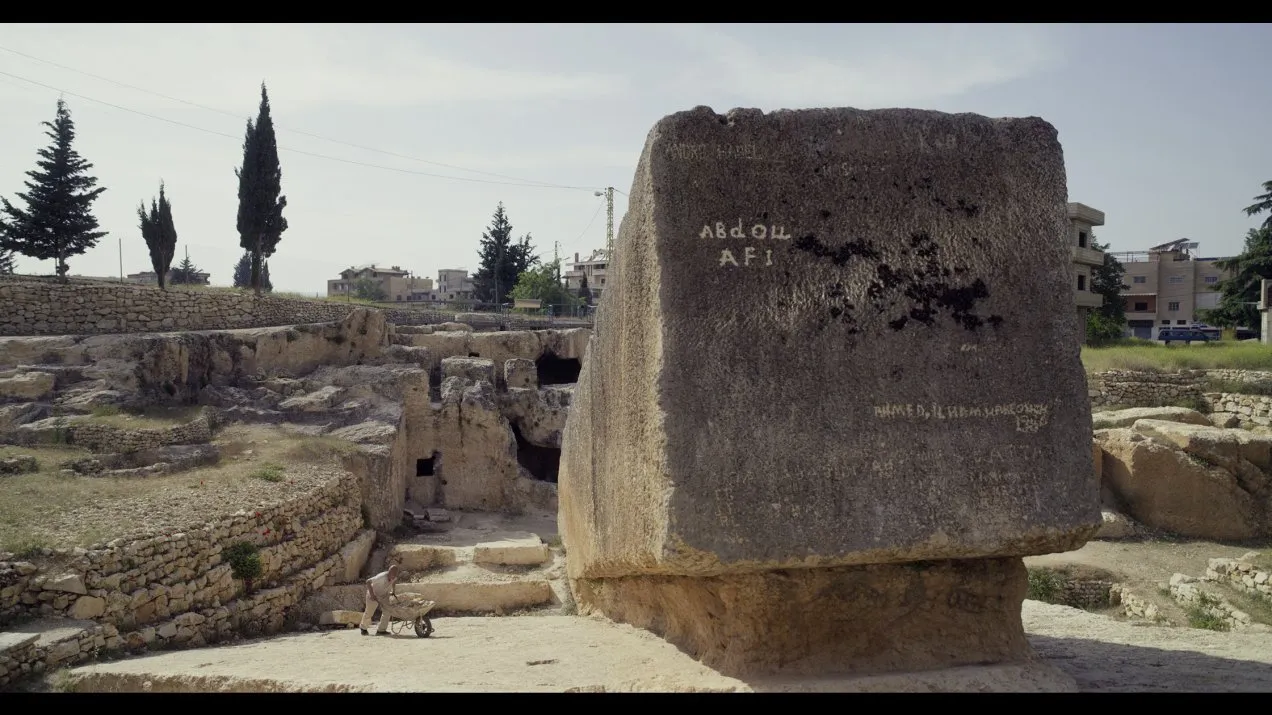
Kossakovsky’s philosophical indictment is etched into every frame. Ancient ruins (Baalbek’s monoliths, Greece’s temples) stand as monuments to reverence, their stones carved with a patience now foreign. 

Modernity, meanwhile, erects transient tombs—Ukraine’s bombed apartments, Turkey’s earthquake-ravaged blocks—where concrete’s brittle arrogance crumbles into dust. The director contrasts these with a quiet fury: why do we build ugliness when beauty once endured? His lens lingers on Michele De Lucchi’s stone circle, a futile altar to permanence in a world addicted to disposability. 

Here, Kossakovsky mirrors Heraclitus: “All is flux,” yet we cling to the illusion of control, constructing edifices that mock our own mortality. The film becomes a palimpsest of human narcissism—a question scrawled in rubble: What does it mean to build when all we touch turns to trash?

Ruins of Ambition: Mortal Hopes Cast in Stone

Architecton frames architecture as a necropolis of human intent—each structure a fossilized scream against oblivion. Ancient ruins (Baalbek, Greece) stand as monuments to reverence, their stones carved with patience that acknowledged time’s dominion. Modernity’s rubble (Ukraine, Turkey) mirrors hubris: concrete slabs crumble like brittle bones, their brief existence a testament to arrogance. 
Architecton Review

Kossakovsky contrasts these to expose civilization’s fragility—war-ravaged walls echo psychological fractures, while ancient ruins, weathered into grace, haunt us with what we’ve lost. The moral weight is visceral: we trade cathedrals of awe for bunkers of efficiency, poisoning planet and psyche. Heidegger’s “building dwelling thinking” collapses into a question: If we construct to defy mortality, what remains when walls fall?

Concrete embodies creation and decay. Its production devours mountains, choking skies with toxic dust—a Frankenstein’s monster meant to conquer nature, now consuming it. Michele De Lucchi’s guilt—his modernist designs reliant on ecological violence—anchors this paradox. 

His stone circle, a futile altar to permanence, mirrors our tragic cycle: we build to assert control, yet each structure becomes a cenotaph for destroyed beauty. Kossakovsky’s lens lingers on quarries gnawing earth, their conveyor belts spitting rocks like teeth. Concrete, meant to defy time, accelerates entropy—a memento mori cast in gray sludge. The film leaves us adrift: our greatest monument to progress is a tombstone of dust.

Echoes in Stone and Sound: The Cinematic Symphony of Collapse

Kossakovsky’s lens transforms rubble into requiem. Drone shots hover like mechanical vultures over Ukraine’s shattered apartments and Turkey’s earthquake-flattened blocks, their skeletal remains framed not as relics of war or disaster but as indictments of human presumption. 
Architecton Review

The camera lingers on avalanches of rock cascading down cliffs—a visceral ballet of geological violence—each boulder a tumbling monument to entropy. Quarries yawn open like wounds, their fractured geometries echoing the jagged edges of our own ambitions. 

In black-and-white sequences, abandoned towns emerge as ghostly palimpsests: cracked walls bloom with lichen, and vines strangle concrete skeletons, nature reclaiming its dominion with silent, inexorable fury. These images are neither documentary nor elegy but a cinematic autopsy, dissecting the hubris of permanence.

Evgueni Galperine’s score is a seismic hum—a subterranean growl of cellos and brass that mirrors the film’s existential tremors. Drones pulse like tectonic plates shifting beneath the narrative, while sudden brass eruptions pierce the silence, echoing the abrupt collapse of structures and ideals. 

Diegetic sounds anchor the chaos: the metallic screech of stone-crushing machinery becomes a industrial heartbeat; the hiss of crumbling concrete, a whispered elegy. Together, they form a dissonant symphony—part requiem, part warning—where every roar of machinery or groan of collapsing stone feels like the planet itself gasping. Is this music a lament for what’s lost, or a premonition of what’s to come? Kossakovsky leaves the question unresolved, letting the dissonance linger like dust in the air.

The Architect’s Lament: Stone, Guilt, and the Fragility of Human Design

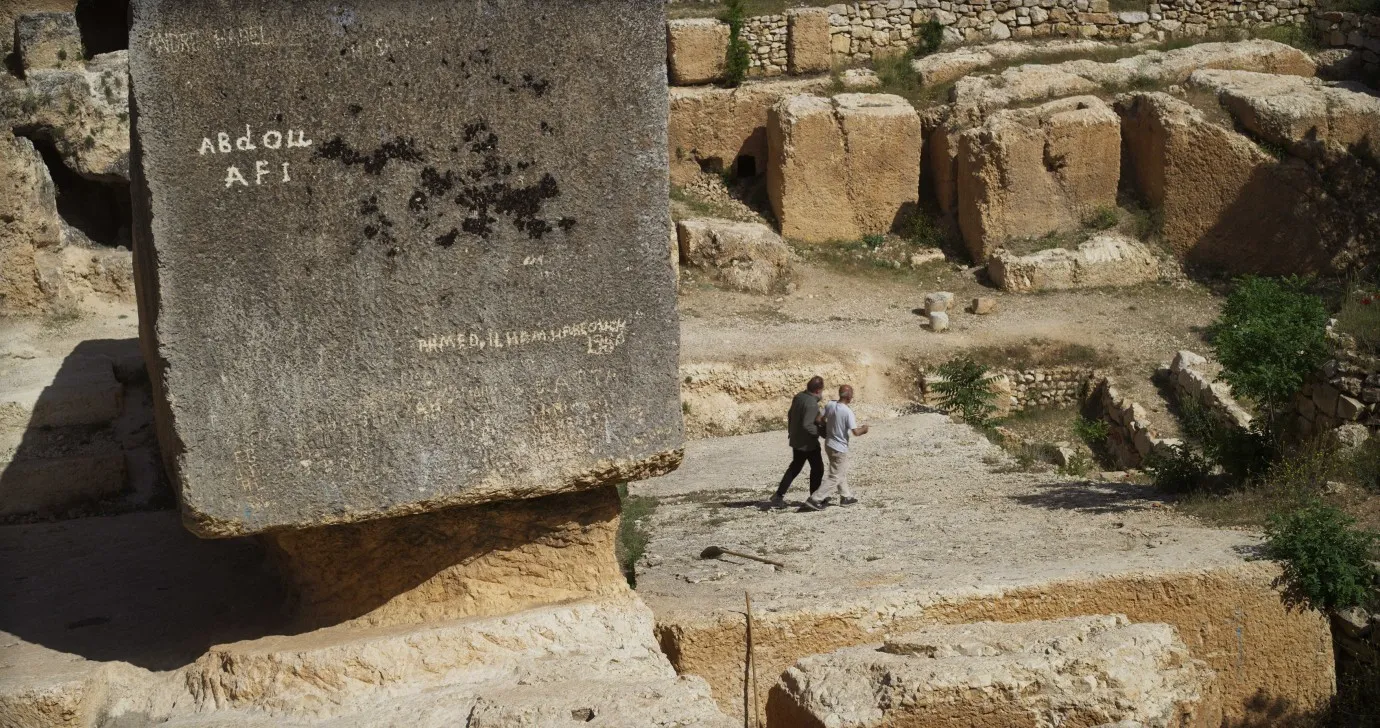
Michele De Lucchi, a spectral figure wandering through the wreckage of antiquity, embodies the film’s tension between reverence and recklessness. His pilgrimage to Baalbek’s monolithic stones—ancient sentinels that have outlasted empires—becomes a silent accusation. 

Architecton Review

Here, he traces the chisel marks of builders who sculpted permanence, their intent inseparable from the rock itself. In contrast, his own modernist creations, rendered in concrete, loom as transient as ash. The film lingers on his quixotic “stone circle,” a ritualistic act of atonement: a ring of raw rock erected in his garden, forbidden to humans save his dog. 

This barren altar mirrors humanity’s fractured pact with nature—a gesture of humility in a world hellbent on domination. De Lucchi’s voice, gravelly and weary, decries the disposability of contemporary architecture: structures designed not for eternity but for obsolescence, their skeletal remains destined to join the rubble of Ukraine’s bombed apartments or Turkey’s earthquake-flattened towns.

De Lucchi’s confession arrives like a shudder. “Concrete is arid,” he murmurs, the weight of complicity etching lines deeper than any blueprint. His hands, which once shaped sleek facades, now tremble at the thought of concrete’s silent violence—the quarries stripped bare, the toxic dust choking lungs, the mountains reduced to gravel. Yet he refuses absolution. 

The film frames his guilt as a microcosm of our collective sin: a civilization addicted to materials that devour the Earth. His plea for sustainable design is no manifesto but a fractured prayer, acknowledging that even “green” architecture risks becoming another tombstone if divorced from ethical reckoning. “What nourishes the planet?” he asks, the question lingering like a ghost. The answer, like the stone circle, remains stubbornly, tragically unresolved.

Erosion of Eternity: Time’s Unyielding Dialogue with Ruin

Kossakovsky’s Architecton unfolds like a tectonic plate—slow, inexorable, yet punctuated by seismic ruptures. The film’s rhythm mirrors geological time: glacial pans over ancient ruins stretch into minutes, their textures etched by millennia, while sudden cuts to explosions or landslides rupture the calm with visceral chaos. 
Architecton Review

This dissonance—between the eternal and the ephemeral—becomes a structural metaphor. The epilogue, a sparse dialogue between Kossakovsky and De Lucchi, lingers in uncertainty. Their exchange feels less like a resolution than a confession: two figures adrift in the chasm between human ambition and cosmic indifference. 

De Lucchi’s guilt over concrete’s toxicity hangs unresolved, while Kossakovsky’s camera lingers on rubble, as if waiting for the dust to settle into answers. The pacing, at times, risks stagnation, yet this mirrors the film’s thesis: we are mired in cycles of creation and destruction, unable to escape the weight of our own debris.

Architecton stakes its claim alongside Koyaanisqatsi as a cinematic jeremiad, though its fury is quieter, more funereal. It does not preach but immerses, demanding we sit with the grotesque beauty of our own undoing. 

The film’s legacy lies in its visceral provocation—a call to interrogate how we etch ourselves into the earth. What lingers is not despair, but a paradoxical hope: that by confronting the fragility of our monuments, we might yet sculpt a humility as enduring as stone.

The Review

Architecton

9 Score

Architecton is a visceral, philosophically charged elegy for humanity’s fractured relationship with permanence. Kossakovsky’s fusion of stark visuals and existential inquiry—juxtaposing ancient stone’s endurance with modern concrete’s fragility—demands introspection. While its meditative pacing may unsettle some, the film’s audacity to frame destruction as both art and indictment resonates deeply. A haunting call to reimagine our footprint on Earth.

PROS

  • Visually stunning cinematography
  • Philosophical depth and environmental urgency
  • Innovative sound design and score
  • Ambitious global scope
  • Timely critique of modern architecture

CONS

  • Slow pacing may alienate some viewers
  • Abstract structure lacks clear resolution

Review Breakdown

  • Overall 0

Tags: A24ArchitectonCharlotte HailstoneDocumentaryEvgueni GalperineFeaturedHeino DeckertMichele De LucchiVictor Kossakovsky
Previous Post

Mini City: Mayhem Review – Strategic Stacking Meets Urban Planning

Next Post

It’s Raining Men Review: A Frothy, Body-Positive Romp Through Midlife Desire

Try AI Movie Recommender

Gazettely AI Movie Recommender

This Week's Top Reads

  • Rogue Trooper Review

    Rogue Trooper Review: Duncan Jones Finds Pulp Life on Nu Earth

    2 shares
    Share 0 Tweet 0
  • Ann Droid Review: A Robot Carer Finds a Human Pulse

    0 shares
    Share 0 Tweet 0
  • Ride or Die Review: Best Friends Outrun a Messy Conspiracy

    1 shares
    Share 0 Tweet 0
  • Do Not Enter Review: Tidy Endings in a Hostile World

    2 shares
    Share 0 Tweet 0
  • Chainsmoker Cat Review: The Sad Cat Beneath the Stench

    1 shares
    Share 0 Tweet 0
  • The Hawk Review: Will Ferrell’s Comeback Comedy Swings Too Wide

    2 shares
    Share 0 Tweet 0
  • The Bay Review: Human Panic Spoils the Hunt

    0 shares
    Share 0 Tweet 0

Must Read Articles

Furious Review
TV Shows

Furious Review: Female Rage Has an FBI File

12 hours ago
Stuart Fails to Save the Universe Review
TV Shows

Stuart Fails to Save the Universe Review: Background Characters Take the Lead

13 hours ago
Star Trek Strange New Worlds Season 4 Review
TV Shows

Star Trek: Strange New Worlds Season 4 Review: The Enterprise Changes Genre at Warp Speed

1 day ago
The Walking Dead Dead City Season 3
TV Shows

The Walking Dead: Dead City Season 3 Review: Negan Finds His Bite Again

1 day ago
The Undeclared War Review
TV Shows

The Undeclared War Review: The Mole Is Stronger Than the Malware

2 days ago
Loading poll ...
Coming Soon
Which of Alfred Hitchcock's 1960s thrillers is your all-time favorite?

Gazettely is your go-to destination for all things gaming, movies, and TV. With fresh reviews, trending articles, and editor picks, we help you stay informed and entertained.

© 2021-2026 All Rights Reserved for Gazettely

What’s Inside

  • Movie & TV Reviews
  • Game Reviews
  • Featured Articles
  • Latest News
  • Editorial Picks

Quick Links

  • Home
  • About US
  • Contact Us
  • Advertise with Us
  • Review Guidelines

Follow Us

Facebook X-twitter Youtube Instagram
No Result
View All Result
  • Home
  • Movies
  • Entertainment News
  • Movie and TV Reviews
  • TV Shows
  • Game News
  • Game Reviews
  • Contact Us

© 2024 All Rights Reserved for Gazettely