

























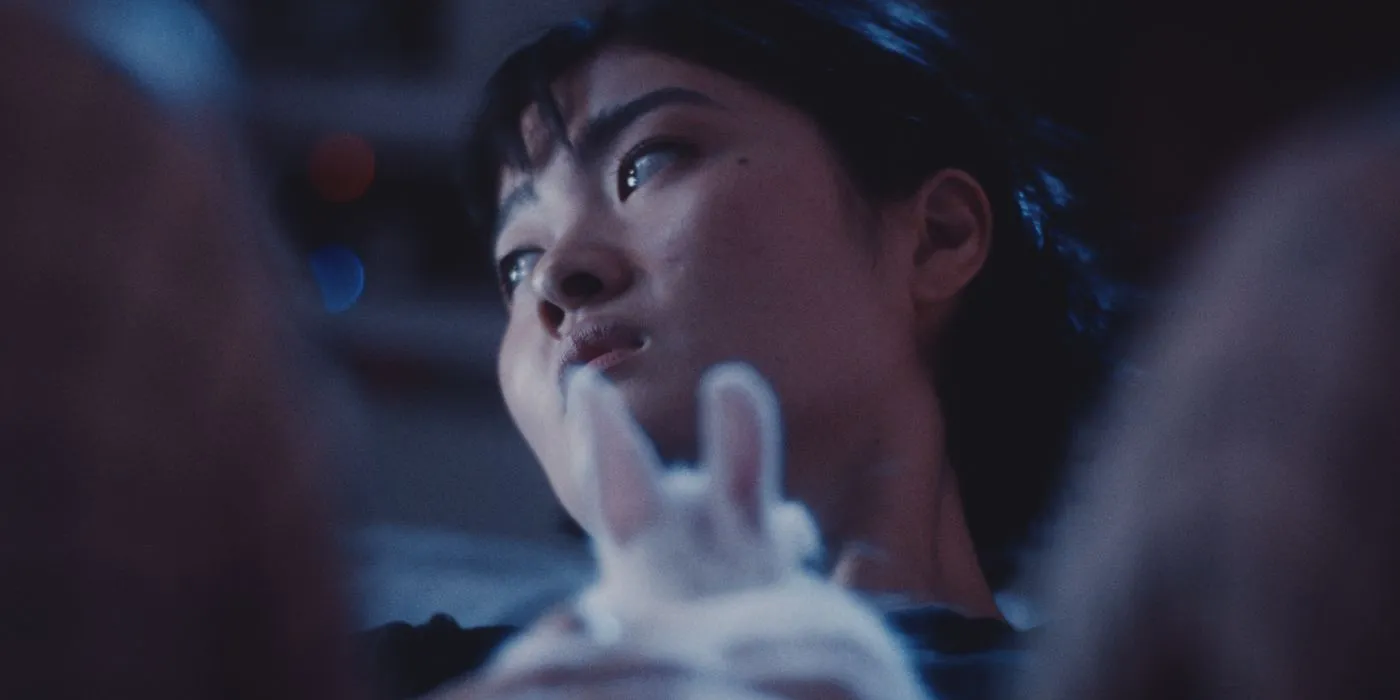

Bunnylovr presents a study of a young woman caught in two distinct routines. The film portrays Rebecca, who splits her time between a typical office role and evenings spent performing online.
Her daytime work offers little excitement, while her nightly activities as a cam girl provide fleeting moments of interaction and distraction. This stark contrast drives the narrative and reflects the friction between societal expectations and personal survival.
Rebecca’s life is marked by a constant struggle to keep her finances in check and an ever-present sense of isolation. Her existence unfolds as a series of small, intimate moments that expose her internal conflicts. The film captures these fragments with a precision that highlights both the personal stakes she faces and the quiet desperation that underpins her choices.
Set against the backdrop of New York City, the film makes full use of its environment. Scenes in bustling Chinatown and the Lower East Side illustrate the overwhelming nature of urban living—a setting that amplifies Rebecca’s solitary state.
Her Chinese-American heritage is interwoven subtly into the visuals and dialogue, adding depth to her character without overwhelming the narrative. From the glow of computer screens to carefully composed close-ups, the film establishes an atmosphere that mirrors modern disconnection and the search for fleeting connection.
Plot Overview and Narrative Structure
Bunnylovr charts its course through the life of Rebecca by unfolding key events in a series of concise, interconnected segments. The narrative opens with her routine challenges—a monotonous day job that barely supports her and a secretive, rewarding nocturnal existence. The unexpected arrival of a white bunny disrupts her familiar rhythm, serving as a turning point that sets in motion a series of emotional shifts.

Rebecca’s daytime role as a personal assistant stands in stark contrast to her online persona. In her evenings, she appears before a screen, engaging with clients in a world where personal connection is traded for fleeting validation. This duality not only fuels the central conflict of the story but also exposes the internal struggles that Rebecca must face, as her two identities collide and create a persistent tension in her life.
The film opts for a structure that unfolds in loosely connected vignettes rather than a straight narrative line. Some sequences drift in a manner that captures the fragmentation of her thoughts and circumstances, while others drive the plot forward with palpable impact.
The pacing vacillates between reflective pauses and rapid developments, particularly during moments of personal crisis. Rebecca’s breakup, a strained interaction with an online client, and a tentative reconnection with a long-estranged father punctuate the storyline with bursts of intensity.
Supporting subplots, such as the dynamic with her best friend and the pressures arising from her work environment, add layers to the main narrative. The tension between transactional encounters online and the search for genuine closeness threads throughout these episodes, contributing to the overall narrative complexity.
Each subplot serves as a mirror reflecting aspects of Rebecca’s internal dilemmas, gradually building toward subtle hints of self-awareness and change.
Characterization and Performances
Rebecca emerges as a complex figure marked by vulnerability and a profound sense of aimlessness. Her dual roles—as an office worker by day and an online performer by night—paint a portrait of a woman caught between conflicting expectations and personal survival.

The film scrutinizes her inner struggles through quiet moments that expose her yearning for genuine connection, while her actions often lead her into self-destructive patterns. This careful dissection of her character mirrors the challenges of modern life, where personal needs clash with societal pressures.
The relationship with her estranged father stands as a poignant subplot. Their interactions are marked by fleeting moments of reconnection that hint at shared cultural roots and personal imperfections.
His own flaws, such as habitual gambling and dubious schemes, reflect the difficulties Rebecca faces in managing her own contradictions. These scenes provide a subtle commentary on familial ties and cultural identity, grounding the narrative in a relatable personal history.
Rebecca’s connection with her best friend Bella introduces both support and tension. Bella represents an alternative lifestyle marked by artistic ambition and the complications of creative success. Their exchanges oscillate between warmth and distance, adding a nuanced layer to the central character’s emotional landscape.
Meanwhile, the ambiguous relationship with her online client reveals a side of Rebecca that is exposed by fleeting digital encounters. This connection underscores the transactional nature of her interactions, hinting at the risks of placing trust in the virtual world.
The performances across the board capture these delicate dynamics with precision. The actors employ subtle shifts in expression and measured dialogue delivery to convey unspoken emotions, while carefully timed exchanges bring underlying tensions to the surface.
Key scenes—whether moments of shared regret or brief sparks of intimacy—reveal the slow transformation of Rebecca as she negotiates her inner conflicts and adapts to her shifting circumstances.
Themes, Symbolism, and Emotional Resonance
The film looks at the loneliness that marks urban existence in a digital era. Rebecca’s solitude stands as a personal trial, reflecting a condition familiar to many who live amid the relentless pace of city life.

Her internal struggle is drawn in quiet scenes where the soft hum of New York’s streets meets the cool glare of electronic devices. This setting creates a mood that is both stark and intimate, capturing the essence of modern disconnection.
At the center of this narrative is the white bunny, Milk, which carries a weight of meaning throughout. The creature symbolizes a state of innocence and fragility, hinting at the possibility of a gentle renewal in spirit.
Several sequences use the bunny’s presence to mirror Rebecca’s inner state, its uncertain movements serving as a visual cue for the delicate search for connection that drives her actions. The repeated image of Milk reminds viewers of a sensitivity that often goes unnoticed in the rush of daily life.
Rebecca’s work as an online performer brings forward a clear contrast between ephemeral digital exchanges and the more demanding reality of personal interactions. Her encounters behind the screen replace the warmth of a human touch with transient signals of approval, raising questions about how we assign value to attention in a high-speed, online world.
Her Chinese-American background is interwoven with care through understated details—a few words in her native tongue here, subtle nods to familial traditions there. These instances contribute to the shaping of her identity and color the narrative with cultural textures that add a quiet richness.
Key moments, marked by thoughtful pauses and close-ups, capture the weight of her internal conflict, inviting the audience to feel the intensity of her search for meaning amid the clutter of modern life.
Visual Style, Cinematography, and Sound
Bunnylovr employs a distinct visual language defined by tight close-ups and intimate framing that captures the nuances of Rebecca’s isolation. The frequent use of a blue glow from computer screens creates a confined atmosphere, reflecting the emotional seclusion that marks her daily life. These camera choices reinforce the sense of being trapped within one’s own thoughts.
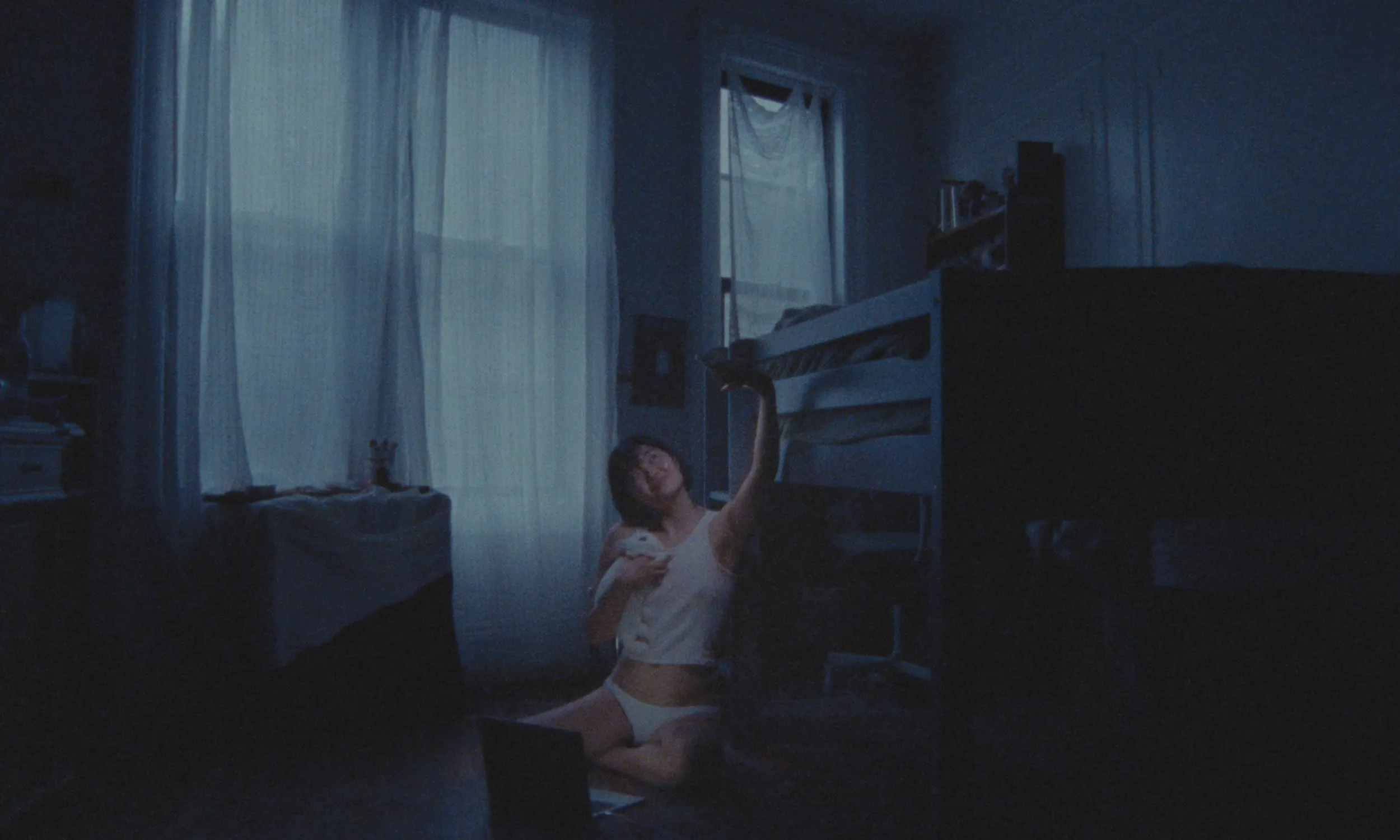
The film makes careful lighting choices. Ambient and natural light in exterior shots contrast sharply with the sterile, digital illumination seen in indoor scenes. The resulting color scheme mirrors the fluctuations in Rebecca’s state of mind, with cooler hues accompanying moments of introspection and warmer tones emerging in brief, fleeting instances of connection.
Sound plays a critical role in setting the tone. The ambient clamor of New York streets mingles with a minimalist, haunting score, enriching scenes with a layer of sonic tension. Specific moments—marked by subtle shifts in background noise—heighten feelings of solitude, while carefully placed musical cues punctuate the quieter, introspective intervals.
Production design further accentuates the narrative. Rebecca’s sparsely furnished apartment, juxtaposed with the bustling urban backdrop of New York, visually reinforces the disconnect between her inner world and the city around her. Scenes set in culturally rich neighborhoods add texture, grounding her experience in a recognizable reality.
Editing supports this visual and auditory tapestry through deliberate scene transitions. The fragmented structure, marked by brisk cuts and lingering pauses, mirrors the disarray of Rebecca’s emotions while occasionally revealing moments of unexpected clarity.
Cultural Context and Social Commentary
Bunnylovr presents a picture of a time when digital interactions replace in-person warmth. The film shows how online communication often substitutes for genuine human touch, leaving characters caught in a cycle of fleeting exchanges. Rebecca’s online work and its fleeting encounters highlight the modern condition, where a screen mediates connections and diminishes the intimacy of face-to-face conversations.
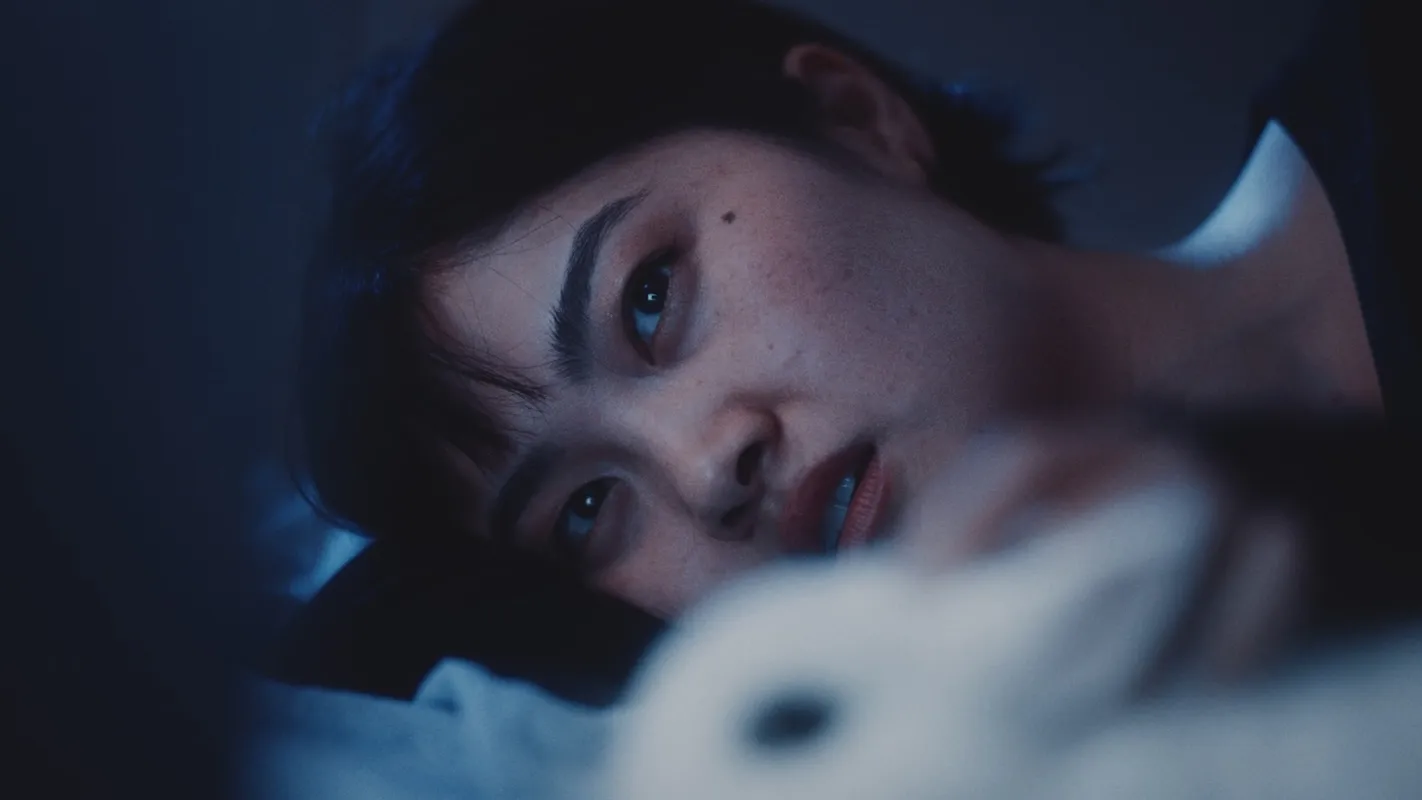
The narrative brings into focus the financial strains experienced by young city dwellers. Rebecca juggles a modest daytime job with a side gig that sustains her lifestyle, a reality that many urban professionals face. The film hints at a market-driven society where work is pieced together in bits, affecting how individuals see themselves and their value.
Cultural identity plays a significant role, with Rebecca’s Chinese-American heritage adding subtle layers to her personal story. Moments of family friction and silent intergenerational exchanges bring cultural differences to light, revealing tensions between inherited traditions and a fast-paced, modern existence.
The film also tackles issues of gender and control in personal interactions. Rebecca’s digital encounters expose power imbalances that extend into her personal life, challenging standard portrayals of female fragility. Key interactions and carefully crafted symbols invite viewers to reassess assumptions about strength and vulnerability.
The Review
Bunnylovr
Bunnylovr captures the ephemeral nature of modern relationships with subtle storytelling, intricate character portrayals, and a reflective visual style. The film resonates through its honest depiction of urban isolation and the impact of digital life, even if some narrative threads lack cohesion. Its exploration of identity and cultural tension adds a quiet, thought-provoking layer to an otherwise intimate portrait of self-discovery.
PROS
- Captivating visual style
- Deep character exploration
- Authentic portrayal of modern isolation
CONS
- Moments of narrative disjoint
- Underdeveloped secondary relationships