





























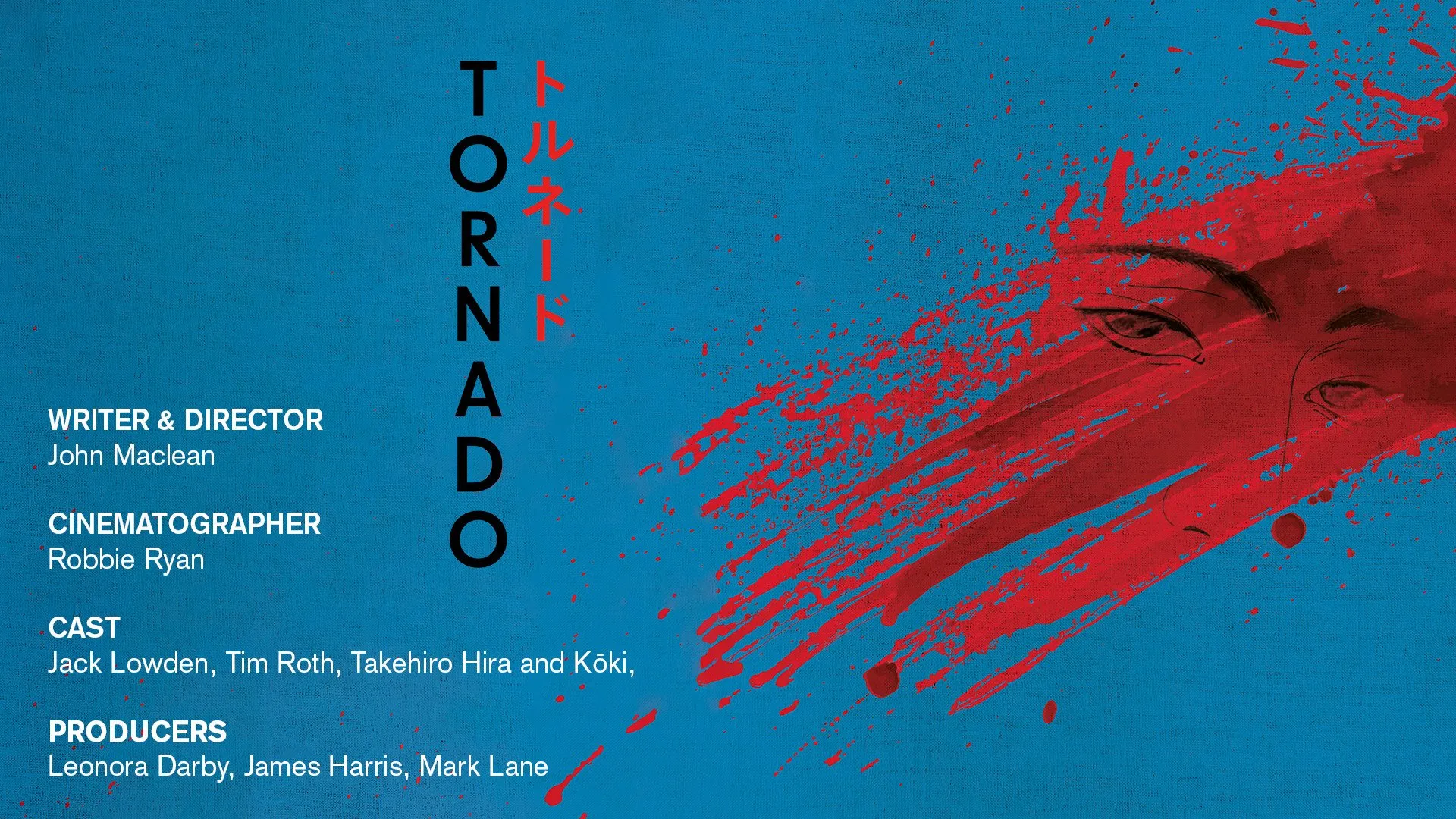

John Maclean returns five years after his haunting debut Slow West with Tornado, a samurai-western revenge thriller transplanted to the grimly beautiful British Isles of the 1790s. Once again teaming with cinematographer Robbie Ryan and composer Jed Kurzel, Maclean threads a tale of relentless pursuit through landscapes that seem suspended between history and myth.
At its heart is Tornado (Kôki), a fiercely determined puppeteer’s daughter raised in the itinerant carnival she shares with her samurai-trained father, Fujin (Takehiro Hira). When she seizes two bags of stolen gold, she ignites a merciless chase led by the steel-eyed bandit Sugarman (Tim Roth) and his mutinous son, Little Sugar (Jack Lowden). Their slow, foot-bound advance across wind-lashed fields evokes a world rugged enough to swallow any conventional pursuit whole.
Dialogue is sparse; every whispered threat and clipped response lands with the weight of ancient rites. The film unfolds in weather-scarred frames where mist and gust carve living sculptures from bodies in motion. Few directors ask us to feel the wind’s breath as an active presence, yet Maclean does just that—transforming gusts into an almost adversarial force. Tornado stakes its claim by colliding the precise discipline of samurai combat with the raw expanse of a western frontier that feels newly unsettled.
Rhythms of the Hunt
From the first frame, Tornado hurls us into an unbroken, 25-minute chase across bog and heath. There is no exposition—only the pounding footsteps of a young woman and a boy, their ragged breaths carried off by gale-force winds. Dialogue is pared to guttural threats and clipped commands, each line landing like a shuriken in an almost wordless ballet of survival. The sequence channels the spirit of silent cinema, where physical performance and landscape become the true narrators, insisting that every glance and gesture register with cinematic force.
Seamlessly, the film rewinds into the dusty interior of a covered wagon, where Tornado and her father stage their macabre puppet show. Here the stolen gold is introduced not through clumsy dialogue but via a furtive exchange of puppet heads and a pair of heavy pouches. The shift in time feels like a gust of wind flipping a page in a scroll—sudden yet artful. This timeline-shuffling reframes our understanding of motives without halting the film’s momentum: the past becomes a hidden undercurrent, driving the present chase even as it remains just out of sight.
When the hunt finally reaches its fever pitch, the terrain narrows into a ruined manor and its surrounding woodland. Tornado’s vulnerability gives way to disciplined ferocity, each sword stroke precise as calligraphy on steel. The sudden turn from prey to predator snaps the story into a new register, though the tonal shift carries a jarring edge. What began as tethered suspense accelerates into a stylized vendetta, trading its elemental dread for choreographed bloodletting. In that pivot, the film tests its own rules—challenging expectations even as it fulfils them.
Contours of Exile
A solid on-screen presence emerges from Britain circa 1790, where battered manor houses stand sentinel over moorlands once ruled by sheep and silence. Filmed near Carlops in the Scottish Borders, Maclean erases every trace of village life: frames linger on empty hillsides and crumbling walls, as though the wind itself has washed away human footprints. Roads and settlements vanish beneath mist and heather, leaving characters adrift on terrain that feels abandoned by time and memory.
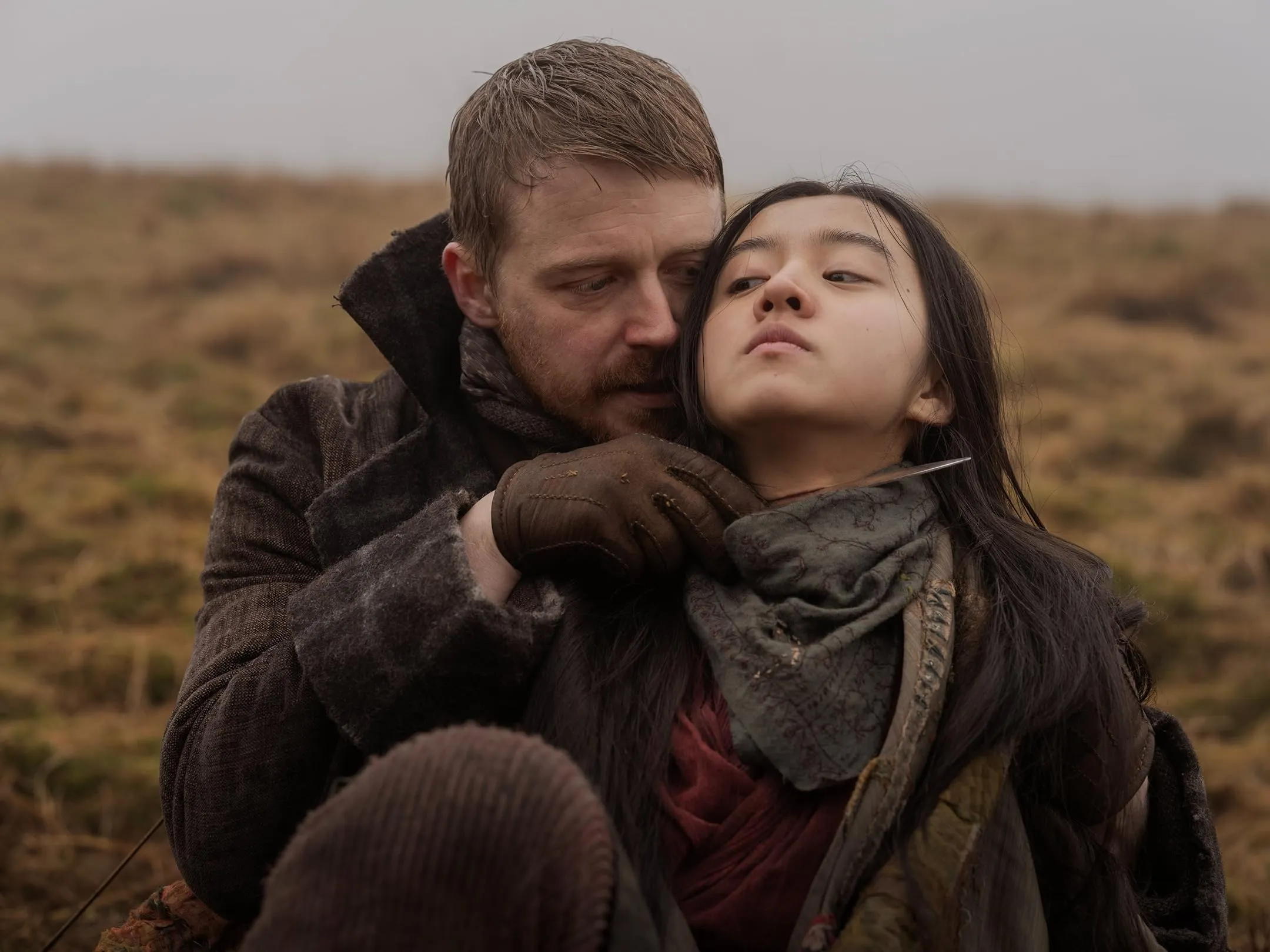
Maclean summons the iconography of the American frontier—long horizons and muted earth tones—but trades cacti for gorse and tumbleweeds for swirling peat smoke. Ghostly echoes of samurai cinema persist in Tornado’s every blade flick and ritualized stance, while themes of exile and belonging underscore her status as an immigrant in a land that regards her with suspicion. The film’s most potent tension arises where these traditions meet, creating a taut cultural dialogue without recourse to heavy exposition.
The elements in Tornado possess an almost mythic agency: a gale roars through valley and glen like a restless spirit, while rain hammers the camera’s lens in relentless insistence. Footsteps squelch in mud that seems to reclaim boots with each step, reinforcing the sense that nature itself opposes every escape. Sound design amplifies this antagonism, layering howling wind and distant animal cries beneath clashing steel. Interludes of her puppet show—tiny marionettes dripping crimson blood—offer strange relief, their fragile movements echoing the fragility of human control in a world ruled by elemental force.
Canvas of Blades and Shadows
Robbie Ryan turns every frame into an act of sculpting light and shape. Close-ups linger on Tornado’s narrowed eyes or the tight grip on a sword hilt, then the camera pulls back to reveal a lone figure against an immense sky—an almost operatic play of scale and solitude.
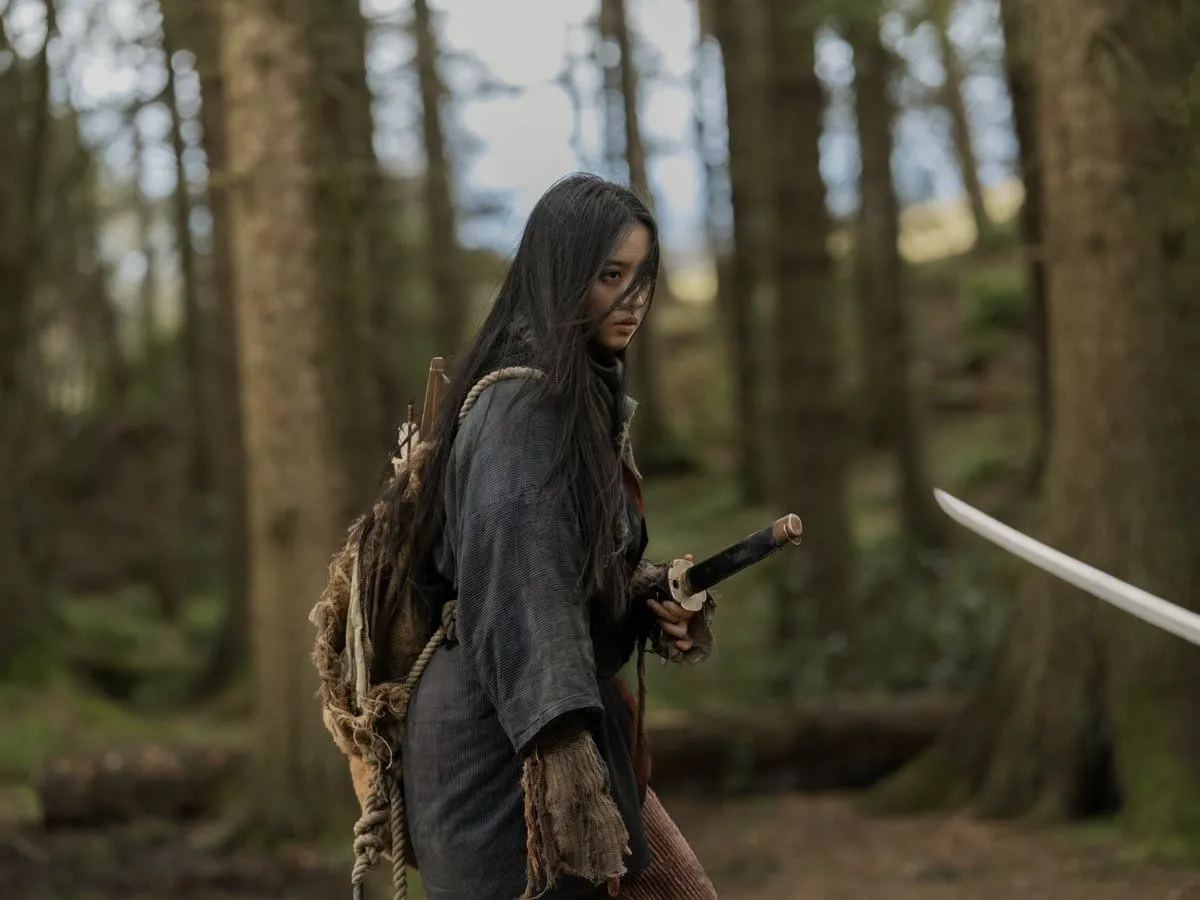
In moments of sudden violence, Ryan positions the lens at a distance, so a stabbing appears as a stark, silhouette-like silhouette, as though warriors have become living shadow puppets against a bleak horizon. This tension between intimacy and expanse underscores each character’s precarious position within the landscape.
The film’s palette reads like a study in greyscale with fractured slivers of color. Desaturated greens and muddy browns coat hedgerows and thatched roofs, while costumes—whether the elegant but worn kimonos of a travelling circus or the tattered rags of Sugarman’s gang—bear the patina of constant motion. Puppets glint with carefully fouled reds when their plastic heads emit dollops of fake blood, offering a small, unsettling flourish against the dominant bleakness. Production design exploits every damp surface and weathered timber, so even the most ordinary barn door feels freighted with history and threat.
The editing snaps unpredictably between pastoral calm and brutal outburst. A serene long shot of rolling moorland is ruptured by a cut to a miniature puppet’s head spouting crimson—an absurdist punctuation that both shocks and wryly amuses. These gore-pump gags recur with precise timing, offering a momentary release of tension before the next wave of violence. Maclean’s use of sudden cuts—often slashing from a hushed conversation to the clang of steel—creates an almost musical rhythm, where brutality resonates as both visual statement and ironic commentary.
Faces of the Storm
In Tornado’s portrayal, Kôki channels elemental force. Each movement carries the weight of ritual, blending martial precision with expressive dance. When she whirls her blade, it arcs like a white arc through slate sky, her body taut as a drawn string. Physicality becomes the lexicon of emotion: a clenched jaw speaks defiance, a single pivot conveys vulnerability.
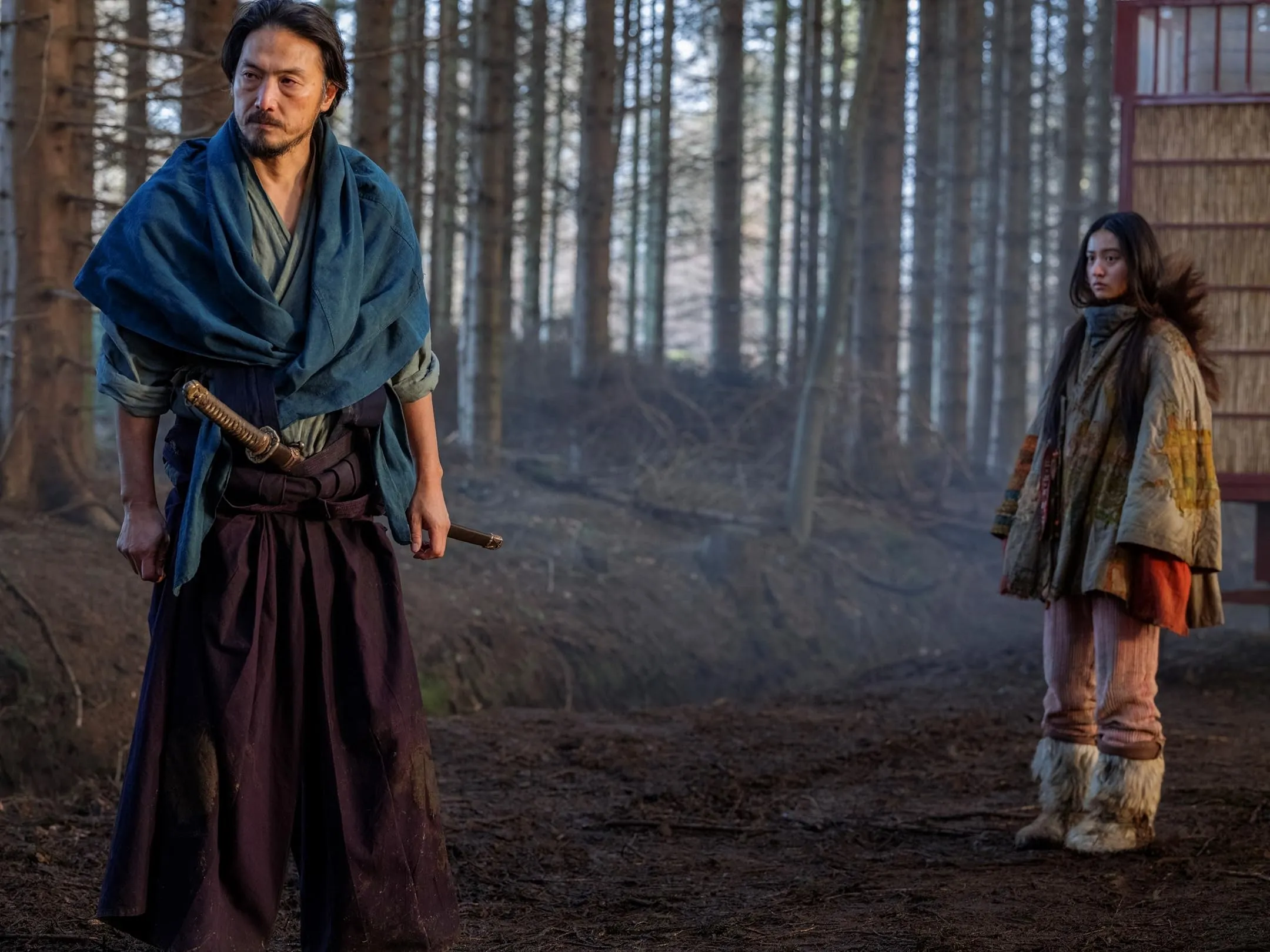
Yet moments of spoken dialogue land with less certainty; the film’s sparse lines sometimes slip from potency into flat measure, as if the words themselves shy from inhabiting Tornado’s fierce silhouette. Her gaze commands every eye in the frame, even when silence falls between thunderous breaths.
Takehiro Hira’s Fujin stands as a pillar of measured authority, the mentor who shapes Tornado’s code. His presence exudes a stoic calm, each folded sleeve and deliberate gesture signaling decades of disciplined training. When he speaks, his words land with quiet gravity, though the script often retreats into boilerplate counsel that undercuts his gravitas. Even so, his bond with Tornado rings authentic, forging an unspoken lineage between father and daughter.
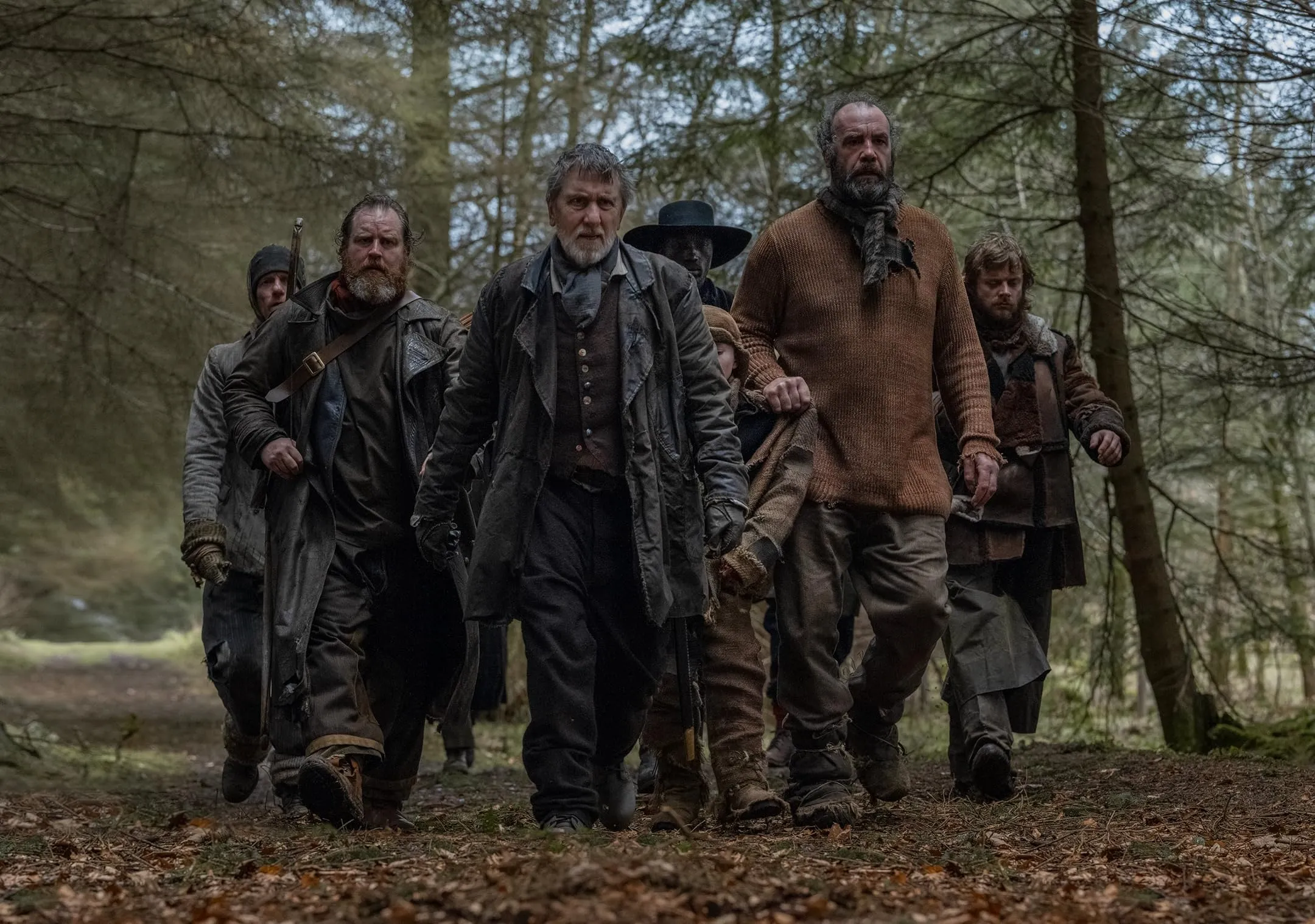
Tim Roth’s Sugarman embodies menace in quiet tones, crafting a villain who stalks without the familiar swagger of a mounted outlaw. Each shift of his gaze carries the threat of sudden violence, and his mercurial temper flares in gestures that blur civility and savagery. Subtle moments—a fleeting smirk after a comrade’s lapse—reveal a complex cruelty. Under Roth’s command, Sugarman becomes a dark mirror to Tornado’s disciplined restraint, embodying chaos in human form.
Jack Lowden’s Little Sugar navigates a turbulent moral compass, torn between filial loyalty and his own yearning for autonomy. He alternates steely resolve with moments of offhand wit, tipping the scales between menace and reluctant vulnerability. Lowden’s measured line delivery lends Little Sugar an unpredictable edge—his soft-spoken schemes resonate like hidden currents beneath a placid surface. The son’s quiet rebellion mirrors Tornado’s pursuit of self-determination, forging an unspoken parallel of generational struggle.
In the periphery, Rory McCann’s hulking Kitten, Jack Morris’s avian-named Squid Lips, and Bryan Michael Mills’s silent musician punctuate the world with visual oddity. Each casts a fragmentary presence, suggesting unseen backstories that haunt the film’s fringes and amplify its sense of an unfinished, ramshackle order.
Echoes in Silence
Jed Kurzel’s score arrives like a gathering storm, strings unfurling with taut urgency before receding into delicate motifs that haunt the edges of each scene. The music conjures both elegy and menace—sweeping arco lines that recall his work on The Babadook, yet here measured against open skies and barren fields. Moments of orchestral swell collide with abrupt stillness, allowing each note to reverberate long after it falls silent, as if the wind itself carries the echo of a bowed cello across the moorlands.
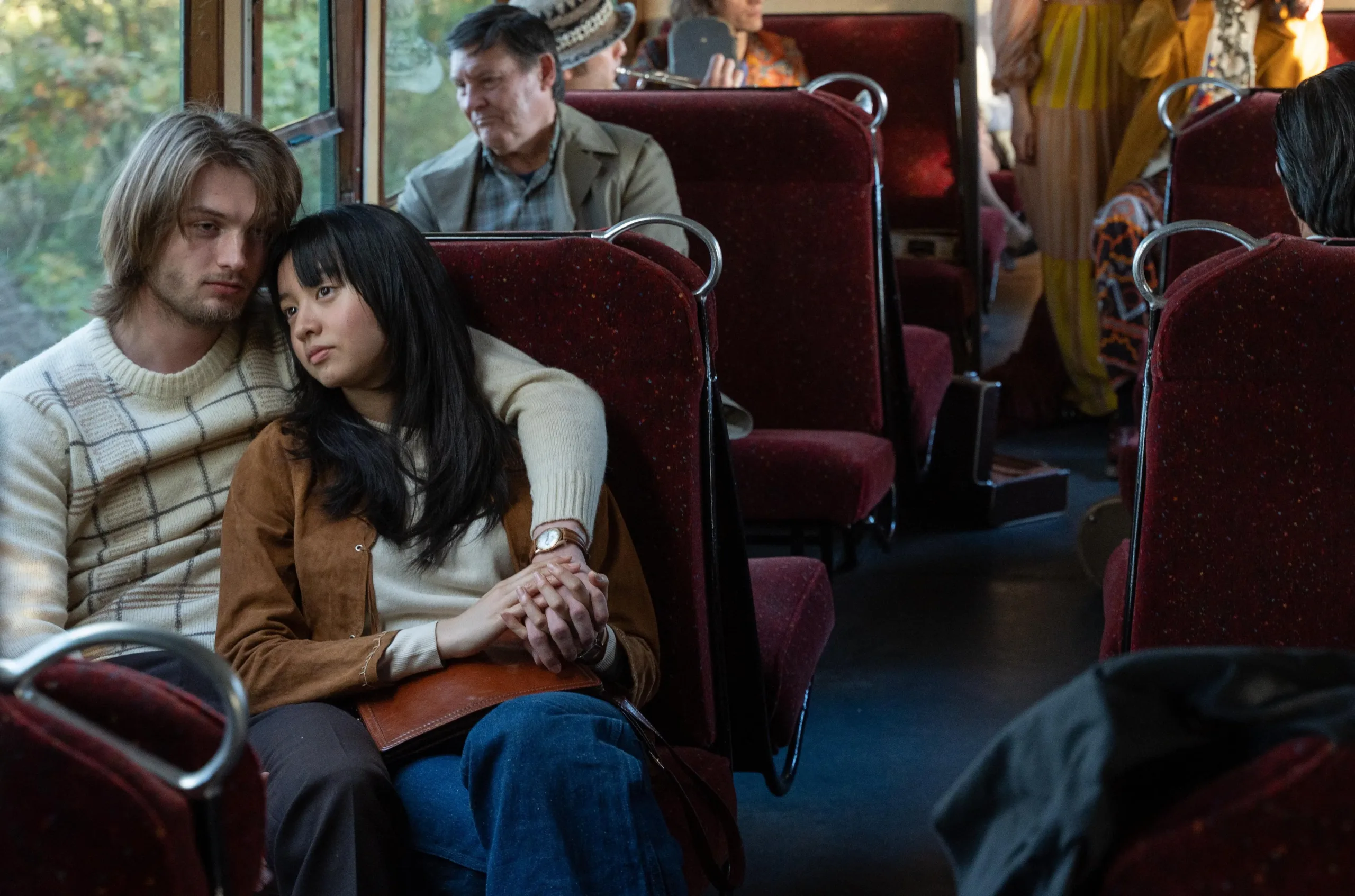
Sound design treats nature as a co-conspirator: gusts whip through heather, distant hoofbeats are replaced by the ominous crack of snapping twigs, and each footstep in mud rings with unexpected clarity. Dialogue is scarce and surgical, used not to inform but to punctuate—every whispered threat emerges like a bell toll in an empty chapel, a sonic exclamation that reshapes the space around it.
Revenge and justice blur into a single, unending cycle, underscored by the film’s fixation on puppetry as a metaphor for human agency: marionettes spilling crimson when severed, a stark reminder of artifice and control. Tornado’s samurai-crafted discipline clashes with a foreign land that views her as both spectacle and interloper, and the relentless procession of foot-bound bandits dissolves the boundary between civilization and wilderness, suggesting that true savagery lies not in geography but in the pursuit itself.
Embers in the Wind
Bristling with visual ambition, Tornado frames each landscape as though carved by wind and shadow. Genre tropes—samurai swordplay and western grit—interlock in a choreography that feels both familiar and startlingly fresh. Kôki commands the screen with ritualized combat that pulses like music, while Tim Roth’s Sugarman looms with a quiet cruelty that unsettles every scene. Robbie Ryan’s rain-lashed compositions bathe the countryside in desaturated grays, letting tension coil around every thatched roof and muddy ford.
At times, narrative threads flicker without resolution, leaving character motivations half-glimmed. The sparse dialogue—so often an asset—occasionally slides into flat exposition, puncturing the film’s taut atmosphere. When the climax shifts into widescreen vengeance, it leans hard into familiar genre beats, jarring against the elemental dread established earlier. These moments of uneven pacing and tonal pivot dampen the film’s otherwise relentless momentum.
Fans of art-house westerns and samurai cinema will find much to admire in Tornado’s austere imagery and ritualized combat. Those seeking a traditional narrative spine or layered character arcs may feel its pacing and brevity leave too many stones unturned. Yet the film’s audacity—its willingness to forsake convention in pursuit of elemental tension—marks it as a rare, if imperfect, cinematic gamble.
Full Credits
Director: John Maclean
Writer: John Maclean
Producers: Leonora Darby, James Harris, Mark Lane
Executive Producers: Joe Simpson, Simon Williams, Andy Wang, Matthew Chausse
Cast: Jack Lowden, Rory McCann, Tim Roth, Alex Macqueen, Takehiro Hira, Jamie Michie, Ian Hanmore, Douglas Russell, Kōki, Jack Morris, Sammy Hayman, Raphaël Thiéry, Bryan Michael Mills, Nathan Malone, Nina Barnett, Dennis Okwera
Director of Photography (Cinematographer): Robbie Ryan
The Review
Tornado
Tornado stands as a defiant fusion of samurai precision and western vastness, its wind-blasted frames and ritualized combat forging a visceral, almost mythic atmosphere. Occasional gaps in character depth and a late tonal lurch into conventional revenge soften its impact, yet the film’s stark ambition and striking visuals linger long after the credits.
PROS
- Striking, widescreen compositions that marry intimacy and vastness
- Bold fusion of samurai discipline with western frontier grit
- Kôki’s physicality and weapon work command every frame
- Tim Roth’s quiet, unpredictable menace elevates the stakes
- Wind-driven soundscape and Kurzel’s strings create visceral atmosphere
CONS
- Sparse dialogue occasionally slips into flat exposition
- Several narrative threads feel under-explored
- Third-act shift into standard revenge tropes jars the earlier tone
- Supporting characters lack full emotional development







