

























![Kingdom Hearts Collection [I-III] Review](https://gazettely.com/wp-content/uploads/2026/10/Kingdom-Hearts-Collection-I-III-1-360x180.webp "Kingdom Hearts Collection [I-III] Review: KHII Holds Steady as Newer Entries Fluctuate 37")



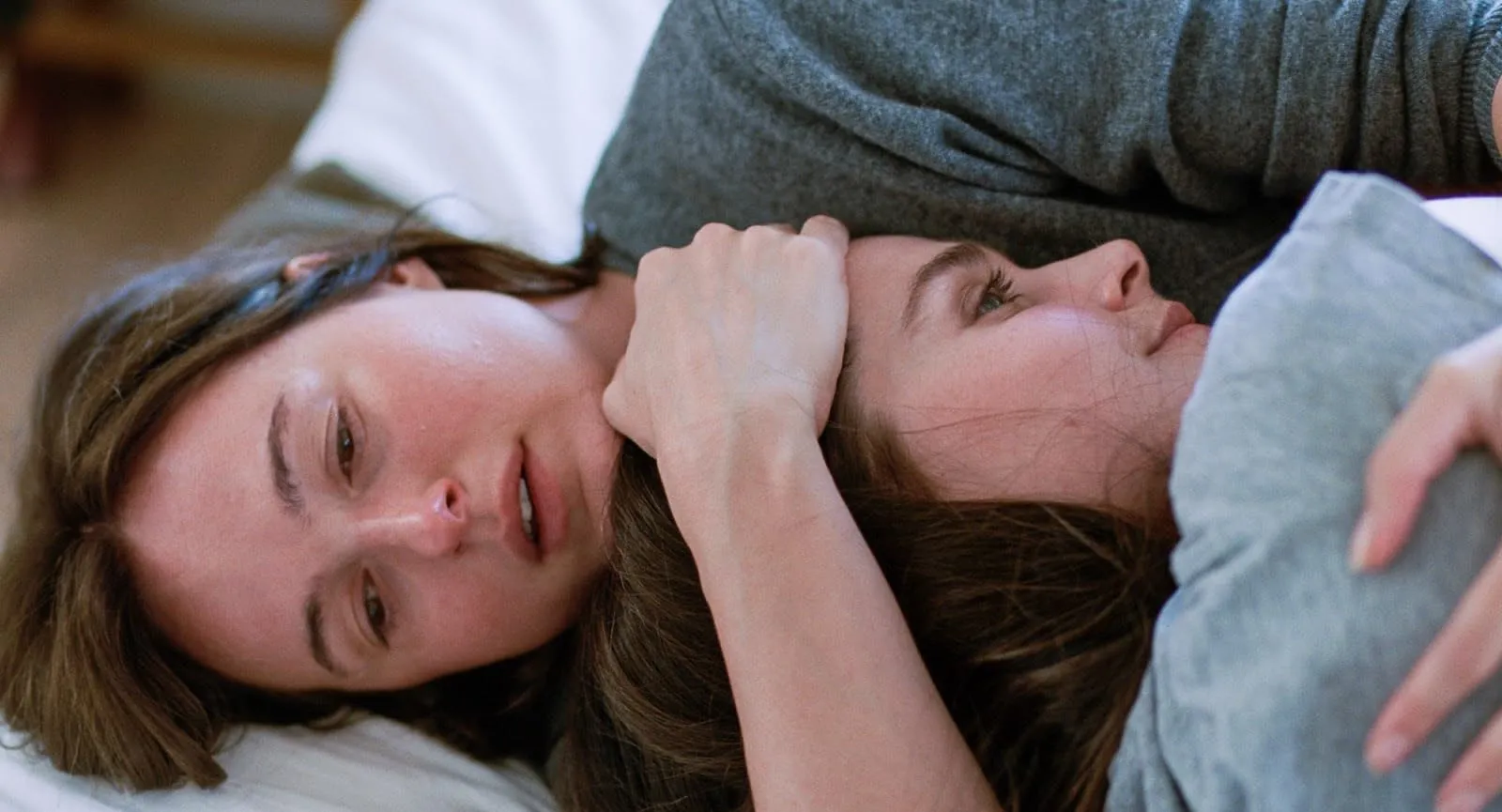

The film opens on a family home so laden with memories it seems to breathe (and occasionally creak in protest), immediately anchoring us in an atmosphere of lingering echoes. Nora Borg, a celebrated Oslo stage actress, stands frozen in her costume—panic attacks her unseen co-star—while outside, the world demands performance.
Her estranged father, Gustav Borg, returns not with flowers or apologies but with a screenplay drawn from the very walls that witnessed his own mother’s final act. It’s therapy by proxy—an auteur’s attempt to excavate buried truths through celluloid rather than confession.
That ancestral mansion, all scarlet timber and sagging floors, serves as both set and symbol: a repository of joy and despair, its very architecture split down the middle like a family portrait gone awry.
When Nora rejects her father’s offer, an American starlet, Rachel Kemp, slides into the vacant role—hair dyed to mimic Nora’s darkness, accent coached to pass for her voice—prompting an identity crisis that feels eerily akin to cultural appropriation. (Artistic colonialism, anyone?)
Joachim Trier orchestrates this intimate drama with a meta-theatrical flourish—scenes within scenes—while Kasper Tuxen’s lens captures Oslo’s cold light as if it were another character. Hania Rani’s piano punctuates the silences, its minimalism allowing the film’s subterranean grief to resonate without embellishment.
In these opening moments, Sentimental Value stakes its claim as a meditation on legacy and the debts we inherit—not just from parents, but from history itself.
Architectures of Tension and Memory
The film’s momentum is set in motion at a funeral wake (that curious social ritual where grief is both performed and policed), as Gustav Borg strides back into his daughters’ lives with a filmmaker’s flair for drama. Almost immediately, we cut to Nora’s backstage meltdown—an anxiety attack so raw it feels like an existential punchline (art as therapy or theatrical self-harm?).
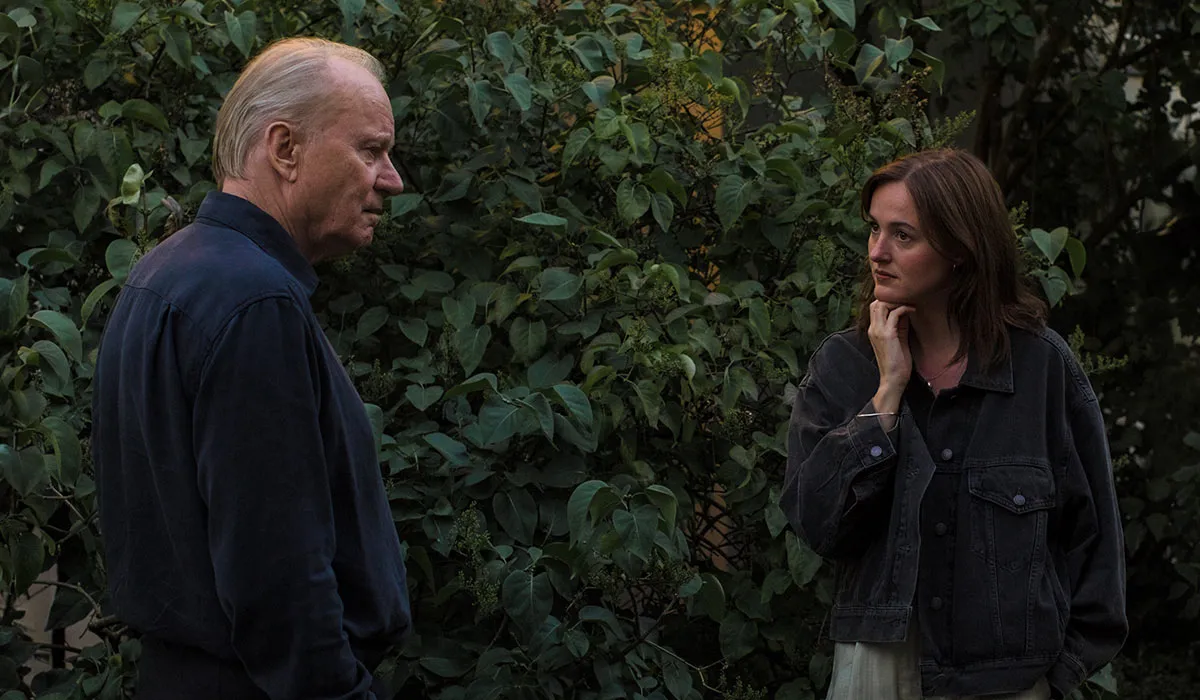
From there, Trier unfolds a layered flashback framework. Nora’s childhood essay drifts through the soundtrack, mapping the family home’s lineage from post-war reconstruction to its present decay—an emblem of Norway’s own uneasy relationship with memory. Key reveries surface: the grandmother’s suicide (a legacy of trauma hinted to stem from Nazi-era persecutions), early scenes where young Nora reaches for a distant father whose lens was always pointed elsewhere.
Into this palimpsest steps the film-within-a-film: Gustav’s semi-autobiographical screenplay, meticulously crafted to cast Nora as his mother rather than his daughter. When Nora balks, an American starlet, Rachel Kemp, is coiffed and coached to mimic Nora’s accent and posture—an act of cultural ventriloquism that raises questions about authenticity and artistic appropriation.
Tension then ripens between the sisters. Agnes embodies pragmatic domesticity—child, husband, routines—while Nora’s inner turmoil radiates like static. Gustav, blissfully ignorant of collateral damage, insists on shooting in the decaying mansion, as if the ghosts of the past might lend credibility to his art.
The climax arrives when Nora deciphers the screenplay’s true focus: is this penance for her grandmother’s suffering or a narcissistic requiem for Gustav’s own legacy? A tableau of heirlooms—photographs, journals, a cracked porcelain doll—becomes the site of a fraught confession between sisters.
And then—a smash-cut to black.
In the final beats, the house’s battered façade hints at tentative restoration (a national monument of familial repair, perhaps). Trier leaves us suspended between ruin and rebirth, suggesting that some structures—architectural or emotional—must be demolished before they can be rebuilt.
Embodied Echoes: The Borgs and Their Doppelgängers
Renate Reinsve’s Nora is a study in kinetic stasis—stage-fright so visceral it borders on performance art (panic as spectacle?). Her opening collapse feels like a microcosm of late-stage capitalist burnout, where even creative vocations can become self-imposed prisons. And yet, beneath the trembling surface lies a paradoxical drive: a yearning to reclaim the paternal gaze that once abandoned her.
Stellan Skarsgård’s Gustav, by contrast, is cinema’s elder statesman turned ingénue in the school of familial remorse. He speaks in the lingua franca of auteurs—long takes, self-referential commentary, casual barbs at streaming platforms—while remaining blissfully unaware of the collateral emotional fallout. His charm is kinetic—an oscillation between cunning seducer of cameras and fumbling seeker of forgiveness. (His late-career anxiety about legacy recalls the anxieties of post-colonial nations grappling with their artistic narratives—who tells our story, and whose voice dominates?)
Inga Ibsdotter Lilleaas as Agnes provides a pragmatic foil: her domestic tableau—husband, child, order—suggests Scandinavian social democracy in miniature, a functional system contrasting Nora’s chaotic subjectivity. Agnes curates the museum of family memory, deciding what artifacts to preserve. Yet even she cannot remain neutral; in her gentle mediation, we glimpse the emotional labor often invisible in both households and welfare states.
Elle Fanning’s Rachel Kemp arrives like Hollywood’s cultural exports—bright, polished, occasionally tone-deaf. Her accent lessons and hair-dye rituals feel like a geopolitical summit on identity politics: who has the right to inhabit another’s narrative? Fanning threads the needle between caricature and empathy—her monologue scene transforms what could be a stunt into genuine pathos.
Even Anders Danielsen Lie, in his brief therapist-by-proxy role backstage, underscores cinema’s therapeutic pretensions. And the house itself—its creaks and voice-over memories—functions as a character, a repository of intergenerational trauma. In this ensemble, performance and persona blur: art becomes an inheritance, passed down with all its unresolved debts.
Echoes of the Unspoken
In Sentimental Value, silence is as heavy as any spoken line. The Borg family’s unvoiced truths—Gustav’s abandonment, Nora’s festering resentment—form a perpetual undercurrent, akin to the Cold War’s frozen standoff: threats never articulated, yet always implied. (Is it any wonder that decades of post-war Nordic reticence find their echo in Nora’s panic attacks?) The film asks: can mercy ever fill the void left by lifelong silence, or does it merely paper over the cracks?
The ancestral Oslo house stands as both archive and mausoleum. Its red-and-black timbers hold laughter in one beam, tears in another. When Agnes sorts through her mother’s keepsakes—an old medical diploma, a cracked porcelain doll—each object becomes a narrative fulcrum, shifting emotional leverage with startling weight. Trier’s “artifact therapy” (my term for this decluttering-as-exorcism) elevates mundane items to talismans of memory and grief.
Art here functions as both scalpel and salve. Gustav wields filmmaking like a psychoanalyst’s couch, probing wounds with his camera’s unblinking gaze. Yet there’s a fine line between catharsis and exploitation: is his semi-autobiographical screenplay a sincere excavation of familial trauma or the narcissism of small differences? (Hint: the American stand-in—Rachel Kemp—wears Nora’s identity like a costume, exposing the ethical tightrope of art-as-therapy.)
Casting becomes a cipher for identity’s tenuous nature. Nora’s refusal to play her own grandmother—and the subsequent hiring of Rachel—mirrors cultural appropriation debates: who has the authority to inhabit another’s story? Intergenerational reverberations ripple outward, from grandmother’s wartime suffering (a Holocaust echo) to mother’s profession as therapist. Identity, it seems, is a palimpsest of inherited narratives.
Finally, Trier probes forgiveness versus mercy. Forgiveness demands absolution; mercy offers allowance. Their distinction plays out in a series of blackout transitions, each abrupt cut a punctuation mark on unsaid emotions. These blackouts are not mere stylistic flair but thematic ellipses—inviting us to ponder the speechless spaces between apology and acceptance.
Architecture of the Frame
Joachim Trier’s direction in Sentimental Value feels like a philosophical séance—each voice-over (the childhood essay, still echoing) acting as a Greek chorus for familial ghosts. His pacing is deliberate, almost dialectical: scenes unfold in measured tableaux, only to be punctured by sudden ruptures of emotion (or blackout). Collaborator Eskil Vogt’s screenplay balances wry humor (“Nora, could you breathe?”) with existential weight, crafting dialogue that feels equal parts Baroque confession and backstage stand-up routine.
Kasper Tuxen’s cinematography bathes Oslo in a chiaroscuro that recalls Nordic noir yet softens into warm domesticity when the camera drifts through the Dragestil mansion’s corridors. Interior frames—family meals, therapy mementos—are shot with a painter’s eye, while performance scenes (Nora on stage, Rachel in rehearsal) adopt a stadium-wide perspective, underscoring the gulf between public persona and private fracture.
Editing here is nothing if not meta-textual. Smash-cuts to black arrive like emotional cliffhangers, akin to binge-watch culture’s ominous “Next on…” alerts. Present-day scenes are intercut with archival-style flashbacks (the grandmother’s suicide, early family rituals) in a manner that feels like scrolling through a private Instagram archive—intimate, fragmented, sometimes overwhelming.
Hania Rani’s score exemplifies minimalist pathos. Her piano motifs punctuate silence rather than fill it, conjuring an “absence economy” of grief. Period tracks—Terry Callier’s “Dancin’ Girl,” Labi Siffre’s eerie strings—anchor the film in a nostalgia economy, reminding us how music (like memory) is both personal and collectively curated.
Production design leans into symbol-laden aesthetics. The red-and-black façade of the ancestral house (a national-romantic relic) bears a literal crack—a visual thesis on Norway’s own historical schisms. Costuming contrasts further this dialectic: Nora’s muted hues of charcoal and slate suggest inward collapse, whereas Rachel’s technicolor wardrobe telegraphs Hollywood’s glossy veneer. In these choices, Sentimental Value crafts a tapestry where every frame doubles as commentary on art, heritage, and the tectonic plates of memory.
Resonant Ruptures
Nora’s backstage implosion—tears she can’t articulate—becomes a visceral plea for authenticity. Clutching her mother’s discarded therapy notes (a literal paper trail of emotional inheritance), she begs the silence to speak. It’s cinema as psycho-drama: raw, unfiltered, almost uncomfortably real.
Agnes’s breakthrough arrives amid a pile of dusty keepsakes: her tremulous voice reading their mother’s journals aloud, each word a hammer striking years of brittle restraint. Sibling solidarity emerges not from grand gestures but from shared, tremoring breaths.
Gustav, meanwhile, finds solace in directing his grandson—an echo of the father he never was. In that gentle exchange, past absences reverberate like an empty chair at a family table. It’s a quiet moment that carries the weight of unspoken apologies.
Tenderness dances with tragedy throughout Trier’s frames. The film never flinches from the burdens of trauma, yet allows compassion to bloom within fissures of grief. The house’s cracked façade lingers in the memory: a testament to calamity, yes, but also to potential repair.
Sentimental Value suggests that art can function as mnemonic alchemy—transforming sorrow into shared understanding. It posits creativity not merely as expression but as communion: a way to bridge the silences that so often divide us.
Sentimental Value premiered at the 2025 Cannes Film Festival on May 21, 2025, where it received a 19-minute standing ovation and was nominated for the Palme d’Or.
Full Credits
Director: Joachim Trier
Writers: Joachim Trier, Eskil Vogt
Producers: Maria Ekerhovd, Andrea Berentsen Ottmar, Nathanaël Karmitz, Elisha Karmitz, Juliette Schrameck
Cast: Renate Reinsve (Nora Berg), Stellan Skarsgård (Gustav Berg), Inga Ibsdotter Lilleaas (Agnes Borg Pettersen), Elle Fanning (Rachel Kemp), Cory Michael Smith, Catherine Cohen (Nicky), Anders Danielsen Lie (Jakob), Jesper Christensen (Michael), Jonas Jacobsen (Anders), Ash Smith
Director of Photography (Cinematographer): Kasper Tuxen
Editor: Olivier Bugge Coutté
Composer: Hania Rani
The Review
Sentimental Value
Sentimental Value is a quietly powerful meditation on how art can excavate buried grief and reshape family ties. Trier’s camera lingers on the Oslo house as if it were a confidant, while Reinsve and Skarsgård deliver performances that register both fissures and fleeting warmth. Its deliberate tempo (and a few well-aimed sternarisms about streaming culture) rewards patient viewers with a surprisingly fresh take on reconciliation through creation.
PROS
- Nuanced exploration of family trauma and reconciliation
- Standout performances by Renate Reinsve and Stellan Skarsgård
- The Oslo house functions as a rich, symbolic setting
- Sharp, self-aware commentary on the film industry
- Soundtrack and editing that punctuate emotional beats
CONS
- Pacing may feel sluggish for some viewers
- Rachel Kemp’s storyline lacks depth
- Key revelations can be predictable
- Sparse narrative leaves certain subplots underexplored
- At 135 minutes, the runtime tests patience







