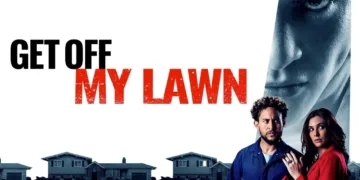



















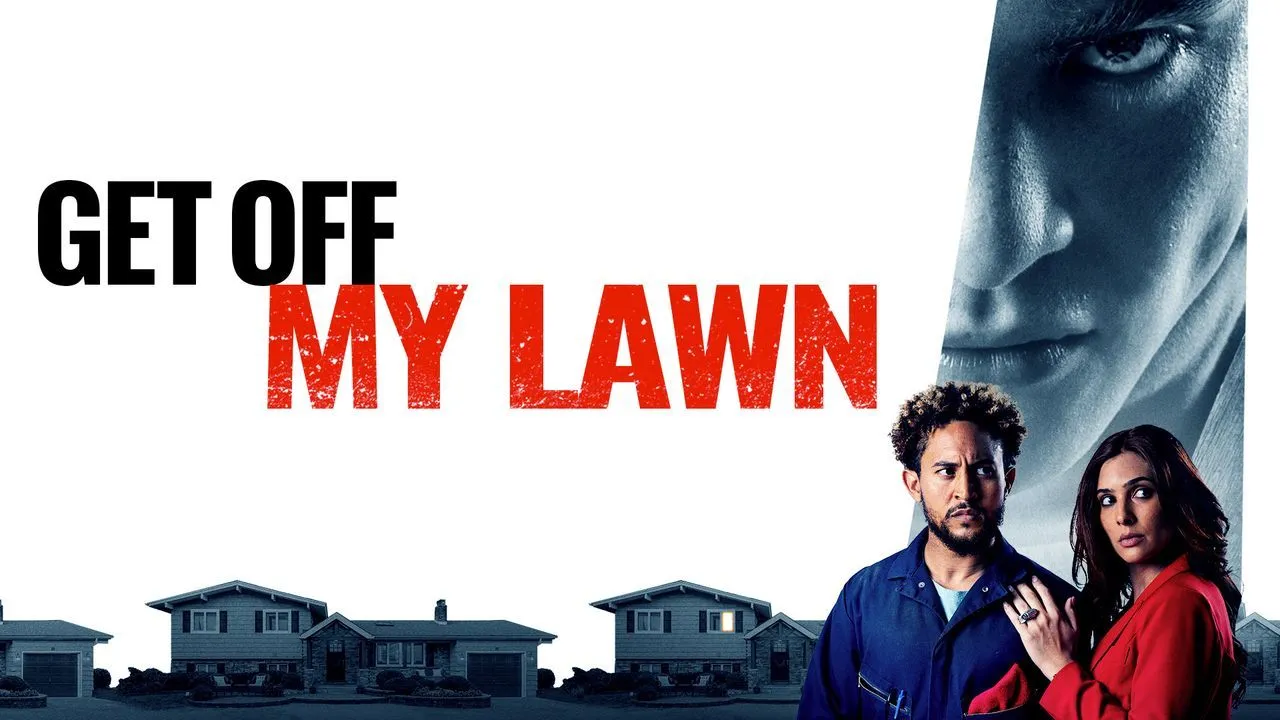

The ache for a place to call one’s own is a foundational human prayer. For Jason and Jackie, the answer arrives as a suburban house, a structure of wood and wire acquired at a price that feels like a benediction.
Yet, they purchase not an empty vessel but a repository of a life already lived, acquiring the home “as is,” complete with its silent relics and lingering histories. Into their nascent dream steps Alec, the grandson of the man who died within these walls.
He is a portrait of polite youth, all clean lines and khakis, but his smile does not reach his eyes. It is a fixed, placid thing, a mask concealing a ferocious attachment to this piece of land, this collection of rooms. The couple has bought a house, but they have inherited its ghost.
A Litany of Small Violations
Possession, the film suggests, is merely a legal fiction; a piece of paper that holds no power against the force of memory. True ownership is an act of will, and Alec’s will is absolute, forged in the crucible of loss. His campaign to reclaim his ancestral space begins not with overt aggression, but with a series of quiet, unnerving corrections that feel like a priest tending his forsaken altar.
Furniture is moved back to its original positions in the dead of night, a silent, desperate insistence that the past cannot be rearranged, that time itself can be held at bay. He materializes inside the home, a phantom of routine, pointing to a plaque of “house rules” as if it were scripture from a lost religion.
This is a conflict between two opposing worldviews. Jackie feels the territorial violation in her bones, an ancient, pre-verbal alarm that recognizes a fundamental threat to her sanctuary. She sees the mythic dimension of the struggle.
Jason, a man of modern reason, attempts to pathologize the boy’s behavior as unprocessed grief, a problem to be managed. His logic is a blunt instrument against Alec’s ritualistic devotion. This devotion soon sours into a grotesque public performance, a sequence of “pranks” executed with his friends and designed for social media’s empty, ravenous gaze.
Here is the film’s sharpest cultural critique: a sacred, private obsession with place is twisted into a hollow bid for digital validation, a symptom of a sickness where genuine pain is commodified into content. This obsession is born from a hollowed-out family life—a vacuum of stability he projects onto the house, his only constant.
Laughter in the Abattoir
Amara Cash directs not with the heavy hand of dread but with the strange, unnerving levity of a fever dream, creating a work that defies easy categorization. The film is a disquieting dance between kitschy satire and home-invasion horror, refusing to let the audience settle into a single emotional state.
It finds its terror not in the concealing dark but under the flat, unforgiving light of the suburban sun. The horror unfolds in bright kitchens and by sparkling pools, suggesting the abyss is not a hidden place but a permanent feature of our mundane landscape.
This choice strips the genre of its comforting shadows, forcing a confrontation with evil in the open. The aesthetic reinforces this idea. The antagonist is not a shadowy monster but a boy in a pressed polo shirt, his clean presentation a chilling statement on the cheerful banality of menace. It whispers that the most profound decay can be masked by a pleasant facade.
The cinematography amplifies this sense of dislocation. Wider, static shots create a feeling of clinical detachment, observing these human insects struggle in their sun-drenched terrarium. The camera becomes an indifferent god, watching the absurd rituals of its creation from a distance.
The manicured lawns and identical houses form a kind of prison, a grid upon which these desperate, violent acts are performed. The resulting humor is sharp and uncomfortable, the laughter one might emit in the face of the absurd. It is the sound of recognizing the futility of trying to impose meaning on a situation that has none.
The Banality of a Grin
At the vacant heart of the film is Jonah Hwang’s mesmerizing performance as Alec. His character is less a person than a void given human form, and Hwang’s fixed, unwavering grin is the event horizon from which no warmth or authentic emotion escapes.
It is a masterful depiction of emptiness, of a personality constructed entirely from received rules and misplaced nostalgia. The primary threat he poses is not what he might do, but what he is—or rather, what he is not. Against this vacuum, the performances of Tahj Mowry and Camila Banus provide a necessary human gravity.
They represent the world of consequence, of pain, of stakes. Their tangible terror is our only entry point into the human cost of Alec’s soulless crusade. Their fight for a home becomes a proxy war for meaning itself against a force that is inherently meaningless.
The film’s periphery is populated by caricatures who underscore a world grown too apathetic to respond. The perpetually disengaged police officer, clutching his iced coffee like a shield against involvement, is a symbol of systemic failure. Society, it seems, is too sedated to notice the cancer growing within its own tidy homes.
The film offers a darkly amusing ride, but one that feels consciously contained. It stops short of absolute terror because a true, sustained confrontation with Alec’s emptiness would be unbearable. It pulls back from the void it so effectively opens, offering a violent, bloody climax that feels more manageable than the existential dread it flirts with. It gives us an exorcism, but refrains from forcing us to live with the ghost.
Get Off My Lawn was released on July 11, 2025, and is a Tubi Original movie, available exclusively on Tubi in the United States and Canada.
Full Credits
Director: Amara Cash
Writers: Arland Digirolamo, Alana Wexler
Producers and Executive Producers: Tracy Chitupatham, Neil Elman, Kate Tumanova
Cast: Tahj Mowry, Camila Banus, Jonah Hwang, Kayla Maisonet, Tyler Lofton, Melissa Jo Bailey, Sonalii Castillo, Christine Dunford, Isaac Gonzalez Rossi, Lydia Look, Mike Markoff, Georgia Warner, Max E. Williams, Ben Zelevansky
Director of Photography (Cinematographer): Josh Maas
Editors: Don Money
The Review
Get Off My Lawn
Get Off My Lawn operates as a disquieting piece of pop nihilism, a sun-drenched fever dream that finds more bleak humor than genuine terror in its suburban nightmare. Anchored by a truly unnerving central performance, the film probes the emptiness behind a manicured facade but pulls back before the abyss becomes too vast. It is a sharp, self-aware, and wickedly entertaining satire that chooses to unsettle rather than outright horrify, making for a memorable and thought-provoking watch.
PROS
- A chilling and unforgettable lead performance from Jonah Hwang as the antagonist.
- A distinct and effective tonal blend of dark comedy, satire, and psychological thriller.
- Intelligent direction and cinematography that utilize bright, daytime settings to create unease.
- Thought-provoking themes examining suburban anxiety, memory, and modern nihilism.
CONS
- Avoids exploring the deepest, most terrifying implications of its premise.
- The methodical pacing may feel slow for viewers expecting a conventional thriller.
- Pulls its punches in the final act, opting for a safer resolution over existential dread.
- Supporting characters are intentionally one-dimensional, reinforcing the satire but limiting emotional depth.