

























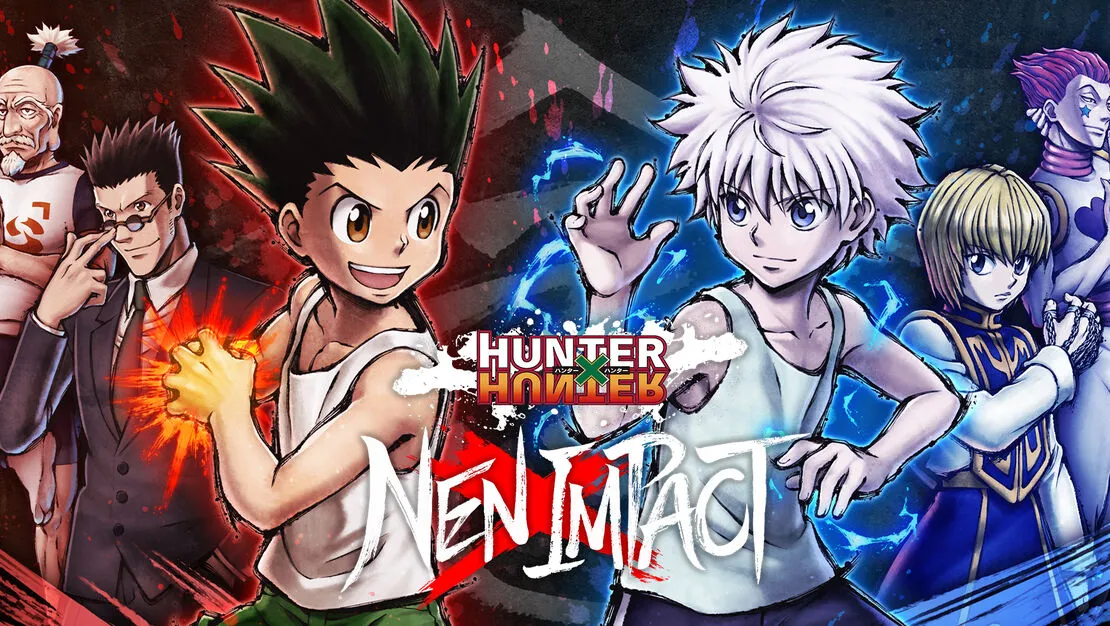

When a beloved series like Hunter x Hunter finally gets a major fighting game, a certain kind of hope ignites. When you hear it’s a 3v3 tag-team fighter from Eighting, the developers behind the legendary Marvel vs. Capcom 3, that hope catches fire.
The mind immediately fills with images of high-speed, chaotic battles that do justice to the source material’s intricate power system. Hunter × Hunter: Nen × Impact arrives carrying all of that expectation. From the first moment, however, you can see the friction between its ambitious mechanical design and its visible budget limitations.
This isn’t just a game; it’s a proposition. It asks a difficult question: can a truly fantastic fighting engine at its core be enough to carry an experience that feels underdeveloped in almost every other respect? The answer is complicated.
The Controlled Chaos of Combat
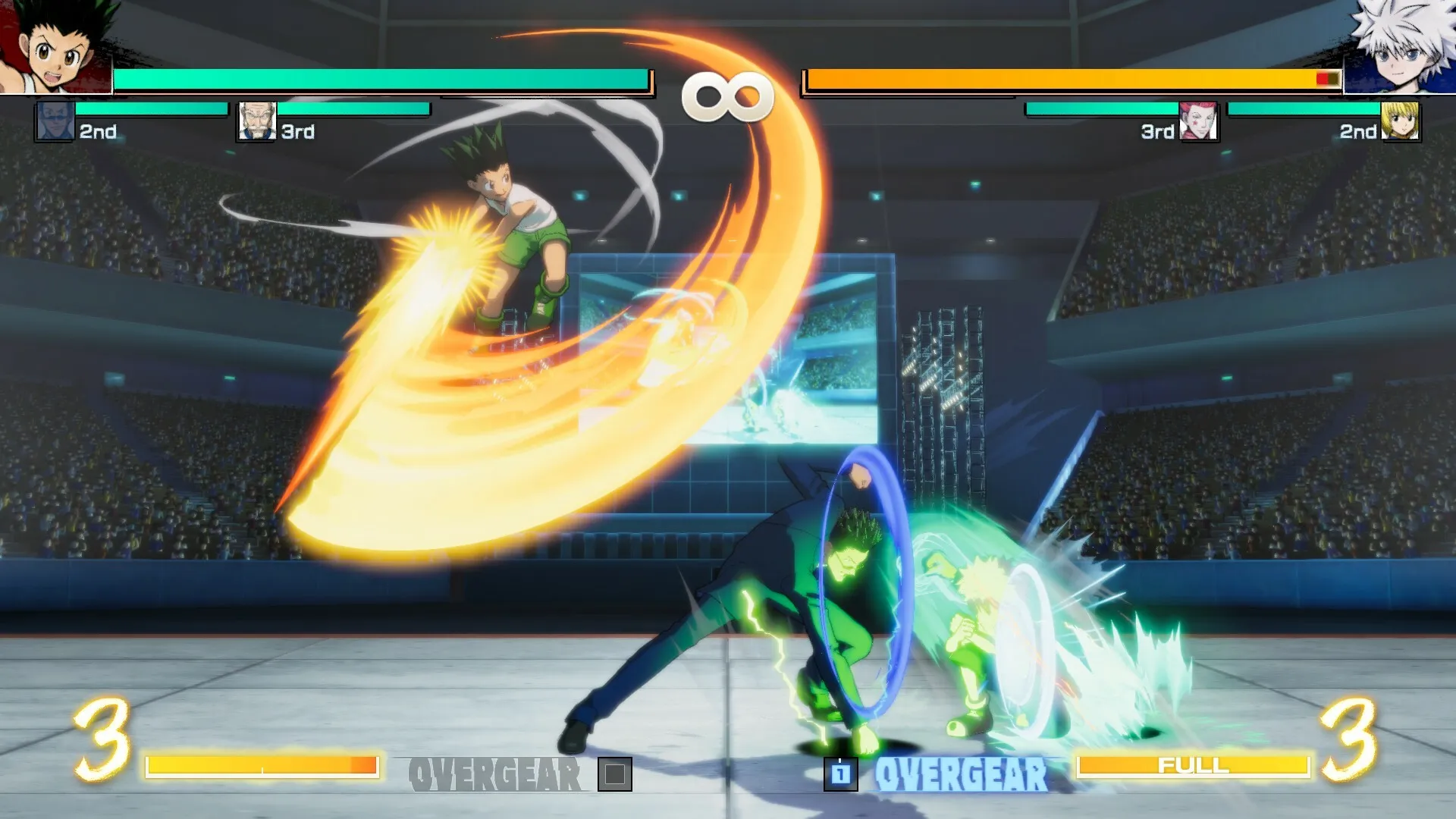
At its heart, Nen x Impact is a dance of beautiful, broken chaos, and I mean that as a compliment. The game moves with a blistering speed that feels right at home for anyone who spent time with the Vs. series. In a three-on-three format, the screen is a constant explosion of assists, character swaps, and projectiles. The design philosophy here is clear: more is more.
The controls lean into this by simplifying execution. Gone are the traditional quarter-circle motions that form the muscle memory of the genre. Instead, a dedicated “Arts” button, paired with a direction, unleashes your character’s signature attacks.
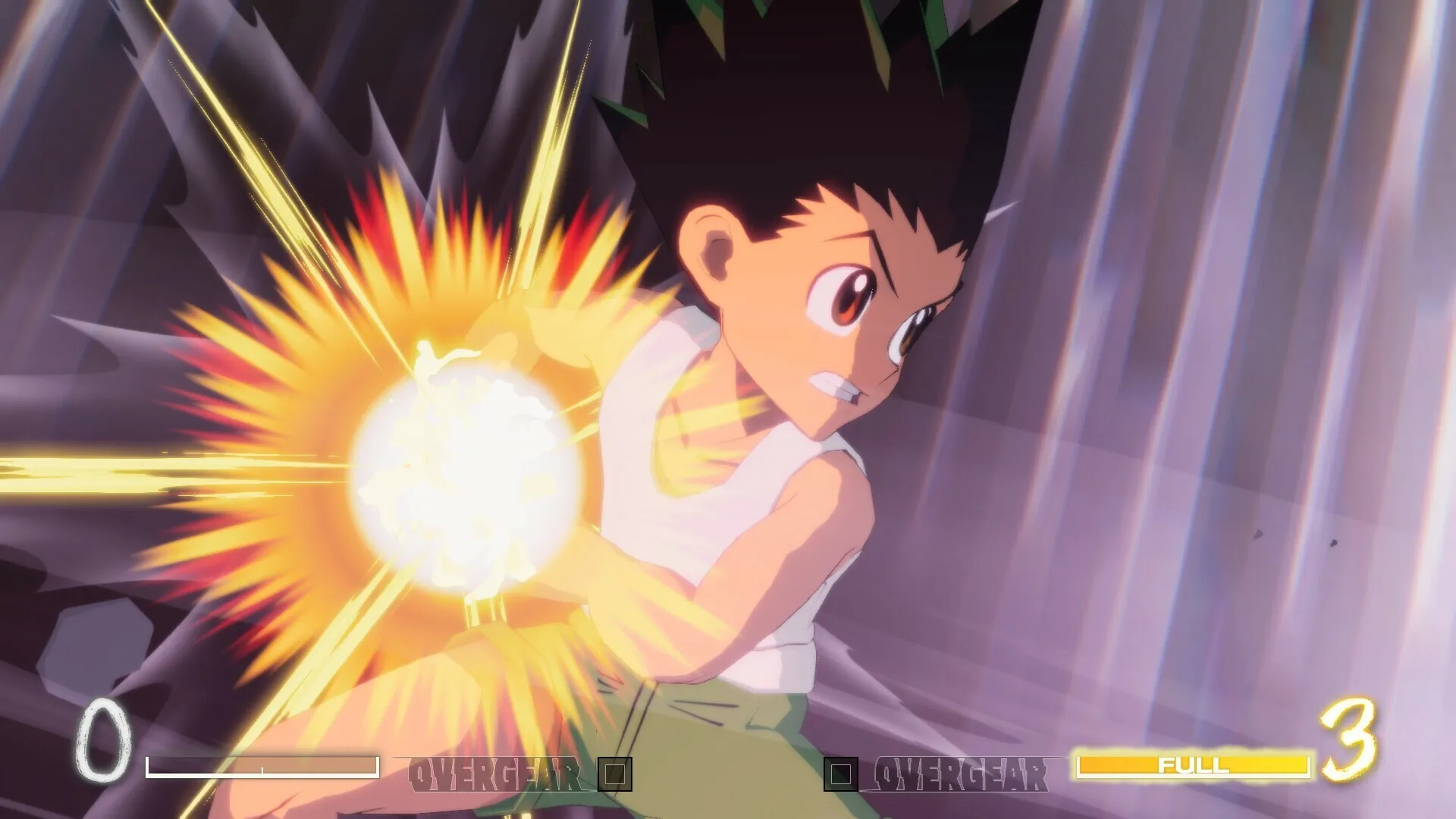
This makes the game incredibly approachable, allowing new players to immediately perform Gon’s Jajanken or Killua’s Godspeed. The trade-off is a subtle loss of nuance and the satisfaction that comes from mastering a difficult input. It’s a definitive design choice that prioritizes immediacy over legacy skill.
Your primary defensive maneuver, the Nen stance, allows you to spend meter to repel an opponent’s onslaught, creating a vital gasp for air in a game that is otherwise relentlessly offensive. It’s the one brake pedal in a system that’s all gas. The combo system is where this philosophy truly shines.
It feels incredibly open, encouraging you to stitch together normals, specials, and assists into long, creative strings that can feel immensely satisfying to discover. A “Rush” button provides a simple but potent autocombo, ensuring no one is left out of the fun, though its high damage output can sometimes devalue the effort of learning manual routes.
This is a game where health bars are treated as a suggestion, and the high-power madness is the entire point. It fully commits to its identity as an over-the-top fighter, for better and for worse.
Characters in Spirit, Not Always in Practice
A fighting game based on a beloved story lives or dies on how well it translates its characters’ souls into a move set. This is where Nen x Impact is frustratingly inconsistent, and where the emotional connection for fans can begin to fray.
With a launch roster of only 16 characters, which feels sparse for a 3v3 fighter and can lead to repetitive team compositions online, there isn’t much room for error. To its credit, the cast is quite diverse. The lightning-fast rushdown of Killua feels worlds apart from the hulking, powerful presence of Uvogin or the tricky zoning of Kite.
When the adaptation works, it’s a joy. Gon’s mechanics, which revolve around his iconic Rock-Paper-Scissors ability, feel thoughtful and true to his character arc. You feel his determination in every charged punch.
The problem is that this level of care is not universal. Key figures like Isaac Netero and the ant king Meruem, characters defined by their unique philosophies and terrifying combat abilities in the story, feel disappointingly generic here. Netero’s moveset, for instance, fails to capture the chilling, divine horror of his 100-Type Guanyin Bodhisattva.
He feels like a standard “fast old master” archetype, a hollow echo of his true self. This is more than a mechanical issue; it’s a narrative failure. The game is missing those small, loving details—unique intro animations between Kurapika and a Phantom Troupe member, for example—that make a licensed game feel like a true celebration of its source material. As it stands, it often feels like you’re controlling a model of a character rather than embodying their spirit, and that disconnect is a profound missed opportunity.
A Narrative Told Through Bullet Points
The emotional core of Hunter x Hunter is its sprawling, character-driven narrative, filled with complex relationships and devastating turns. Nen x Impact’s single-player content treats this rich history as little more than an afterthought, a functional checklist to be completed.
The story mode is perhaps the greatest casualty. It reduces entire sagas, like the poignant and brutal Chimera Ant arc, to a handful of fights stitched together by static screencaps from the anime and brief text summaries.
There is no pacing, no emotional weight, and no attempt to convey the story for someone unfamiliar with it. It’s a highlight reel stripped of all context and feeling, turning profound moments of loss and victory into simple flavor text between matches.
The other modes offer little more substance. There is a standard Arcade Mode without any narrative payoff, a feature that in older games often provided satisfying character vignettes. Time Attack is a simple race against the clock.
Heaven’s Arena offers a 31-fight survival challenge that feels more like a punitive grind than a rewarding test of skill, as a single loss forces you to start over completely. The Combo Trials are a profound missed opportunity. Instead of providing preset combos to teach players a character’s routes and the game’s combo theory, the mode presents vague damage challenges.
It effectively removes the bridge between casual button-mashing and intentional, competent play. The one saving grace is the Training Mode, whose detailed move list provides clear, practical information about every attack—a small beacon of thoughtful design for players willing to teach themselves.
A Performance Hindered by Static
A fighting game’s presentation is essential for selling the impact of its action, and it’s here that the game’s low budget is impossible to ignore. This isn’t just about graphical fidelity; it’s about atmosphere. The world of Hunter x Hunter is vibrant and imaginative, yet the stages are static and uninspired, with generic backdrops like “forest” or “desert” that fail to capture any of that magic.
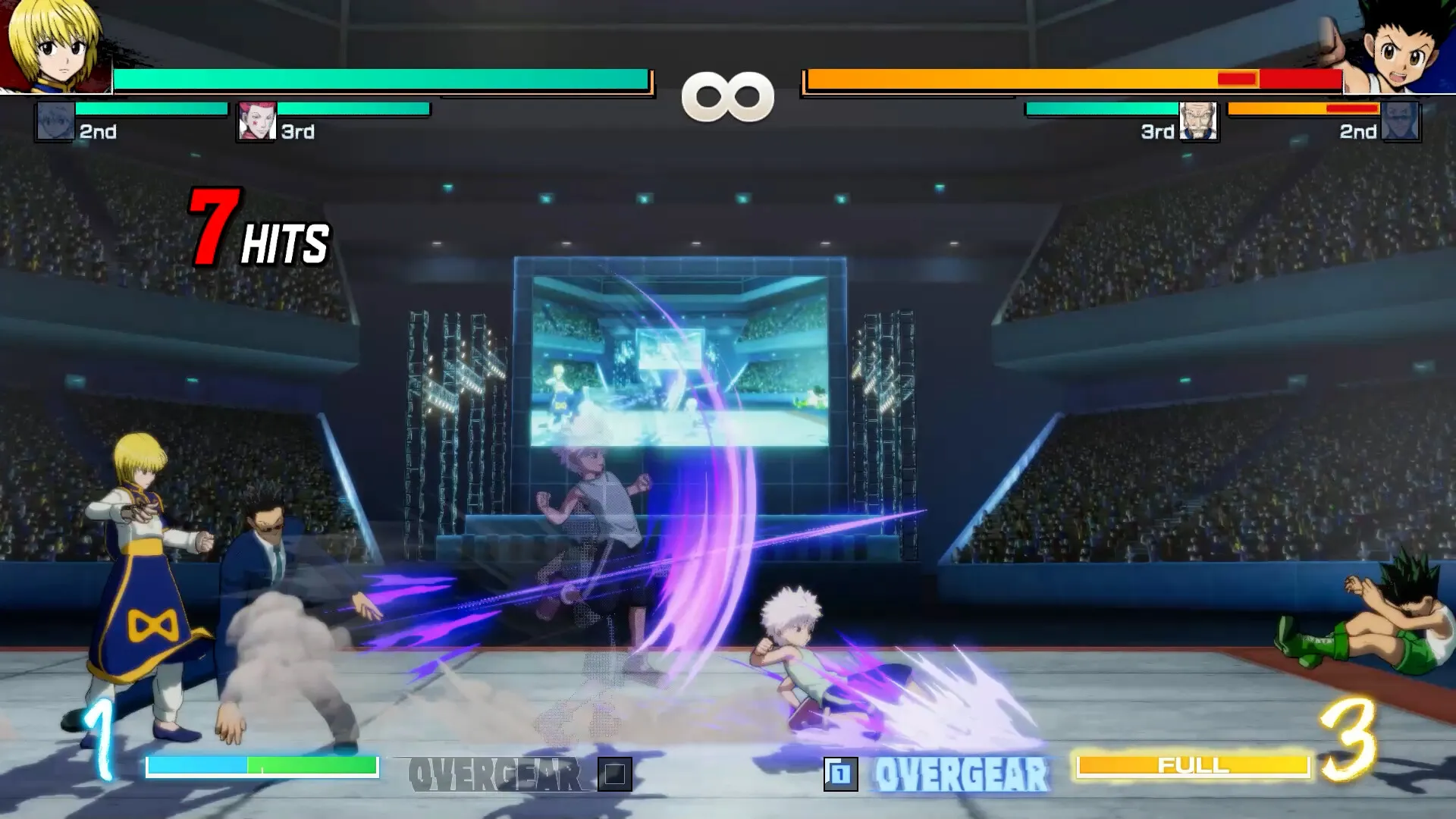
While the character models themselves are decent, they exist in a world that feels lifeless. Animations are often stiff, robbing powerful super moves of their visceral feedback and making characters feel more like puppets than elite fighters. Fights in the anime have weight and consequence; here, landing a critical blow can feel strangely light. The soundtrack is functional but forgettable, adding little to the experience.
These presentation issues might be forgivable if the online experience, the true heart of any modern fighter, were solid. Unfortunately, it is not. The game’s netcode at launch is profoundly unstable, with matches frequently crippled by severe lag, desynchronization, and disconnects.
An unstable online connection kills momentum and turns what should be a fun set of matches into a frustrating gamble. This technical failure is compounded by a lack of crossplay, which fractures an already niche player base into even smaller, isolated pools on each platform. It’s a decision that severely damages the game’s potential to build the healthy, long-term community it so desperately needs to survive.
The Review
Hunter × Hunter: Nen × Impact
Hunter × Hunter: Nen × Impact is a game of frustrating contradictions. At its center lies a brilliant, high-speed fighting engine that is both accessible and deep, offering some of the most enjoyable chaos in the genre. This fantastic core, however, is trapped in a low-budget package with sparse content, a hollow story mode, and a critically unstable online experience that cripples its long-term potential. It’s a game with the soul of a top-tier fighter but the body of an unfinished project, making it difficult to recommend without serious caveats.
PROS
- Fast-paced, frantic, and immediately fun core gameplay.
- An open and creative combo system.
- Each character on the roster feels distinct.
- A detailed and helpful training mode.
CONS
- Extremely poor online netcode and no crossplay at launch.
- Anemic single-player content and a deeply disappointing story mode.
- Underwhelming presentation with stiff animations and bland visuals.
- Small roster size feels restrictive for a 3v3 fighter.