


















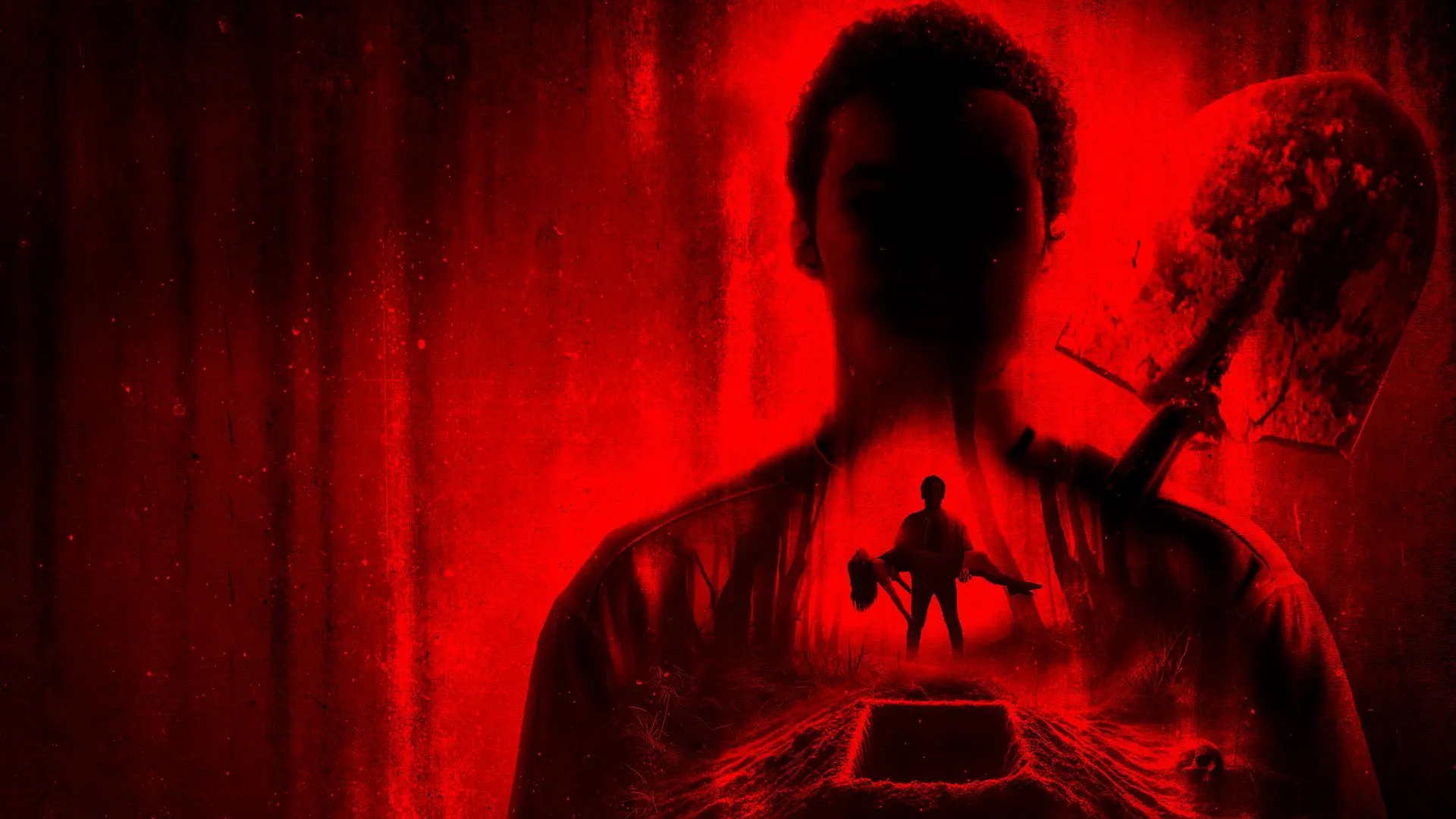

A man’s wife is dying. This is not a new story. What is new, or at least freshly examined, is the nature of her final request. Catherine, facing a swift and certain end from brain cancer, asks her husband Henry not for a grand gesture, but for a quiet return to the earth.
She wishes to be buried in the woods of her childhood, a specific and pantheistic rejection of the sterile traditions of modern death. Henry is faced with pressure from her powerful family to default to a conventional burial.
The film immediately establishes its central thesis: a promise is a contract with a ghost. This is a story about the quiet, creeping consequences of betrayal. It poses the idea that some hauntings are not of the house, but of the mind.
The Glacial Pace of Karma
The film unfolds in two distinct movements, demanding a patience that our culture of immediate gratification has all but abandoned. The first half is a methodical, almost funereal study of anticipatory grief. It mirrors the awful languor of waiting for the inevitable, forcing the audience into the same suspended state as the characters.
It is only after Catherine’s death, when Henry breaks his sacred promise, that the second movement begins its sinister turn. The source of his capitulation is Catherine’s father, a figure of old-world political power who embodies the crushing weight of tradition and patriarchal control.
He demands a “proper” Christian burial, an act that overwrites his daughter’s last shred of agency, treating her body as family property rather than the vessel of a sovereign will. Henry’s failure is a quiet surrender to this system.
Then comes the real complication, the dirty secret that recontextualizes everything. Henry’s affair with his flower shop employee, Rebecca, has resulted in a pregnancy. His character shifts from a grieving spouse to a deeply compromised man, his sorrow tainted by a profound, self-serving betrayal that predated the diagnosis.
He is a moral coward, a man whose defining trait is a gravitation toward the path of least resistance. The film’s pacing, its slow burn, is the necessary incubation period for such a character’s reckoning. It allows his guilt to fester, to curdle into something else entirely before the strange events begin.
The central question is left starkly open for debate. Is a vengeful spirit exacting its paranormal price (a classic haunting), or is Henry’s psyche simply fracturing under the immense weight of his own lies (a classic case of Poe-esque psychological collapse)?
The film presents a man’s downfall and lets the audience decide whether to file it under metaphysics or psychology, suggesting they may be two words for the same phenomenon.
A Visual Language of Guilt and Decay
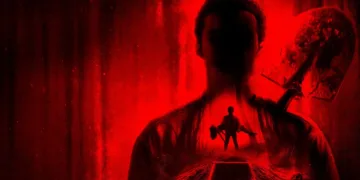
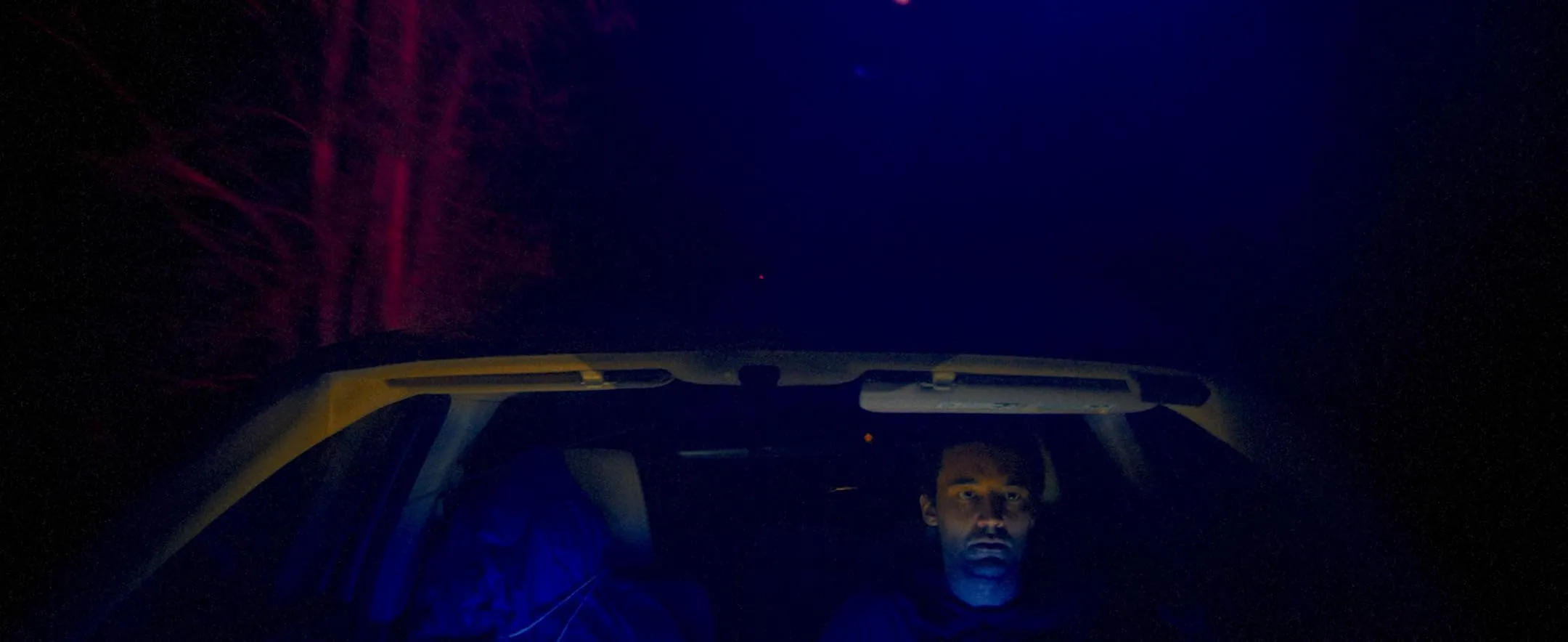
Director Seabold Krebs has a distinct eye, and with cinematographer Gemma Doll-Grossman, he creates a potent visual language for moral decay. This is not a film of jump scares but of a creeping, aesthetic dread.
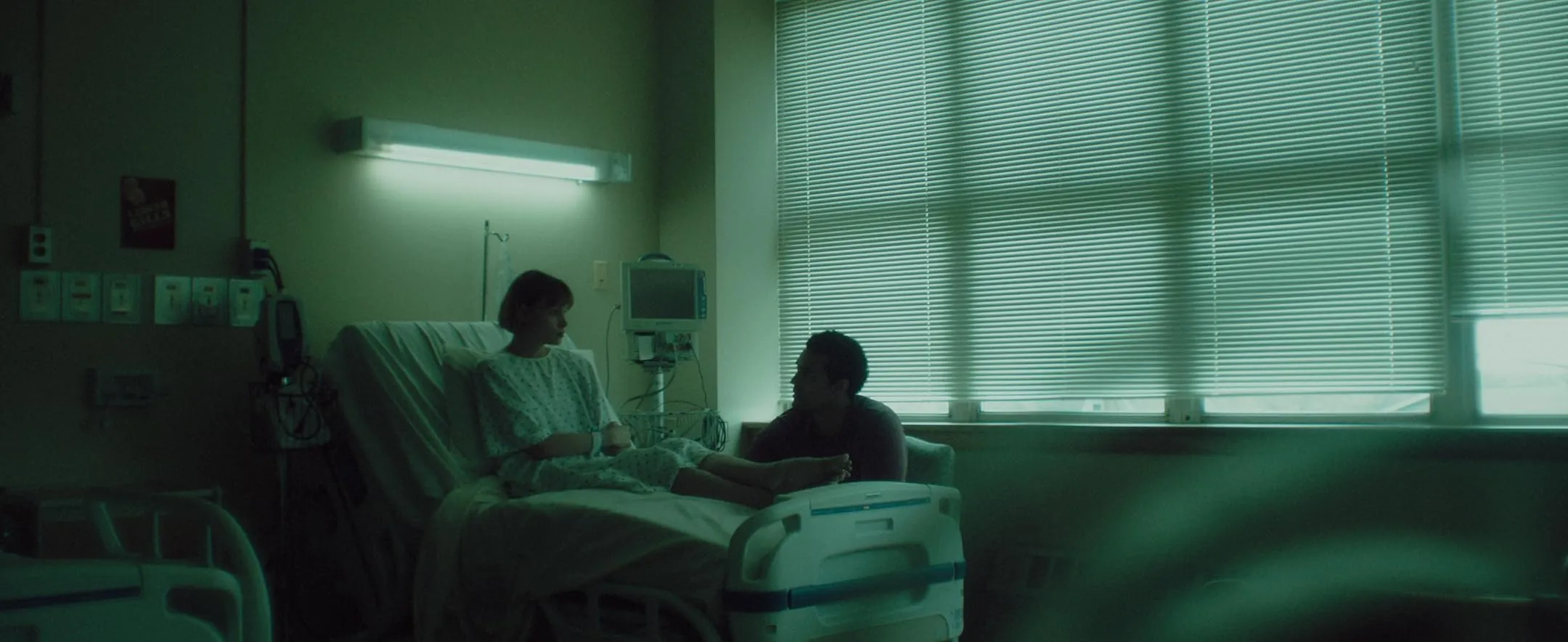
The camera’s gaze is often uncomfortably close, employing tight, claustrophobic frames that deny us any perspective outside Henry’s own tunnel vision. This technique of voyeuristic intimacy forces the audience to share his suffocating headspace, making his private panic a public spectacle. The world shrinks to the size of his anxiety.
The film’s palette is a study in contrasts that reflects its protagonist’s splintered self. Moments of crisp, almost pastoral beauty in the New Hampshire woods clash with interiors lit by harsh, unforgiving light. The very setting, a landscape usually associated with purity and escape, becomes an ironic witness to corruption.
This pristine natural world makes Henry’s internal ugliness all the more pronounced. Even the couple’s flower shop, a place meant to traffic in symbols of life and love, feels like a hollow facade. The visual style argues that there is no sanctuary from oneself.
The sound design follows suit, weaponizing mundane noises. A creaking floorboard, the rustle of leaves, the ring of a phone—each sound is amplified, becoming a potential accusation in the echo chamber of Henry’s conscience.
The Eccentric Anchors in a Sea of Grief
While Henry’s journey is the film’s desolate center, the periphery is populated by characters who give the story its texture and, frankly, its pulse. Mike Houston’s performance as the neighbor, Buck, is a standout of magnificent strangeness.
He is a backwoods oracle, a man living entirely outside the societal pressures that have crushed Henry. His rambling, eccentric monologues on life and death provide a necessary dose of dark humor and philosophical observation, functioning like the commentary of a Greek chorus that happens to wear flannel. He speaks the uncomfortable truths the other characters cannot.
The female cast provides a sturdy emotional foundation, forming a triptych of femininity reacting to male failure. Charlotte Hope’s physical depiction of illness is painfully effective. Makenzie Leigh gives the complicated Rebecca a grounding presence that keeps her from becoming a simple plot device.
Devon Terrell has the difficult task of portraying Henry, a man so hollowed by guilt he becomes a vacuum at the film’s heart. His performance is a challenging gambit. The numbness he projects risks alienating the audience completely, but it is an intellectually honest choice.
The film refuses to make his journey comfortable or to offer him easy redemption. It asks us to observe, not to forgive. This ambitious mixture of family drama and psychological thriller results in a kind of “grief-noir,” a story whose lasting chills come not from a ghost, but from watching a man realize he is already haunted by himself.
Bury Me When I’m Dead was released on July 18, 2025, on digital platforms and VOD. It is available to rent or purchase on platforms like Apple TV+, Amazon Video, Plex, YouTube, and Google Play Movies.
Full Credits
Director: Seabold Krebs
Writer: Seabold Krebs
Producers and Executive Producers: Nicholas Santos, Amanda Freedman, Ron Black, Gewan Brown, Rob Cotterill
Cast: Devon Terrell, Charlotte Hope, Makenzie Leigh, Roxanne Hart, Richard Bekins, Mike Houston, Elisha Lawson, Teo Rapp-Olsson, Clint James
Director of Photography (Cinematographer): Gemma Doll-Grossman
Editors: Not explicitly mentioned in the provided search results.
Composer: Canter
The Review
Bury Me When I'm Dead
Bury Me When I'm Dead is a challenging, meticulously crafted psychological study disguised as a ghost story. Its deliberate pacing and unlikable protagonist will deter those seeking simple thrills, but patient viewers will find a visually stunning, thematically rich film anchored by standout supporting performances. It succeeds more as a melancholy "grief-noir" than a traditional horror film, offering a chilling meditation on how a guilty conscience can be the most terrifying ghost of all.
PROS
- Stunning cinematography that visually enhances the film's themes of guilt and decay.
- Excellent and memorable supporting performances, particularly from Mike Houston.
- An ambitious, thought-provoking exploration of grief, betrayal, and consequence.
- Successfully builds and sustains a mood of psychological dread.
CONS
- The pacing is extremely slow and methodical, which will not appeal to all viewers.
- A passive and unsympathetic protagonist makes emotional connection difficult.
- The blend of drama, horror, and dark comedy can feel imbalanced.
- Lacks the conventional scares or intensity expected from a horror film.