


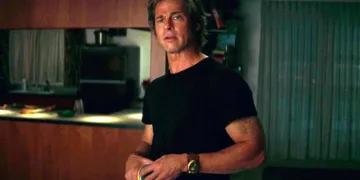

























Felix Kersten controls every room in this film until someone asks him for a date, a document, or a second version of the same story. Claes Bang plays the former physiotherapist of Heinrich Himmler with the confidence of a man who has repeated his wartime biography often enough to make every sentence sound notarized. Felix Randau’s I Is Another understands that this confidence is the story.
It is 1952, and Kersten is traveling by train toward Oslo with his wife Irmgard, convinced that his claimed role in securing the release of concentration camp prisoners could place him near the Nobel Peace Prize. Waiting nearby is East German journalist Hedda Wohmann, played by Valerie Pachner, who sees something less flattering: a useful subject whose heroic account may collapse under examination.
Randau builds the film around that examination. The historical question surrounding Kersten matters, yet the sharper dramatic question concerns how a person turns disputed events into an identity that becomes difficult to separate from fact.
The Interview Tightens
Hedda initially approaches Kersten with flattery. She brings a reel-to-reel recorder into his compartment, lets him establish his credentials, and allows him to tell the story at his preferred pace. He speaks about treating Himmler’s stomach pain, gaining the SS leader’s trust and using that access to intervene on behalf of prisoners.
Bang makes each detail feel rehearsed without making Kersten immediately fraudulent. His immaculate clothes, formal manner and insistence on status create the impression of a man who treats presentation as evidence. Then Hedda starts interrupting.
The film’s strongest stretch begins when she searches Kersten’s luggage while he is away taking a phone call. He catches her looking for his diary. Rather than simply throwing her out, he gives it to her and invites her to judge him through his own record. Kersten thinks he has produced his strongest witness. Hedda finds the obvious structural flaw: a diary proves remarkably little if nobody can establish when its entries were written.
From there, the interview becomes an exchange of leverage. She introduces facts that trouble his account. He uses Swedish intelligence connections to investigate her damaged journalistic career and personal history. Each character learns that exposing the other person also means handing them another weapon.
Pachner keeps these scenes from turning into a shouting match. Hedda rarely needs theatrical outrage. Watch how long she maintains eye contact after Kersten raises his voice or strikes the table. Bang supplies the physical threat; Pachner refuses to validate it by retreating.
The Hero Inside Every Flashback
Randau uses wartime flashbacks carefully because their function changes as Hedda’s questioning grows sharper. Early scenes present Kersten’s memories with relative confidence. He treats Himmler, played by Martin Müller, earns access to senior Nazi circles and gradually presents himself as an intermediary capable of influencing decisions.
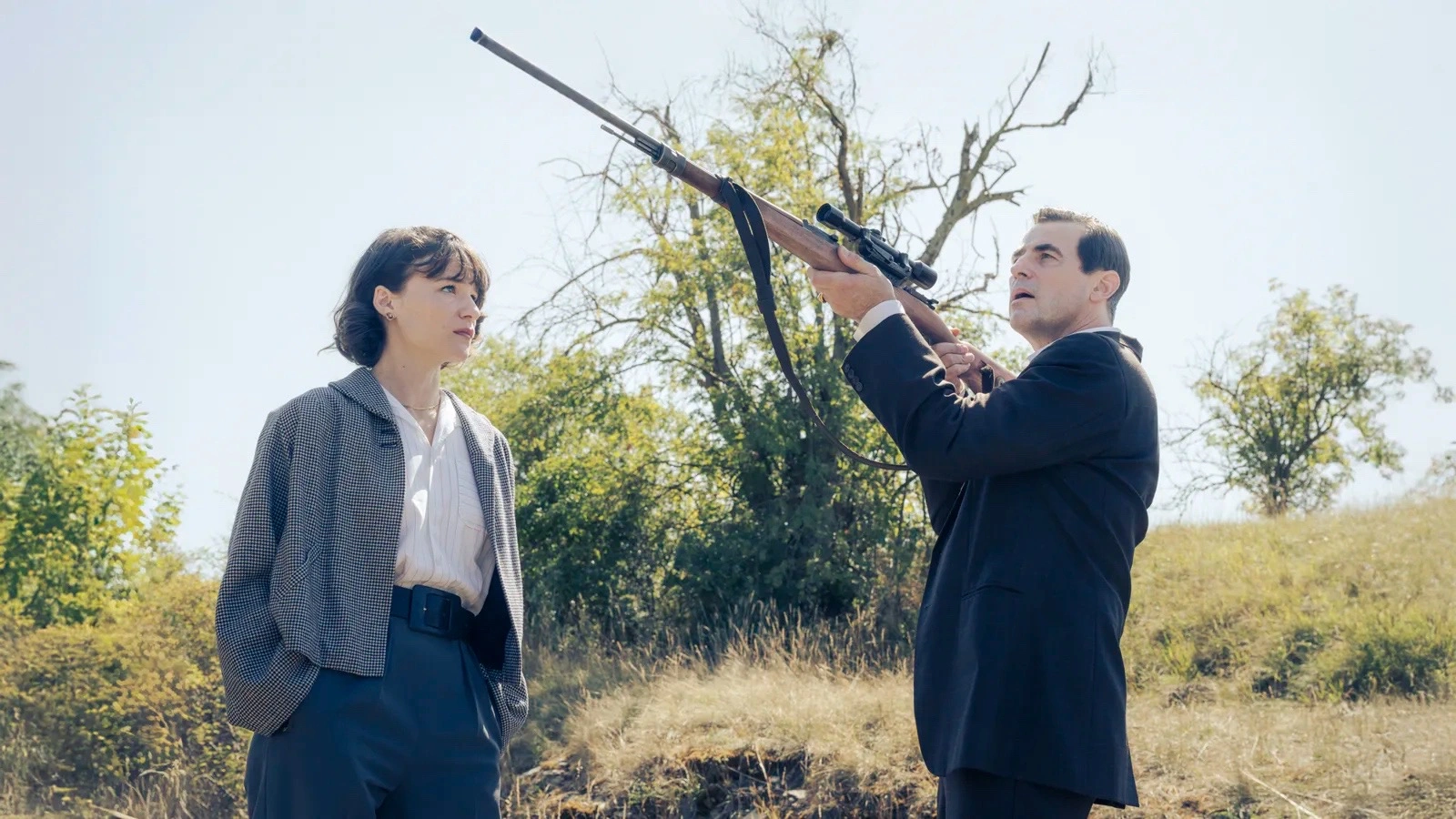
There is a recurring narrative problem inside Kersten’s recollections: he is always positioned near the point where history turns. His account places him around negotiations involving Norbert Masur and presents his relationship with Himmler as morally useful while maintaining his distance from formal SS membership. The construction is tidy. Perhaps suspiciously tidy.
The film wisely refuses to make every flashback dependable. Competing descriptions can alter how an incident appears, turning recollection into staging. Kersten may be telling the truth, reshaping it, or remembering a version that has hardened through decades of repetition. Randau gains tension from those possibilities when the contradictions are specific.
Hedda carries her own compromised history, which prevents the film from giving her automatic moral authority. Her damaged career gives her a professional reason to land a major story. Kersten understands that weakness and presses it.
Winfried, Hedda’s photographer husband, cuts across their elaborate gamesmanship when he speaks about atrocities he committed as a soldier. His admission has force because it moves in the opposite direction from Kersten’s self-mythology. One man is trying to live with culpability. Another keeps arranging the historical furniture so that he occupies the heroic chair.
Mirrors and Compartments
The train gives Randau an efficient pressure chamber. Sebastian Thaler’s camera works through windows, mirrors and reflections, frequently dividing faces or placing characters behind glass. The technique could have become painfully literal, given a film built around unstable identity, but the confined compartments give it practical dramatic value. Kersten and Hedda cannot comfortably escape each other.
Joana Scrinzi’s editing does similar work with time. A statement in the compartment can send the film into the past, while later information changes how that earlier scene reads. The flashbacks function less like exposition than testimony entered into evidence and reopened after cross-examination.
Bernhard Fleischmann’s restrained score keeps the train sequences close to espionage territory without inflating every conversational reversal into a thriller crescendo. The costumes perform their own character work. Kersten’s carefully maintained appearance fits a man committed to authorship of his public image, while Irmgard’s presence exposes quieter cracks in that performance.
The structure does begin repeating itself. Hedda discovers a weakness, Kersten recovers control, another disclosure reverses the advantage. Several interruptions make the train feel stationary long before it reaches its destination. The screenplay occasionally relies on Bang and Pachner to create psychological depth that the underlying exchange has already exhausted.
They usually manage it. Bang lets Kersten’s charm curdle gradually, while Pachner keeps Hedda difficult to intimidate and equally difficult to idealize. The film works best at the precise moment one of them produces apparent proof and the other notices the loose thread.
I Is Another had its world premiere at the Locarno Film Festival on August 7, 2026. The historical drama follows Felix Kersten, the controversial masseur to Heinrich Himmler, during a tense train journey where an investigative journalist challenges his postwar claims of heroism.
Full Credits
Title: I Is Another
Distributor: Locarno Film Festival
Release date: August 7, 2026
Running time: 93 minutes
Director: Felix Randau
Writers: Felix Randau
Producers and Executive Producers: Ostlicht Filmproduktion GmbH, Wega Film
Cast: Claes Bang, Valerie Pachner, Susanne Wuest, Timocin Ziegler, Martin Müller, Hilde Berger
Director of Photography (Cinematographer): Sebastian Thaler
The Review
I Is Another
I Is Another turns a disputed historical reputation into a tightly engineered contest over who gets to control the record. Claes Bang makes Felix Kersten’s charm feel increasingly calculated, while Valerie Pachner gives Hedda enough steel to keep their compartment-bound exchanges tense. Randau’s shifting flashbacks and contradictory testimony sharpen the film’s strongest question: when every witness has something to gain, evidence becomes another storytelling tool. The theatrical structure occasionally repeats its moves, yet the performances keep the machinery running.
PROS
- Excellent Bang and Pachner
- Smart unreliable flashbacks
- Strong psychological power shifts
- Effective claustrophobic cinematography
- Morally complicated historical framing
CONS
- Repetitive interview structure
- Occasionally stage-bound pacing
- Some character psychology stays thin