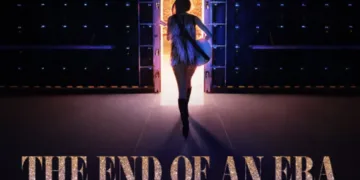




























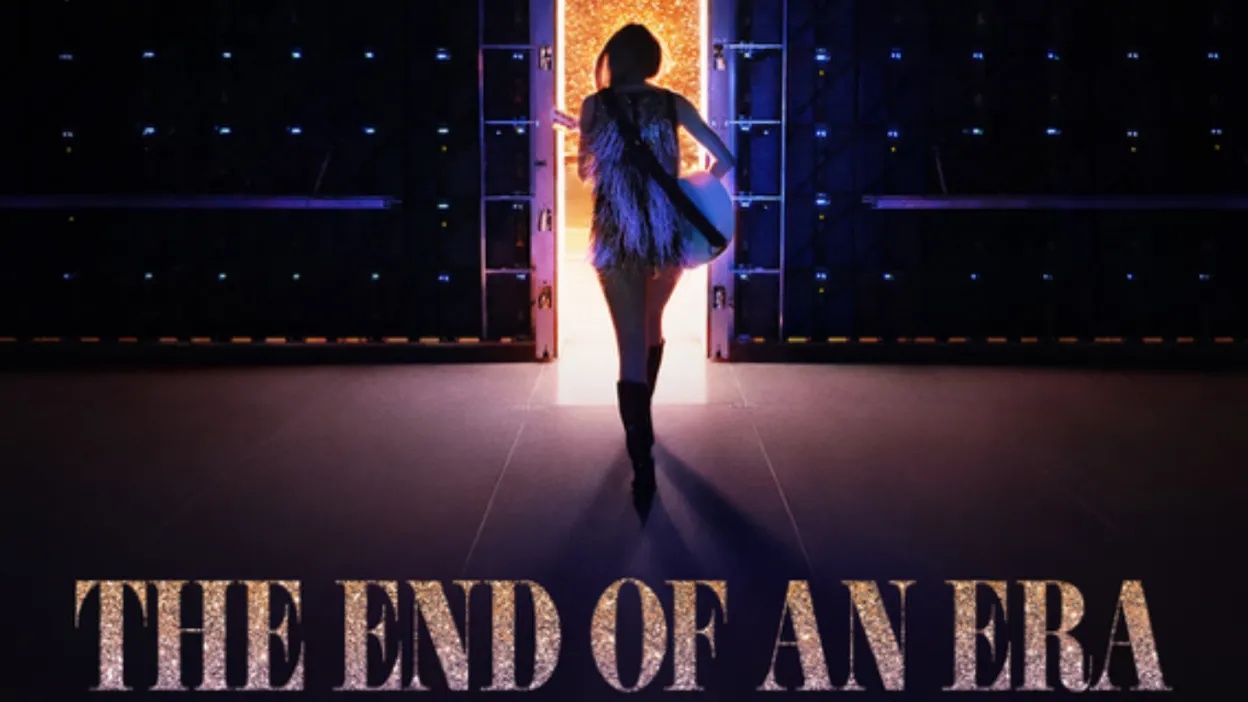

The Taylor Swift industrial complex leaves very little air in the room. After the albums, the re-recordings, the stadium tour, and the theatrical concert films, silence might read like the next logical move. Disney+ offers Taylor Swift: The Eras Tour: The End of an Era, a six-part docuseries that keeps the feed stocked and the machine humming.
The project plays less like a traditional documentary and more like a branded continuation of the Eras Tour itself. It pulls back the curtain on a record-breaking operation: a 149-date global run that reshaped the live music economy across nearly two years. Swift appears at a peak of commercial reach and cultural saturation. The concert films delivered immaculate performance capture. This series moves to the blueprint, tracking the mechanics, the fatigue, and the logistical sprawl required to keep a production of this scale intact.
The structure refuses a straight line. It anchors itself in the tour’s ending in Vancouver, then splinters into flashbacks that frame key stretches such as the European leg. The intent feels calibrated to “over-serve” a fanbase that treats access as a form of participation. What emerges is a victory lap for the artist and her team, with little interest in investigative bite. The mood swings hard. One scene runs on pre-show adrenaline; the next settles into the sober work of managing a global phenomenon that starts to resemble a small nation-state more than a traveling band.
The Pilot and the Precipice
The series punctures the pop spectacle by putting entertainment beside geopolitical violence. It spends significant time on the cancellation of the Vienna shows after a thwarted ISIS terrorist plot. The segment tears away the tour’s celebratory surface and lets fear take the microphone. Swift speaks about a chilling sense of responsibility that stretches past performance.
The safety of millions becomes her problem to carry. She reaches for a specific analogy that clarifies the pressure: she describes herself as a pilot flying a plane, committed to calm so the passengers stay safe. The turbulence stays internal because visible panic could spread. In that framing, superstardom looks less like fantasy and more like crisis management. Cultural gatherings at this scale register as soft targets, and the danger stops feeling abstract.
The narrative grows heavier when it turns to Southport, England. The fatal stabbing of three young girls at a Swift-themed dance class rips through the tour’s manufactured joy. The footage catches Swift in a raw state as she cries while talking about the “massacre situation” avoided in Vienna and the horror that did happen in Southport. The camera holds on her distress. She describes choosing to meet the victims’ families before her London performances, a moment that underlines the emotional discipline demanded by her role.
She talks about needing to clear space for grief offstage so she can step into the show and project pure joy for a stadium full of people. The Wembley Stadium dates that follow play like a security operation with music attached. Swift speaks about the anxiety she carried around the safety of every person in the venue. Celebration gives way to the grim logic of counter-terrorism protocols. In these episodes, the Eras Tour reads as a fortified event, built to withstand threat as much as to deliver catharsis.
The Industrial Architecture of Joy
The docuseries examines the tour’s physical and logistical demands with a clinical, industrial gaze. A three-hour stadium show requires athletic endurance, and the series documents that toll with close attention. Swift’s body becomes a system that needs maintenance. She describes a post-show comedown routine that includes a drawn bath and the careful removal of false lashes. She says adrenaline keeps her awake until 4 a.m. on most nights. The stamina rests on a rigorous six-month training regimen that began before the tour started.
The series also confirms long-circulating fan theories about how she moves through spaces unseen. Cameras show Swift hiding inside a janitorial cart to reach the stage without being spotted. The image lands as a sharp metaphor for contemporary fame: the most famous woman on the planet compresses herself into the language of cleaning supplies to move freely.
Beneath the stage, the viewer gets a guided look at the machinery. Swift rides hydraulic lifts and pulley systems like a commuter moving through an underground grid. The technical secrets extend into intellectual property protection. Rehearsals rely on click tracks so dancers can practice without unreleased audio leaking to stadium workers. The series treats secrecy as a currency, reflecting a digital economy where leaks carry real value.
The mid-tour insertion of The Tortured Poets Department into the setlist becomes a case study in large-scale restructuring on the road. The logistical challenge looks immense. Dancers learn choreography in silence to keep material under wraps. Swift voices real concern about audience response. She worries the shift could disrupt the flow fans expect, especially since so many consume the tour through livestreams and know each beat. The series frames the show as engineering first, with artistry operating inside that framework.
The Labor Behind the Spectacle
The focus widens to the workforce that sustains the spectacle, pushing the corporate sheen toward something more human. Kameron Saunders stands out among the dancers, and the series tracks his background and the viral attention that latched onto him. His spoken “Never” line becomes a nightly fan ritual. Shots of his mother watching him perform give the sequence emotional ballast and widen the spotlight beyond Swift. The tour creates micro-celebrities inside its orbit, and the series acknowledges that ripple effect.

Assistant choreographer Amanda Balen brings a pragmatic perspective on what the work costs. She talks about injuries and the physical sustainability of a dance career, a reminder that entertainment depends on bodies that break down. Her comments land as a blunt statement about an industry that prizes performance and replaces performers with ease.
Backstage, the atmosphere rejects the stereotype of fear-driven rigidity. The series shows a collaborative space built around camaraderie. Swift describes her dancers and band as “tectonic plates,” essential to the stability of the whole operation. Her leadership reads unusually personal for a billion-dollar enterprise. One scene shows her handing out bonuses with personal notes sealed in wax. The wax seal feels like an old-fashioned gesture of care planted inside a modern machine.
Swift consistently treats her crew as experts and speaks with deference about their roles. She depends on their precision to keep standards consistent. The series leans into that collective reality: the tour functions like a village, built by labor that rarely gets the camera. The magic on stage rests on people in black t-shirts moving cases, fixing cues, and making the impossible look effortless.
The Solitude of the Stratosphere
The series approaches Swift’s private world through controlled moments that still underline the isolation of extreme fame. Her relationship with Travis Kelce appears mostly through voice calls and phone conversations. The exchanges play as peer consultation between high-performance athletes. They talk about the mental load of memorizing football plays and complex choreography, and they connect those demands through tactical precision and endurance. Swift calls those conversations a “vitamin drip,” suggesting connection as a form of replenishment during the grind of the road.

A backstage scene with Ed Sheeran before the London show shifts the tone toward simplicity. The two sit with acoustic guitars and work to remember chords and harmonies for “Everything Has Changed.” The moment pulls focus away from lasers, costumes, and lift systems, leaving fundamental musicianship in the foreground. The industry scale falls away, and the songwriter comes back into view.
Florence Welch’s guest appearance for “Florida!” brings a different kind of awe. She compares riding the hydraulic lift to “landing on Mars,” mixing fear with excitement. Her response works as a proxy for the audience and a reminder that Swift’s stagecraft can feel alien even to other famous musicians.
A rehearsal conflict adds texture to Swift’s approach to performance. She pushes for communal staging, insisting that she and Florence join the dancers’ choreography instead of standing apart. The choice reinforces the collective image the series keeps returning to: Swift as ringmaster, and also as participant, folding herself into the group dynamic she controls.
The Curated Artifact
The docuseries favors thematic resonance over chronological clarity. It jumps between Vancouver at the end of the tour, its 2023 beginning, and the European leg, creating an experience that plays like a curated stack of anecdotes. The time-hopping can blur momentum, but it strengthens the sense of a collage assembled with intention. Swift’s control over the finished product feels total. The access looks intimate, and the footage still reads carefully chosen to tell a story of diligence and gratitude. Tears and exhaustion make it in. Interpersonal conflict and internal fractures stay outside the frame.
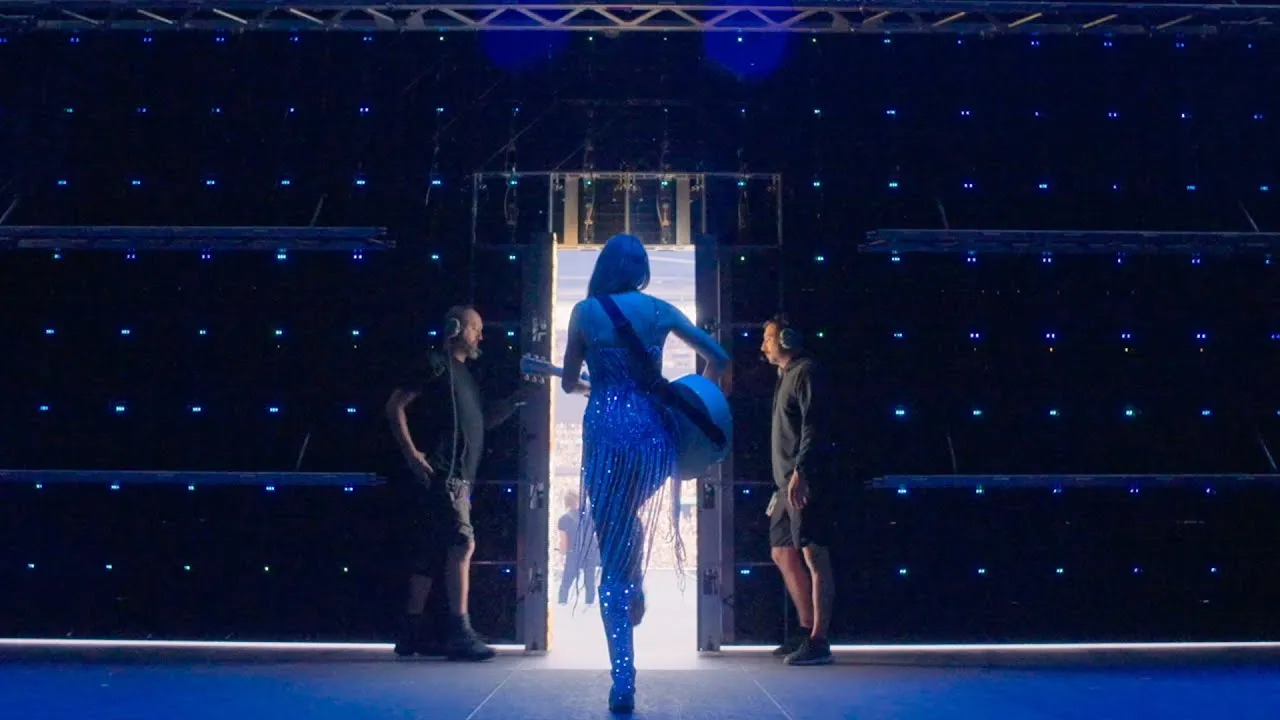
The series keeps clear of scandal-driven angles and routes tension through external events like the terror plot and internal creative pressure. That choice aligns with the stated mission to “over-serve” fans. The project invests in the existing base and rewards loyal viewers with new angles on familiar beats.
The visual language matches the polished aesthetic of Swift’s brand, and it avoids the gritty handheld immediacy associated with investigative music documentaries like Madonna: Truth or Dare. The result is a glossy, high-definition artifact that preserves legacy and maintains distance at the same time. Vulnerability appears, then gets shaped into brand maintenance. The series records a historic cultural moment, and it stays inside the walled garden of the Swift universe, built by the victor to lock the era into memory on her terms.
Taylor Swift: The End of an Era premiered on Disney+ on Friday, December 12, 2025. This six-part documentary series offers an intimate, behind-the-scenes look at the conclusion of the record-breaking Eras Tour. It explores the logistical challenges, emotional highs, and darker realities—such as the thwarted Vienna terror plot—faced by the global superstar and her team. You can currently stream all available episodes exclusively on Disney+.
Full Credits
Title: Taylor Swift: The End of an Era
Distributor: Disney+
Release date: December 12, 2025
Rating: TV-14
Running time: 45 minutes
Director: Don Argott, Sheena M. Joyce
Producers and Executive Producers: Taylor Swift
Cast: Taylor Swift, Travis Kelce, Ed Sheeran, Florence Welch, Kameron Saunders, Amanda Balen, Andrea Swift, Sabrina Carpenter, Gracie Abrams
- Composer: Taylor Swift
The Review
Taylor Swift - The Eras Tour - The End of an Era
This docuseries stands as a meticulously constructed monument to a historic pop culture event. It succeeds as a gift to the faithful by balancing the joy of performance with the stark realities of safety and logistics. While the non-linear structure occasionally disorients, the footage of the Vienna cancellation provides necessary emotional weight. It remains a controlled, glossy artifact rather than a raw exposé, yet it effectively humanizes the massive industrial machine behind the star. It is essential viewing for the converted and a fascinating, if guarded, case study for the observer.
PROS
- The segments covering the Vienna terror plot and Southport tragedy offer a rare, grounded look at the high stakes of global fame.
- Detailed examinations of the tour’s logistics, from hydraulic lifts to the "cleaning cart" transport, fascinate.
- The series successfully highlights the dancers and crew, framing the tour as a collective triumph rather than a solo effort.
CONS
- The footage feels heavily sanitized to maintain the brand image, lacking genuine interpersonal conflict or grit.
- The non-linear structure jumps erratically between time periods, which may confuse viewers expecting a chronological diary.
- The project is designed exclusively for existing fans and offers little entry point for casual viewers or skeptics.