


























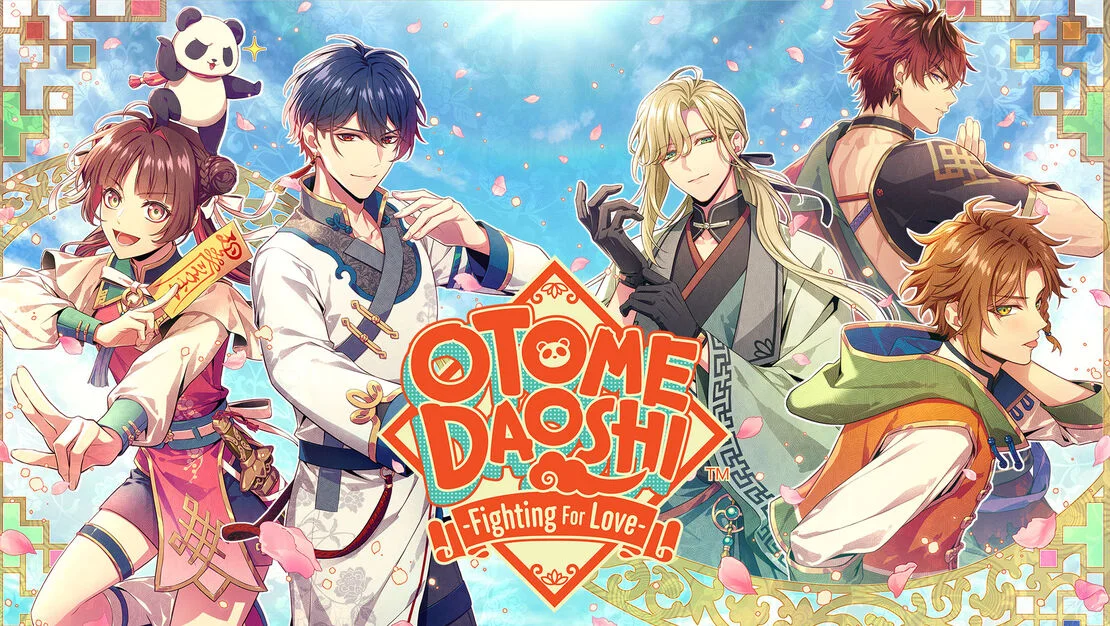

Haoran has a reason to hold back when he fights. An incident in his past has led him to use martial arts defensively, giving his gentle, protective manner a history that affects his behavior. For an otome game set in a kingdom obsessed with strength, that connection matters. It gives one of Otome Daoshi: Fighting for Love’s familiar romantic types a specific relationship with the world around him, rather than leaving his fighting ability as another attractive quality beside his appearance.
Battlefield Waltz offers a useful comparison. Pash’s clawed gauntlets suit the physical brawling tradition of his homeland and allow the movement his style requires. Background, equipment, and personality support each other. Otome Daoshi sometimes reaches that level of characterization, but Longli’s elegant fighting exposes its limits. Shunlin describes his movements with admiration, likening them to flowing water; the story spends less time explaining what shaped that elegance. Haoran’s restraint tells us something about a decision he has made. Longli’s grace mostly gives us something to admire.
Shunlin has a stronger practical connection to the setting. Training under her grandfather, Lihong, she is becoming a Daoist priestess whose duties include preventing corpses from becoming jiangshi. When these undead creatures attack the Tournament of Valor, her skills become immediately relevant.
She has come to support her childhood companion Haoran, but joins the response herself. The fictional, Chinese-inspired kingdom of Kayu supplies the tournament, royal secrets, and anti-Wushu unrest that drive the investigations. The player’s involvement remains that of a traditional visual novel: reading, choosing responses, and following a relationship through its branch.
The route structure gradually increases access to that mystery. Yuhang, Shaowu, and Haoran are available after the brief common route; completing them opens Longli, whose story then provides access to a hidden partner. Haoran’s route carries substantial revelations, making him a sensible third choice after the other two. This arrangement gives returning otome players familiar progression through a cast, with later routes expanding the picture. Within that structure, the interesting distinction is how each investigation supplies a different reason for Shunlin and her partner to spend time together.
Yuhang has the advantage of a friendship that predates the plot. Having moved away, he reunites with Shunlin at the tournament, and suspicions surrounding his mentor give them a reason to investigate together. His embarrassed remarks follow the familiar tsundere pattern, but his viewpoint makes the affection behind them legible. Rebuilding their connection provides a credible basis for romance. The limitation lies in how often harshness performs the same job: once his feelings are clear, another awkward deflection adds little unless it changes how the pair understand each other.
Shaowu’s investigation has a sharper personal motive. He wants the king’s help uncovering the truth about his village’s destruction, and his eventual partnership with Shunlin grows from that search. His intimidating size and curt manner give way to kindness, while her thoughts make her physical attraction quite clear. Their banter also gives the relationship an enjoyable everyday rhythm. The romantic progression is less secure than those individual ingredients. Attraction and easy companionship arrive readily; the transition into lasting commitment needs time the route does not consistently provide.
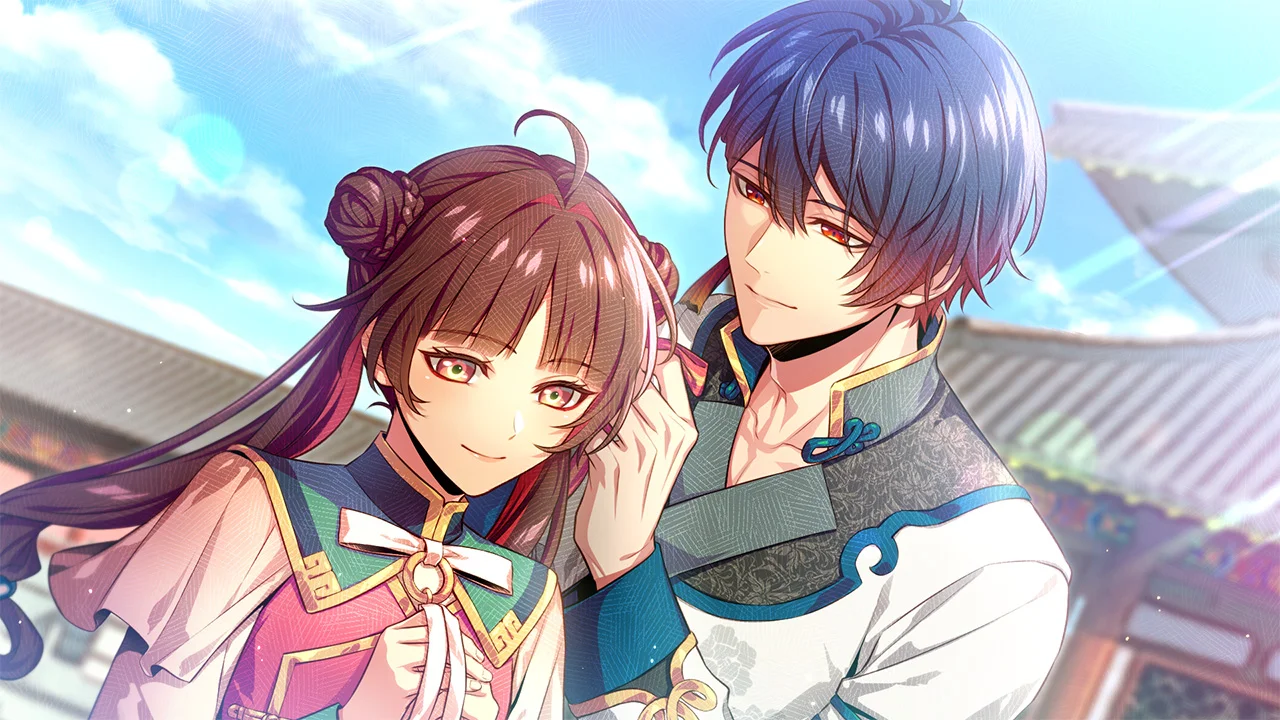
Haoran’s story has the opposite advantage: considerable shared history, complicated by his insistence on treating Shunlin as a little sister. Yuhang’s challenge to that denial helps make the obstacle explicit. Once Haoran acknowledges his romantic feelings, his change in behavior is rapid, and the relationship finally moves beyond protective familiarity. That shift is satisfying because the pair already have a bond to reconsider. His restraint in combat and reluctance in love also belong to the same recognizable temperament, although the speed of his romantic change leaves some adjustment compressed.
Longli brings a different dynamic through his palace position and his openly giving affection. His route makes his influence clearer than the earlier branches do, and his attentiveness offers relief from the childhood friends’ evasions. Shunlin contributes desire of her own throughout these relationships, alongside her concern about proving useful as a partner. She has reasons to act and preferences to express. The writing serves that liveliness less well when brief courtship leads into talk of marriage. The missing ingredient is development between affection and commitment, rather than a particular number of kissing illustrations.
The ending system supports a gentler experience than otome structures built around avoiding tragedy. Choices develop Romance or True Love, leading to Romantic or True Love endings, with no bad endings to punish a misjudgment. That can make exploring the relationships comfortable without preventing suspense about the kingdom’s secrets. The weaker dramatic moments come from how events are handled. In one route, a martial arts master becomes an undead puppet, yet those who know him spend little time responding to the transformation. The plot moves onward before the personal consequences have properly registered.
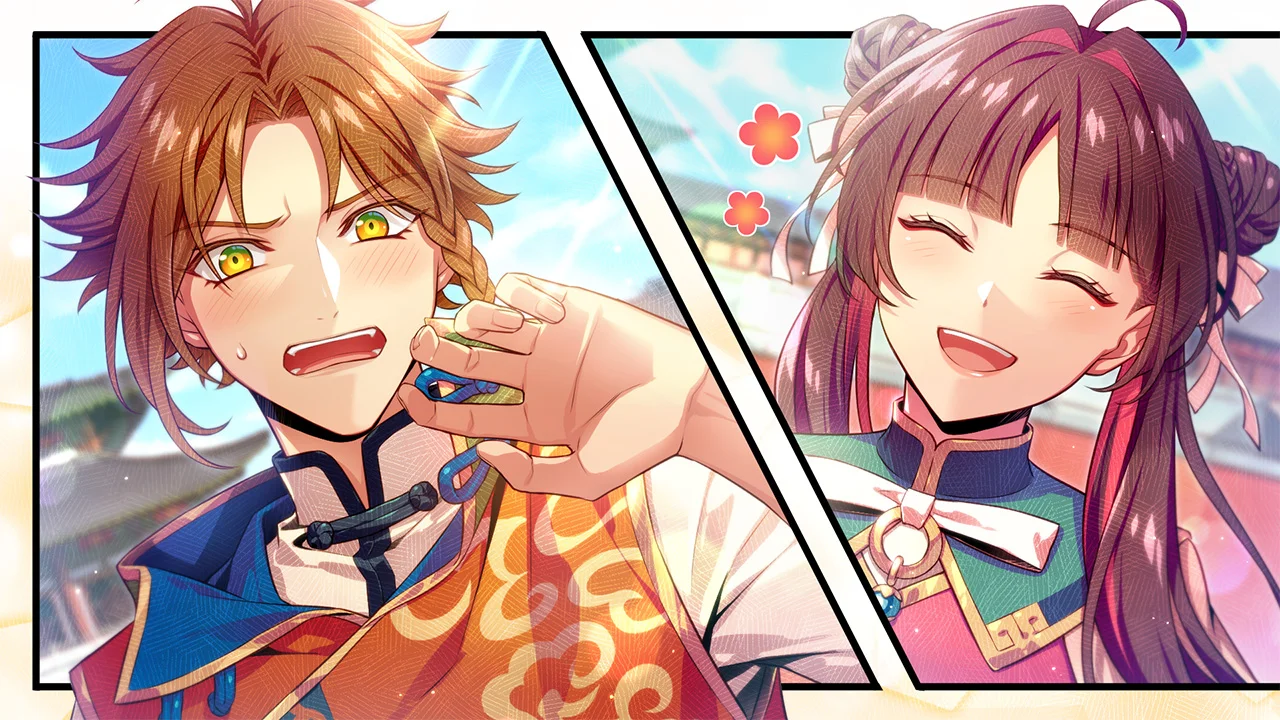
The artwork gives the martial arts premise a stronger means of expression. Ayu Nekoi’s detailed clothing patterns and expressive portraits establish an appealing cast, while the affectionate event illustrations give closeness a visible form. Black-and-white manga sequences change how important action and emotional beats are presented. Moving away from the usual portrait-and-dialogue arrangement lets the story depict physical action through drawn sequences, a fitting choice for a romance built around fighters. These passages give the premise an energy that descriptions of impressive technique cannot supply alone.
Chapter-ending previews extend that serialized feel, offering a taste of the next episode rather than simply stopping the text. They can be disabled, which accommodates players who prefer to continue directly. The Japanese voice work also differentiates personalities, especially Jun Fukuyama’s extravagant delivery as Shiyu. His theatricality gives the comic exchanges a clear vocal identity. The opening song, “Taisetsu na Anata e,” carries its cheerful appeal into the main menu, matching the bright presentation without requiring the darker plot material to dictate every part of the experience.
Replay tools keep the multi-route structure manageable: skipping, jumping to the next choice, returning through the dialogue log, and revisiting chapters with adjustable affection reduce repeated reading. The absence of a conventional glossary is addressed through Shiyu’s classroom, which explains setting terms in educational manga. Its illustrated explanations give unfamiliar vocabulary a readable form instead of leaving players without reference material. The gallery also preserves the special manga alongside event illustrations, videos, and music, allowing those sequences to be revisited without replaying the investigations.
The Review
Otome Daoshi Fighting for Love
Otome Daoshi: Fighting for Love gives familiar otome archetypes an appealing martial arts setting, an active heroine, and expressive manga sequences. Haoran’s defensive fighting and changing relationship with Shunlin show how effectively personal history can shape a route. Other relationships move toward commitment too quickly, while serious revelations sometimes receive scant emotional aftermath. Players seeking gentle romance will appreciate its forgiving endings and replay tools, though the characterization does not consistently match the artwork’s detail.
PROS
- Detailed character art and affectionate illustrations.
- Manga sequences give action a distinct visual form.
- Shunlin contributes skills, initiative, and personal desires.
- Useful replay tools and illustrated terminology lessons.
CONS
- Several romances rush toward lasting commitment.
- Fighting styles receive uneven personal grounding.
- Serious events lack sustained emotional consequences.







