




















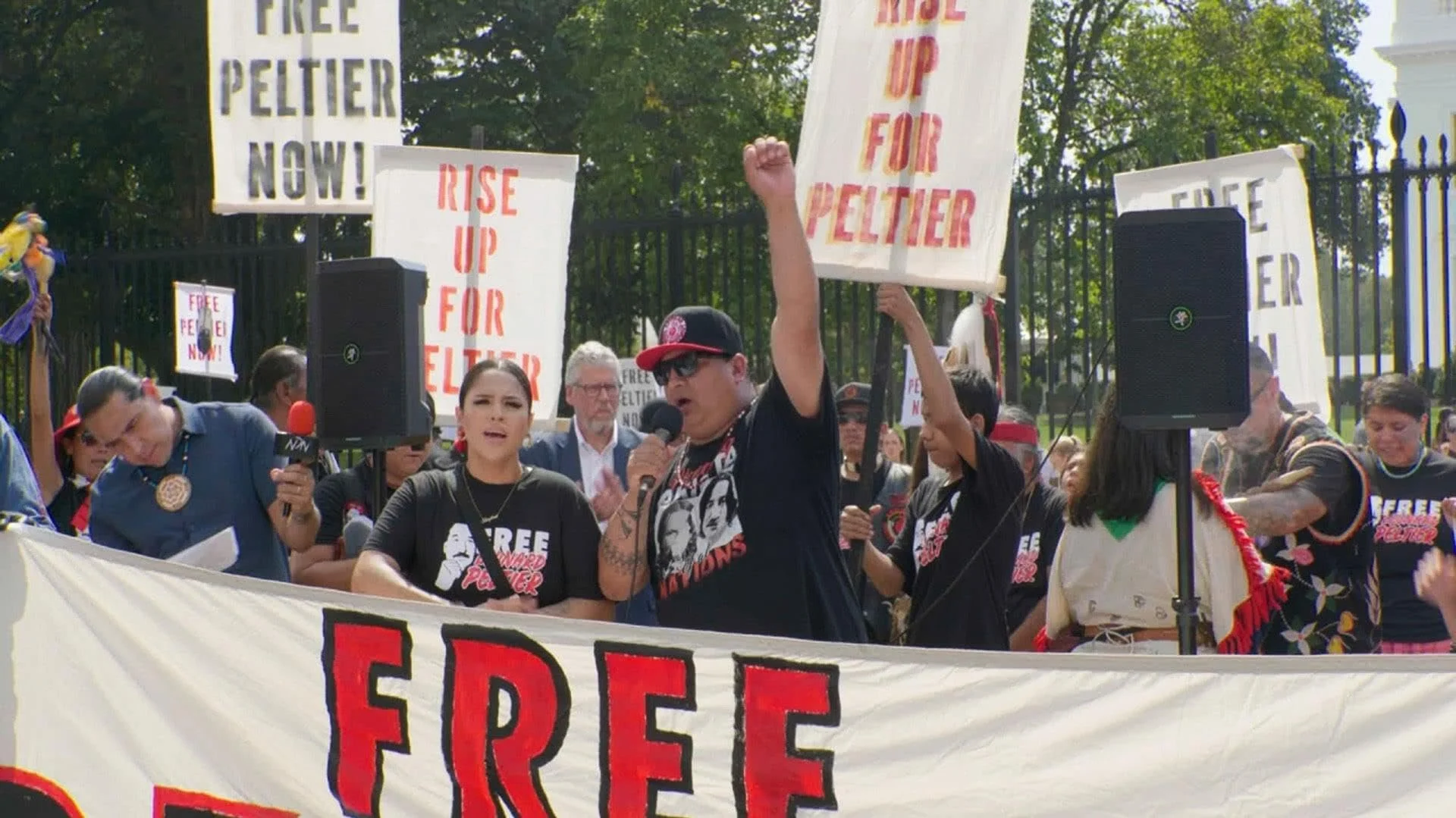

Leonard Peltier speaks from prison in interviews recorded years ago, while people outside organize for a release that keeps failing to arrive. Jesse Short Bull and David France have limited contemporary access to the man whose freedom their documentary demands. His older testimony must carry across that separation. Watching it, I kept wanting an ordinary conversation with Peltier, some account of a day that belonged to him rather than to his case.
The account of his Seattle auto body shop briefly supplies something like that. Peltier repaired cars for people who could not afford to pay. It is a modest detail beside the history of armed confrontation and prosecution, yet it makes generosity recognizable as work: time spent helping somebody get moving again. A political emblem acquires a trade, customers, obligations. The film could use further details of this kind, although the conditions that restrict its portrait are themselves part of what it documents.
Free Leonard Peltier approaches those conditions through the American Indian Movement and the campaign surrounding his imprisonment. Peltier was convicted in 1977 of murdering two FBI agents following the 1975 confrontation at South Dakota’s Pine Ridge reservation. The documentary disputes the case against him while establishing the history that brought AIM activists there. It asks us to understand a prosecution through institutions that had already exercised considerable control over Indigenous lives.
Peltier’s childhood boarding school experience gives that control a bodily specificity. Children have their hair removed and their language forbidden; assimilation is enforced through daily treatment. The film places this experience beside the territorial history of broken treaties, making the demand for Indigenous self-determination understandable before armed resistance enters the account. The boy’s treatment and the later activist’s decisions remain distinct experiences, however. Childhood suffering cannot explain every subsequent political choice, and the repair shop usefully preserves a person capable of acting beyond his injuries.
A color-coded map tracks the contraction of Indigenous territory. Its simplicity earns its place: accumulated losses become visible without requiring viewers to retain a list of agreements and dates. From there, the occupation of the Bureau of Indian Affairs and the conflict at Pine Ridge emerge as responses to decisions about land, authority, and extraction. The uranium beneath the reservation gives the territorial argument an economic specificity that a general denunciation of prejudice would lack.
The film’s account of tribal chairman Dick Wilson’s GOON squad further complicates the distribution of power. It describes armed intimidation within the reservation, supported by federal assistance. Authority operates through local figures as well as outside agencies. This history gives the approach to the shootout pressure and intelligibility, although it cannot independently establish who fired the fatal shots.
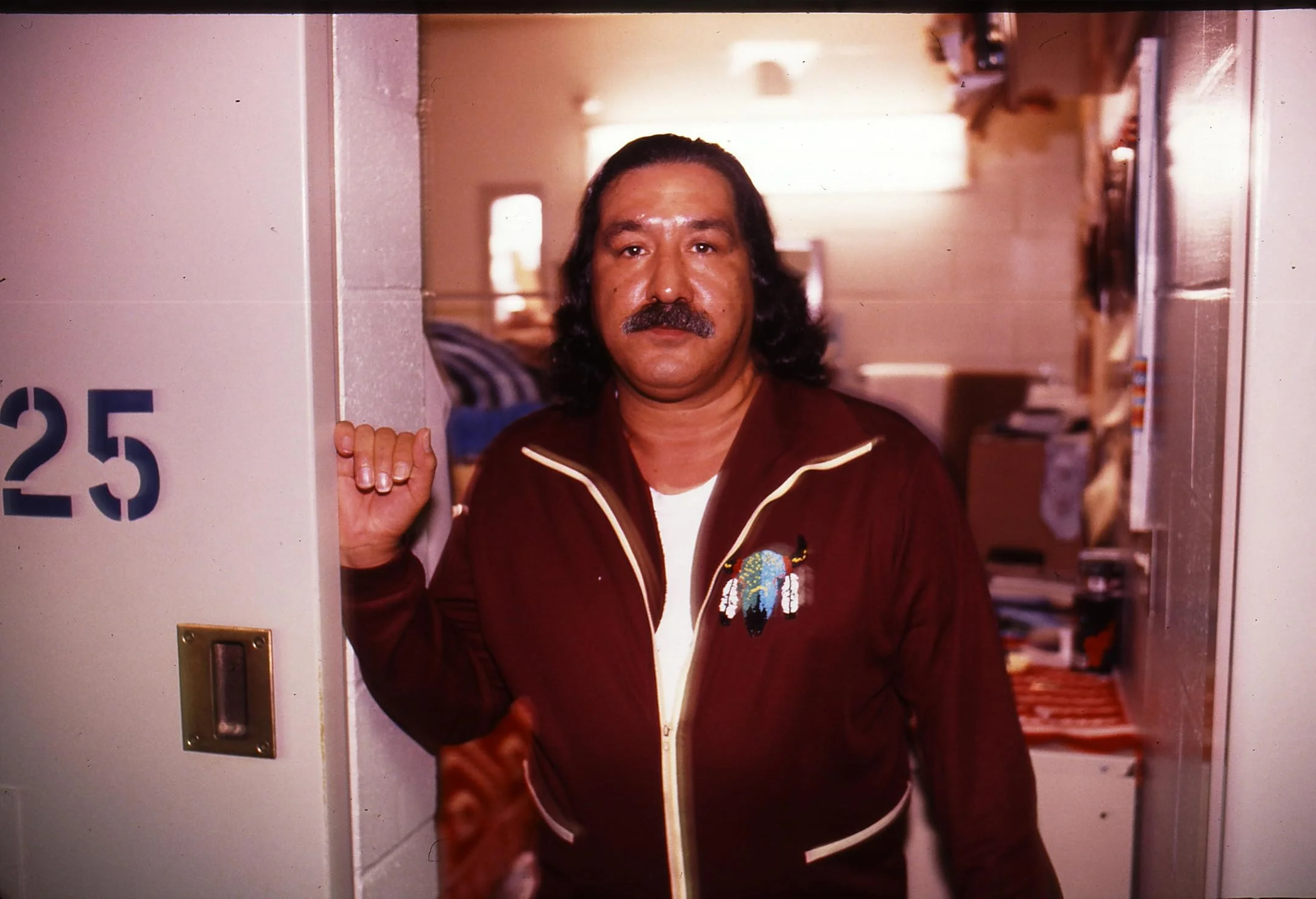
That distinction matters to the documentary’s credibility. FBI agents Jack Coler and Ronald Williams and Indigenous participant Joe Stuntz die in the confrontation. The subsequent legal account carries the film’s sharpest evidence against institutional justice: two fellow AIM defendants are acquitted, while Peltier’s extradition from Canada depends on testimony the documentary challenges.
Myrtle Poor Bear’s claimed relationship with him, her recantation, and allegations of coercion make the handling of a witness central to its argument. Alongside withheld evidence and unsuccessful attempts to overturn the conviction, these details give the advocacy something solid to examine.
The directors are openly working for Peltier’s cause. That commitment does not relieve them of evidentiary responsibility, and it does not automatically disqualify their account. Their strongest passages establish particular failures rather than asking sympathy to settle the case. When the film later attributes the collapse of possible Clinton-era clemency to FBI opposition, it extends its inquiry from the original prosecution to the institution’s continuing investment in its outcome.
This investment makes the documentary’s manufactured imagery especially distracting. Reconstructions of the shootout receive green and purple tinting and simulated period-video texture. An overhead animation explains the movement of participants; a computer-generated deer supplies a reaction shot. These devices have different purposes, yet the distressed visual treatment encourages them to occupy a shared historical atmosphere. The deer is a particularly odd recruit to an argument already rich in human testimony.
I wanted to reject the artificial images on principle. The film’s own evidence makes that response too indiscriminate. A diagram can clarify geography without pretending to be a camera present at the event. Work on an existing voice recording can improve access to testimony. Peltier’s permission for the use of his voice addresses an important question of consent, even if permission alone cannot answer every question about how the finished material sounds. Reenactment itself is hardly incompatible with documentary. What matters here is the status the image invites us to give it.
The period texture is the troublesome choice. It lends constructed material an appearance associated with surviving footage, while details such as the deer add little to our understanding of the confrontation. The closing credits disclose generative AI use, but viewers still have to assess the images as they encounter them. A film challenging the handling of evidence benefits from making its own distinctions readily legible. These embellishments create interpretive work that the firsthand accounts do not require.
Those accounts remain the documentary’s strongest resource. Fellow activists supply the experience of organizing and surviving the conflict, while historical footage gives their recollections a public setting. Mato Wayuhi’s choral scoring reinforces the collective emphasis without requiring a separate argument about solidarity. Together, these elements also answer some of my early desire for a closer portrait of Peltier: the community can explain commitments and relationships that a private interview might never reach. His personal absence still leaves questions, but other people’s presence has substance.
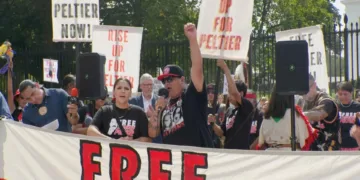
The contemporary campaign footage is less consistently productive. Car rides, meetings, and preparation for a parole hearing establish the practical labor behind a demand that can sound deceptively simple. Once that labor is clear, further passages of preparation sometimes repeat the condition of waiting. The generational commitment described by campaigners already gives duration its human scale. The film does not always need additional logistical activity to prove that the effort continues.
Biden’s January 2025 commutation brings an announcement capable of ending a documentary. It releases Peltier from prison into house arrest, without pardoning him or overturning the conviction. The relief is earned by the preceding record of failed efforts, and qualifying it should not require withholding joy from the people who have worked for this change. Friends and family can share his days under conditions that prison prevented.
Peltier reaches those changed conditions in his eighties. The campaign has acquired a new objective, while his available time has continued to shrink. House arrest permits a different daily life, still subject to confinement and still lived under the conviction the film contests. After so much attention to the machinery deciding his future, the question left open is what he wishes to do with the hours now accessible to him.
Free Leonard Peltier premiered globally on Netflix on October 14, 2026. The investigative documentary examines the controversial 1975 conviction of Indigenous activist Leonard Peltier for the murder of two FBI agents, exploring decades of legal battles, systemic injustices, and the enduring global campaign for his clemency.
Where to Watch Free Leonard Peltier (2026) Online


Full Credits
Title: Free Leonard Peltier
Distributor: Netflix, HBO Documentary Films
Release date: October 14, 2026
Rating: TV-14
Running time: 1 hour 42 minutes (102 minutes)
Director: Jesse Short Bull, David France
Writers: Jesse Short Bull, David France
Producers and Executive Producers: Jesse Short Bull, David France, Ted Sarandos, Lisa Nishimura
Cast: Leonard Peltier, Winona Ryder, Mark Ruffalo, Peter Coyote, Leonard Peltier Jr., Winona LaDuke
Director of Photography (Cinematographer): Dylan Golden
Editors: Flávia de Souza
Composer: Max Richter
The Review
Free Leonard Peltier
Free Leonard Peltier makes its strongest case through firsthand testimony and the concrete relationship between land, power, and prosecution. Its artificial imagery sometimes complicates the trust those accounts earn, while campaign logistics repeat what generations of commitment already establish. I wanted a closer encounter with Peltier himself, yet the community’s testimony gives his absence substance. The commutation brings earned relief without settling the film’s questions about justice.
PROS
- Substantial firsthand testimony from fellow activists.
- Clear connections between dispossession, extraction, and resistance.
- Specific examination of contested prosecution evidence.
- Earned relief that preserves the limits of commutation.
CONS
- Limited contemporary access constrains the personal portrait.
- Period-styled AI imagery complicates evidentiary clarity.
- Campaign logistics occasionally repeat the same point.







