





























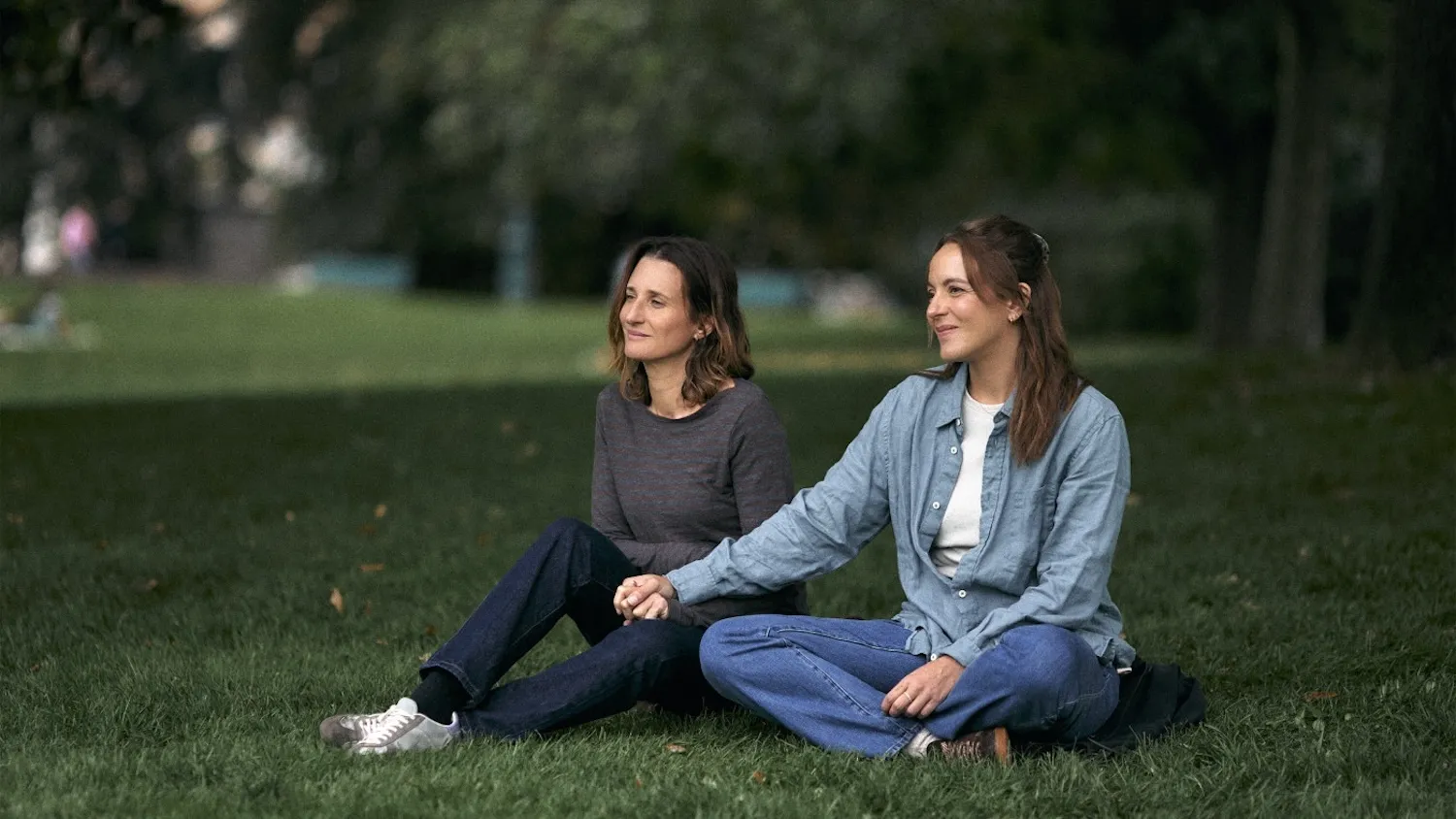

How does a life built on precision react to the sudden imposition of chaos? Out of Love poses this question not with melodrama, but with a quiet, unnerving stillness. The film introduces us to Jeanne, a woman whose existence is a carefully curated structure of professional dedication.
Played by Camille Cottin, Jeanne is a solitary claims adjuster, a career that mirrors her personal life—assessing damage, maintaining distance, and closing files. She has actively chosen a life without children, a decision that defines her independence. This equilibrium is shattered when her younger sister, Suzanne, appears at her door with two young children in tow.
The visit is brief. The next morning, Suzanne is gone, leaving behind her son and daughter and a short note. Jeanne, the architect of her own solitude, is abruptly forced into the role of a surrogate mother, a position she never wanted and for which she is completely unprepared. The story that unfolds is a deeply internal one, a personal crisis playing out within the four walls of a home that is no longer just her own.
The Slow Siege of Domesticity
Jeanne’s initial response is a mix of shock, resentment, and a profound sense of helplessness. Her world, once governed by logic and schedules, is now dictated by the alien vocabulary of childhood needs. The film excels in capturing the friction of this new reality through small, potent moments: the awkwardness of brushing a little girl’s teeth, the difficulty of preparing a simple meal for picky eaters.
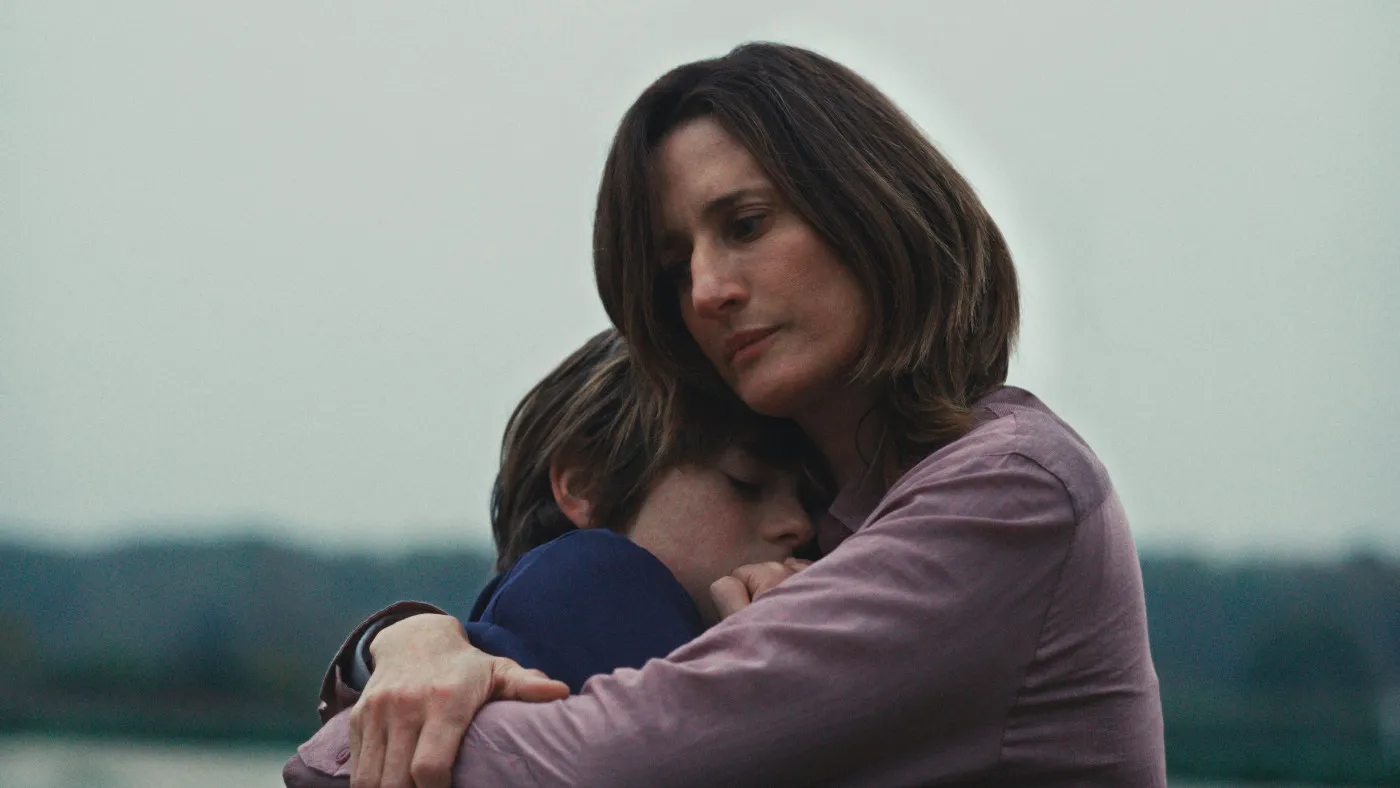
These scenes illustrate the vast gulf between Jeanne’s former self and her current situation. Her emotional evolution is not a sudden epiphany but a gradual erosion of her defenses. The constant, dependent presence of the children begins to chip away at her guarded exterior, revealing a capacity for vulnerability and a nascent affection she never knew she possessed.
In an attempt to understand, she begins to investigate her sister’s disappearance, a search that painfully illuminates how little she knew of Suzanne’s desperation. This new, messy family arrangement also strains her relationship with her ex-girlfriend, Nicole (Monia Chokri), forcing Jeanne to confront the life choices that led her to this point of isolation.
A Precise Emotional Geometry
The film’s power is amplified by the remarkably sophisticated direction of Nathan Ambrosioni. His approach is defined by its maturity and restraint, allowing intense feeling to surface without forcing it. The visual language is exacting.
The camera pushes into tight, intimate close-ups during moments of raw conversation, trapping characters in the frame with their own difficult truths. Then, it will suddenly pull back into a wide shot, stranding a character in the expanse of a room or a landscape to physically manifest their loneliness or emotional distance. This purposeful composition is the film’s true grammar.
The pacing is deliberate, with Ambrosioni trusting silence and the eloquence of a sustained glance to convey what dialogue cannot. He observes his characters rather than explaining them, creating a space where the audience feels the weight of unspoken history and hesitant connection. There is no stylistic excess; every shot and every cut feels considered, designed to deepen our access to the characters’ rich internal states.
The Architecture of Feeling
Out of Love examines the very idea of maternal instinct, suggesting it is not always an innate biological certainty but sometimes a role that is learned through the sheer force of necessity. It is a film about the unconventional creation of family, forged not from planning but from crisis and a shared sense of abandonment.
This emotional architecture is held together by its superb cast. Camille Cottin gives a finely calibrated performance, portraying Jeanne’s complex spectrum of frustration, grief, and growing tenderness with immense subtlety and strength. Her transformation feels earned at every step.
She is supported by wonderfully natural performances from the two child actors, Manoâ Varvat and Nina Birman, who embody the confusion and resilience of youth with startling authenticity. As the ex-partner, Monia Chokri provides a sharp, poignant counterpoint to Jeanne’s journey.
The film offers no easy answers, leaving the fate of the absent sister ambiguous. It closes not on a resolution, but on the quiet, hopeful image of three people beginning to look like a family—a fragile structure, certainly, but one they are starting to build together.
Full Credits
Director: Nathan Ambrosioni
Writers: Nathan Ambrosioni
Producers: Nicolas Dumont, Hugo Sélignac
Cast: Camille Cottin, Juliette Armanet, Monia Chokri, Manoâ Varvat, Nina Birman, Guillaume Gouix, Féodor Atkine, Frankie Wallach, Myriem Akheddiou, Tania Dessources
Director of Photography: Victor Seguin
Composer: Alexandre de La Baume
The Review
Out of Love
Out of Love is a profoundly human and meticulously crafted drama. It succeeds through its commitment to a quiet, observational style, anchored by a powerful lead performance from Camille Cottin and Nathan Ambrosioni's remarkably mature direction. A moving portrait of family formed through crisis, the film is a thoughtful and emotionally resonant piece of filmmaking that finds its strength in subtlety rather than spectacle.
PROS
- A powerful and finely nuanced lead performance from Camille Cottin.
- Mature, restrained direction with purposeful and elegant cinematography.
- An honest and sensitive exploration of unconventional motherhood.
- Strong, naturalistic performances from the supporting cast, especially the child actors.
CONS
- The character of the vanishing sister remains enigmatic and underdeveloped.
- Its deliberate, slow pace may not suit all viewing preferences.