





























Eriksholm: The Stolen Dream drops you into the grim, rain-slicked streets of its namesake city, a place steeped in an alternate-history 1900s atmosphere. This Scandinavian-inspired metropolis is in the grips of the “Heartpox,” a mysterious plague that adds another layer of misery to its populace.
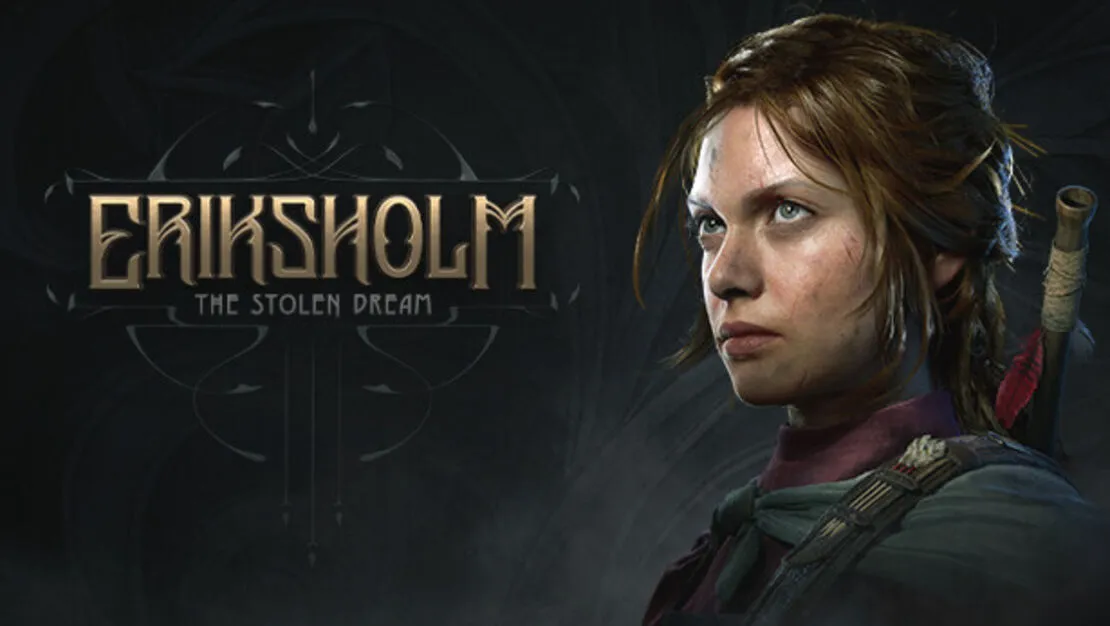
You play as Hanna, a young orphan whose search for her missing brother, Herman, puts her in the crosshairs of the city’s omnipresent police force. From the first moments, the game’s stunning visual presentation is apparent, with detailed environments and dramatic lighting that paint a world both beautiful and oppressive.
This is an isometric stealth title that immediately establishes a specific tone. It guides you through its world with a firm hand, suggesting an experience that values precision over improvisation and carefully laid plans over chaotic experimentation.
The Intended Path
The core gameplay of Eriksholm operates like a finely tuned clockwork mechanism. Each level presents a series of self-contained stealth encounters that are less about player expression and more about discovering a predetermined path to success.
Unlike strategy titles that provide a sandbox for emergent solutions, Eriksholm presents a lock and tasks you with finding the one specific key the designers have created for it. Your primary role is to observe, learn the rigid patrol patterns, and execute a precise sequence of actions.
This creates a gameplay loop of trial and error, but the designers wisely mitigate any potential frustration with generous checkpoints and near-instantaneous reloads. Death is not a punishment but simply another opportunity to test a new theory.
The game’s puzzles are built around the distinct abilities of its three characters, who are introduced at a steady pace. Hanna is the nimble scout, using her blowpipe for non-lethal knockouts and her small frame to slip through vents. Alva expands the tactical playbook with her ability to destroy light sources, distract guards with a well-aimed slingshot, and clamber up drainpipes to find new vantage points.
Sebastian arrives later as the enforcer, providing the capacity for permanent, silent takedowns and the unique ability to swim. The level design is constructed to leverage whichever characters are available for a given mission. You rarely have access to the full trio, which makes each stage a bespoke challenge that forces a deep understanding of a limited toolset.
This design extends to the enemy AI. While not dynamic, it is scripted for authenticity. Guards react to missing comrades or strange noises in predictable ways you can learn and exploit. A memorable example involves two officers who complain about their sergeant; remove the boss, and they abandon their post, opening a new route. This makes the world feel reactive to your specific actions, even within its linear framework.
A Tale of Two Conflicts
The narrative of Eriksholm begins with impressive confidence and a strong, personal focus. The opening chapters tell a grounded and relatable story of a local community struggling against an occupying police force.

This conflict is woven directly into the gameplay; Hanna’s intimate knowledge of her neighborhood’s back alleys and secret passages gives her a tangible advantage over the invading authorities, whose presence is resented by the locals. This initial setup effectively ties character, world, and mechanics into a cohesive whole. The player feels like a part of this community, fighting for its survival from the shadows.
Unfortunately, this tight, personal story eventually gives way to a grander and less compelling conspiracy plot. The conflict shifts from a community’s struggle to a direct confrontation with a one-dimensional villain whose motivations are murky at best.
The story gets so caught up in its high-level machinations that it glosses over key details, leaving the player to fill in gaps that the narrative should have addressed. This shift dilutes the emotional weight established so effectively in the early game. The story concludes with a jarringly abrupt ending that feels less like a resolution and more like a hard cut to credits, leaving major threads dangling.
This weakness in the main plot is offset by the strength of its smaller character moments. Alva’s internal struggle between her hardened, business-like persona and a burgeoning maternal instinct is particularly well-realized. The incidental dialogue overheard from guards and citizens is often sharp and humorous, adding a layer of authenticity that the central plot sometimes lacks.
A Meticulously Crafted World
Where Eriksholm is an unqualified success is in its presentation. It is a visually sumptuous game, with the Unreal Engine 5 rendering its world with a level of detail that is consistently impressive. The art direction is masterful, guiding the player through a striking variety of locations.

You will sneak through labyrinthine shanty towns, dank and mossy smugglers’ coves, and medieval fortresses retrofitted with industrial-era armaments. Each environment is suffused with meticulous detail, from the light catching on wet cobblestones to the intricate architecture. The interplay of light and shadow is not merely decorative; it is a fundamental mechanic that defines sightlines and creates safe passages.
This visual excellence is supported by superb audio design and uniformly excellent voice acting that lends real personality to the main trio and the wider cast. While the pre-rendered cutscenes are used sparingly, they are a technical showcase, featuring remarkably subtle and emotive facial animations that convey character depth that dialogue alone could not.
The user interface is another highlight, communicating essential information with clarity and elegance. Contextual enemy view cones, a bright highlight confirming you are hidden, and a tactile controller rumble to signal discovery all work together to make the stealth experience readable and fair.
The isometric perspective provides a clear tactical overview, though it can occasionally lead to obscured sightlines behind large buildings. Every element of the game’s presentation is polished to a high sheen, creating a powerful sense of place that makes the world of Eriksholm both believable and memorable.
The Review
Eriksholm: The Stolen Dream
Eriksholm: The Stolen Dream is a stunningly beautiful stealth game with meticulously crafted puzzle-box encounters. Its audio-visual presentation is a masterclass in atmosphere, and its moment-to-moment gameplay is tight, challenging, and fair. However, its rigid linearity and a narrative that starts strong before devolving into a generic plot with an unsatisfying conclusion keep it from achieving true excellence. It’s a gorgeous, polished experience that is rewarding to solve but offers little room for player expression, making it a memorable journey on a strictly guided path.
PROS
- Absolutely gorgeous visuals and world design.
- Clever, tightly-designed stealth puzzles.
- Superb voice acting and atmospheric sound design.
- Polished, intuitive user interface.
CONS
- Strictly linear gameplay with little freedom for creativity.
- The main story loses focus and ends abruptly.
- An underdeveloped primary antagonist.