
























There are ghosts in the memory of the video store. They flicker in the mind’s eye like worn-out tape: the specific heft of a plastic clamshell case, the quiet hum of fluorescent lights on a Friday night, the communal rite of navigating aisles as a family or a solitary seeker of truths on film.
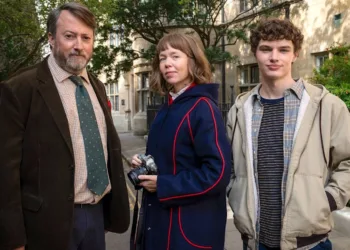
This cathedral of choice, a physical anchor for a mode of being that has since dissolved into the ether, is the subject of Alex Ross Perry’s Videoheaven. His film is less a documentary and more a seance, a sprawling three-hour video essay built not from interviews but from the very celluloid specters the stores once circulated.
Through an endless collage of movie clips, guided by the disembodied, steady voice of Maya Hawke, Perry conducts an inquiry into a cultural collapse. He excavates the phantom limb of a bygone era, asking what silent void was left when the last of these doors were locked for good.
The Archive as Narrative – A History Told Through Hollywood’s Lens
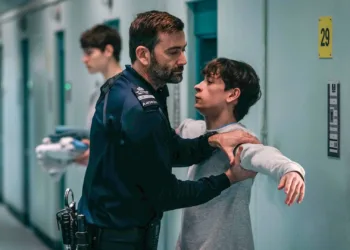
Videoheaven presents a history written in borrowed light, arguing that a place can be defined, and perhaps destroyed, by its own reflections. Perry’s method is to chart the life of the video store entirely through its on-screen representations, creating a dizzying excavation of cultural perception.
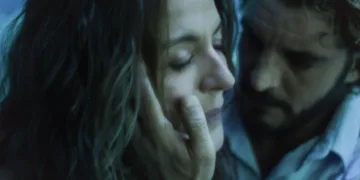
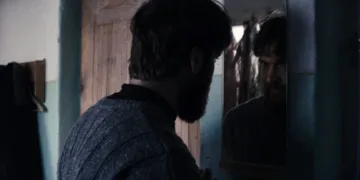
The journey begins in shadow, with the store as a mysterious, even sordid, space of illicit knowledge, a place of Cronenbergian corruption where forbidden signals pulsed behind beaded curtains. From this darkness, a new image emerges: the clean, well-lit hub of 1980s suburbia.
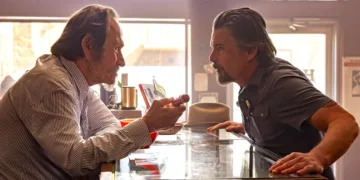
The aisles become a wholesome backdrop for romantic comedies and family disagreements as mom-and-pop shops give way to the corporate sterility of Blockbuster. The film then chronicles the final decay, where the store becomes a hollowed-out signifier, a nostalgic set piece in films made by people who barely knew it. The documentary is therefore a history of an idea. It posits that the screen looked back at the store, and in that gaze, it forged a myth and then presided over its quiet disillusionment.
The Director’s Cut – A Personal and Pointed Perspective
The ghost in this machine is Alex Ross Perry himself. He stands not as a detached historian but as a high priest of a dead faith, his account deeply colored by his past behind the counter. This is not a record; it is a sermon from a collapsed pulpit, a passionate and sometimes bitter testament.
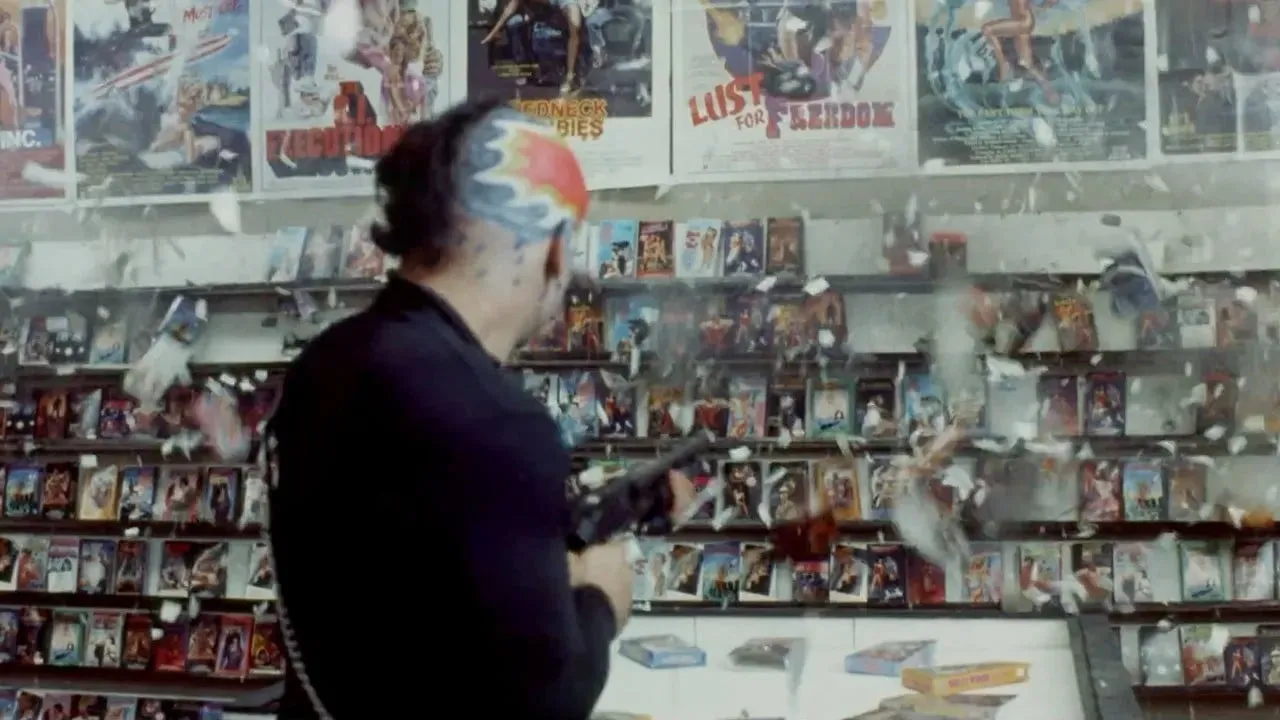
The film’s obsessive deconstruction of the video store clerk trope feels less like academic analysis and more like the settling of an old score, an attempt to reclaim a narrative imposed upon a generation of film acolytes. Maya Hawke acts as the oracle, her calm, mellifluous delivery a strange and effective mask for the director’s pointed script.
Her casting becomes its own esoteric symbol, narrating over images of her father or her own work in Stranger Things. She is the cool voice channeling a passionate, wounded spirit. This personal lens sharpens the film’s critique, particularly in its examination of the “adults only” section, which becomes a space onto which a puritanical society projected its own anxieties, marking the stores with a manufactured shame.
The Three-Hour Rental – An Indulgent but Immersive Experience
To watch Videoheaven is to accept a challenge. Its three-hour runtime demands a kind of monastic commitment, a sustained attention that feels alien in an age of infinite, frictionless scrolling. This pilgrimage is not for the casually curious; it is an indulgence, a deep dive for the truly devoted.
Yet for those willing to submit, the experience offers a strange transcendence. The relentless torrent of images induces a hypnotic state, a temporal collapse that transports the viewer to a lost world of tangible media and finite, meaningful choices. The atmosphere of the video store is conjured with a powerful wistfulness. This immersion is not seamless.
A reported instance of a repeated line of narration is a crack in the facade, a moment the creator’s hand becomes too visible, reminding us this perfect memory is an imperfect construction. The film leaves you not with a recommendation but with a profound and unsettling question. It is a meditation on what happens to human discovery and connection when the physical spaces for them are erased, leaving only the cold, limitless void of a digital menu.
Videoheaven premiered at the International Film Festival Rotterdam in January 2025. The film was released in select theaters in the United States on July 2, 2025. It has also been available to stream on platforms like MUBI.
Full Credits
Director: Alex Ross Perry
Writers: Alex Ross Perry
Producers: Alex Ross Perry
Cast: Maya Hawke
Director of Photography: Luka Bazeli
Editors: Clyde Folley
The Review
Videoheaven
Videoheaven is less a documentary and more a hypnotic, demanding requiem for a lost mode of being. Alex Ross Perry’s three-hour archival immersion is an indulgent and deeply personal meditation on memory, perception, and the void left by vanished physical spaces. While its length will test many, for the patient viewer, it is a powerful and unsettling work that captures the ghost of a world where our choices had physical weight.
PROS
- Deeply immersive and atmospheric.
- Raises profound questions about memory, culture, and technology.
- Ambitious and formally unique as a video essay.
- An encyclopedic and impressive use of archival clips.
CONS
- An excessive and challenging three-hour runtime.
- The director's perspective feels intensely personal, sometimes bitter.
- Niche subject matter limits its audience.
- Can feel indulgent and occasionally unpolished.