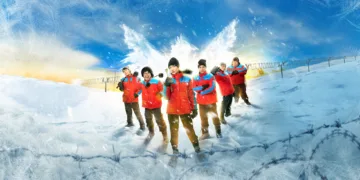






















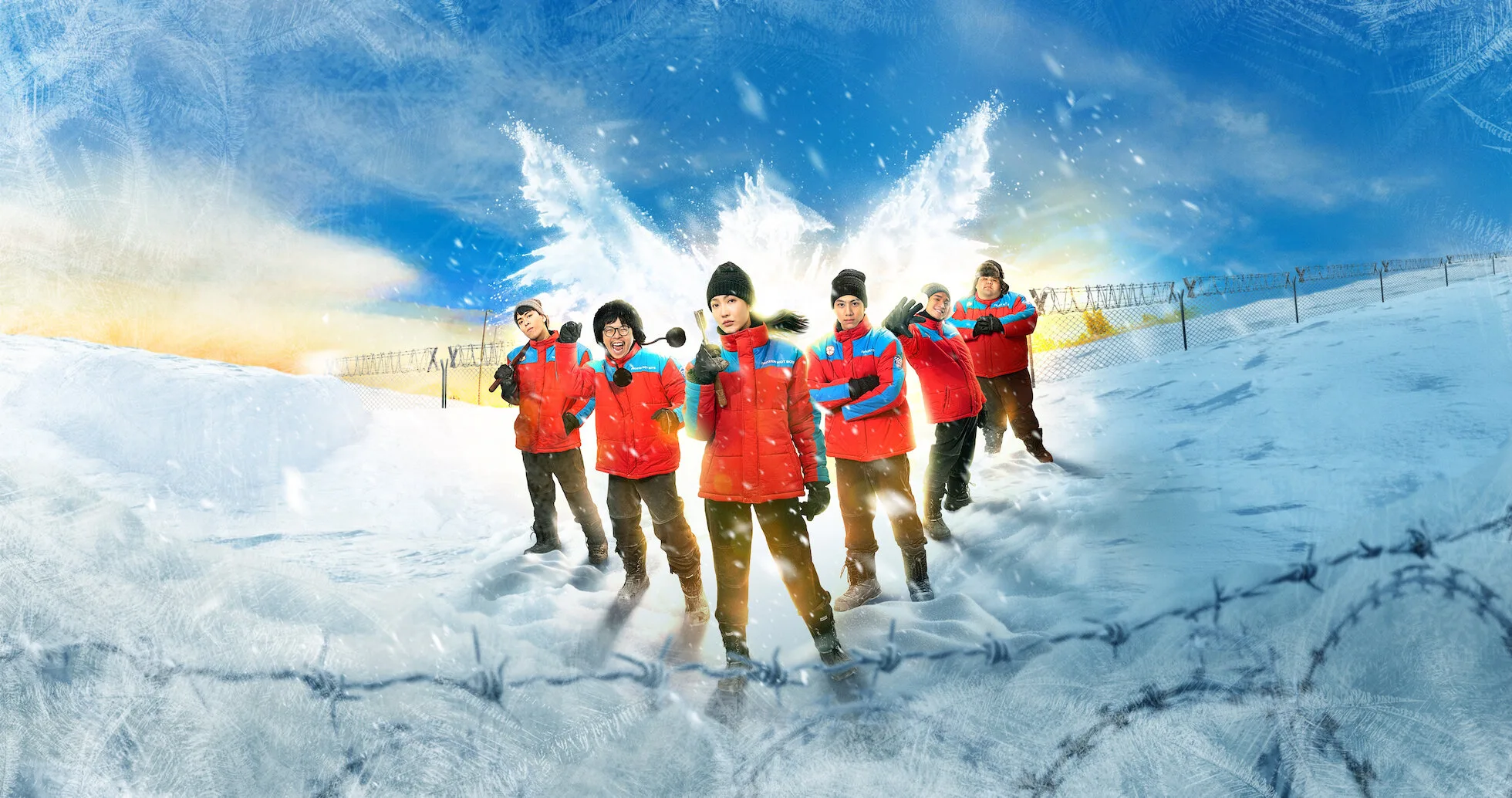

In an era where globalization often flattens cultural distinctions, “Frozen Hot Boys” presents a fascinating paradox: Thai juvenile offenders carving ice sculptures in Sapporo, Japan. This premise alone signals the film’s intent to explore cultural boundaries through the lens of artistic expression. Miss Chom, a disillusioned teacher at Bangkok’s Benjatham Regional Juvenile Vocational Center, sees opportunity where others see impossibility. Her mission to reconnect with her estranged father in Japan becomes intertwined with transforming her woodworking students into competitive ice sculptors.
The film’s audacious setup—boys from a tropical climate mastering a winter art form—serves as metaphor for cross-cultural adaptation and personal transformation. Chom’s charges, including the volatile artist Jab, gentle giant Toom, and troubled Win, represent Thailand’s marginalized youth seeking redemption through an unlikely medium. Their journey from detention center to international competition mirrors the broader tension between local identity and global aspiration that defines contemporary Southeast Asian cinema.
Generational Conflict and Mentorship Dynamics
Natapohn Tameeruks delivers a nuanced performance as Miss Chom, embodying the complex position of millennial educators caught between traditional Thai respect for authority and modern pedagogical approaches. Her strained relationship with her mother, the facility’s director, reflects deeper generational tensions about rehabilitation versus punishment that resonate across Asian societies. Tameeruks navigates these cultural layers with authenticity, particularly in scenes where she must balance maternal instinct with professional boundaries.
Nuttawatt Thanathaveeprasert brings remarkable depth to Jab, the film’s most compelling character. His portrayal captures the specific cultural shame associated with juvenile delinquency in Thai society, where family honor remains paramount. The actor’s ability to convey artistic passion beneath layers of defensive aggression speaks to the universal language of creative expression transcending cultural barriers.
The supporting ensemble, particularly Piyaphong Dammunee as Toom, demonstrates how physical comedy translates across cultural contexts while maintaining distinctly Thai sensibilities. Their group dynamics reflect the collectivist values of Thai culture, where individual redemption becomes inseparable from group harmony. The evolution from fractured individuals to cohesive team mirrors traditional Thai concepts of community solidarity, yet the competitive framework introduces Western individualistic elements that create productive tension.
Narrative Architecture and Cultural Translation
Directors Nareubadee Wetchakam and Tanakit Kittiapithan construct their narrative using familiar underdog sports movie conventions while infusing distinctly Thai storytelling elements. The film’s extended training sequences, reminiscent of Japanese perseverance narratives, create space for character development that might feel excessive in Western pacing but aligns with Asian cinema’s emphasis on process over outcome.
The comedy operates on multiple cultural registers simultaneously. Sound effects punctuating physical gags recall Thai television comedy traditions, while visual humor transcends linguistic barriers. However, certain comedic moments—particularly those involving cultural misunderstandings—risk reinforcing stereotypes rather than bridging cultural gaps. The film’s tonal shifts between broad comedy and serious drama reflect the Thai entertainment industry’s comfort with genre fluidity, though this approach may challenge Western audiences expecting clearer tonal consistency.
Cinematographically, the stark contrast between Thailand’s tropical heat and Japan’s winter landscapes becomes a visual metaphor for cultural adaptation. The ice sculpting sequences possess genuine artistry, showcasing how Thai woodcarving techniques translate to frozen medium. This cross-cultural artistic synthesis represents the film’s most successful thematic achievement, demonstrating how traditional skills can find new expression in global contexts.
The film’s nearly two-hour runtime allows for thorough character development but occasionally sacrifices narrative momentum. Extended montages of competition preparation serve the Asian storytelling tradition of showing rather than telling, yet may test international audiences’ patience.
Rehabilitation Philosophy and Global Justice Perspectives
“Frozen Hot Boys” enters complex territory regarding juvenile justice, presenting a distinctly Thai Buddhist perspective on redemption that emphasizes potential for transformation over punitive measures. The film’s stance—that society creates criminals through neglect and harsh judgment—reflects Southeast Asian communitarian values where collective responsibility supersedes individual accountability.
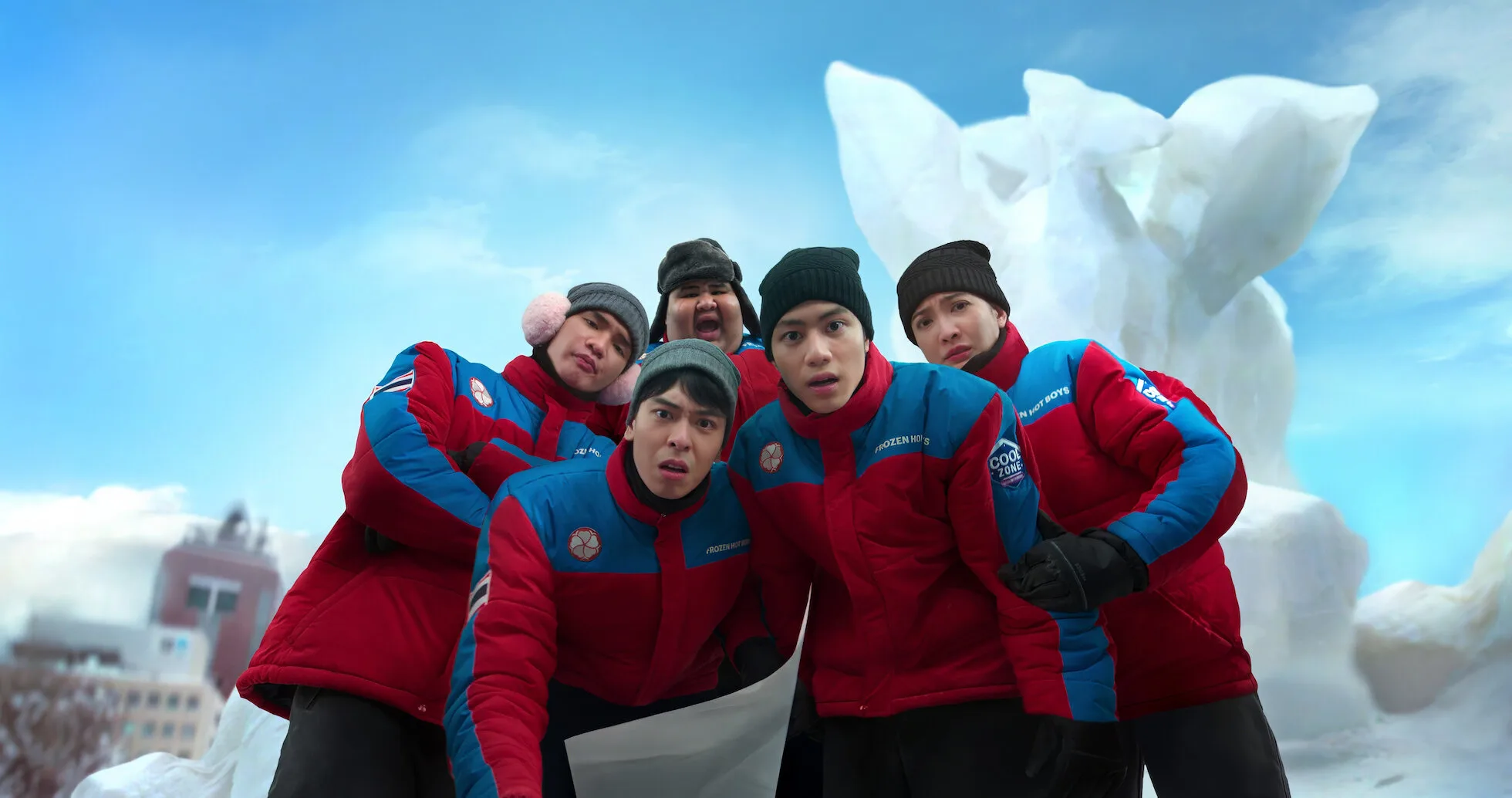
The cultural specificity of Thai juvenile detention, with its emphasis on vocational training and artistic expression, contrasts sharply with more punitive Western approaches. Miss Chom’s teaching philosophy, rooted in Thai concepts of mentorship and spiritual guidance, offers an alternative model for youth rehabilitation that may resonate globally as traditional Western juvenile justice systems face scrutiny.
The film’s treatment of family reconciliation, particularly Chom’s relationship with her father, addresses the specific pressures of Asian diaspora families while speaking to universal themes of forgiveness and second chances. Her father’s new life in Japan represents both abandonment and aspiration, reflecting the complex emotions surrounding economic migration within Asian contexts.
The boys’ artistic achievements in ice sculpting serve as metaphor for cultural adaptation and personal growth. Their ability to transform traditional Thai artistry into a foreign medium suggests possibilities for cross-cultural understanding that transcend political and economic barriers. The film argues that artistic expression provides a universal language for human connection, regardless of cultural origin or personal history.
The emotional impact stems from the film’s genuine belief in human potential for transformation, a perspective deeply rooted in Thai Buddhist philosophy yet accessible to global audiences seeking hope in an increasingly divided world. Whether this message translates effectively across cultural boundaries depends largely on viewers’ openness to alternative approaches to justice and redemption.
Frozen Hot Boys is a Thai drama-comedy film that premiered on April 10, 2025, exclusively on Netflix. The movie is distributed by Netflix and has a runtime of 1 hour and 57 minutes. Viewers can watch the movie on Netflix, which offers various subscription plans.
Full Credits
Directors: Tanakit Kittiapithan, Nareubadee Wechakum
Writers: Rangsima Aukkarawiwat, Tanakit Kittiapithan, Pruch Neamsri, Alinda Peeraket
Cast: Natapohn Tameeruks, Nuttawat Thanataviepraserth, Chatchai Chinnasri, Sadanont Durongkavarojana, Piyapong Dammunee, Punnanon Treewannakul, Karnjanaporn Plodpai, Supakorn Kitsuwon, Attaporn Teemakorn, Suthipongse Thatphithakkul, Somlek Sakdikul, Abhicha Thanachanun, Wayupak Bangkhran, Kithchanaphat Wichitkun, Arunee Wattana, Molywon Phantarak,
Editors: Weerapat Tembundit
The Review
Frozen Hot Boys
"Frozen Hot Boys" succeeds as a cross-cultural meditation on redemption despite its formulaic framework. While pacing issues and tonal inconsistencies occasionally undermine its impact, the film's sincere exploration of juvenile rehabilitation through artistic expression offers genuine emotional rewards. The cultural specificity of its Thai perspective enriches rather than limits its universal themes, making it a worthwhile watch for audiences seeking meaningful entertainment beyond Western narrative conventions.
PROS
- Authentic portrayal of Thai juvenile justice philosophy
- Strong performances, particularly Natapohn Tameeruks and Nuttawatt Thanathaveeprasert
- Effective visual metaphor of cultural adaptation through ice sculpting
- Genuine emotional resonance in mentorship relationships
- Unique cross-cultural premise with artistic merit
CONS
- Excessive runtime with pacing issues
- Tonal inconsistencies between comedy and drama
- Some cultural humor may not translate internationally
- Formulaic underdog sports movie structure