



























Cooking acquires a sinister political vocabulary when the person waiting for dinner can imprison the chef, empty a village, or starve a country. Andrew Neel’s How to Feed a Dictator, adapted from Witold Szabłowski’s nonfiction book, approaches Pol Pot, Augusto Pinochet, Saddam Hussein, Idi Amin, and Kim Jong-il through people who encountered them in circumstances stripped of podiums and uniforms. They cooked their meals.
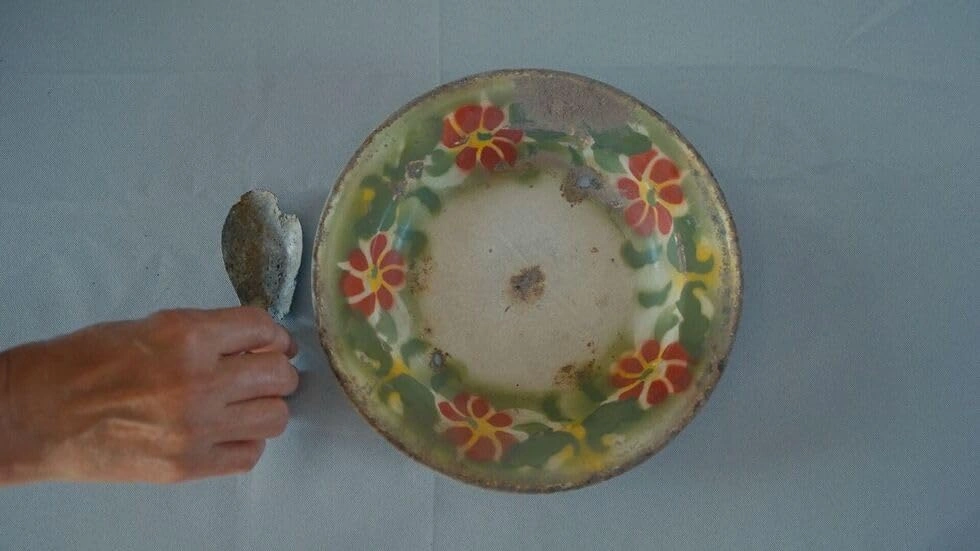
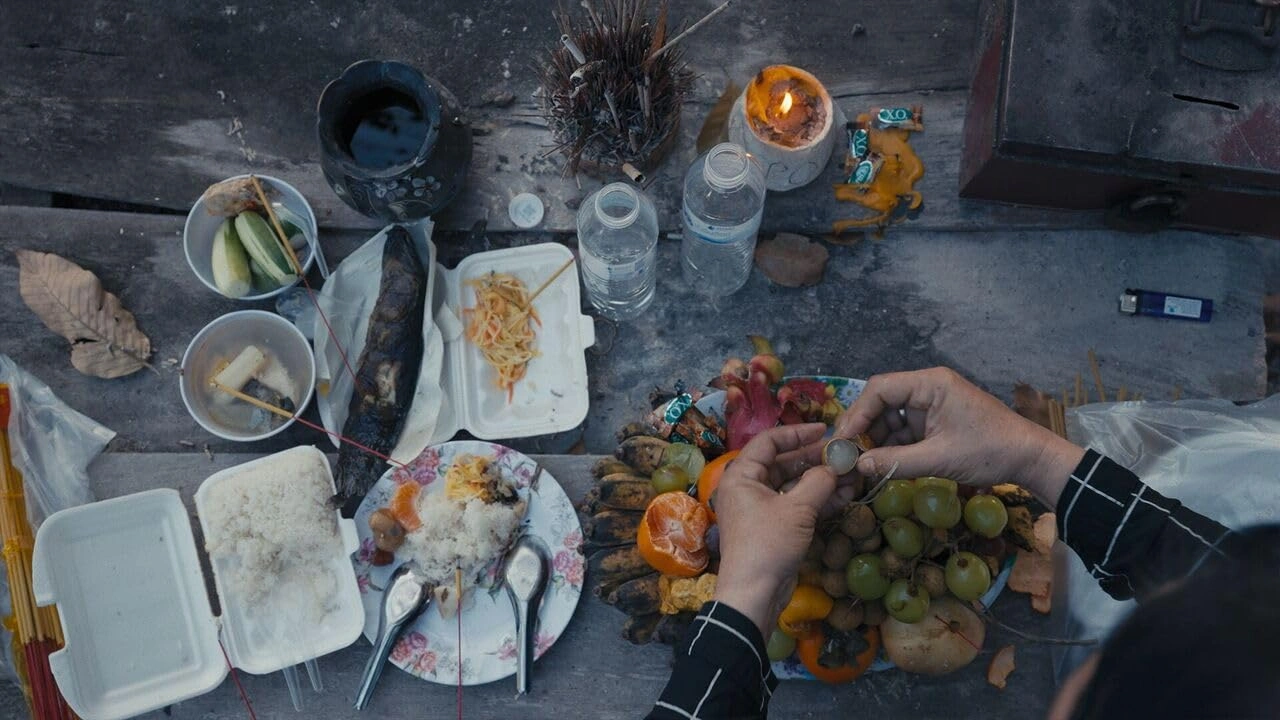
Neel photographs the results with almost indecent beauty. Vegetables glisten, meat browns, sauces simmer, and finished plates receive the pristine overhead framing familiar from prestige food television. Each dish belongs to a man whose rule produced suffering far beyond his dining room.
That collision gives the documentary its sharpest idea. Dictatorships depend on enormous machinery, yet power also survives through ordinary acts performed repeatedly by ordinary people. Somebody guards the door. Somebody drives the car. Somebody cooks dinner.
Five Kitchens, Five Stories
Keo Samoun still carries food to Pol Pot’s grave. It is a startling gesture until her history complicates the image. Recruited into the Khmer Rouge while young and poor, she associates the movement with the food and protection absent from her childhood. Her loyalty exposes one of authoritarianism’s nastier achievements: political violence can become entangled with private gratitude so thoroughly that separating one from the other becomes psychologically difficult.
Jorge “Coco” Pacheco requires less decoding. The Chilean chef speaks fondly of Augusto Pinochet, credits him with restoring order, displays photographs of their encounters, and recalls preparing food for him long after his dictatorship had ended. Neel cuts these recollections against evidence of state violence. Pacheco does much of the film’s argumentative work himself. Every affectionate anecdote reveals the historical material he has chosen to exclude from his version of Chile.
Ermanno Furlanis occupies a different position. The Italian chef traveled to North Korea to perfect pizza for Kim Jong-il during the era of devastating famine. He recalls privileged accommodations while maintaining that he never saw widespread starvation. The statement matters less as a factual defense than as a portrait of insulated privilege. Power does not always need its beneficiaries to approve of suffering. Sometimes it merely needs them to remain comfortably incurious.
Saddam Hussein’s former cook, identified as Abu Saif, appears in darkness and under an alias. He fears the dictator’s enemies while retaining an affectionate conception of Saddam as a protective paternal figure. Even decades later, fear and loyalty remain difficult to separate.
Otonde Odera’s memories of Idi Amin carry another kind of terror. He recalls wealth and proximity to power, then describes nearly being executed after Amin’s children became sick following a meal. His account of preparing a human heart without daring to ask about its origin reduces authoritarian employment to its ugliest principle: survival frequently requires knowing exactly which question cannot be spoken.
Outside the Palace
The documentary would become dangerously fascinated with access to infamous men if Neel allowed the chefs to control the historical record. He does not. Survivors repeatedly enter the frame and rupture the comforting scale of kitchen anecdotes.
Hoshyar Ali, who survived Saddam Hussein’s violence against the Kurds, appears bearing its physical consequences. His presence beside Abu Saif’s admiration for Saddam creates a gulf that polite historical distance cannot close. One man remembers security. Another carries mutilation.
Cambodian testimony brings accounts of electrocution, forced labor, starvation, and murdered relatives. During Samoun’s section, a translator reveals that he endured Khmer Rouge torture as a child. The encounter quietly destroys the temptation to divide history into innocent servants and obvious perpetrators. Two children passed through the same political system and emerged with radically different memories of what it represented.
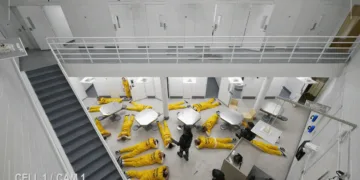
Chile offers similarly brutal testimony, including imprisonment, sexual violence, electric torture, and food weaponized against prisoners. These accounts transform the documentary’s culinary motif. A bowl, plate, or meal can signify comfort inside one room and coercion inside another.
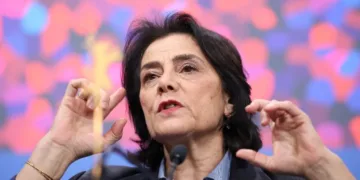
Historian Ruth Ben-Ghiat is particularly useful when Pacheco’s nostalgia begins rewriting Pinochet as a provider of stability. Her intervention identifies the political mechanism beneath such memories: authoritarian nostalgia survives by editing violence out of the story. Journalist Riccardo Orizio widens the question toward collective responsibility, asking how populations participate in constructing the rulers who later appear impossibly powerful.
Appetite and Horror
Neel and editor Brad Turner understand that an argument about political violence can be made through sequencing. A knife passes cleanly through vegetables. Fat crackles on a grill. A completed dish arrives under careful lighting. Then archival footage shifts the meaning of everything that came before.
The strategy risks tastelessness, yet its calculated excess serves the subject. These rulers consumed lavish meals while citizens endured deprivation, and photographing the food attractively makes the inequality visible rather than abstract. The viewer experiences appetite before being forced to examine where that appetite has been placed.
The episodic construction is less disciplined across every regime. The Uganda chapter spends valuable time with Idi Amin’s daughter, whose memories of a beloved father offer little resistance to the historical evidence surrounding him. Several talking heads similarly repeat ideas that survivor testimony and the chefs’ own contradictions communicate with greater force.
The strongest passages trust juxtaposition instead. Pacheco praises Pinochet while violence fills the screen. Furlanis remembers pizza while famine sits outside his protected world. Samoun prepares offerings for a dead dictator while another survivor recalls what his regime did to children.
Those edits locate authoritarianism somewhere disturbingly familiar. Power survives inside ideology and institutions, certainly, but it also survives at tables where the food keeps arriving and everyone present learns which suffering can be ignored.
How to Feed a Dictator premiered at the Tribeca Festival in June 2026 and expanded to theatrical and festival runs later that summer. The documentary explores the terrifying inner workings of five notorious authoritarian regimes through the eyes and kitchen experiences of the personal chefs who served them.
Where to Watch How to Feed a Dictator (2026) Online
Full Credits
Title: How to Feed a Dictator
Distributor: Submarine Entertainment
Release date: June 2026 (Tribeca Festival)
Running time: 95 minutes
Director: Andrew Neel
Writers: Witold Szabłowski
Producers and Executive Producers: Michael Merlob, Catherine Rehwinkel, Billy Hines, Ryan Bartecki, Ethan Palmer, Kyle Martin, Gary Levinsohn
Cast: Coco Pacheco, Ermanno Furlanis, Abu Saif, Otonde Odera, Keo Samoun, Riccardo Orizio, Ruth Ben-Ghiat, Bruce Bueno de Mesquita
Director of Photography (Cinematographer): Ethan Palmer, Raphael Laski
Editors: Brad Turner
Composer: Arjan Miranda
The Review
How to Feed a Dictator
How to Feed a Dictator turns the private kitchen into a disturbingly effective portrait of authoritarian power. Andrew Neel’s sharpest choice is refusing to treat loyalty as an historical curiosity: Coco Pacheco’s affection for Pinochet, Keo Samoun’s offerings to Pol Pot, and Abu Saif’s reverence for Saddam reveal how political myths survive the regimes that created them. The lavish food photography acquires an increasingly poisonous beauty beside testimony of famine and torture. A few interviews weaken the film’s precision, yet its strongest encounters make complicity frighteningly ordinary.
PROS
- Piercing study of complicity
- Powerful food-and-atrocity editing
- Uncomfortable, revealing chef interviews
- Strong survivor testimony
- Sharp interrogation of authoritarian nostalgia
CONS
- Uneven depth between regimes
- Some unnecessary talking heads
- Uganda chapter lacks equal scrutiny