



















The architecture of a horror film often rests on a familiar foundation: a vulnerable protagonist enters a seemingly benign space that conceals a malignant secret. The Home builds its story on this very blueprint. We meet Max, a young man defined by a past tragedy and a spray-painted worldview.
To sidestep a prison sentence, he takes a job as a live-in custodian at the Green Meadows Retirement Home, a sprawling estate whose placid exterior does little to hide an immediate sense of unease. The story wastes no time in laying its cards on the table. Almost upon arrival, he is given a stark warning from the unwelcoming staff—he is to stay away from the fourth floor under all circumstances.
This prohibition, a classic narrative device, establishes the film’s central mystery. What begins to unfold is a series of unsettling behaviors and strange occurrences that suggest this facility is far from a place of quiet dignity. The narrative poses its primary question plainly: what darkness operates behind the locked doors of Green Meadows, and what is the true purpose of its menacing caretakers?
An Anchor Adrift
The film’s emotional weight is meant to rest on Max’s shoulders, but the character’s construction is shaky from the start. We understand he is a man in pain; tattoos like “Thicker Than Blood” and a backstory involving his foster brother Luke’s suicide are offered as evidence. His act of vandalism, a mural declaring “Our future is burning,” is a blunt instrument used to signal his internal state.
Pete Davidson’s portrayal of Max is a study in contrasts. His innate, low-key charisma, honed by his television work, serves the character well in moments of casual interaction. He is believable as a slacker-type caught in a situation spiraling into absurdity, his snark a plausible defense mechanism. Yet, the performance falters precisely when the script demands a higher emotional register.
In scenes that should provoke terror or profound shock, Davidson’s reaction is often so muted it pulls the viewer out of the experience. His flat response to horrific discoveries reads less as stoicism and more as a disconnect from the stakes, an inability to project the sheer panic the situation warrants. He appears far more at ease in the film’s final, physically demanding moments than he does grappling with its psychological terrors, making the character feel more like a sketch than a fully realized person.
Also Read




A Collection of Curios, But Little Terror
Visually, The Home presents a far more polished product than its script deserves. The widescreen cinematography and a palette of deep, saturated reds and blues give it an aesthetic sheen, creating the expectation of a thoughtfully composed thriller. This professional look is consistently betrayed by the narrative’s content, which often veers into silliness.

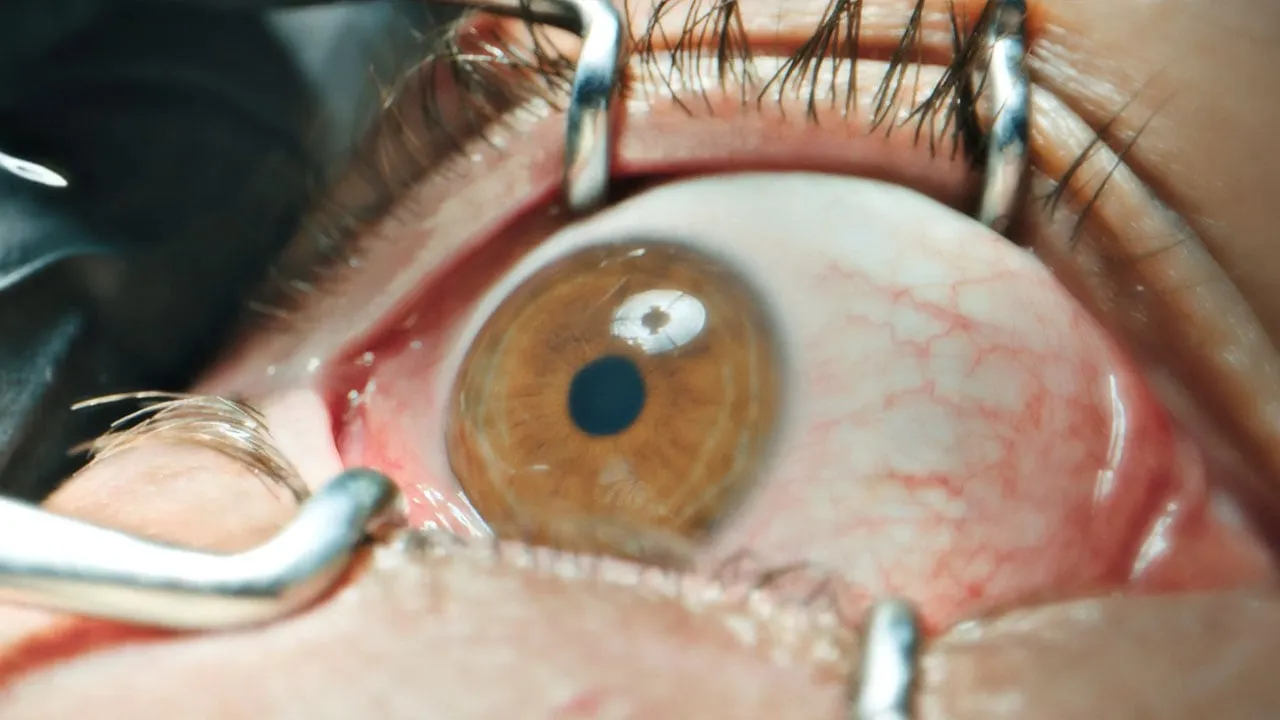
The film assembles a full catalog of horror tropes, yet it struggles to weaponize any of them effectively. Jump scares, a genre staple, are telegraphed with such obviousness that they land without impact. An attempt at a major fright on the forbidden fourth floor produces more of a smirk than a scream. The story leans heavily on body horror, from the unnerving fixation of Dr. Sapien on Max’s eyes to a resident named Lou graphically pulling out his own teeth.
These images, along with other unsettling sights like masked residents and a gruesome death by impalement, are meant to build a creeping sense of dread. The effort fails because the narrative logic holding these moments together is too weak.
The script’s most glaring flaw is that Max’s decision to remain in the facility defies all belief, and this single illogical point unravels any subsequent attempt to build tension. A story can only sustain fear if its world has rules and its characters behave in a recognizably human way. This film abandons that contract early on.
Life in the Margins
While the central narrative struggles, the film finds moments of life in its supporting players. The story is populated by a roster of veteran character actors who appear to understand their function: to inject personality into a script that provides very little. As the eccentric acting teacher Lou, John Glover is a particular bright spot, projecting a sense of fun that is infectious.

His performance provides a crucial narrative function, giving Max a flimsy but necessary reason to develop a personal stake in the well-being of the residents. Mary Beth Peil, as the resident Norma, provides a necessary touch of warmth, creating a believable bond with Max over their shared histories of loss. Her character briefly represents the film’s more grounded and discarded theme of genuine elder neglect before the plot swerves into a grander conspiracy.
On the other side of the equation are the menacing staff members, whose uniform hostility acts as a broad, unsubtle signpost for the audience. Bruce Altman’s Dr. Sapien is a standout, his strange cheerfulness and unnerving focus on Max’s eyes planting one of the film’s few effective seeds of unease. The work of this capable ensemble does much to keep individual scenes afloat.
A Message Lost in Transmission
The Home gestures toward having something significant to say. Initially, it appears to be a critique of the American elder care system or a simple tale about the fear of aging, using the “creepy old person” trope as a narrative shortcut. Yet the script has larger, if clumsier, ambitions.
Late in its runtime, the film reveals its intended core idea: a direct conflict between generations. The older residents enjoy a comfortable existence, while Max represents a younger generation that feels its future has been mortgaged. This notion is connected back to his “Our future is burning” graffiti, a hint of an eco-horror subtext that is never properly developed.
The execution of these themes is anything but subtle. For most of the film, the ideas are presented in a disorganized, heavy-handed fashion, often through clunky dialogue or on-the-nose visual cues. When the message is finally spelled out explicitly, it feels like an afterthought tacked onto the story rather than an organic outgrowth of it. It’s an interesting premise borrowed from a different kind of film, one that feels completely disconnected from the immediate horror of the retirement home setting.
A Structural Collapse
Director James DeMonaco approaches the material with the same unsubtle force that characterized his Purge films, but without the clear, high-concept premise that made them work. The direction favors blunt impact over nuance, and the film’s pacing is often disjointed, particularly in an opening that awkwardly cuts between past and present.
The entire narrative builds toward a final twist, a revelation meant to explain all the preceding strangeness. This explanation, when it arrives, is so illogical that it retroactively invalidates the character motivations we have been following. It doesn’t reframe the story in a clever way; it simply makes it foolish. The film’s final act shifts into a sequence of visceral, bloody violence.
While DeMonaco is on familiar ground here, and Davidson handles the action capably, the brutality feels hollow and unearned. The catharsis is absent because the threat was redefined so nonsensically at the last minute. The violence becomes a narrative shortcut, a way to end the story with a bang when the plot has written itself into a corner from which there is no logical escape.
“The Home” is a horror thriller film directed by James DeMonaco and starring Pete Davidson. It was released nationwide in the United States on July 25, 2025.
Full Credits
Director: James DeMonaco
Writers: James DeMonaco, Adam Cantor
Producers:
Executive Producers: Pete Davidson
Cast: Pete Davidson, John Glover, Bruce Altman, Ethan Phillips, Marilee Talkington, Victor Williams, Mary Beth Peil
The Review
The Home
The Home is a film built on a familiar but effective horror premise that it systematically dismantles with its own illogical script. Despite a polished visual style and the commendable efforts of a veteran supporting cast who inject life into the margins, the movie collapses. Its central narrative is hobbled by unbelievable character choices and a lead performance that struggles under dramatic weight. With muddled themes and an unsatisfying twist that renders the preceding events nonsensical, it’s a story that squanders its potential, leaving behind an empty and frustrating structure.
PROS
- An engaging supporting cast of veteran actors, particularly John Glover.
- A polished visual style with professional cinematography.
- Pete Davidson’s natural charisma is effective in the film's more casual, snarky moments.
CONS
- A deeply illogical script with unbelievable character motivations.
- A near-total lack of suspense and ineffective horror scares.
- Clumsily handled themes that feel tacked-on and underdeveloped.
- An unsatisfying final twist that undermines the entire narrative.
- A lead performance that falters during crucial dramatic and emotional scenes.