





![Kingdom Hearts Collection [I-III] Review](https://gazettely.com/wp-content/uploads/2026/10/Kingdom-Hearts-Collection-I-III-1-360x180.webp "Kingdom Hearts Collection [I-III] Review: KHII Holds Steady as Newer Entries Fluctuate 37")



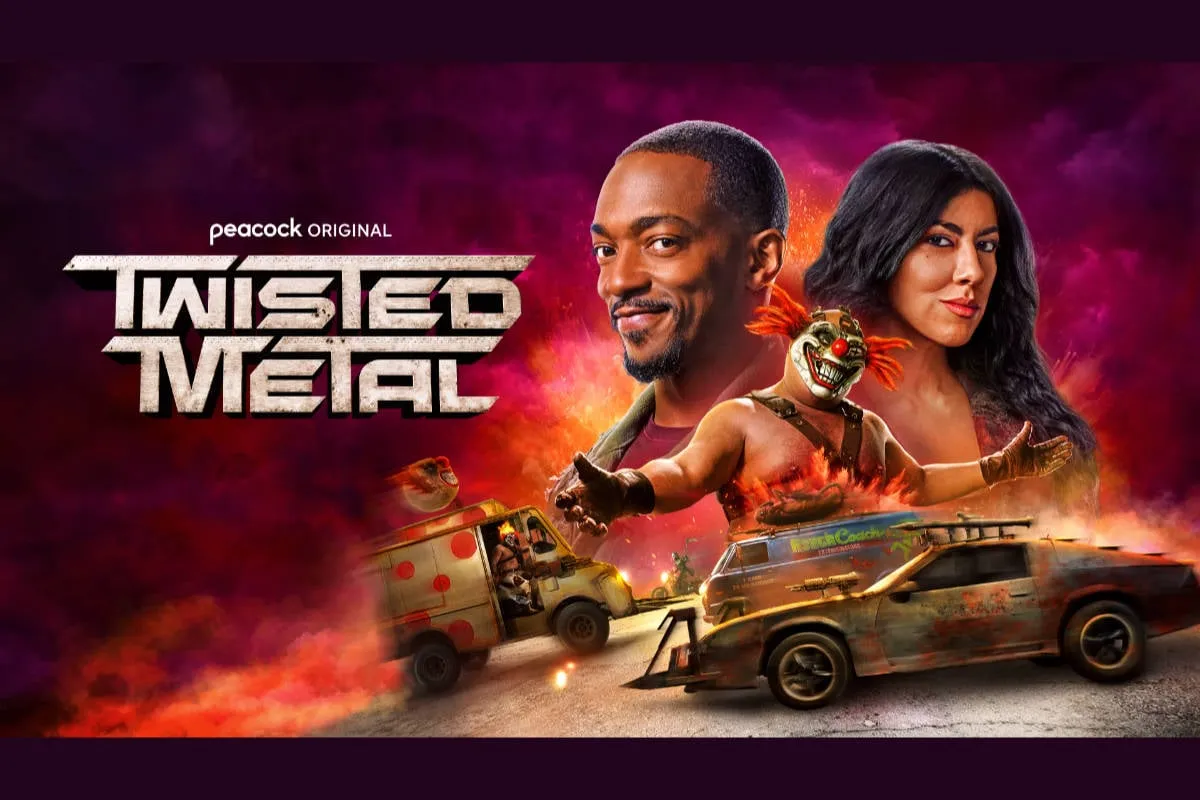

If the first season of Twisted Metal was the greasy appetizer that set the table, season two is the chaotic, high-calorie main course fans were promised. The titular tournament is finally upon us. The series returns to its distinct post-apocalyptic landscape, a world where society collapsed sometime around the Y2K scare, leaving behind a graveyard of Blockbuster stores and a populace with a deep appreciation for ’90s pop hits.
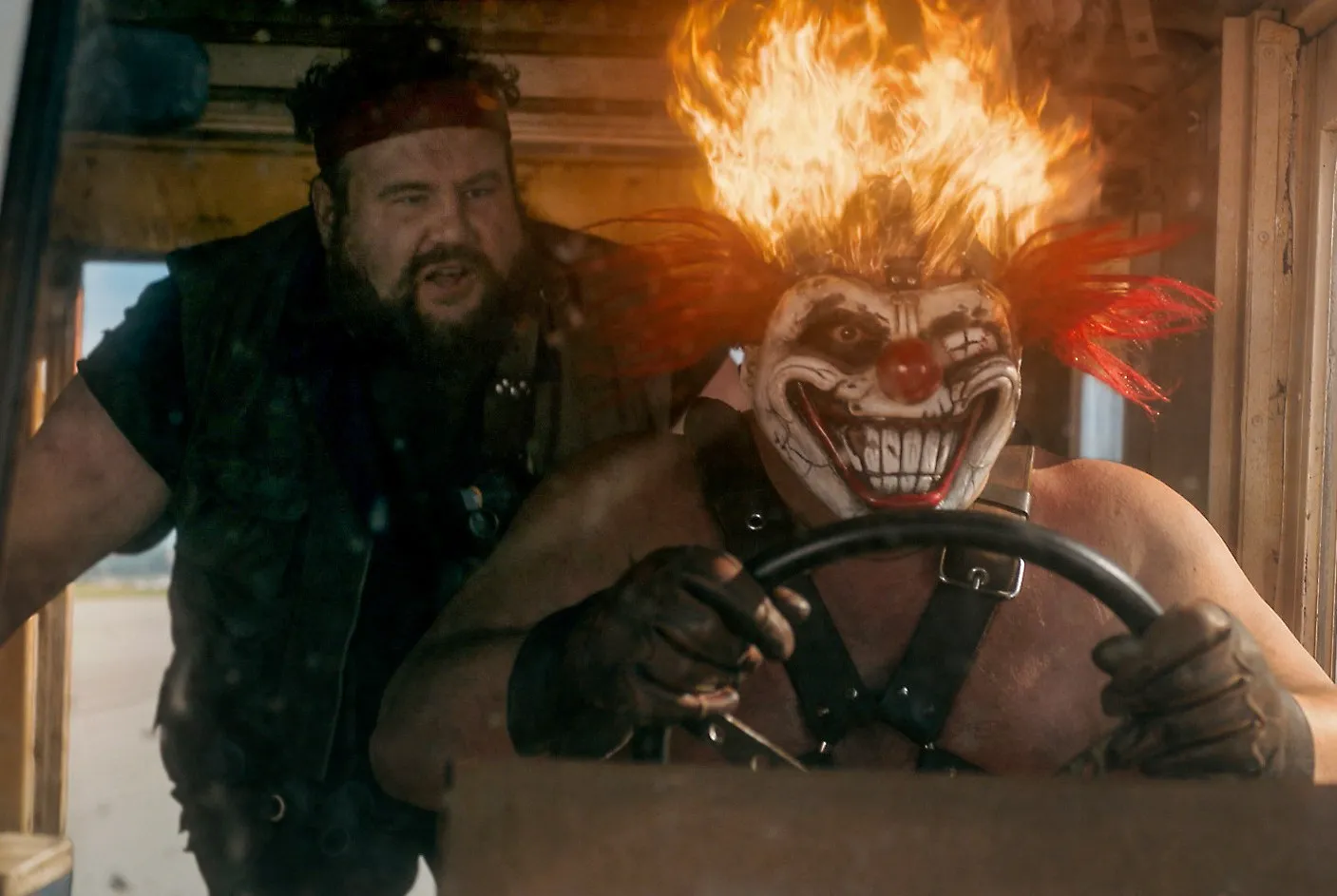
Our hero, John Doe, finds himself restless inside the pristine walls of New San Francisco, discovering that safety is a poor substitute for freedom. On the outside, Quiet has found a new purpose with the masked Dollface crew, led by John’s own sister. Meanwhile, the show’s mascot of mayhem, Sweet Tooth, continues his bloody road trip across the wasteland, with his terrified but surprisingly resilient sidekick Stu in tow.
Their disparate paths are violently yanked together by the arrival of Calypso, a theatrical wish-granter who announces his deadly demolition derby. The prize is a single wish, and the entry fee is a willingness to kill for it. The game is on.
Patience is a Virtue, and a Plot Device
In an era of streaming television where the pressure to hook a viewer in the first ten minutes is immense, Twisted Metal makes a surprisingly bold choice: it makes you wait. A lesser show would have thrown its audience directly into the automotive carnage from the opening scene. Instead, this season takes a more deliberate, and ultimately more rewarding, path.
Across its expanded 12-episode run, the narrative dedicates its entire first half to meticulous character work and setup before the first engine is revved in anger. This structural gambit could easily have felt like a tedious delay, a frustrating detour on the way to the fireworks factory.
But the writing is sharp enough to turn this wait into a confident play that builds genuine stakes for the carnage to come. It uses the extended runtime not just to move plot points around, but to explore the psychological fallout from season one.
We spend considerable time with John Doe as he grapples with the gilded cage of New San Francisco. His discontent is not simple boredom; it is a profound identity crisis for a man whose entire sense of self was tied to the open road and the thrill of the delivery. The sterile, almost uncanny perfection of “inside” life serves as a stark contrast to the vibrant chaos he thrives in.
On the other side of the wall, Quiet’s arc becomes a compelling political subplot. She wrestles with the brutal ideology of Dollface’s revolutionaries, forcing her, and the audience, to question if their violent pursuit of equality makes them any better than the walled-off oppressors they despise. By separating its central duo, the show gives each character the necessary space to evolve, making their eventual, explosive reunion feel both earned and complicated.
Meanwhile, the season’s most brilliant B-plot follows the darkly hilarious journey of Sweet Tooth and Stu. Their dynamic blossoms from a simple horror-movie setup into a twisted buddy comedy. Stu’s presence perversely humanizes the killer clown, giving him a reluctant sounding board that forces the monster into something resembling conversation, a dynamic far richer than just watching him monologue to his next victim.
This patient world-building also allows the show to handle logistical challenges with aplomb, such as the clever, in-universe recasting of Raven, which is addressed with an absurdity that feels perfectly at home in this reality.
A Murderer’s Row of Talent
The success of Twisted Metal’s character-first approach rests squarely on the shoulders of its cast, who operate at the absolute top of their game. Anthony Mackie infuses John Doe with a surprising new layer of vulnerability beneath his signature fast-talking charm. He excels in the quiet moments, his easy confidence melting away to reveal the pained confusion of a man haunted by a past he cannot access.
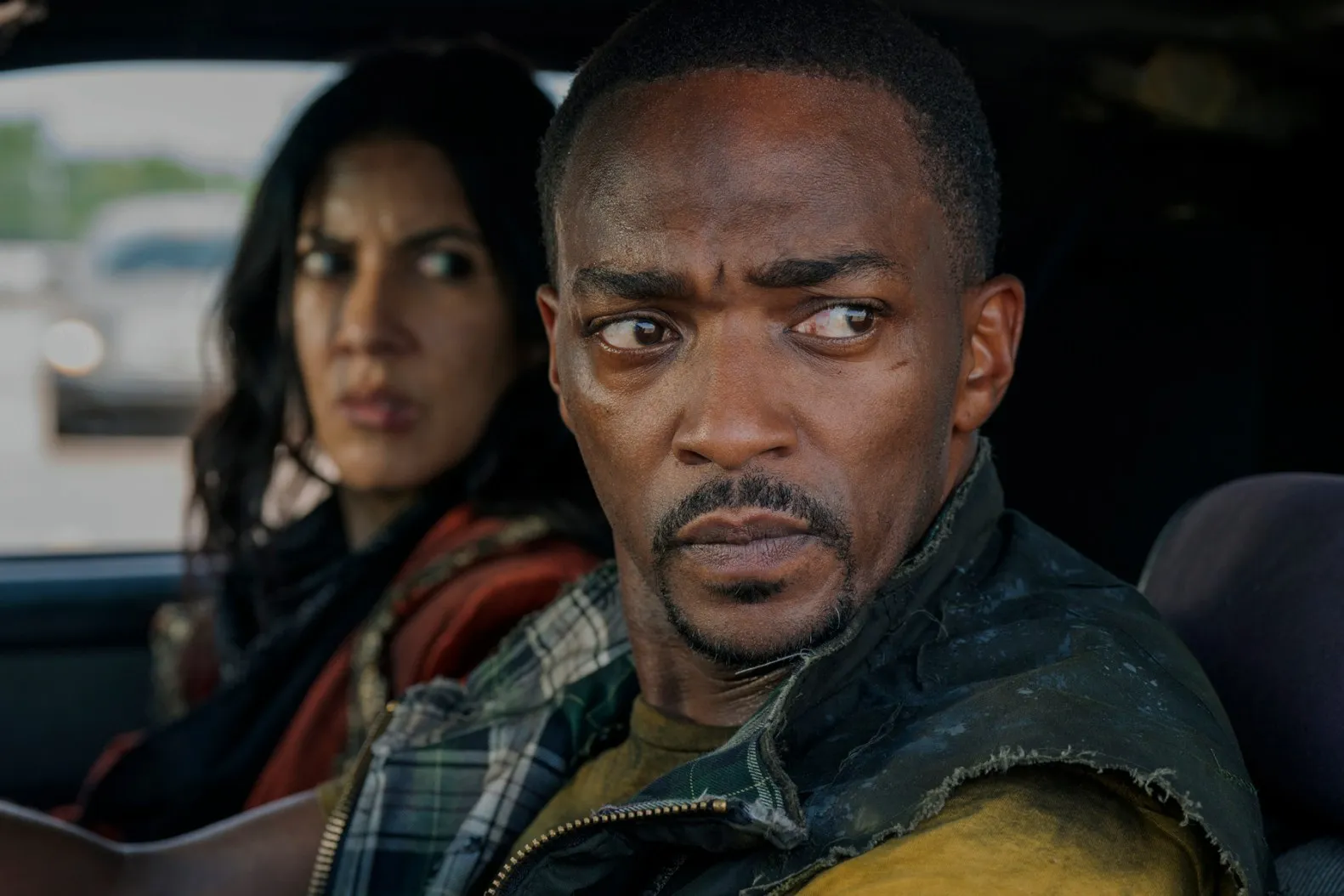
His scenes attempting to reconnect with his long-lost sister are a showcase for this expanded emotional range, adding genuine pathos to his quest. Across from him, Stephanie Beatriz masterfully allows Quiet to find her voice, both literally and figuratively. She sheds the mostly silent, stoic persona of season one and emerges as a character of sharp wit and deep moral conviction. It’s a performance of immense control, conveying a constant internal battle through subtle shifts in her posture and a clipped, precise delivery.
Of course, the show’s agent of chaos remains a spectacular highlight. The dual performance of Joe Seanoa’s hulking, intimidating physicality and Will Arnett’s gleefully psychotic voiceover for Sweet Tooth is lightning in a bottle. Seanoa provides the terrifying physical canvas upon which Arnett paints a masterpiece of manic, vaudevillian evil.
The show smartly deploys the killer clown not as a protagonist but as a natural disaster, a force that erupts into the narrative to create maximum disruption. The new additions to the roster are just as formidable. Anthony Carrigan’s Calypso is a masterstroke of casting. He portrays the tournament organizer as a malevolent Willy Wonka, a figure of immense power who is equal parts charismatic and deeply unsettling.
With a predatory smile and an unnervingly calm cadence, Carrigan introduces an element of what appears to be actual magic, subtly shifting the genre’s boundaries. Other new faces make an immediate impact. The live-action realization of Axel, the man trapped between two massive wheels, is a triumph of practical effects, creating a figure of tragic, gasoline-fueled myth. In contrast, Saylor Bell Curda’s Mayhem is a burst of hyperactive Gen Z energy, a perfect foil for the older, more world-weary protagonists.
Style, Substance, and Spilled Guts
When the tournament finally begins, the action does not disappoint. The car combat is a glorious symphony of practical effects, a ballet of twisted metal, candy-colored smoke, and fiery explosions that feels ripped straight from the pixels of the PlayStation source material.
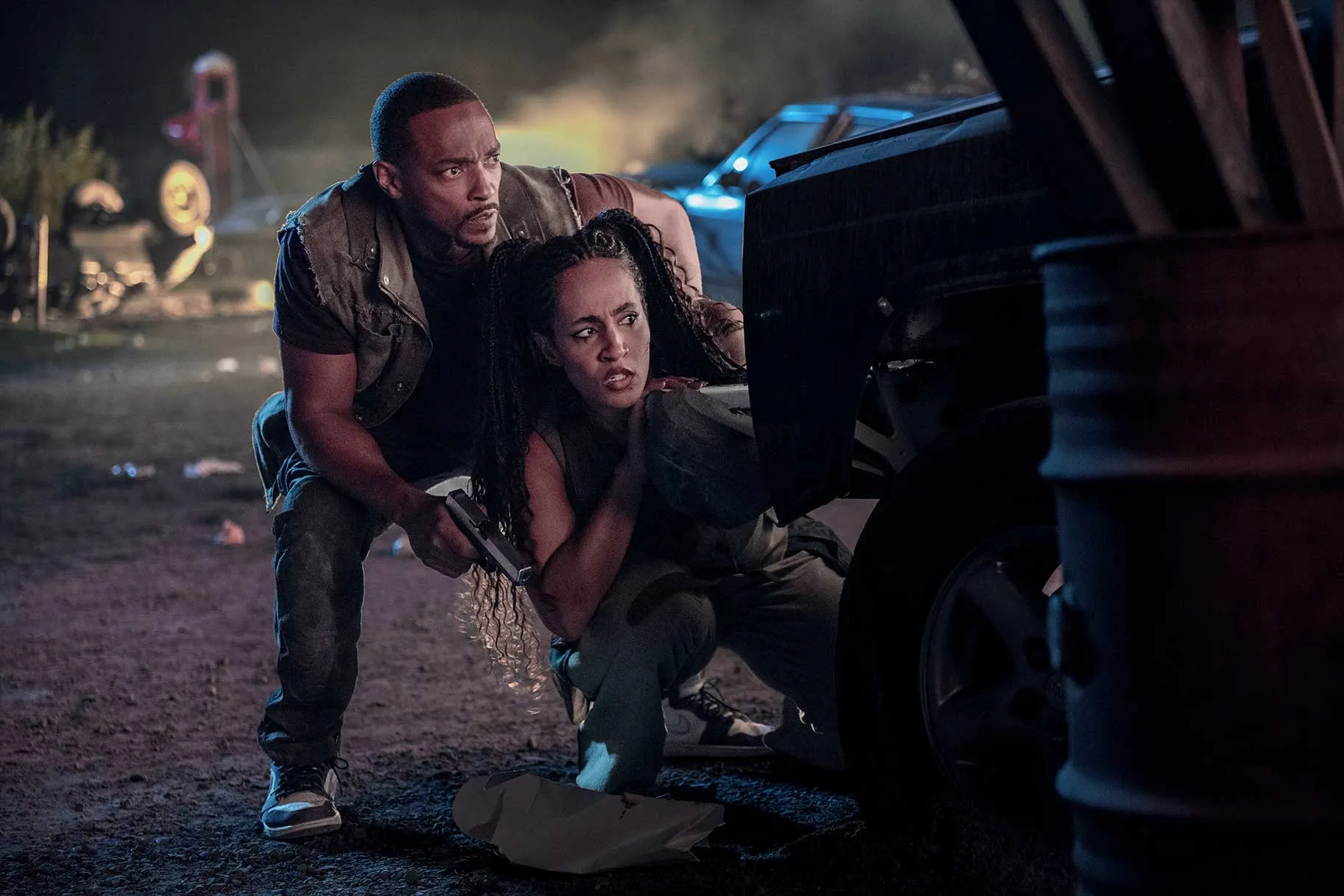
The production design revels in the details, outfitting vehicles with machine guns, rocket launchers, and other implements of destruction that fans will instantly recognize. The series understands that this vehicular violence is its main attraction. Yet, for all its automotive glory, the tournament rounds are frequently padded with on-foot challenges and extended hand-to-hand combat sequences.
While these brawls are capably choreographed, they sometimes feel like a concession to the realities of a television budget rather than a purely creative choice. These moments can occasionally break the immersion of the central premise, pulling us out of the driver’s seat.
Where the show never falters is in its stylistic identity. The aesthetic is driven by frenetic, high-impact editing and an inspired soundtrack of ’90s and ’00s pop-rock needle drops that are deployed with surgical precision. The show’s editors know exactly when to use a burst of Filter or a blast of Sisqó to amplify a moment of violence or humor.
In one standout sequence, the show reclaims Haddaway’s “What Is Love?” from its comedy-sketch history and transforms it into the score for a genuinely hot and heavy romantic scene set against a backdrop of fire and destruction. For all its brutal violence, however, the show is conspicuously hesitant to thin its core cast. The “battle to the death” premise loses some of its terrifying edge when it becomes clear that the main characters are protected by a thick layer of plot armor.
The narrative almost winks at this, with Calypso seemingly changing the rules of his own game on the fly to ensure his most entertaining contestants survive. While this can deflate the dramatic tension, the show smartly compensates by ensuring that the emotional consequences of the violence, especially for supporting characters, land with surprising and genuine weight.
Who Knew the Apocalypse Had Feelings?
Beneath the many layers of motor oil, dried blood, and crude humor, Twisted Metal season two beats with a surprisingly tender heart. The thematic engine driving the narrative is the powerful idea of the found family. In a world that rewards selfish survival above all else, the season repeatedly explores how loners, killers, and outcasts are forced to forge unlikely alliances and develop genuine affection for one another.
This focus allows for some of the season’s most effective storytelling. We see this in the main arc, but also in the smaller moments between side characters who find common ground amidst the mayhem. The theme is further explored through a surprisingly poignant focus on dysfunctional parenthood, particularly in the way John and Quiet attempt to guide the delinquent Mayhem. Their fumbling efforts are a clear reflection of their own broken pasts, an attempt to provide the protection they never had, with predictably messy results.
These pockets of sincerity, like a beautifully rendered scene where two hardened characters share a makeshift, post-apocalyptic prom, provide a necessary counterweight to the relentless nihilism. This contrast between extreme violence and unexpected tenderness is the show’s secret weapon. It is, in every respect, a bigger, louder, and funnier season that successfully expands its world while digging far deeper into the emotional lives of its characters.
The final moments deliver an explosive revelation that does not just serve as a cliffhanger for a potential third season; it fundamentally recontextualizes the events of the entire tournament, shifting our understanding of Calypso’s power and purpose. With the game board so violently reset, one is left to wonder what choice really means for the players in a contest whose rules are not just arbitrary, but actively malicious.
Twisted Metal is an action-comedy series based on the popular video game franchise. The second season premiered with three episodes on July 31, 2025, on Peacock. New episodes will be released weekly on Thursdays, with the season finale scheduled for August 28, 2025.
Full Credits
Directors: Phil Sgriccia, Bill Benz, Iain MacDonald, Bertie Ellwood
Writers: Michael Jonathan Smith, Rhett Reese, Paul Wernick, Alyssa Forleiter, Ify Nwadiwe, Irving Ruan, Grant DeKernion, Alison Tafel, Shaun Diston, Becca Black, Francesca Gailes, Jacqueline Gailes, Jorge Thomson, Taylor Santiago Berger, Kirsten Jakob, Gilli Nissim, Hadiyah Robinson
Producers: Will Arnett, Steve Burgess, Grant DeKernion, Shaun Diston, Leah Farrell, Marc Forman, Francesca Gailes, Jacqueline Gailes, Hermen Hulst, Heather Imerman, Anthony Mackie, Peter Principato, Asad Qizilbash, Rhett Reese, Kitao Sakurai, Michael Jonathan Smith, Jason Spire, Carter Swan, Alison Tafel, Paul Wernick
Executive Producers: Michael Jonathan Smith, Anthony Mackie, Rhett Reese, Paul Wernick, Will Arnett, Marc Forman, Jason Spire, Peter Principato, Asad Qizilbash, Carter Swan, Hermen Hulst
Cast: Anthony Mackie, Stephanie Beatriz, Joe Seanoa, Will Arnett, Anthony Carrigan, Michael James Shaw, Saylor Bell Curda, Lisa Gilroy, Richard de Klerk, Patty Guggenheim, Tiana Okoye, Mike Mitchell, Tahj Vaughans, Andre Dae Kim, Johnno Wilson, Tyler Johnston, Natalie Metcalfe, Lily Gao, Katherine East, Paul Thomas
Director of Photography (Cinematographer): James McMillan
Editors: Michael Giambra, Heather Capps, Travis Sittard
Composer: Leo Birenberg, Zach Robinson
The Review
Twisted Metal Season 2
Twisted Metal season two revs past its predecessor, delivering a bigger, funnier, and surprisingly heartfelt ride. While the deliberate pacing takes its time getting to the titular tournament, the journey is packed with stellar performances, deeper character arcs, and gloriously executed vehicular mayhem. It’s a confident, stylish, and chaotic expansion that successfully balances its explosive action with an unexpected emotional core, making it a must-watch for fans and a high point for video game adaptations.
PROS
- The entire cast shines, with Anthony Mackie and Stephanie Beatriz adding new emotional depth, and Anthony Carrigan stealing scenes as the enigmatic Calypso.
- The season dedicates significant time to developing its characters, creating genuine emotional stakes.
- The dynamic between Sweet Tooth and Stu provides some of the season's biggest and most consistent laughs.
- When the cars start fighting, the action is creative, practical, and faithful to the games.
- The frenetic editing, distinct visual flair, and killer '90s soundtrack create a cohesive and entertaining tone.
CONS
- The decision to delay the tournament until the season's midpoint may test the patience of some viewers.
- The reliance on on-foot combat sometimes breaks the pacing and feels like a substitute for the more expensive car battles.
- A clear reluctance to kill off key players can reduce the sense of genuine peril during the tournament.