



















![Kingdom Hearts Collection [I-III] Review](https://gazettely.com/wp-content/uploads/2026/10/Kingdom-Hearts-Collection-I-III-1-360x180.webp "Kingdom Hearts Collection [I-III] Review: KHII Holds Steady as Newer Entries Fluctuate 40")


Eric Goode has spent several years turning America’s appetite for exotic animals into television, and Monsters of God arrives at an interesting point in that evolution. The five-part HBO series, produced with A24 and Goode Films, carries fewer of the carnival instincts that defined Tiger King. Its subject is also harder to package into a single meme-ready personality. Reptile trafficking grew through networks: collectors, dealers, zoos, government loopholes, criminal organizations, and consumers who learned that rarity could function as status.
Goode has personal history here. He collected reptiles from childhood and admits buying animals from dealers he now considers questionable. That admission gives him access to people who might distrust an outsider, yet the series barely investigates what his participation meant. Television loves a confession that doubles as credentials.
Instead, Monsters of God traces the American reptile trade from the 1960s forward, beginning with Hank Molt and Tommy Crutchfield, two men whose fascination with snakes became businesses, then rival businesses, then part of an international trafficking economy. Their story gives the documentary its strongest dramatic spine because personal obsession, institutional demand, and environmental damage are still moving together.
The Men Who Built the Market
Molt’s career demonstrates how easily an eccentric hobby can become infrastructure once institutions decide they want what the hobbyist can supply. After working in food sales, he began contacting reptile enthusiasts overseas and acquiring species rarely seen in American pet shops. In 1966, his Philadelphia Reptile Exchange began circulating price lists advertising imported animals.
The timing was extraordinary. Zoos were expanding reptile collections, and Molt suddenly had buyers with recognizable names, respectable buildings, and very little interest in examining the path between a wild habitat and an American enclosure. The series understands that this distinction matters. Smuggling did not develop exclusively in hidden warehouses populated by obvious criminals. Legitimate institutions helped create the market.
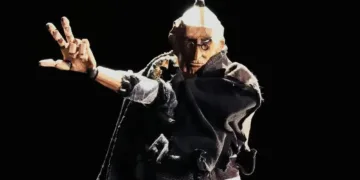
Molt is also exactly the sort of interview subject documentary television has trained audiences to recognize instantly. He describes the personas he used while dealing with officials abroad, then dresses up to recreate them for Goode’s camera. He speaks about himself with a grandeur that would feel invented if he were a fictional character. Goode rarely needs to editorialize. Give Molt sufficient screen time and he supplies his own commentary.
Tommy Crutchfield enters from another direction. His fascination with reptiles takes him to Florida’s wonderfully unsubtle Snake-a-Torium as a teenager, where he sells snakes and later meets Linda, his future wife. Molt’s price lists become a model for what such fascination might become commercially. Crutchfield begins traveling, acquiring animals, selling them, and eventually building an operation of his own.
Their mentorship curdles into a feud that still has energy decades later. Crutchfield speaks about Molt with open contempt. Molt responds in kind. Yet the feud matters because it maps a transfer of power. When federal authorities investigate Molt and his relationships with zoos deteriorate, Crutchfield becomes one of the people positioned to inherit the demand.
The Endangered Species Act of 1973 sharpens the legal stakes. Practices that had flourished amid weak enforcement become harder to defend as harmless collecting. One investigation produces the series’ ugliest image: illegal reptiles buried alive in New Jersey’s Pine Barrens after associates panic about law enforcement. The scene punctures the dealers’ preferred language of devotion. Love becomes remarkably negotiable when prison enters the conversation.
Rarity Becomes Currency
The later episodes expand from two competing dealers into an international economy involving figures such as Ray and Mike Van Nostrand, Mario Tabraue, Beau Lee Lewis, and Malaysian trafficker Anson Wong. The geography stretches across Germany, Madagascar, Belize, Malaysia, and the United States.

The organizing principle is scarcity. Once collectors already possess the familiar animals, value shifts toward whatever is difficult to obtain. Legal restriction can raise that value further. Endangerment, perversely, can become marketing.
Crutchfield’s stories capture how strange the market became. He recalls supplying cobras for Hollywood and selling tortoises to Michael Jackson. His white albino alligators could command extraordinary sums. Celebrity buyers make good television, yet the zoo connection remains the sharper institutional story. Major zoological collections benefited from dealers capable of sourcing animals whose origins were sometimes conveniently murky.
That history complicates the clean moral categories true-crime television tends to prefer. Federal agents pursue smugglers through investigations such as Operation Cobra and Operation Chameleon. Dealers respond by developing better methods, international contacts, and increasingly sophisticated routes. The reptile business eventually overlaps with cocaine trafficking and organized crime, particularly through figures whose criminal activities extended far beyond wildlife.
Goode gathers a remarkable collection of stories from this world. A federal agent participates in a sting while dressed in a gorilla costume. A German associate attempts to flee authorities across eight lanes of traffic while handcuffed and wearing Birkenstocks. These stories are funny because reality has apparently abandoned any obligation to behave seriously. They also reveal the series’ structural problem.
By the middle chapters, almost every eccentric anecdote earns admission. New dealers bring new grudges, new law-enforcement operations, new countries, new smuggling tricks, and new tales of improbable escapes. The central history starts competing with the pleasures of accumulation. Five episodes offer Goode room to include everything. The freedom proves expensive.
Television Learns Some Restraint
The clearest development from Tiger King to Monsters of God is Goode’s changing relationship with his subjects. The earlier series frequently used music, editing, and framing to encourage audiences to laugh before they had time to think about what they were watching. Here, the filmmaking is less eager to hold up a sign reading “look at these people.”
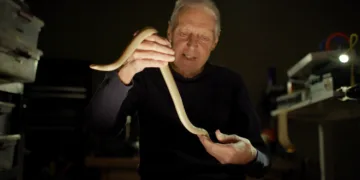
Molt still behaves outrageously. Crutchfield casually handles reptiles while talking, at one point treating a scratching lizard like an unusually armored household pet. The difference lies in presentation. Goode gives the men enough space to expose contradictions without decorating every contradiction with a punchline. That change produces calmer television, which may explain why Monsters of God sometimes feels less immediately addictive. It is also a healthier documentary instinct.
The reptiles receive striking close-ups that emphasize texture, movement, color, and physical presence. A king cobra introduced early in the series lashes toward its handler after viewers are told its venom could kill an elephant. The obvious television move would be to treat the animal as a monster and the handler as an idiot awaiting punishment. Goode gradually shifts the question toward the systems that turned such animals into merchandise.
His access remains exceptional. Former Fish and Wildlife agents, prosecutors, customs officials, breeders, zoo employees, journalist Steve Chao, author Bryan Christy, and major dealers all contribute to the historical reconstruction. Goode repeatedly builds suspense around gaining access to secretive traffickers, then produces the interview. The first occurrence feels like journalistic persistence. By the fourth, the device has begun behaving like an episodic format requirement.
His own role receives far less examination. He says he once participated in this culture, yet the documentary never gives his history the scrutiny it gives Molt or Crutchfield. That omission becomes especially noticeable because Monsters of God presents itself as a maturation of his previous work. The filmmaker has grown more sympathetic toward his subjects precisely when he has arrived at the animal culture closest to his own past. Television should probably be curious about that.
Possession Disguised as Devotion
The most valuable tension in Monsters of God sits inside the phrase “reptile people.” Many of the dealers possess extraordinary knowledge of the animals they collect. Their obsessions often begin in childhood, long before the profitable businesses, federal investigations, or criminal networks arrive. Money changes the scale. Rarity changes the psychology.
An animal becomes desirable because few people have seen it. Then possession becomes proof of access, expertise, wealth, nerve, or status. The endangered specimen gains value from the same scarcity that should make removing it from the wild unthinkable.
The documentary repeatedly places declarations of love beside evidence of exploitation. Reptiles are trapped, transported under dangerous conditions, hidden from authorities, and sometimes killed when their survival becomes inconvenient. Escaped animals create new ecological problems far from their native habitats. The collectors may understand reptile biology intimately while participating in systems that damage the populations they claim to cherish.
Goode does not press this contradiction hard enough during the crowded middle episodes, where smugglers and investigators dominate the screen. The final chapter brings the animals back into focus through Anson Wong and the ploughshare tortoise, a species driven toward disappearance in the wild while becoming exceptionally desirable among collectors. Here the series reaches beyond the personalities who make easy television. The real story is a market capable of converting extinction risk into prestige.
That is also where Monsters of God becomes most useful as television. Its reptile smugglers are unusual. The institutions around them are painfully recognizable: buyers who prefer ignorance, industries that monetize scarcity, wealthy consumers who turn restricted access into social value, and systems that discover ethical concern only after demand has done its work. The snakes were never the strange part.
Monsters of God premiered on HBO on August 6, 2026, and is available to stream on HBO Max. The documentary series explores the shadowy global underworld of exotic reptile smuggling and wildlife trafficking.
Where to Watch Monsters of God Online



Full Credits
Title: Monsters of God
Distributor: HBO, HBO Max
Release date: August 6, 2026
Rating: TV-MA
Running time: 55 minutes
Director: Eric Goode
Writers: Eric Goode, Jeremy McBride, Tom Peterson
Producers and Executive Producers: Eric Goode, Callie Barlow, Charles Divak, Adrienne Gits, James Liu
Cast: Anna Czerniecki, Riley Wilson
Editors: Darrin Roberts, Ron Eigen, Vincent Oresman
The Review
Monsters of God
Monsters of God is strongest when Eric Goode stops treating reptile smugglers as colorful folklore and follows the institutions that made their business possible. Zoos wanted rare animals, collectors wanted status, and dealers learned that scarcity could be monetized. The five-episode structure gives too much room to eccentric detours, while Goode’s own history as a collector remains frustratingly underexamined. Still, the ploughshare tortoise story restores the moral stakes the middle chapters sometimes misplace. The reptiles were exotic. The market surrounding them was painfully familiar.
PROS
- Remarkable access to major traffickers
- Strong Molt-Crutchfield opening chapter
- Clear history of the reptile trade
- Less mocking documentary style
- Powerful conservation material
CONS
- Five episodes feel stretched
- Too many anecdotal detours
- Goode’s complicity stays underexplored
- Animals sometimes disappear behind personalities