
























![Kingdom Hearts Collection [I-III] Review](https://gazettely.com/wp-content/uploads/2026/10/Kingdom-Hearts-Collection-I-III-1-360x180.webp "Kingdom Hearts Collection [I-III] Review: KHII Holds Steady as Newer Entries Fluctuate 37")



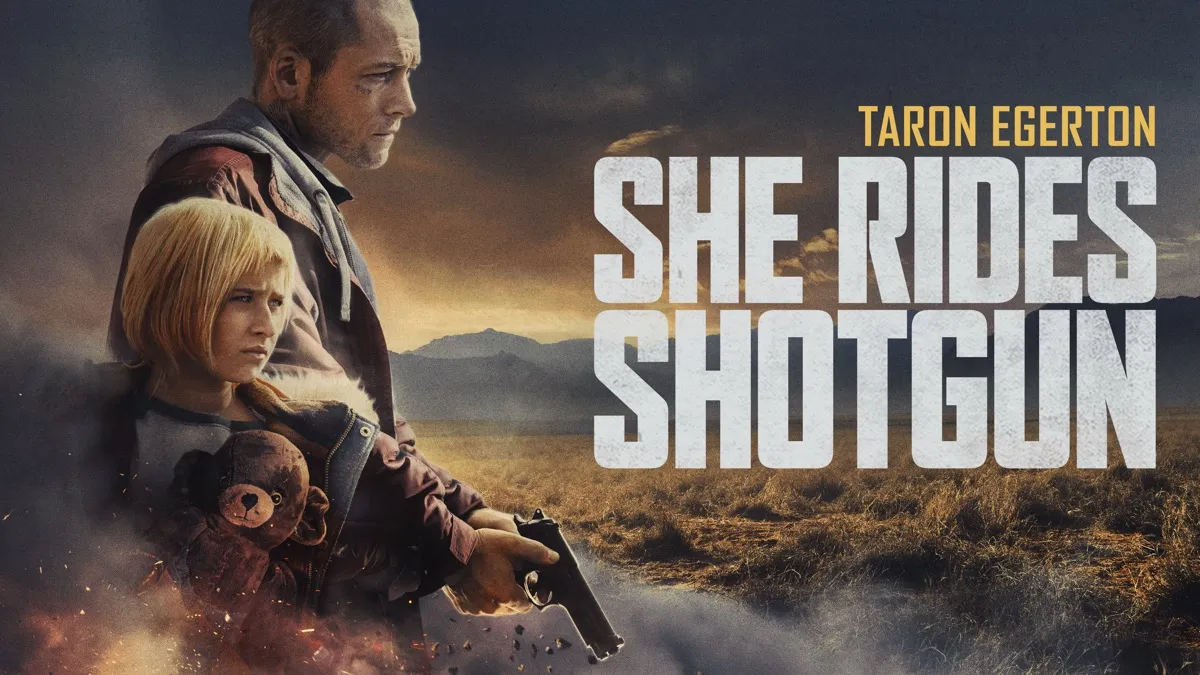

The air at the end of a school day holds a familiar quiet. For eleven-year-old Polly, that quiet curdles into dread as she waits for a ride that never comes. Instead, a beat-up car pulls to the curb, driven by a man she barely recognizes: her father, Nate, newly released from prison.
The wrongness of the moment is immediate and sharp. This is not a happy reunion. Nate has broken ties with the violent Aryan Steel prison gang, and in their world, such betrayals are answered with a “greenlight.” The order is to eliminate his entire bloodline.
Suddenly, this man and his estranged daughter are fugitives, a two-person family forged in panic and forced to flee from killers who are everywhere. Their grim journey for survival begins on that lonely curb.
Forged in Fire and Fear
The core engine of She Rides Shotgun is not its shootouts or car chases, but the fragile, evolving bond between Nate and Polly. This dynamic is the central mechanic through which we experience the story, reminiscent of the powerful narrative arcs in games like The Last of Us or A Plague Tale.
Their relationship does not simply appear; it is earned through stages of immense difficulty. It begins with Polly’s justified suspicion and Nate’s clumsy, desperate attempts at fatherhood. Their early interactions are transactional: he offers physical safety while she provides him with a purpose beyond mere survival.
Taron Egerton delivers a raw, physical performance, stripping away his usual charm to embody a man coiled with tension and exhaustion. He portrays Nate’s flaws without apology, yet communicates his fierce paternal drive in every protective glance and violent act. The film’s true discovery, however, is Ana Sophia Heger as Polly. Her performance is remarkable for its subtlety.
She shows the terrifying erosion of childhood innocence not through loud emotion, but through her watchful eyes, her flinching reactions, and the slow, gradual unclenching of her posture as trust begins to form.
Their on-screen connection feels utterly authentic, providing the foundation for the entire picture. Moments like Nate teaching Polly the proper way to swing a baseball bat are deeply unsettling, yet they are the painful, necessary steps through which their unique, powerful bond is built.
Nowhere Safe to Run
The world Nate and Polly navigate is as unforgiving as their circumstances. The film creates a tense, raw atmosphere that is almost a character in itself. Director Nick Rowland masterfully uses the sparse, sun-bleached New Mexico landscape to mirror the characters’ profound isolation and vulnerability.
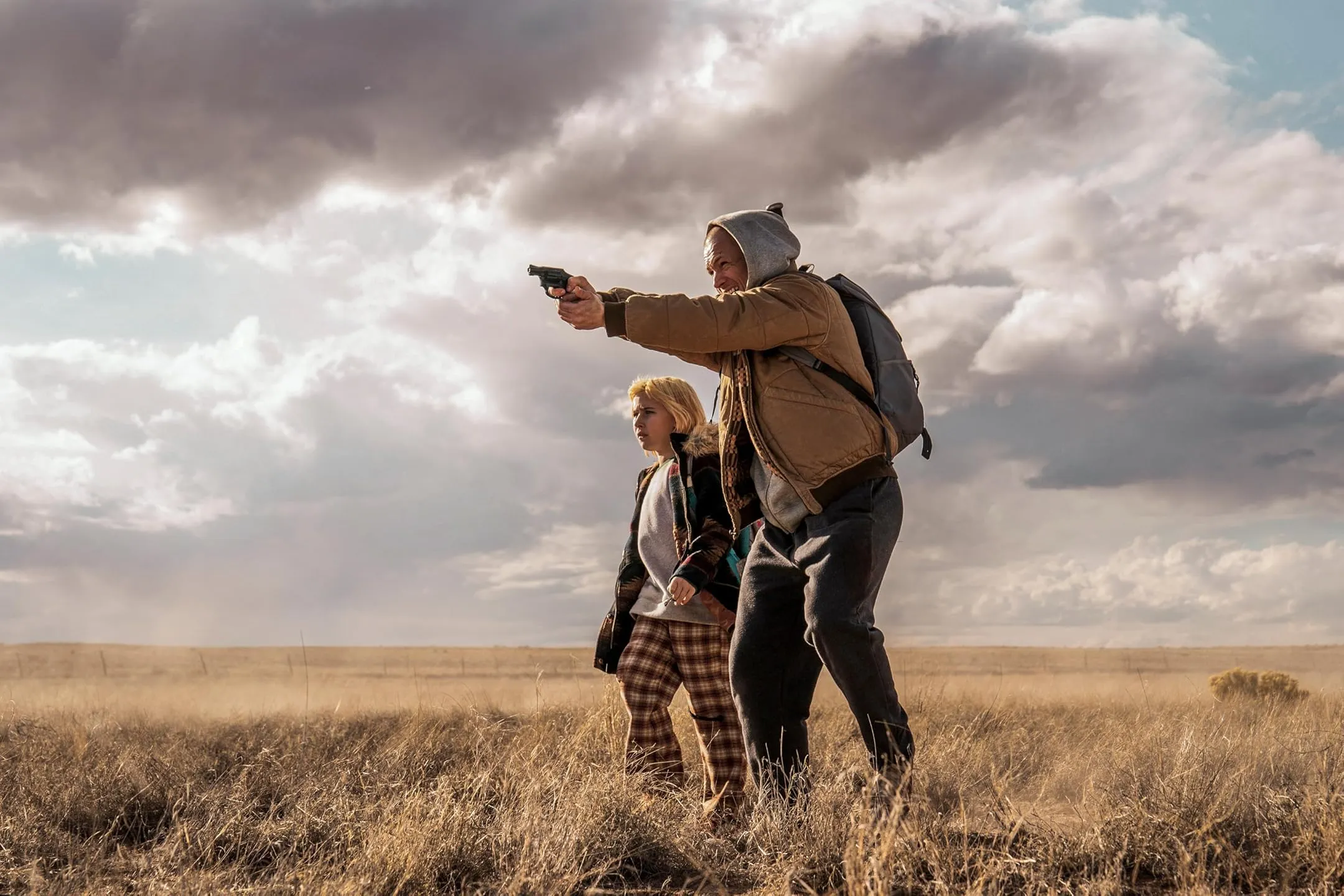
Wide, empty shots of the highway emphasize their loneliness, while the harsh daylight offers no comfort, only exposure. This feeling of exposure is contrasted with the suffocating claustrophobia of the cheap, grimy motel rooms that serve as their temporary shelters.
There are no safe havens here. This world is populated by predators, with the Aryan Steel gang acting as a pervasive, almost faceless threat. The embodiment of this danger is the corrupt Sheriff Houser, played with a chilling authority by John Carroll Lynch. He is not just a simple villain; he represents a systemic rot, wielding the power of the law as his personal weapon, which makes their flight feel even more hopeless. Offering a small but crucial counterpoint to this darkness is Rob Yang as Detective Park.
He is a genuinely decent officer, and his parallel investigation provides a thread of hope, however slim. His presence prevents the story from collapsing into complete nihilism, suggesting that goodness can exist in this brutal world, even if it is fragile and struggling.
The Engine of Suspense
Director Nick Rowland pilots this thriller with a confident, steady hand. His filmmaking is efficient and purposeful, displaying a clear understanding of how to build and sustain suspense. The action sequences feel like necessary punctuation marks in the story, not indulgent set pieces.
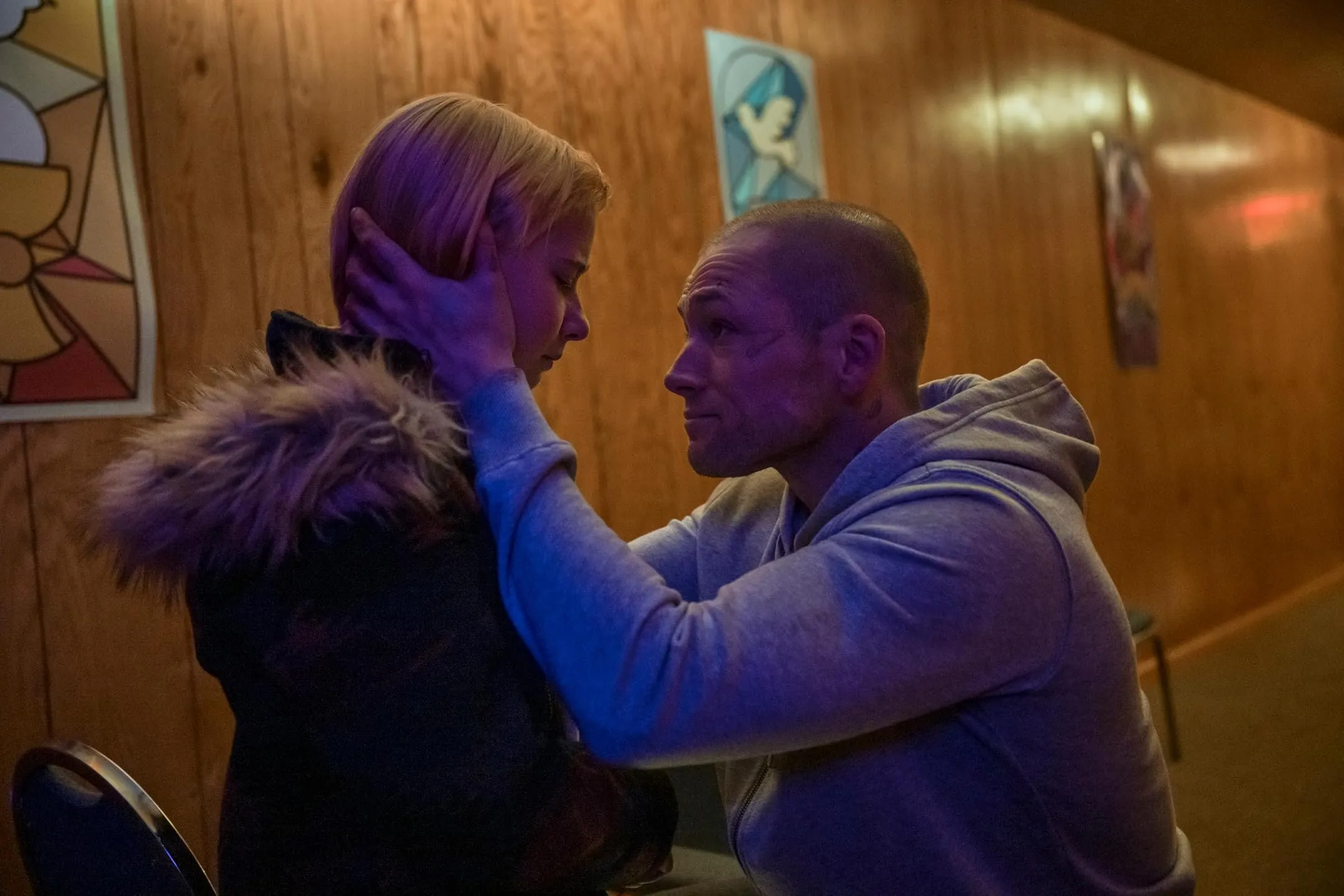
A climactic shootout, for instance, is captured in a long, wide tracking shot that prioritizes geographic clarity and the brutal reality of the violence over chaotic editing. In another scene, the tight confines of a small hotel room are used to amplify a sense of personal terror, making the threat feel immediate and inescapable. The film’s pacing is a study in excellent rhythm, alternating between high-octane moments of pursuit and quiet, character-focused scenes.
This ebb and flow is crucial; it allows the audience to breathe and deepen their investment in Nate and Polly’s relationship, which in turn makes the next burst of violence hit with greater impact. The screenplay provides a strong, high-stakes premise, though it briefly stumbles with an exposition-heavy moment to explain Nate’s backstory with the gang. It feels like a brief lack of confidence in an otherwise self-assured film.
The film works because it never loses sight of the human story at its center. The raw performances and the edgy father-daughter bond make this a potent and memorable thriller.
Full Credits
Director: Nick Rowland
Writers: Ben Collins, Luke Piotrowski, Jordan Harper
Producers: Brad Weston, Collin Creighton, Hiro Murai, Nate Matteson
Executive Producers: Ken Kao, Josh Rosenbaum, Teddy Schwarzman, John Friedberg, Walter Parkes, Laurie Macdonald, Alexis Garcia, Chris Rice, Christopher Slager, Graham Taylor
Cast: Taron Egerton, Ana Sophia Heger, Rob Yang, John Carroll Lynch, Odessa A’zion, David Lyons
Composer: Blanck Mass
The Review
She Rides Shotgun
She Rides Shotgun is a potent and gripping thriller anchored by two outstanding central performances. While its plot occasionally dips into convention, the raw, authentic bond between Taron Egerton and Ana Sophia Heger provides a powerful emotional core that elevates the film beyond a standard genre exercise. Its confident direction and relentless tension make it a must-see for fans of character-driven suspense.
PROS
- Taron Egerton and Ana Sophia Heger are exceptional, delivering raw and emotionally resonant portrayals.
- The evolving father-daughter dynamic is the film's powerful, beating heart.
- The gritty direction and stark setting create a palpable sense of danger and desperation.
- The action sequences are well-constructed and serve to heighten the narrative stakes.
CONS
- The handling of Nate's backstory with the gang is slightly clumsy.
- The final act follows a more predictable path than the film's strong setup.







