





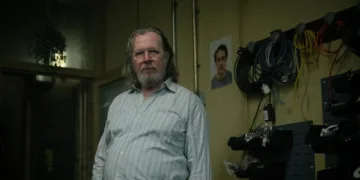

























Michelle Garza Cervera’s 2025 reimagining of The Hand That Rocks the Cradle, written by Micah Bloomberg, relocates the yuppie domestic thriller to a present shaped by brittle comforts and newer kinds of dread. The film introduces Caitlyn Morales, played by Mary Elizabeth Winstead, an affluent and overburdened lawyer and mother who lives within a carefully curated glass habitat that reflects every ambition and fear she carries.
Her path crosses with Polly Murphy, played by Maika Monroe, a tenant facing eviction whom Caitlyn helps through pro bono work. A later encounter leads Caitlyn to hire Polly as a nanny for her newborn. What begins as a gesture of convenience and charity becomes a quiet siege.
Polly’s arrival in the minimalist home shifts the atmosphere, turning order into unease and routine into a question mark. The film embraces a slow-burn approach, rooting its suspense in a chilly anxiety that hums beneath the surface of upper-middle-class security, as if prosperity were a fragile vessel that can fracture under the slightest pressure.
Faces in the Void of Domesticity
The film’s dramatic charge arises from the pressure chamber created by its two leads. Winstead shapes Caitlyn with a coiled, brittle poise. Her performance suggests a woman who manages fear by ritual and discipline, and who treats coping strategies as armor. A history of instability, combined with the strain of modern motherhood, places her on a perpetual brink.
To those around her she can seem reactive, even paranoid, yet the film renders that alertness as the product of real wounds. Class compounds this tension. Her privilege, and the guilt that accompanies it, clouds judgment and narrows perception, making danger harder to read when it arrives with a polite smile.
Across from her, Monroe’s Polly carries a sadness that curdles into menace the moment she steps into frame. The hollow-eyed focus that Monroe brings signals a threat felt before it is explained. The script withholds the full ledger of Polly’s past, preferring a fog of motive that sustains ambiguity. Out of that haze emerges a practiced gaslighter, patient and precise, able to use Caitlyn’s story as a set of tools. Polly isolates, pries, and reassigns meaning, edging the husband away and coaxing the children into roles they never asked to play.
A charged undercurrent intensifies this duel. Both women acknowledge that they are out, and that shared knowledge produces a hum of possibility and fear. The suggestion of desire complicates the household order and presses against Caitlyn’s heterosexual marriage. Their connection does not settle into friendship or rivalry. It becomes a contest of wills shaped by unease, a psychological standoff where tenderness and threat flicker within the same glance.
The Shadow of the System
This iteration seeks renewal through fault lines of class and identity. The glass house that Caitlyn prizes functions as a cage of light. It advertises success and exposure at once, a structure that shelters and displays. Economic disparity gives Polly a measure of sympathy even as her actions harm. The film observes how wealth invites a belief in permanence, then watches that belief erode as someone on the edge finds leverage within the cracks.
Sexuality and domestic ideals receive equal scrutiny. The explicitly queer element does not serve as a simple flirtation. It unsettles the order that Caitlyn has chosen for herself, a test of the narrative she built about marriage and stability.
A second thread attends to Caitlyn’s elder daughter, Emma. Polly manipulates worries about LGBTQ influence, redirecting an innocent search for identity into a new instrument of pressure. The home becomes a stage where social anxieties play out in intimate gestures, as if the culture’s loudest arguments had shrunk to the size of a whispered bedtime story.
Ambition brings friction. The film prefers psychological grounding to pulpy release. By letting Polly’s history emerge as a slow, trauma-marked reveal, the plot binds her wounds to Caitlyn’s past with deliberate intricacy. The choice prioritizes weight and resonance, yet the effect can drain the snap that a thriller feeds on. The work leans toward serious drama about damaged people, and in doing so softens the primal terror that the intruder narrative can ignite. The fear that once charged the genre as a blunt instrument arrives here as a study in echoes and aftershocks.
Form and the Architecture of Dread
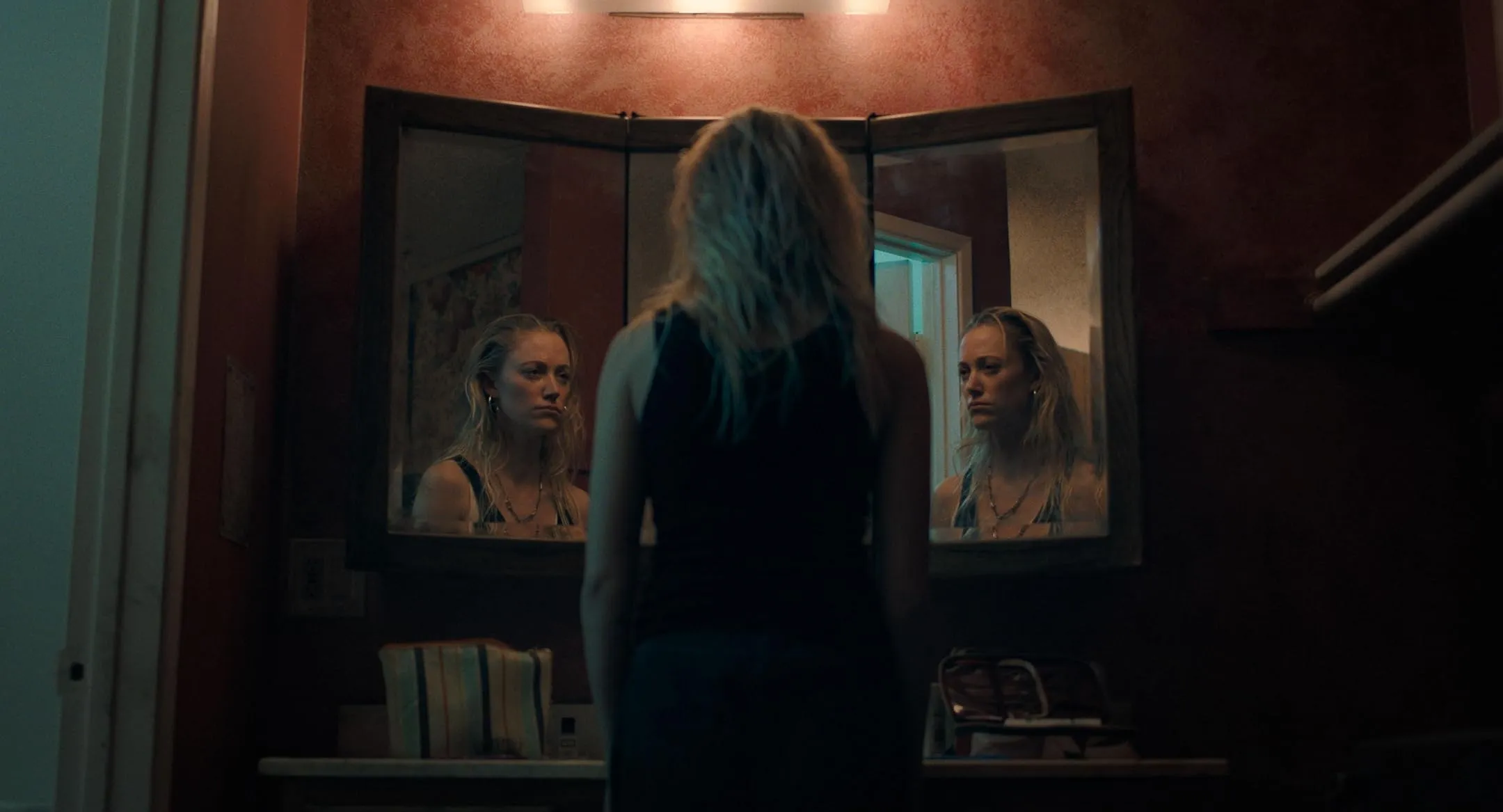
Cervera applies restraint that favors atmosphere over velocity. Jo Willems’ cool-toned cinematography frames glass, steel, and ordered surfaces until the house feels like a mirror machine. Reflections repeat bodies and faces, implying surveillance and self-deception, as if characters watch themselves while failing to see what matters. This clinical polish suits the social world on display. It can also flatten momentum, replacing volatility with a sleek sameness that keeps tension from taking on sharp corners.

Pacing reflects that aesthetic. Disruptions arrive with wide spacing, and the plot moves with a confident, unhurried gait that often robs the suspense of staying power. Late in the film, an acceleration arrives, yet the need to clarify the tangled connection through literal dialogue vents the pressure that the restraint had stored. Explanation stands where chaos might have stood, and the mechanism becomes visible.
Ariel Marx’s score writes another story. The music keeps ratcheting a nervous current through scenes that remain otherwise cool, a sustained line of dread that refuses release. That tonal mismatch becomes a critical mirror. The score promises horror that the images hesitate to embody. When violence does erupt, it arrives as a jolt, brief and ugly, and its rupture feels detached from the earlier psychic weather. The result fractures the contemplative mood rather than extending it into a final, fated crisis.
Echoes of Necessity
The supporting players fix the family portrait even as it comes apart. Raúl Castillo’s Miguel reads as loving and distracted, a partner who carries faith in clinical diagnoses and prior episodes and who misses the danger in front of him. Mileiah Vega’s Emma feels unguarded and eager for recognition, a teenager whose hunger for attention opens paths that Polly walks with care. Stuart, played by Martin Starr, functions as the clear-eyed presence whose intervention sets the climactic events in motion, a familiar device that still serves its purpose.

A question of need hovers over the film. This reimagining offers sharp updates and careful restraint in the same breath. Its core strength rests in its commitment to themes of trauma, class, and complicated sexuality, all of it sharpened by Winstead’s tensile vulnerability and Monroe’s quiet menace.
The same seriousness that lends gravity also keeps the film from embracing the messy ecstasy that the domestic thriller can deliver. The piece stands as a thoughtful, well-acted drama, torn between philosophical inquiry and the feral satisfaction of genre payoff. The contrast becomes its condition, a choice that clarifies what the film values and what it withholds, and leaves the viewer with a prickling sense that safety is a story people tell to fall asleep.
The Hand That Rocks the Cradle (2025) is an American psychological thriller film that serves as a modern re-imagining of the 1992 domestic classic. The film, directed by Michelle Garza Cervera, centers on an upscale suburban mother, Caitlyn Morales (Mary Elizabeth Winstead), who hires a new nanny, Polly Murphy (Maika Monroe), only to slowly discover the young woman has sinister and vengeful intentions. This updated version of the ‘nanny from hell’ narrative premiered on Wednesday, October 22, 2025. It is available to stream in the United States exclusively on Hulu, and internationally it is available on Disney+.
Credits
Director: Michelle Garza Cervera
Writers: Micah Bloomberg
Producers and Executive Producers: Ted Field, Michael Schaefer, Mike Larocca, Seth William Meier, Michael Napoliello, Maria Frisk
Cast: Mary Elizabeth Winstead, Maika Monroe, Raúl Castillo, Martin Starr, Mileiah Vega, Riki Lindhome, Shannon Cochran
Director of Photography (Cinematographer): Jo Willems
Editors: Julie Monroe
Composer: Ariel Marx
The Review
The Hand That Rocks the Cradle
The Hand That Rocks the Cradle attempts to chart new territory in the domestic thriller, substituting lurid chaos for complex social and psychological commentary. Mary Elizabeth Winstead and Maika Monroe deliver compelling, wounded performances that anchor the film's exploration of class anxiety and damaged identity. While the ambition to ground the narrative in trauma is admirable, director Michelle Garza Cervera's restrained, slow-burn approach dilutes the necessary tension. The film is a thoughtful, elegantly scored drama about fractured women, but it ultimately feels too self-aware to achieve the satisfying, visceral dread its genre demands.
PROS
- Maika Monroe and Mary Elizabeth Winstead deliver sophisticated, intense portrayals that maintain the psychological tension
- The incorporation of class disparity, 'liberal guilt,' and a complicated queer subtext adds necessary contemporary depth.
- The cold, glass-heavy cinematography and Ariel Marx's anxious score effectively build a feeling of pervasive unease.
- The decision to make the antagonist's motivation a slow-revealed mystery is a clever structural update.
CONS
- The film often feels unhurried, spreading out the necessary thrills and dulling the sustained sense of danger.
- The final act relies too heavily on literal dialogue to explain core connections, releasing built-up tension prematurely.
- The sleek, clinical look of the affluent home, while intentional, can feel bland, diminishing visual excitement.
- The occasional, jarring moments of violence feel detached from the preceding subtle, psychological mood.
- The movie is reluctant to commit to the campy or lurid elements that typically define the most memorable entries in this thriller subgenre.