
























![Kingdom Hearts Collection [I-III] Review](https://gazettely.com/wp-content/uploads/2026/10/Kingdom-Hearts-Collection-I-III-1-360x180.webp "Kingdom Hearts Collection [I-III] Review: KHII Holds Steady as Newer Entries Fluctuate 37")



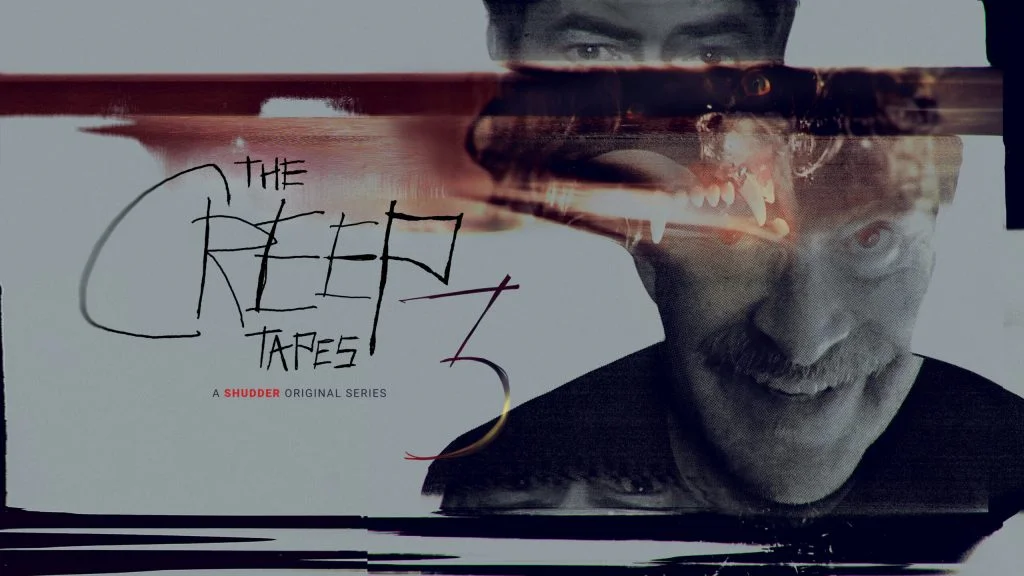

By its third season, The Creep Tapes has a problem most horror shows would happily accept: the audience already knows the trick. We know that Mark Duplass’ Peachfuzz is performing. We know the friendliness will curdle, the social discomfort will become threatening, and somebody who should have left ten minutes ago will stay long enough to regret it. That familiarity should drain suspense from the series.
Season 3 survives because Patrick Brice and Duplass keep changing the conditions surrounding the trap, using the restrictions of found footage to create new ways for Peachfuzz to control a room, a conversation, or even a crowded city street.
Found footage works by limiting what filmmakers can show. The camera has to exist inside the story, which means every angle needs some reason to be recorded. That restriction can become a burden quickly. The Creep Tapes has always been clever about turning it into part of Peachfuzz’s psychology. He wants the camera present. Recording people is part of how he performs for them, studies them, and preserves whatever strange relationship he thinks he has created.
Season 3 pushes that idea into different environments without pretending the series has suddenly become something else. “Crystal” places Peachfuzz on a boat, playing an aging rock star who wants to manufacture attention through a scandalous recording. Kate Siegel’s Crystal is an especially good match for him because she refuses to behave like one of his easier marks.
She is loud, volatile, amused by his performance, and capable of making the power dynamic wobble. Duplass tends to get even better when another actor can interrupt Peachfuzz’s rhythm, and Siegel keeps forcing him to adjust. Their scenes become less about waiting for the inevitable attack and more about watching two people compete for control of the same social space.
“Mo” changes the texture again by sending Peachfuzz into New York City and shifting the recording onto an iPhone. That sounds like a small production choice, but it changes how the episode feels. Most stories in this series use isolation as part of the danger. Here, strangers are everywhere. Streets are busy. Escape seems as though it should be easier, which somehow makes Peachfuzz creepier.
The public setting suggests limits that he simply refuses to acknowledge. Watching him pursue someone while ordinary people move through the background creates a strange tension between visibility and safety. Being seen does not necessarily mean being helped, and the phone camera makes the footage feel closer to something a passerby might casually record before realizing the situation has gone very wrong.
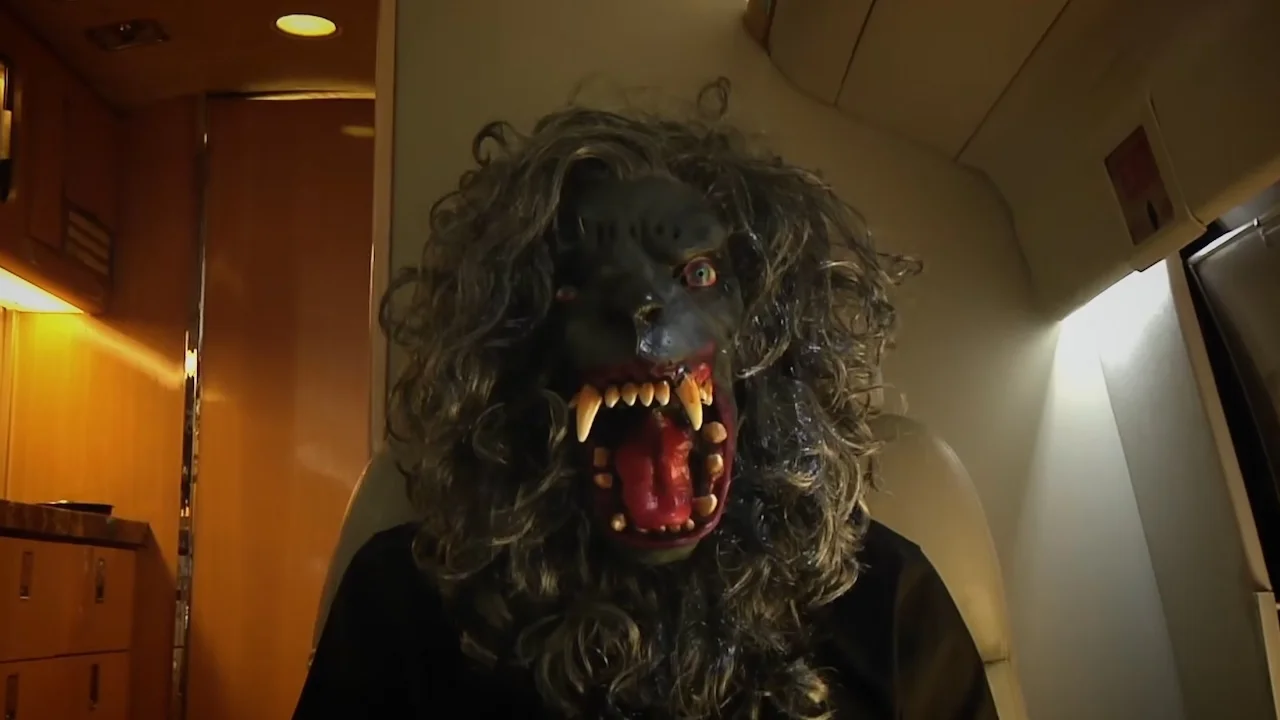
The season keeps testing the formula through location and character type. One episode moves onto a private plane, pairing Peachfuzz with an ambitious journalist played by Rekha Shankar and a flight attendant played by Jeffrey Self. Shankar gives her character the kind of professional curiosity that makes the setup believable. She wants the story enough to keep listening. When the situation collapses, her confidence erodes in stages rather than disappearing on command. Self, meanwhile, brings out one of the show’s most useful weapons: its sense of humor.
That humor matters because Peachfuzz frequently behaves like someone who wandered in from a particularly deranged comedy before remembering he is a serial killer. Duplass can make an awkward exchange funny, extend it past comfort, and then turn the same behavior threatening without visibly changing gears. The joke and the danger often occupy the same moment, and the slightly prolonged awkwardness becomes part of Peachfuzz’s way of destabilizing whoever happens to be sitting across from him.
The guest stars are essential because the series cannot change Peachfuzz too much without losing him. It can, however, change the kind of person standing across from him. Each episode becomes a test of how a different personality responds to his manipulation. Some challenge him. Some humor him. Others keep explaining away warning signs until the explanation becomes harder to believe than the threat itself, which is also where Season 3 occasionally strains.
Found footage depends heavily on plausibility. The camera has to stay on, and the potential victim has to remain inside the situation. There are moments this season when those requirements become visible as requirements. You can feel the story working to keep someone from leaving because the episode still has minutes left. Once that happens, the camera stops feeling like an organic part of the encounter and starts feeling like a rule everyone has agreed to obey.
The short episode length helps. Six installments give Brice and Duplass enough room to vary the experiment without letting Peachfuzz’s routine blur into itself. Some stories still lose energy near the end or arrive at their payoff too abruptly, but the season rarely lingers after an idea has clearly expired.
Season 3 also continues pulling at Peachfuzz’s history. The series has gradually become interested in what exists behind the personas, and “Jody + Brie” pushes that curiosity back to 1994, showing him at a much younger age. The idea is risky. A character like Peachfuzz gains power from uncertainty, and every piece of childhood history threatens to turn mystery into explanation.
The episode does not fully solve that problem. Its glimpse into his early life adds context without carrying the same bizarre momentum as the strongest stories this season. Yet I understand why the show keeps looking backward. These episodes are becoming less interested in cataloging murders and increasingly interested in the person who keeps inventing identities to commit them.
That may be the most useful shift in how I watch The Creep Tapes. The victims still matter, especially when performers such as Siegel or Shankar give them enough personality to push against Duplass. But the anthology structure now works like a collection of distorted mirrors. Every victim reflects a different version of Peachfuzz back at him.
Season 3 proves there is still flexibility inside that design. A boat, an iPhone, a private plane, an old recording from 1994: each changes the pressure without breaking the basic concept. The danger for a fourth season is clear, though. Changing the room will eventually stop being enough. Sooner or later, the series will have to change something deeper about the game Peachfuzz keeps playing. For now, the camera is still finding new places to point.
The Creep Tapes Season 3 premiered on Shudder and AMC+ on September 15, 2026. The found-footage horror-comedy anthology series continues to expose twisted video tapes from the secret vault of a deeply unsettling serial killer.
Where to Watch The Creep Tapes Season 3 Online










Full Credits
Title: The Creep Tapes Season 3
Distributor: Shudder, AMC+
Release date: September 15, 2026
Rating: TV-MA
Running time: 30 minutes
Director: Patrick Brice
Writers: Mark Duplass, Patrick Brice
Producers and Executive Producers: Mark Duplass, Patrick Brice, Jay Duplass, Mel Eslyn
Cast: Mark Duplass, Kate Siegel, Nic Hamilton, Elliott Fulham, Ora Duplass, James Earl, Chris Gethard, Rekha Shankar
The Review
The Creep Tapes Season 3
The Creep Tapes Season 3 keeps Peachfuzz’s familiar ritual alive by changing the spaces, personalities, and recording methods around him. Patrick Brice and Mark Duplass find fresh tension in an iPhone, a private plane, and Kate Siegel’s volatile challenge to Peachfuzz, while the season’s weaker stretches expose how much the formula depends on victims remaining inside situations they should probably flee. The mythology adds useful context without fully stripping away the mystery. The camera still has interesting places to go.
PROS
- Duplass keeps Peachfuzz unpredictable
- Smart variations on found-footage form
- Kate Siegel is a standout
- Dark humor sharpens the tension
- Backstory expands Peachfuzz carefully
CONS
- Some victim choices strain credibility
- Familiar structure occasionally shows its age
- A few episodes lose momentum







