














![Kingdom Hearts Collection [I-III] Review](https://gazettely.com/wp-content/uploads/2026/10/Kingdom-Hearts-Collection-I-III-1-360x180.webp "Kingdom Hearts Collection [I-III] Review: KHII Holds Steady as Newer Entries Fluctuate 33")




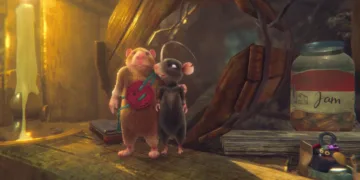
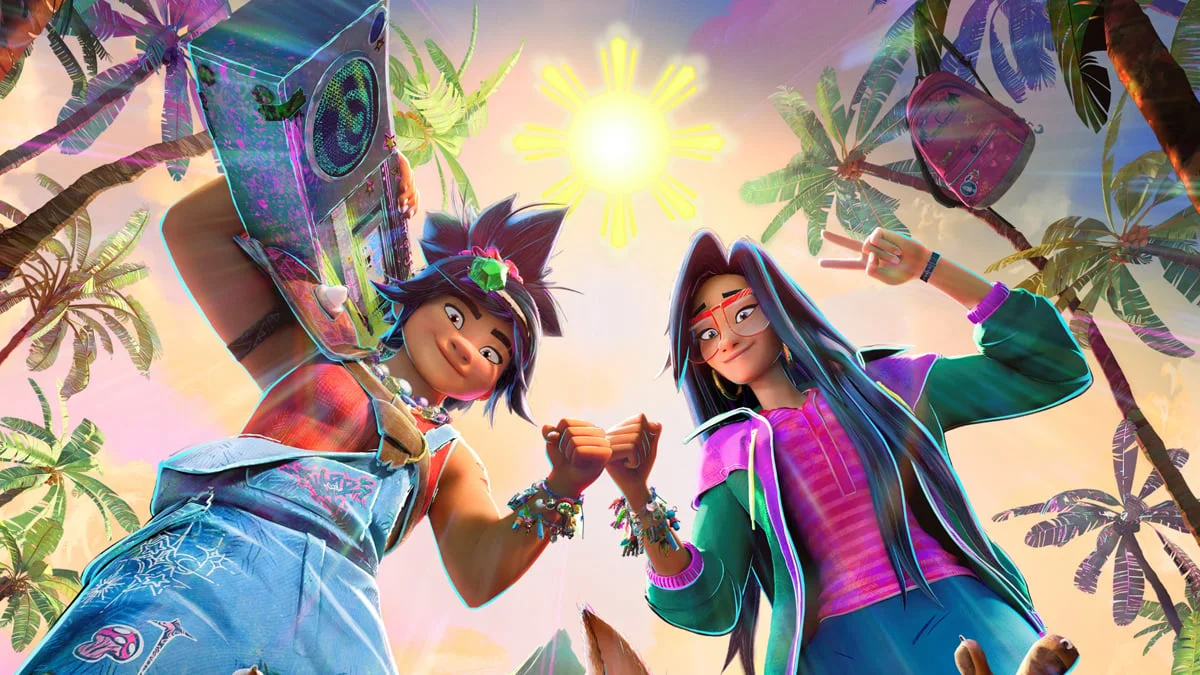

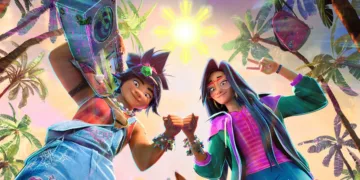
Twelve missing hours give Forgotten Island its best structural device, but the trick works because Joel Crawford and Januel Mercado spend their opening stretch making those hours matter before they vanish. Jo and Raissa have been together since childhood, collecting memories in matching bracelets, shared troublemaking, increasingly elaborate displays of their taste for the macabre, and stories handed down by Jo’s grandmother, Lola Fatima. By the time Raissa prepares to leave the Philippines for Caltech, their friendship already has history. The film does not have to insist that separation will hurt. It has built the evidence.
That economy is important because Forgotten Island has plenty waiting behind the portal. Jo, voiced by H.E.R., is the impulsive half of the partnership, a habitual troublemaker whose instinct is to grab whatever experience is passing before it escapes. Liza Soberano’s Raissa is more deliberate, academically gifted and capable of imagining a future beyond the boundaries of their childhood. Their difference sounds like familiar animated-movie arithmetic, but Crawford and Mercado make it dramatically useful. Raissa sees college as the next stage of her life. Jo hears the same plan as a warning that their life together is ending.
The film’s early compression handles that conflict particularly well. Childhood passes through shared obsessions, school mischief and the charms added to their bracelets after significant moments. Even their fascination with Filipino folklore becomes part of the friendship rather than background material waiting for the plot to use it.
Lola’s tales of Nakali and its creatures belong to the private language Jo and Raissa have developed together. When the mythical island finally becomes real on the night before Raissa’s departure, the fantasy feels like an extension of their history rather than a second movie suddenly beginning. Then they wake up twelve hours later.
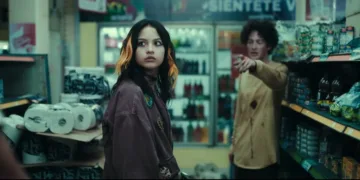
Raissa has part of her hair shaved. Jo is wearing a crown. A were-dog named Raww claims the three of them became the Wild Pack during an evening neither girl remembers, and he has the matching tattoo with Jo to prove it. More troublingly, Raissa now has Manang’s wings attached to her body by demonic hands.
The lost-night mystery provides a steady comic engine as Jo and Raissa reconstruct whatever spectacular nonsense occurred while they were mentally absent, but it also gives the story a much stronger spine than a simple race back through a magical portal. Memory is already the material from which this friendship has been constructed. Taking twelve hours away from the girls turns the film’s theme into a problem they have to solve.
Crawford and Mercado keep testing that idea as Nakali expands around them. Raww fits Jo’s reckless energy almost immediately, which carries a small but useful sting for Raissa. Bungi is two hundred years old and behaves like a child missing his mother.
Mermahn performs confidence while insecurity keeps leaking through. Batiba hides inside a tree surrounded by memories collected through wishes. These characters are funny on their own, but most of them also bend the film back toward questions of attachment, independence and what people preserve when relationships change.
That keeps the supporting cast from becoming a tour of character designs, though the movie comes dangerously close. King Truffle Wuffle arrives with an army of tiny mushroom warriors whose fury is constantly undermined by their own adorability, a problem Jo is spectacularly unequipped to resist. Manang, voiced by Lea Salonga, operates at the opposite tonal extreme.
Her Manananggal design allows the animation to flirt with genuine body horror, especially once her divided body and missing wings become part of the pursuit. A lesser film might have treated the Filipino folklore as a themed coat of paint. Here it shapes the characters, the threats, Jo and Raissa’s childhood imagination and the route through Nakali itself.
The animation is similarly unwilling to sit still. Graphic-novel exaggeration collides with anime-inflected movement, while flashbacks and heightened sequences shift toward the visual language of older action cartoons and video games. The elasticity suits Jo in particular. She moves through the world as though every object has already volunteered to become part of her next bad idea, and the film frequently lets its visual grammar catch up with her.
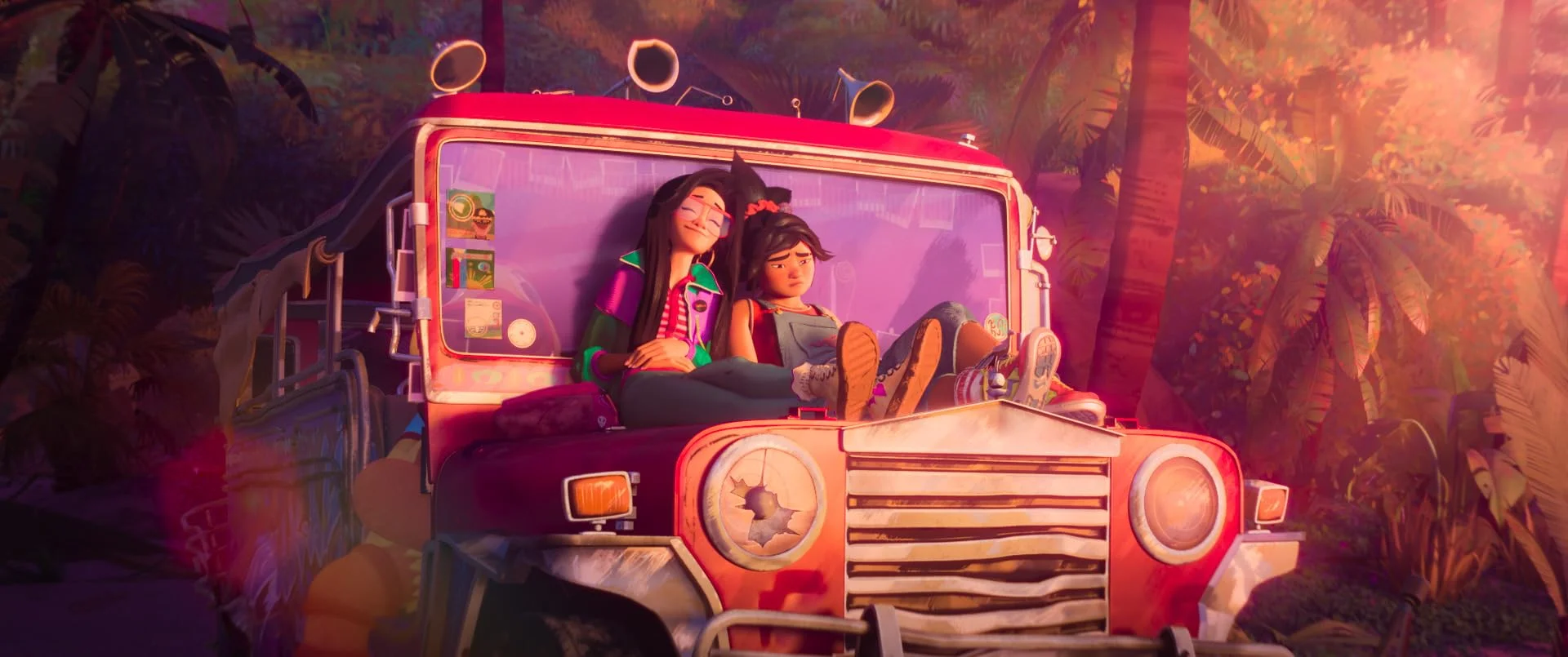
That hyperactivity is usually disciplined. The first two acts keep introducing creatures, jokes and obstacles without losing track of the trip home or the damaged friendship underneath it. Even the pop-culture material contributes to character history rather than functioning solely as recognition bait. Predator, of all things, becomes part of the girls’ shared vocabulary. There are worse ways to demonstrate intimacy than discovering which Arnold Schwarzenegger movie two people have apparently decided to carry through adolescence.
The movie’s structural control weakens once the final act begins stacking conflicts faster than it can resolve them. Several threats converge on Jo and Raissa, and the cleanup takes enough time that the fantasy machinery begins competing with the friendship for attention. This is where the earlier abundance finally sends the invoice. Characters who once added texture now require resolution, dangers need defusing, and the central emotional problem has to wait its turn behind several pieces of business.
The excess does not wreck the ending because the film prepared its emotional argument so carefully beforehand. The missing hours have gradually stopped being a comic puzzle and become a way of asking how much a shared past determines the present. Specific adventures can be remembered; Jo fears that distance will turn their entire history into something finished.
That distinction gives the last stretch weight even when the plot is working too hard. Friendship cannot remain meaningful by remaining unchanged, which is the maturation problem hiding beneath the monsters, portals and mushroom armies. The film has spent its running time showing Jo trying to preserve experiences, objects and people because preservation feels safer than transition. Raissa has been moving in the opposite direction, sometimes so decisively that she underestimates what leaving costs the person staying behind.
Even the end credits return to the same idea through Polaroid-style photographs of cast and crew from earlier stages of their lives. It is an unusually appropriate extension of the film’s argument. A photograph keeps a moment. It cannot keep the people inside it from changing.
Forgotten Island is scheduled for release in the United States on September 25, 2026, distributed by Universal Pictures. The animated fantasy adventure follows two childhood best friends who are transported to a mystical island where memories gradually fade, forcing them to navigate a world rich in folklore to save their bond.
Where to Watch Forgotten Island (2026) Online
Full Credits
Title: Forgotten Island
Distributor: Universal Pictures (DreamWorks Animation)
Release date: September 25, 2026 (United States)
Running time: 1 hour 40 minutes (100 minutes)
Director: Joel Crawford, Januel Mercado
Writers: Joel Crawford, Januel Mercado
Producers and Executive Producers: DreamWorks Animation team
Cast: H.E.R., Liza Soberano, Dave Franco, Jenny Slate, Manny Jacinto, Dolly de Leon, Jo Koy, Ronny Chieng, Lea Salonga
The Review
Forgotten Island
Forgotten Island builds its fantasy around something sturdier than spectacle: a friendship with enough history to make its missing-memory hook matter. Jo and Raissa give the film an emotional spine, while Nakali’s Filipino folklore, elastic animation, and strange supporting cast keep the adventure lively. The final act crowds too many conflicts into the same space, but the story has done enough careful work by then that the emotional payoff survives the congestion.
PROS
- Jo and Raissa’s friendship feels fully lived-in
- Strong use of memory as both plot device and theme
- Filipino folklore shapes the fantasy world meaningfully
- Energetic, expressive animation
CONS
- Final act becomes overstuffed
- Supporting conflicts compete with the central friendship
- The theme is sometimes stated too plainly