
















![Kingdom Hearts Collection [I-III] Review](https://gazettely.com/wp-content/uploads/2026/10/Kingdom-Hearts-Collection-I-III-1-360x180.webp "Kingdom Hearts Collection [I-III] Review: KHII Holds Steady as Newer Entries Fluctuate 37")



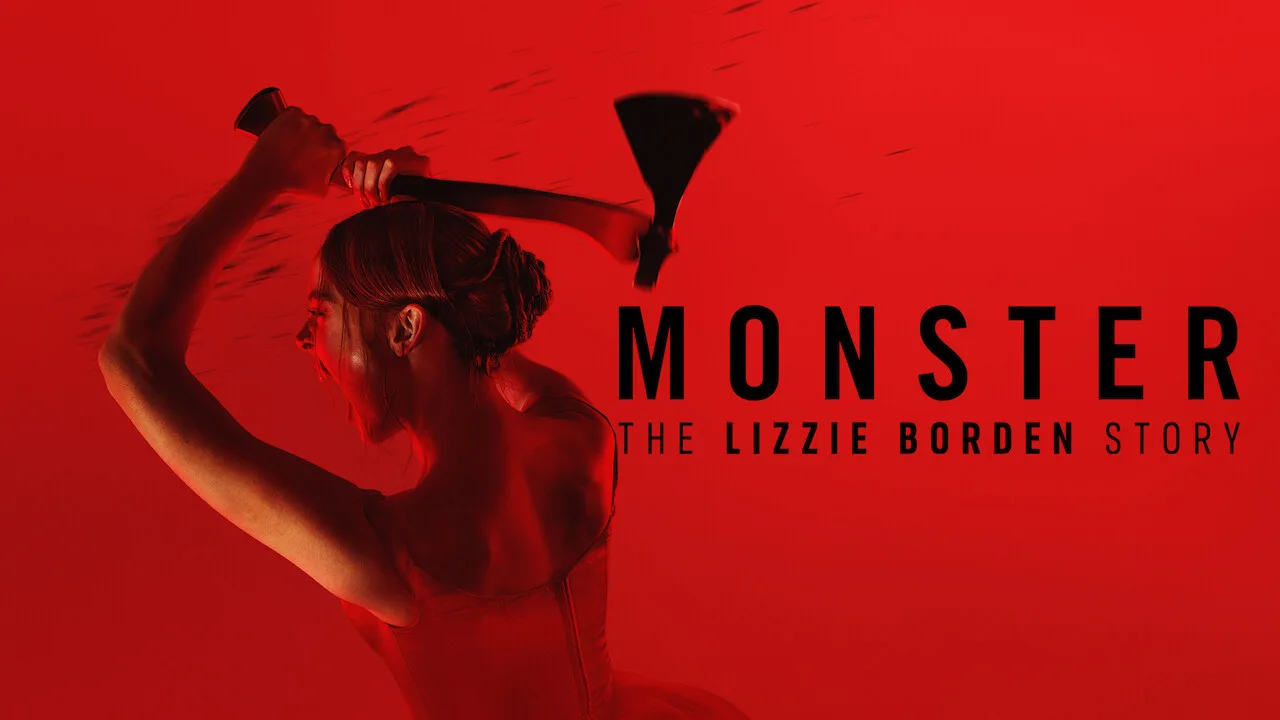

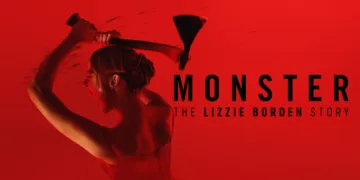
Lizzie Borden has survived in American folklore because the case never quite settles into one shape. She can be murderer, victim, curiosity, folk demon, tourist attraction, or simply the woman attached to a crime nobody ever managed to close. Monster: The Lizzie Borden Story seems almost offended by that uncertainty. It gives us an answer early, gives us a motive soon after, and then spends eight episodes trying to convince us that explanation is the same thing as understanding.
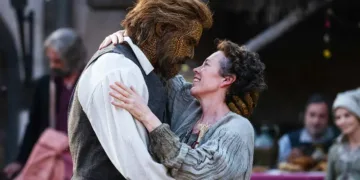
The fourth season of Ryan Murphy and Ian Brennan’s anthology begins behind a stage curtain, with a toy piano marked “LIZZIE,” then puts an axe in Ella Beatty’s hands and shows Abby and Andrew Borden dying. Four months earlier, this Lizzie is trapped in a house where every social expectation has become a small instrument of punishment. Abby, played by Rebecca Hall, humiliates her. Andrew, played by Charlie Hunnam, barely regards her as a full person. Prospective husbands recoil. Her heavy periods become another source of shame. Then Bridget Sullivan arrives, and Vicky Krieps plays her as both servant and portal, someone who explains Lizzie’s body, introduces sexual possibility, tells her stories about Elizabeth Báthory, and gives her a glimpse of a life arranged on different terms.
That is a perfectly workable interpretation of Lizzie Borden. I resisted it almost immediately.
My resistance was not to the invented romance, the abuse, or even the decision to show Lizzie committing the murders. Historical drama invents because history leaves gaps. The problem is the moral geometry. The series arranges nearly every piece around Lizzie so that the axe begins to look like the final available exit from a house designed to crush her. Abby is vicious. Andrew is hypocritical, lecherous, drunk, and casually cruel. Bridget understands Lizzie. Animals trust her. Love softens her. By the time the blood arrives, the show has already moved the harder question out of reach.
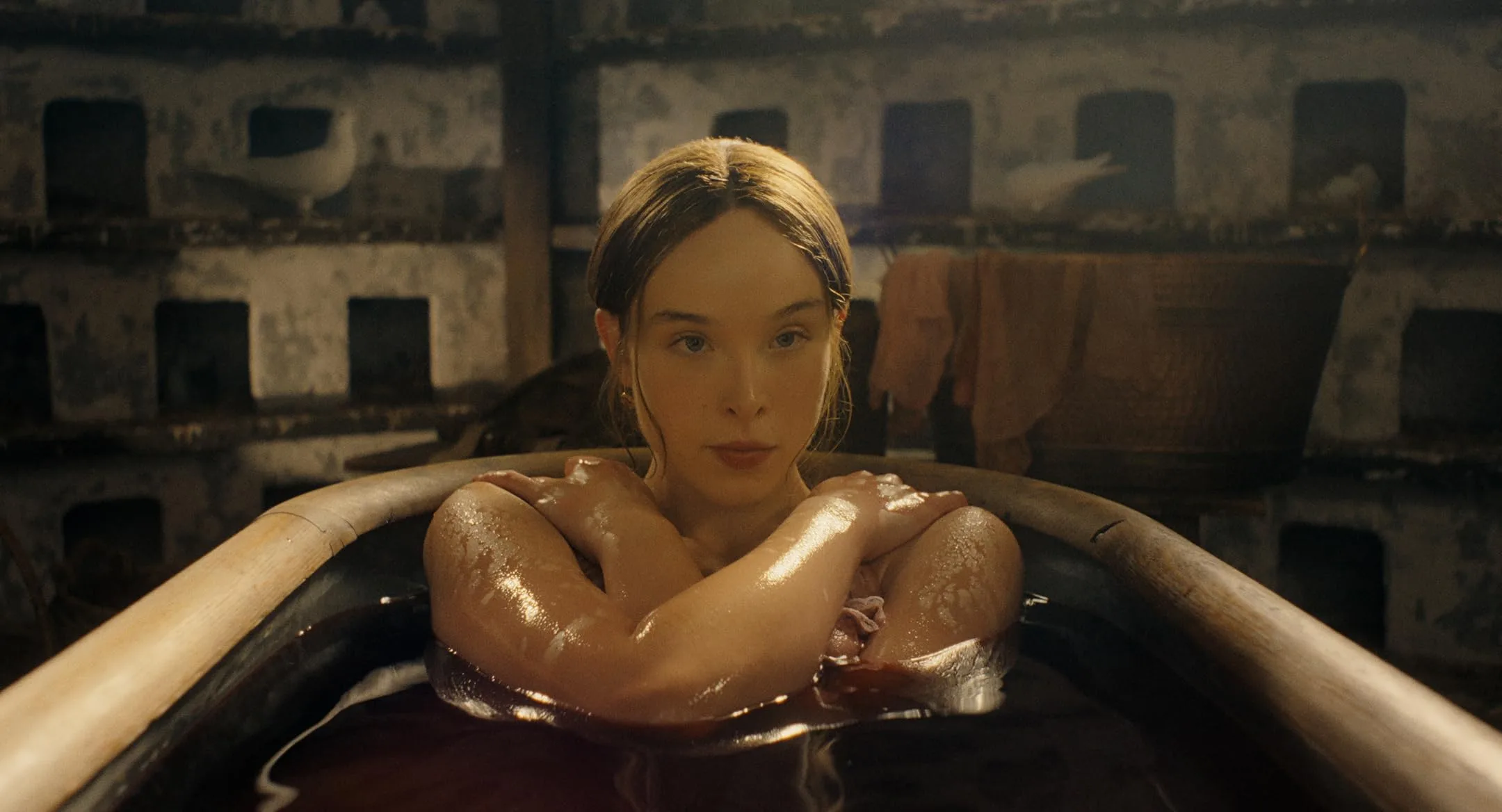
But I am not sure “simplification” completely describes what the season is doing. Its fixation on Lizzie’s body suggests a stranger ambition. Menstruation is everywhere in the early episodes: cramping, blood on Abby’s prized fainting couch, disgust, remedies, a hand-cranked vibrator, a medical massager, Báthory bathing in blood. Victorian femininity is supposed to remain discreet, clean, decorative, marriageable. This series makes it leak all over the furniture.
There is an idea there, and sometimes a good one. Bridget’s lack of embarrassment becomes radical because everyone else has taught Lizzie to experience her body as evidence against herself. The relationship between them gives that argument a human shape. Lizzie’s dovecote and the cherry trees around it become a private counterworld, one where female desire and tenderness can exist outside the household’s surveillance. The trouble is that the series rarely trusts an image once it has found one. It keeps explaining what the blood means after the blood has already done the work. A symbol eventually becomes a lecture if you keep pointing at it.
Hall is the actor who benefits most from this excess. Abby is written as a nightmare: she abuses servants, belittles Lizzie, polices the house with sadistic precision, and treats cruelty as part of domestic management. Hall responds by making her enormous. The bulging eyes, elaborate insults, sudden shrieks, and immaculate disgust push Abby toward grotesque comedy without dissolving her into noise. Oddly, she becomes one of the season’s most dimensional people.
That creates a problem the series appears not to notice. The woman it wants us to hate is allowed to be theatrical, wounded, ridiculous, cruel, and alive. The woman it wants us to understand is protected from much of that mess.
Beatty’s restraint can be effective. Her Lizzie often seems to observe life from half a step outside it, and when the accumulated abuse finally breaks through her composure, the performance gains force because she has held so much back. Krieps gives Bridget a similar benefit. The character can sound suspiciously like a modern consciousness dropped into the 1890s, yet Krieps makes her affection for Lizzie feel grounded enough to survive the writing’s occasional sermonizing. Their relationship is where the season’s politics feel least theoretical. Freedom becomes a person who looks at Lizzie without disgust.
Hunnam’s Andrew is less complicated, though one detail nearly explains the whole show’s symbolic method. He builds coffins and trims corpses with axes when bodies do not fit the boxes. It is such a clean metaphor for patriarchal order that you can practically hear the screenplay underlining it. The man literally cuts bodies down until they conform.
Then Sarah Paulson arrives as Aileen Wuornos, and the series widens its argument from one infamous woman to a lineage of female violence. Bridget’s stories have already brought Báthory into the frame. Wuornos, living nearly a century after Borden, idolizes Lizzie, reads about her, visits her home, and imagines a kind of kinship across time. The obvious objection is that these women have wildly different histories, victims, motives, and mythologies. Grouping them because each became culturally legible through female violence risks reducing history to a theme night.
And yet I understand the temptation.
Báthory, Borden, and Wuornos occupy different positions inside stories society tells about dangerous women. One becomes a blood-soaked legend. One becomes an unresolved national riddle. One becomes a convicted killer whose history of abuse remains inseparable from the public story of her crimes. The season is trying to build a continuum from those differences. Its strangest gesture, bringing Lizzie, Bridget, and Wuornos together to dance to “Smalltown Boy,” should collapse under the weight of its own cleverness. Instead, it briefly works because the scene abandons argument and settles into loneliness. Three women from incompatible stories recognize the feeling of wanting another life.
The series is often strongest at precisely the moment it stops explaining itself.
Its camp helps. The red curtain, ornate interiors, poisoned meals, severed bodies, modern songs, axes displayed like household utensils, and Hall’s operatic malice keep the story far from sober reenactment. At times the season resembles a murderous fairy tale staged by people who found historical restraint boring. That freedom gives it energy. It also gives the writers somewhere to hide. Camp can make contradiction pleasurable, but the series also wants the authority of a serious argument about misogyny, abuse, punishment, and who society permits to be seen as a victim. Those ambitions keep colliding. The show wants to be irresponsible and morally exact at the same time.
The acquittal makes that collision harder to ignore. The later episodes show Lizzie living with freedom, wealth, social exile, animals, guests, and suffrage politics. The series seems anxious to prove that the woman it has shown killing her father and stepmother was still good in the ways that matter: tender, loving, protective, politically awakened. The axe becomes an exception inside an approved moral biography. That choice exposes the season’s idea of sympathy. It argues that women who commit violence deserve to be understood, then makes understanding easier by sanding away much of the moral danger from the woman it has chosen to defend. Andrew spends his days cutting bodies until they fit the coffins he sells. Eight episodes later, the series recoils from that brutality while performing a gentler version of the same operation on Lizzie.
Monster: The Lizzie Borden Story premiered on Netflix on September 17, 2026, as the fourth installment of the hit true-crime anthology series created by Ian Brennan. The 8-episode series dramatizes the infamous 1892 axe murders of Andrew and Abby Borden in Fall River, Massachusetts, focusing on their daughter Lizzie Borden and her eventual trial and acquittal. You can stream the complete series exclusively on Netflix.
Where to Watch Monster The Lizzie Borden Story Online


Full Credits
Title: Monster: The Lizzie Borden Story
Distributor: Netflix
Release date: September 17, 2026
Rating: TV-MA
Running time: Approximately 45–55 minutes per episode (8 episodes)
Director: Max Winkler, Sarah Adina Smith
Writers: Ian Brennan
Producers and Executive Producers: Ryan Murphy, Ian Brennan, Max Winkler, Alexis Martin Woodall, Eric Kovtun, Scott Robertson
Cast: Ella Beatty, Vicky Krieps, Charlie Hunnam, Rebecca Hall, Jessica Barden, Joey Pollari, Billie Lourd, Sarah Paulson, Oliver Spenceman
Director of Photography (Cinematographer): Jason McCormick, Carolina Costa
Editors: Lead Editors across episodes include Todd Desrosiers, Peggy Tachdjian
Composer: Mac Quayle
The Review
Monster: The Lizzie Borden Story
Monster: The Lizzie Borden Story is liveliest when its blood, camp, and performances are allowed to contradict its ideas. Rebecca Hall is terrific, Ella Beatty and Vicky Krieps give the central relationship emotional weight, and several audacious choices genuinely land. Yet the season keeps simplifying the woman it claims to liberate from simplistic judgment. By turning Lizzie into such a carefully justified killer, Monster trades historical ambiguity for moral reassurance. Its messiness can be entertaining. Its certainty is much less interesting.
PROS
- Rebecca Hall’s ferocious performance
- Strong Beatty-Krieps chemistry
- Audacious gothic camp
- Several emotionally effective surreal choices
- Memorable bodily and domestic imagery
CONS
- Lizzie is overly sanitized
- Feminist themes become overexplained
- Wuornos connection feels strained
- Historical distinctions are flattened
- Camp and serious argument frequently clash