

























![Kingdom Hearts Collection [I-III] Review](https://gazettely.com/wp-content/uploads/2026/10/Kingdom-Hearts-Collection-I-III-1-360x180.webp "Kingdom Hearts Collection [I-III] Review: KHII Holds Steady as Newer Entries Fluctuate 37")



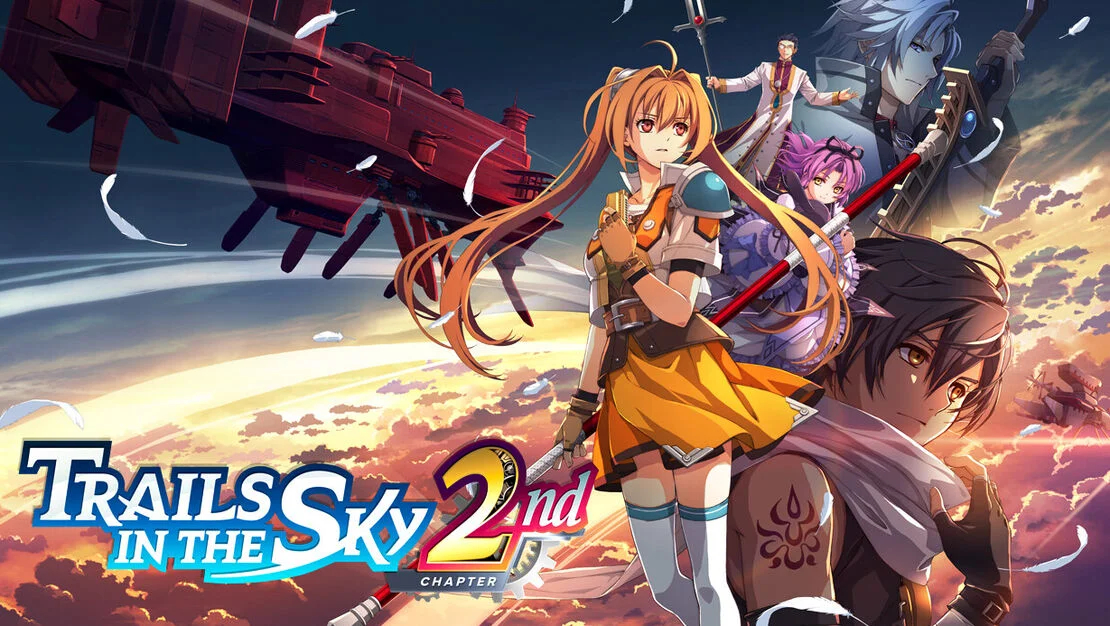

Trails in the Sky 2nd Chapter inherits nearly everything from 1st Chapter: its combat structure, its map of Liberl, its Bracer routines, its Orbments, its towns, and most of its cast. That sounds like the setup for a sequel playing things painfully safe. Instead, the interesting question is what happens when all those returning systems remember what you already did.
NPCs recognize past favors. Party members enter conversations differently depending on who is traveling with Estelle. Familiar towns reveal people whose lives have moved forward since the previous adventure. Even the basic act of completing another Bracer assignment lands differently because Estelle is no longer learning what the job means. She is doing it while searching for Joshua. That continuity is 2nd Chapter’s strongest design idea, and occasionally its biggest problem.
The story resumes almost immediately after Joshua’s departure. Estelle, now a Senior Bracer, heads to a training facility with Anelace before returning to active duty and investigating Ouroboros, the organization tied to Joshua’s past and the growing threat facing Liberl. A recap exists for anyone arriving fresh, but plot information alone cannot reproduce what the sequel expects from you.
The game assumes you already care about Joshua, know Olivier’s particular brand of chaos, understand why Agate and Tita matter to each other, and have spent enough time wandering Liberl that returning to Rolent or Bose means something. That makes this a poor entry point and an unusually effective sequel.
Removing Joshua from Estelle’s side also changes the function of the party. Their partnership supplied much of the first game’s emotional rhythm, so his absence initially leaves a hole that the expanded supporting cast cannot completely fill.
The early choice between traveling with Agate or Scherazard helps because each brings different conversations, and the growing roster gives you far greater control over party composition. Still, the first stretch can feel like the game has taken away one of its best character dynamics and asked familiar regional errands to compensate.
The trade works because Estelle changes under that pressure. Her personal objective remains simple, find Joshua, but the game keeps placing it inside larger responsibilities involving Ouroboros and Liberl itself. She cannot solve one problem by abandoning the other. That tension makes her growth feel tied to what the player is doing rather than stored exclusively in cutscenes.
The same principle applies to sidequests. Mechanically, many are familiar RPG work: hunt a monster, recover an item, help someone solve a local problem. The objectives rarely impress by themselves. What changes their value is who is asking.
Liberl’s NPCs keep evolving between story beats. People you helped before may remember it if you carry over save data. Returning figures continue relationships and personal routines that began dozens of hours earlier. The game even encourages frequent check-ins by updating dialogue as events progress. Complete enough of this optional work and your Bracer rank rises, rewarding the same player behavior the fiction says Estelle should care about.
That is good system design because the reward structure and characterization are pointing in the same direction. You can ignore much of the optional material and still follow the main story, but players who treat Bracer work as part of Estelle’s identity receive mechanical rewards, additional character material, and a stronger sense that Liberl is populated by people rather than quest dispensers.
There is a cost. You are still traveling through Rolent, Bose, Ruan, Zeiss, and Grancel. The regional progression can resemble another lap around the first game, especially early on, and longer dungeons sometimes turn familiarity into fatigue. Fishing returns as a larger activity, cooking can provide useful benefits, and hidden objectives have been reworked so discovery does not demand blindly talking to every citizen, but none of that disguises the structural repetition.
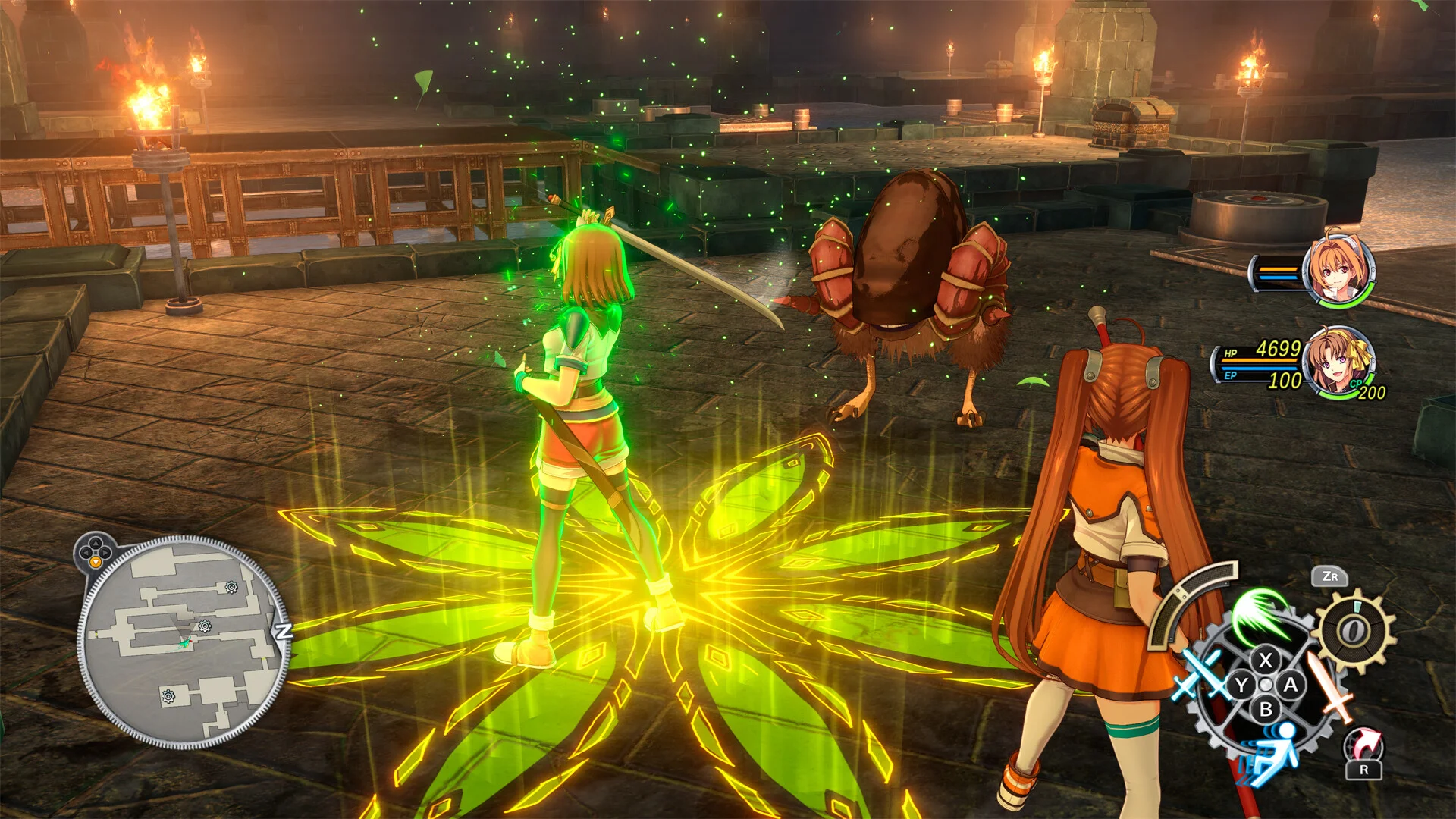
Combat takes a similar approach: preserve the foundation, then give the player stronger reasons to use all of it. Weak enemies can still be handled quickly through real-time attacks while exploring. Stunning a target before switching into turn-based combat gives the party an opening advantage, and tougher fights bring Crafts, Arts, positioning, elemental weaknesses, powerful S-Crafts, and party coordination back to the foreground. Boss encounters lean on the command system completely.
The sequel does not pretend you forgot how any of this works. Party members return with established techniques, Crafts gain new effects and animations as they improve, and encounters become demanding much sooner. Equipment and Quartz progression are refreshed, so your old power curve does not simply carry forward, yet the game treats system knowledge as something the player retains.
Enemy Rage states are a good example of how 2nd Chapter adds pressure without replacing the rules. A boss that powers up after taking heavy damage can punish a party built around dumping every resource into one burst. Stronger variants can survive situations that look like finishing blows and immediately swing momentum back. The response draws on the existing toolkit: manage turn order, preserve resources, exploit weaknesses, protect vulnerable characters, and prepare for the counterattack.
That design makes the modest mechanical changes easier to accept. The hybrid combat system was already flexible enough to support different types of encounters. 2nd Chapter mostly asks it harder questions.
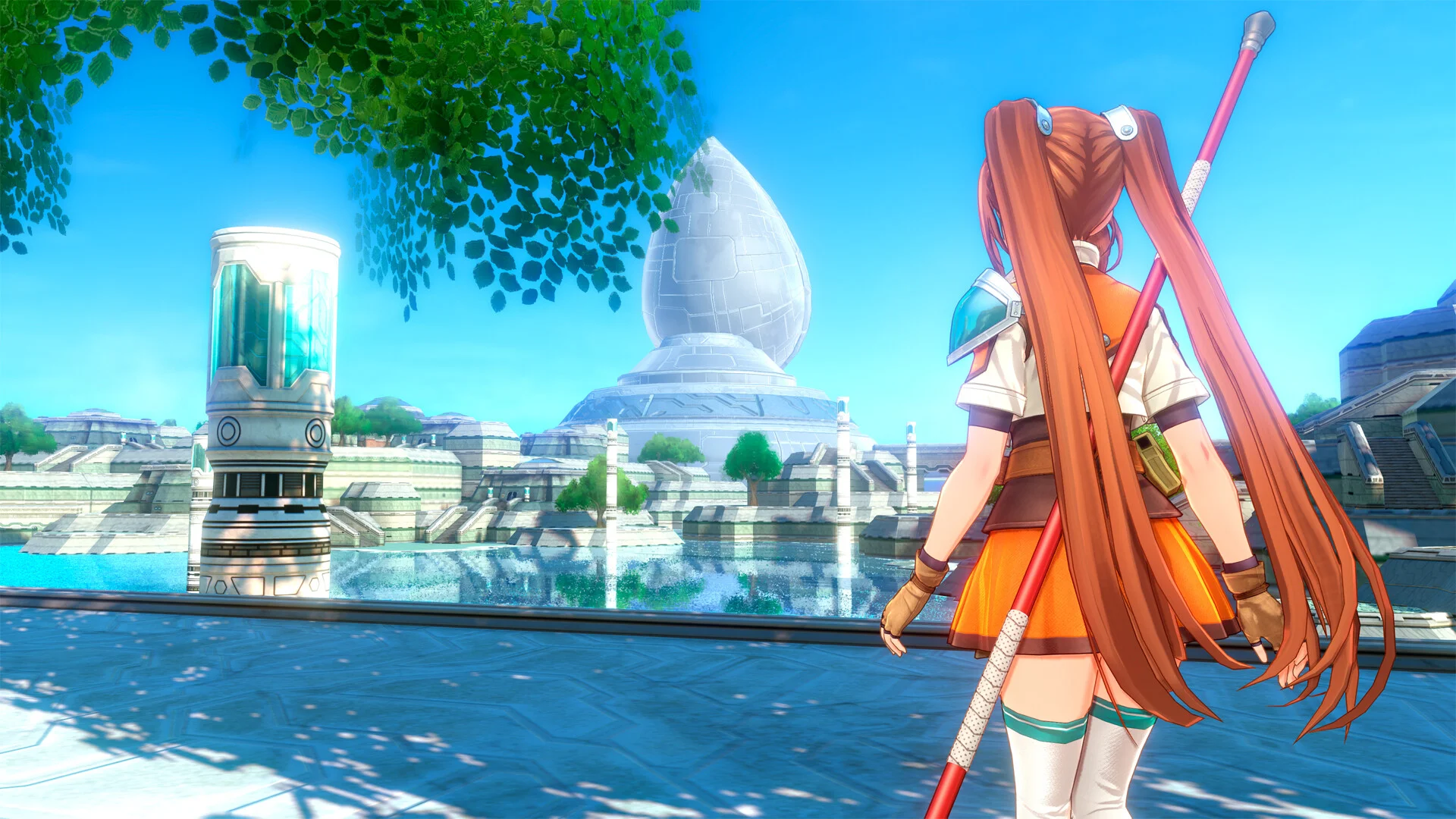
Presentation follows the same philosophy. Character models and environments are close to what 1st Chapter established, but later scenes give the remake’s 3D presentation greater opportunities to show scale. Large enemies, airships, upgraded Craft animations, and major story sequences carry impact the older presentation could not deliver as easily. Voice performances help the emotional material land, and revised terminology and pronunciations make the localization feel more consistent with the wider series.
The strange gap remains partial voice implementation. A scene can move from fully performed dialogue to one character speaking while another answers silently through text. It does not ruin the writing, but it is hard not to notice when the rest of the presentation is working this hard to pull you into the scene.
2nd Chapter rarely solves familiarity by inventing something completely new. It solves it by making familiarity carry consequences. The towns matter because you know them. The NPCs matter because you have history with them. The combat works because the game trusts you to understand it already. Estelle’s separation from Joshua hurts because the previous game spent so much time making their partnership feel ordinary.
Sometimes that same continuity produces repetition, especially when another familiar road leads to another familiar Bracer job. Then an NPC remembers something you did fifty hours ago, a party member changes the tone of a conversation because you brought them along, or a boss forces you to reconsider a combat habit you thought was settled. The sequel keeps asking what your previous time in Liberl was worth. Its best answer is that none of it was wasted.
The Review
Trails in the Sky 2nd Chapter
Trails in the Sky 2nd Chapter succeeds because it understands that continuation can be a design strength. Returning towns, systems, and characters occasionally make its opening stretch feel repetitive, but the game keeps finding ways to make prior investment matter through evolving NPCs, party-dependent dialogue, tougher combat, and Estelle's growth without Joshua beside her. Its hybrid battle system remains excellent, while the remake gives the story's larger moments the spectacle they deserve. The sequel asks what dozens of earlier hours were worth, then keeps paying them back.
PROS
- Excellent hybrid combat system
- Estelle's growth feels mechanically and narratively connected
- Returning NPCs reward long-term investment
- Strong party flexibility and dialogue variation
- Major scenes benefit from the remake's presentation
CONS
- Familiar regions can feel repetitive
- Early hours miss the Estelle-Joshua dynamic
- Some dungeons run long
- Partial voice acting remains distracting







