





![Kingdom Hearts Collection [I-III] Review](https://gazettely.com/wp-content/uploads/2026/10/Kingdom-Hearts-Collection-I-III-1-360x180.webp "Kingdom Hearts Collection [I-III] Review: KHII Holds Steady as Newer Entries Fluctuate 33")




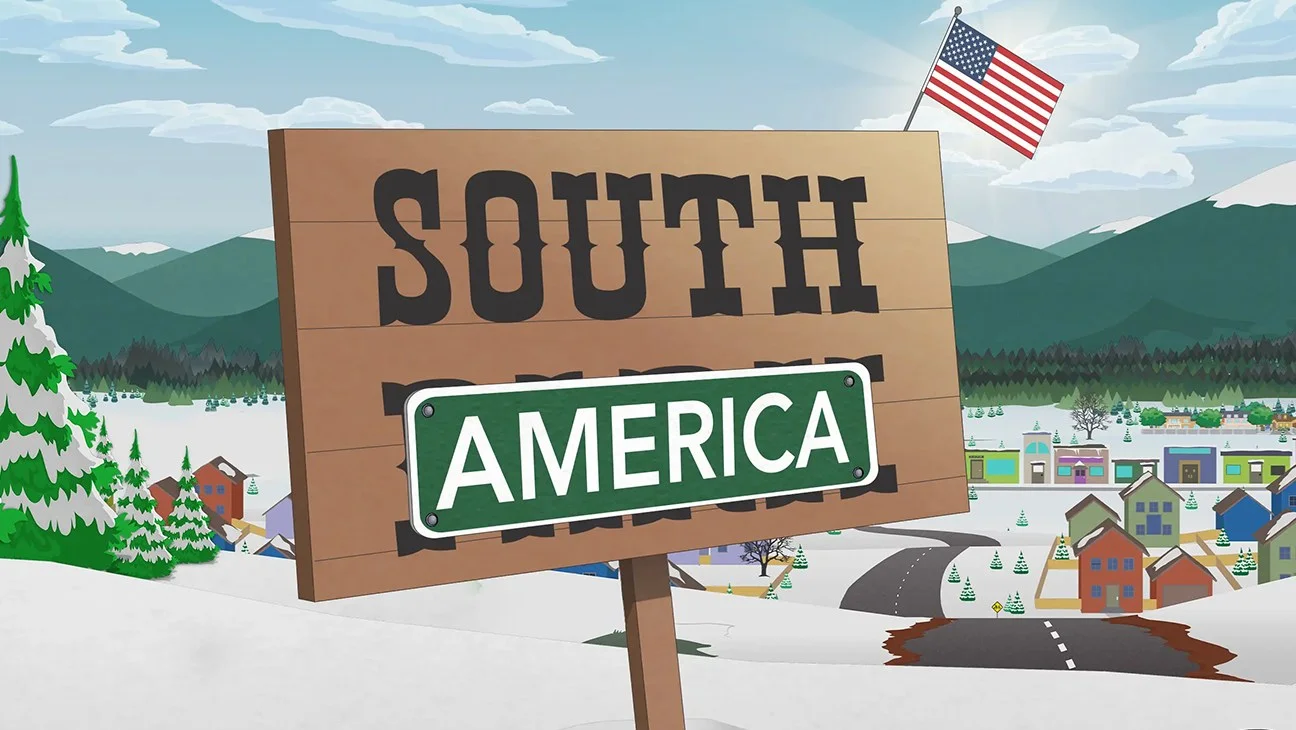

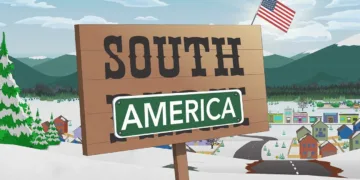
The funniest thing about South Park calling itself South America is how quickly the joke stops being about geography. Trey Parker and Matt Stone turn the rename into an institutional gag, one aimed at the corporations and public bodies willing to adjust language when political power demands it.
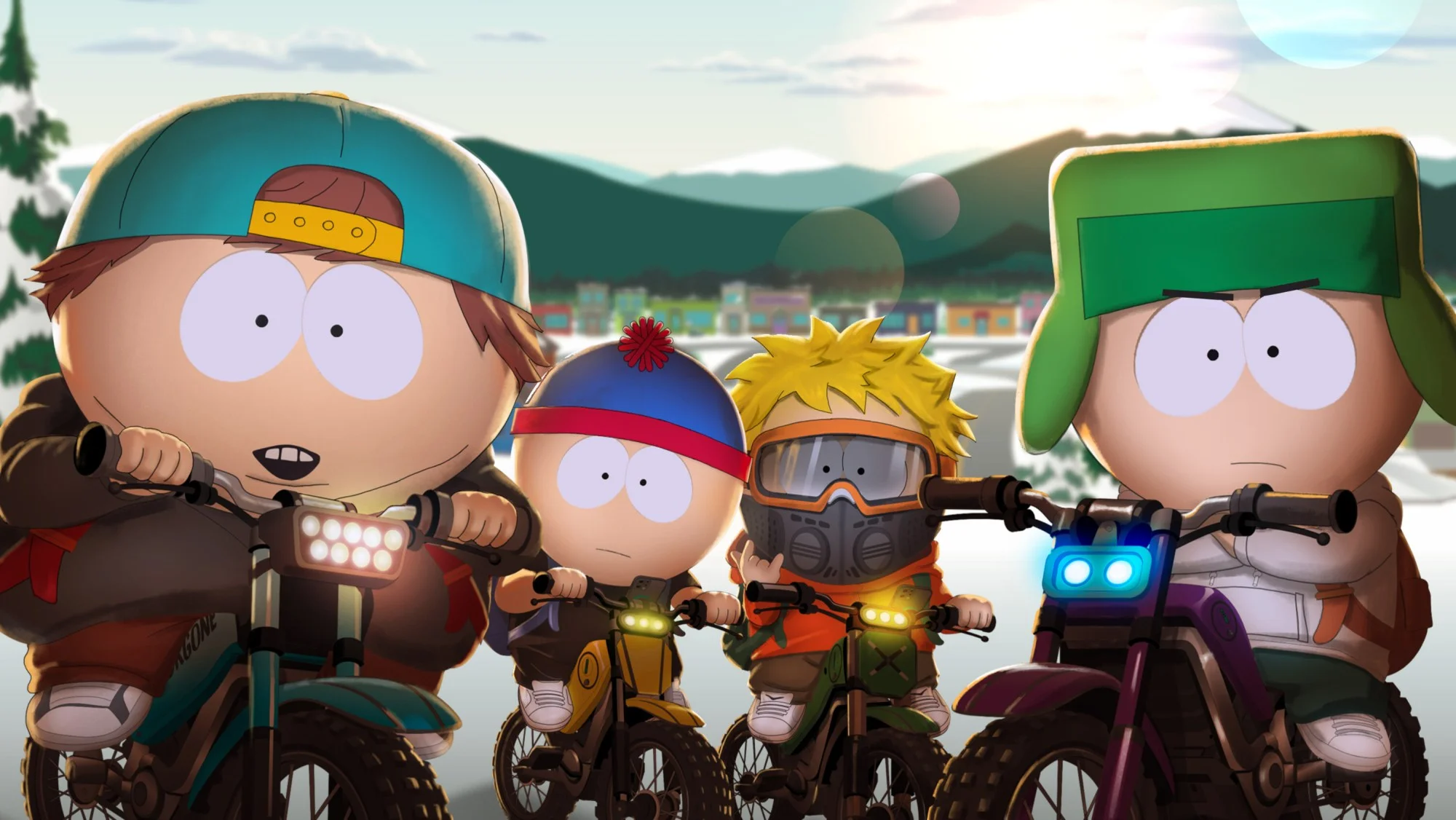
Then the premiere moves somewhere less obvious. “South American Biker Gangs” spends most of its time with children on e-bikes, furious middle-aged cyclists, a police department that would rather wait for Grand Theft Auto VI, and a town discovering that moral panic is much easier once somebody else has been designated the problem.
That combination makes the Season 29 premiere feel unusually revealing. South Park remains one of American television’s fastest political reactors, yet this episode works because it stops trying to chase every headline. The new title announces a confrontation with the present. The story beneath it behaves like an episode from an earlier version of the series, when Stan, Kyle, Cartman, and Kenny could generate an entire civic catastrophe from something as ordinary as wanting bicycles.
The e-bikes are perfect material for that return. Cartman sees freedom, speed, and an opportunity to become intolerable in public. Stan sees independence. Randy sees decline. The adults soon stop discussing what the kids are actually doing and start constructing a social threat around them.
That progression matters because the episode’s satire is strongest when it studies the production of outrage rather than attaching itself to one political analogy. The children become a “vicious South American biker gang” partly because adults need a language dramatic enough to justify their response. Irritation becomes danger. Danger becomes identity. Identity becomes permission. Polarization here is less a permanent social weather system than something people actively manufacture.
The reporter confronting a resident angry about e-bikes yet strangely comfortable with the town’s forced name change gets closest to the episode’s institutional argument. Public outrage is presented as selective, highly trainable, and often dependent on whoever has successfully defined the emergency first. The joke lands because it does not require the citizens to be secret ideologues. They simply accept one absurdity while becoming furious about another.
Parker and Stone extend that logic through Randy, whose cycling obsession gives the episode its best escalation. He begins as an aggrieved father and ends up helping create the disorder he claims to oppose. His cycling group frames itself as a defense of public order, tries to influence law enforcement, attacks Lu Kim, and turns a petty conflict into something resembling organized persecution.
The television-specific joke is how quickly the invented threat acquires the clean packaging of a real one. Once “vicious South American biker gang” exists as a phrase, the local news can repeat it, residents can react to it, and the adults can behave as though the label explains everything. Cartman, being Cartman, happily assists with the invention.
The joke would be weaker if the children were innocent little symbols. They are not. Cartman is awful on his bike. The kids behave recklessly. They annoy people. That messiness is useful because the episode refuses the comforting idea that mistreatment becomes unacceptable only after its targets have demonstrated flawless behavior.
Stan gives the conflict its quietest counterargument. For him, the e-bike offers independence and time away from his phone. He believes Randy might change his mind if he understood what that freedom meant. The sadness of the scene comes from how badly Stan misunderstands the social machinery already in motion. Randy no longer needs information. He has a cause, and contradictory evidence has become something to overcome rather than consider.
Kenny’s death pushes that idea into darker territory. Masked and trying to broker peace, he is blown up by the older bikers. Randy discovers who died and still folds Kenny’s death into the campaign against e-bikes. Grief becomes messaging. The community responds with “South America Strong” rhetoric, and the tragedy is absorbed into exactly the story the adults were already telling themselves.
The turn is sharp enough to expose a weakness in the episode. The climax arrives quickly, and Kenny’s death carries a larger thematic burden than the pacing quite earns. The idea is clearer than the dramatic transition delivering it. A few extra beats around the consequences might have given the tonal shift greater force.
Still, Kenny dying again feels like a strangely useful piece of television history rather than simple fan service. The premiere has already returned the focus to the boys, restored Randy to the role of delusional adult accelerant, and built its plot around a local craze that spirals beyond reason. Bringing back one of the show’s oldest recurring jokes completes the sense that South Park is testing how much of its earlier form still works inside the present political climate. Quite a lot, apparently.
For a series approaching three decades on television, returning to the boys could have felt like retreat. Here it plays closer to rediscovery. The re-recorded “South America” opening and Brad Paisley’s closing song frame the episode with mock civic grandeur, as if renaming a town and surviving an e-bike panic deserve the same ceremonial weight as national history. Governments rename. Corporations comply. News media repeat. Citizens adapt. Then everyone finds a smaller enemy close enough to actually yell at.
South Park Season 29 premiered on Comedy Central on September 16, 2026, with streaming available the following day on Paramount+. The satirical animated series continues to skewer contemporary cultural and political events through the chaotic exploits of its young Colorado residents.
Where to Watch South Park Season 29 Online










Full Credits
Title: South Park Season 29
Distributor: Comedy Central, Paramount+
Release date: September 16, 2026
Rating: TV-MA
Running time: 22 minutes per episode
Director: Trey Parker
Writers: Trey Parker, Matt Stone
Producers and Executive Producers: Trey Parker, Matt Stone, Anne Garefino, Frank C. Agnone II
Cast: Trey Parker, Matt Stone, April Stewart, Mona Marshall
Composer: Isaac Hayes, Adam Berry, Jamie Dunlap
The Review
South Park Season 29
South Park returns with a premiere that makes its loudest political gesture before settling into something smarter: children create a nuisance, adults manufacture a threat, and institutions help give the panic legitimacy. The e-bike conflict gives Parker and Stone a strong comic engine, while Randy’s crusade and Kenny’s death expose how grievance can absorb evidence, suffering, and contradiction. The rushed climax keeps the episode from hitting quite as hard as its ideas deserve, yet the renewed focus on the boys gives the series surprising energy.
PROS
- Sharp satire of manufactured outrage
- Strong return to the core boys
- Randy drives the escalation effectively
- Political ideas emerge through comic action
- Excellent institutional irony
CONS
- Climax moves too quickly
- Kenny’s death needs greater dramatic space
- Some political symbolism lands rather bluntly