

























![Kingdom Hearts Collection [I-III] Review](https://gazettely.com/wp-content/uploads/2026/10/Kingdom-Hearts-Collection-I-III-1-360x180.webp "Kingdom Hearts Collection [I-III] Review: KHII Holds Steady as Newer Entries Fluctuate 37")



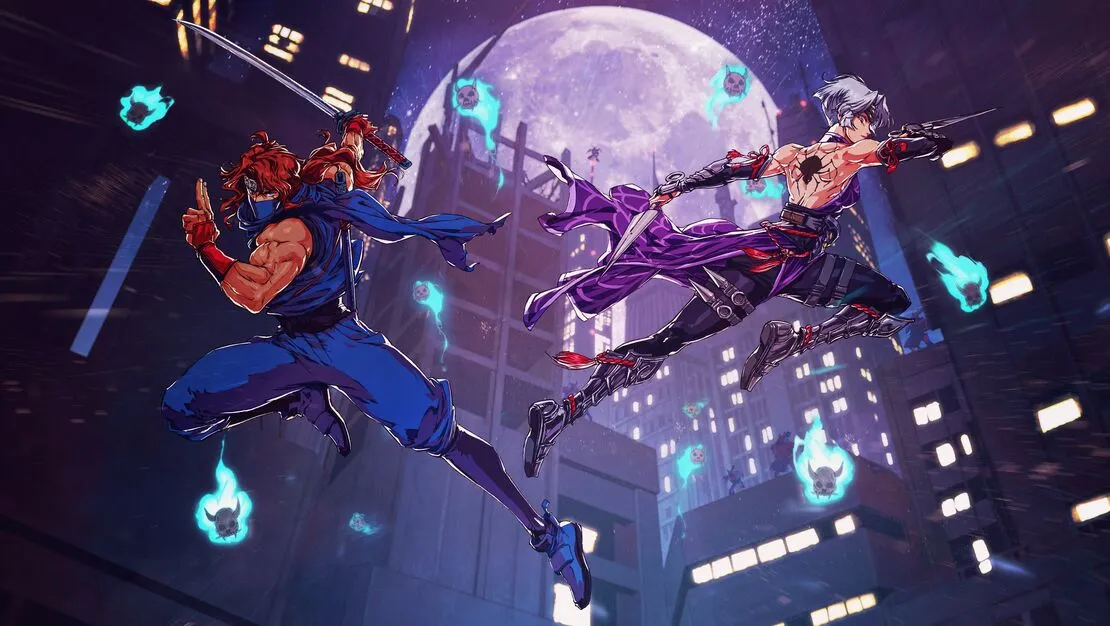

The Game Kitchen, the studio celebrated for its grim work on the Blasphemous series, takes on a revered piece of gaming history with Ninja Gaiden: Ragebound. This new entry revives the classic 2D action that defined the series on the Nintendo Entertainment System.
Players take control of Kenji Mozu, a promising student of the legendary Ryu Hayabusa. With his master away on business in America, Kenji is left as the sole defender of his village against a sudden demonic onslaught. Ragebound presents itself as a blistering fast and stylish action-platformer.
It successfully captures the demanding spirit of its 8-bit ancestors while injecting a host of modern design sensibilities. The immediate impression is one of stunning pixel art and the promise of a deep, high-speed combat system, setting a high bar from the opening moments.
A Symphony of Steel and Shadow
Ninja Gaiden: Ragebound builds its action on a foundation that feels both familiar and fresh. The controls are wonderfully simple, with dedicated buttons for jumping and attacking that will feel instantly natural to anyone with a history in the genre.
This basic scheme is expanded with a vital dodge for quick escapes and a lunging attack perfect for closing the gap to a distant foe. The responsiveness is immediate; there is no sense of input lag, making Kenji feel like a direct extension of your will. This precision is critical. The lunging attack, for instance, is not just a gap-closer but a commitment. Using it recklessly can send you hurtling into a pit or the path of another enemy’s attack, creating a constant tactical consideration.
These abilities feed into the game’s core design philosophy: constant forward momentum. The game wants you to be a blur of motion, slicing through enemies without ever breaking your stride, creating a state of flow where you are reacting to threats before you can consciously process them.
The true star of Kenji’s moveset is the Guillotine Jump. This mechanic allows you to perform a downward bounce on enemies and even their projectiles. This single action masterfully unifies combat and traversal into one fluid motion. It is the key difference between a novice player and a master. In platforming sections, it becomes your primary tool for reaching otherwise inaccessible ledges, turning a volley of enemy fire into a makeshift staircase to a hidden collectible.
In a fight, it is a critical technique for staying airborne, evading the sweeping ground attacks from bosses that are designed to punish terrestrial players. One early boss fills the arena floor with electricity, making the Guillotine Jump your only method of offense as you bounce between its projectiles to stay aloft and strike its weak point. The Guillotine Jump is the mechanical heart of Ragebound, giving the entire experience a kinetic flow that feels incredibly satisfying to master.
Further depth is added through the Hypercharge system. A Hypercharge is a single-use, instant-kill attack that can be acquired in two ways: by defeating special enemies that glow with a colored aura, or by standing still to charge it manually at the cost of some health. This creates a simple but effective risk-reward dynamic that permeates every encounter.
Do you risk a few precious seconds of vulnerability to charge up for the large demon ahead, or do you press the attack and hope an aura enemy appears? The system is made more interesting by its color-coded nature. Blue auras must be broken by Kenji’s katana, while pink auras demand a hit from Kumori’s ranged kunai.
This forces you to think tactically about which attack to use, adding a split-second puzzle to the heat of combat. When two aura enemies appear at once on opposite sides of the screen, you must make an instant decision about which Hypercharge is more valuable for the fight ahead. The only small issue is that the appearance of an aura-clad enemy can signal that a tougher foe is just off-screen, slightly reducing the element of surprise.
The fusion with Kumori also grants Kenji access to her distinct arsenal, fundamentally changing your offensive options. Her ranged kunai provides a much-needed method for dealing with flying pests or enemies perched on distant platforms without having to platform over to them.
She brings special weapons, like a wide-arcing sickle that is perfect for controlling crowds of weaker foes, and a boomerang chakram that can hit enemies on its return trip, rewarding careful positioning. These are governed by a Ki meter that refills as you land basic attacks, encouraging an aggressive rhythm of melee strikes to fuel your powerful special moves. Finally, there are the game-changing Ragebound Arts, which can turn the tide of a losing battle by freezing time for a few precious seconds or restoring a chunk of lost health.
The Reluctant Duo
The game’s narrative serves as a direct justification for its mechanical variety, a clever bit of design where story and gameplay are intertwined. The setup is straightforward: with Ryu Hayabusa occupied during the events of the original NES game, Kenji faces a demon invasion alone. Simultaneously, the rival Black Spider Clan makes a foolish pact with a demon lord.
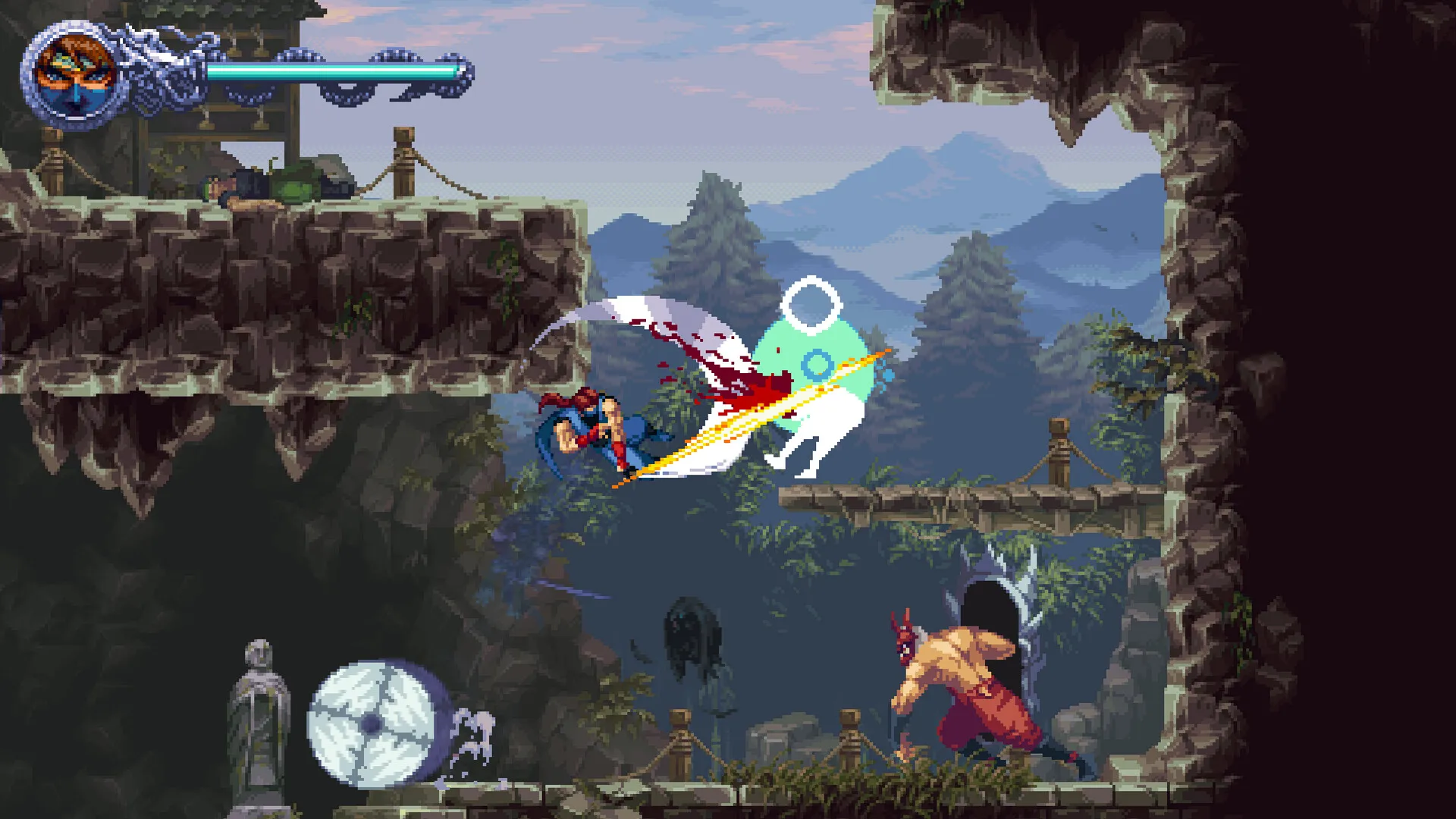
This results in the ninja Kumori becoming magically fused with Kenji, her soul inhabiting his body so they can both survive. This plot point is the vehicle that delivers Kumori’s abilities to the player, neatly tying the story to the gameplay expansion. It is a simple but effective premise.
Their resulting partnership is a source of lighthearted fun that prevents the game from taking itself too seriously. Kenji is a staunch traditionalist, obsessed with the honor of his clan and the “proper” way of the ninja. Kumori is his direct opposite, frequently teasing him for his serious nature and his odd fascination with pirates.
The writing is sharp and witty, and their banter provides a welcome palate cleanser between the intense and demanding action sequences. This tone is a smart choice. A grim, self-serious story might have felt at odds with the almost cartoonishly violent and fast-paced action. Instead, the story works in concert with the gameplay, providing just enough context and character to keep you invested without ever bogging down the pace.
A Gauntlet of Style and Substance
Ragebound is structured as a series of linear stages, selectable from a world map. This design focuses the experience on pure, distilled action rather than exploration, allowing for meticulously handcrafted encounters and memorable set pieces.
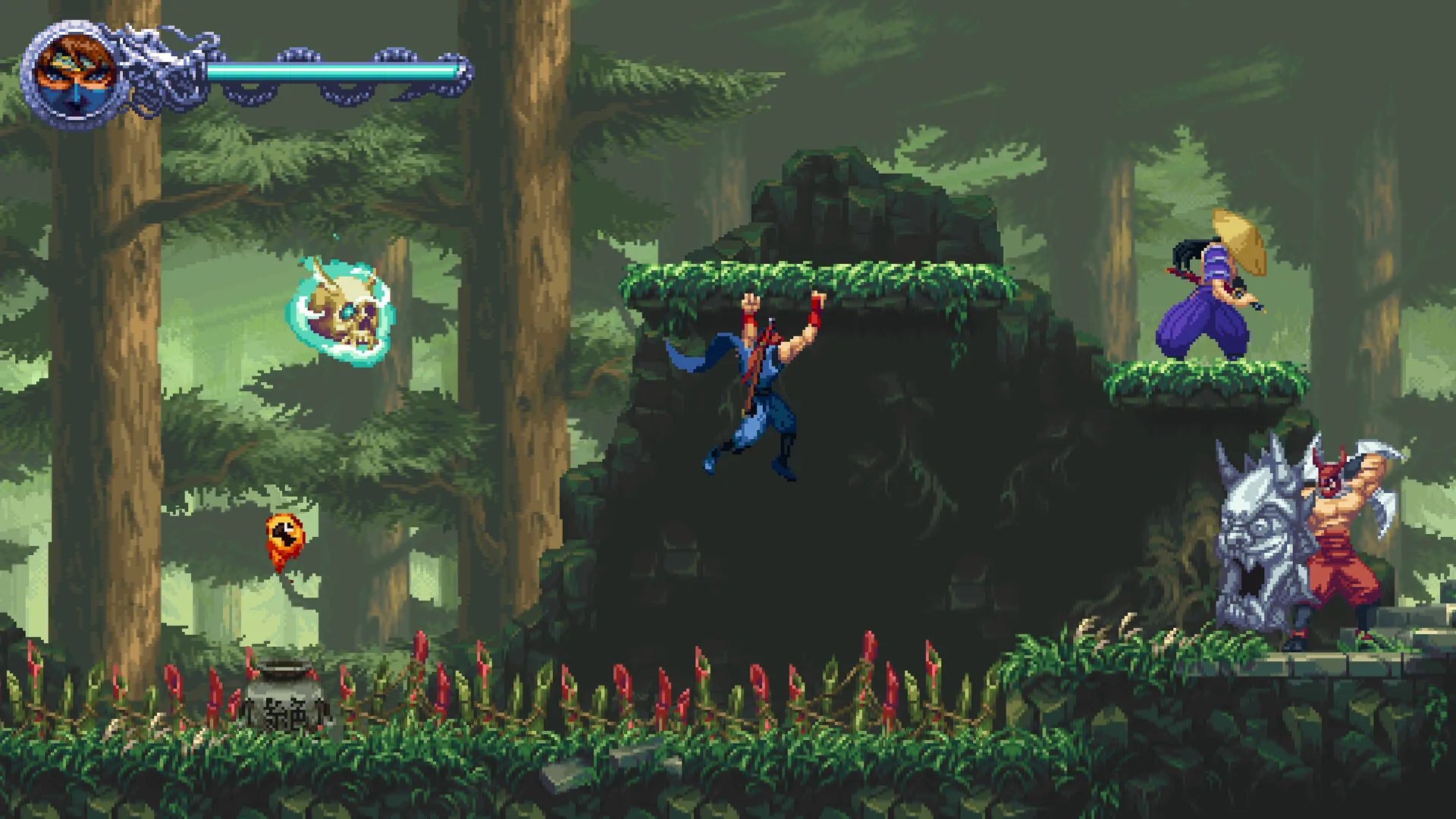
You will battle across burning villages, treacherous mountains, and even a secret navy base, each with its own distinct visual identity and unique environmental hazards. The mountain pass, for example, features strong gusts of wind that affect your jump trajectory, while the construction site is filled with deadly pits and industrial machinery repurposed by demons.
These levels are punctuated by incredible cinematic moments, like a frantic battle atop a runaway train or a desperate chase sequence involving a demon-piloted bulldozer, that are seamlessly integrated into the gameplay.
To break up the combat, levels contain Demon Altars. Activating these whisks you away to special challenge rooms where you control Kumori’s spirit. These sections are pure platforming tests where you must navigate complex hazards to find collectibles or unlock new paths in the main level.
Controlling Kumori’s disembodied soul feels floaty and ethereal, a stark contrast to Kenji’s grounded and precise movements. A constantly depleting meter adds tension, forcing you to be quick and efficient before you are returned to Kenji’s body. These altars function as a focused test of pure platforming skill, isolating that aspect of the game from the combat for short, intense bursts.
Player choice is primarily expressed through the robust upgrade system at Muramasa’s shop. Hidden Golden Scarabs found in each stage act as currency to purchase talismans. These equippable items offer significant modifications to your abilities, allowing you to craft a build that suits your playstyle.
One might restore your health with every kill in a long combo chain, encouraging an aggressive, momentum-based approach. Another might grant an automatic Hypercharge after five successful Guillotine Jumps, rewarding aerial mastery.
Conversely, you can equip talismans that make the game harder, such as one that causes you to restart the entire level if you die, but grants a massive bonus to your final score. This system is where Ragebound truly empowers the player, giving you the tools to either overcome its steep challenge or make it even steeper in the pursuit of glory.
Pixel-Perfect Execution
Visually, Ninja Gaiden: Ragebound is a triumph. The Game Kitchen has applied its mastery of pixel art to create a world that is beautiful and brutal in equal measure. Animations are exceptionally fluid, with dozens of small details that bring the action to life.
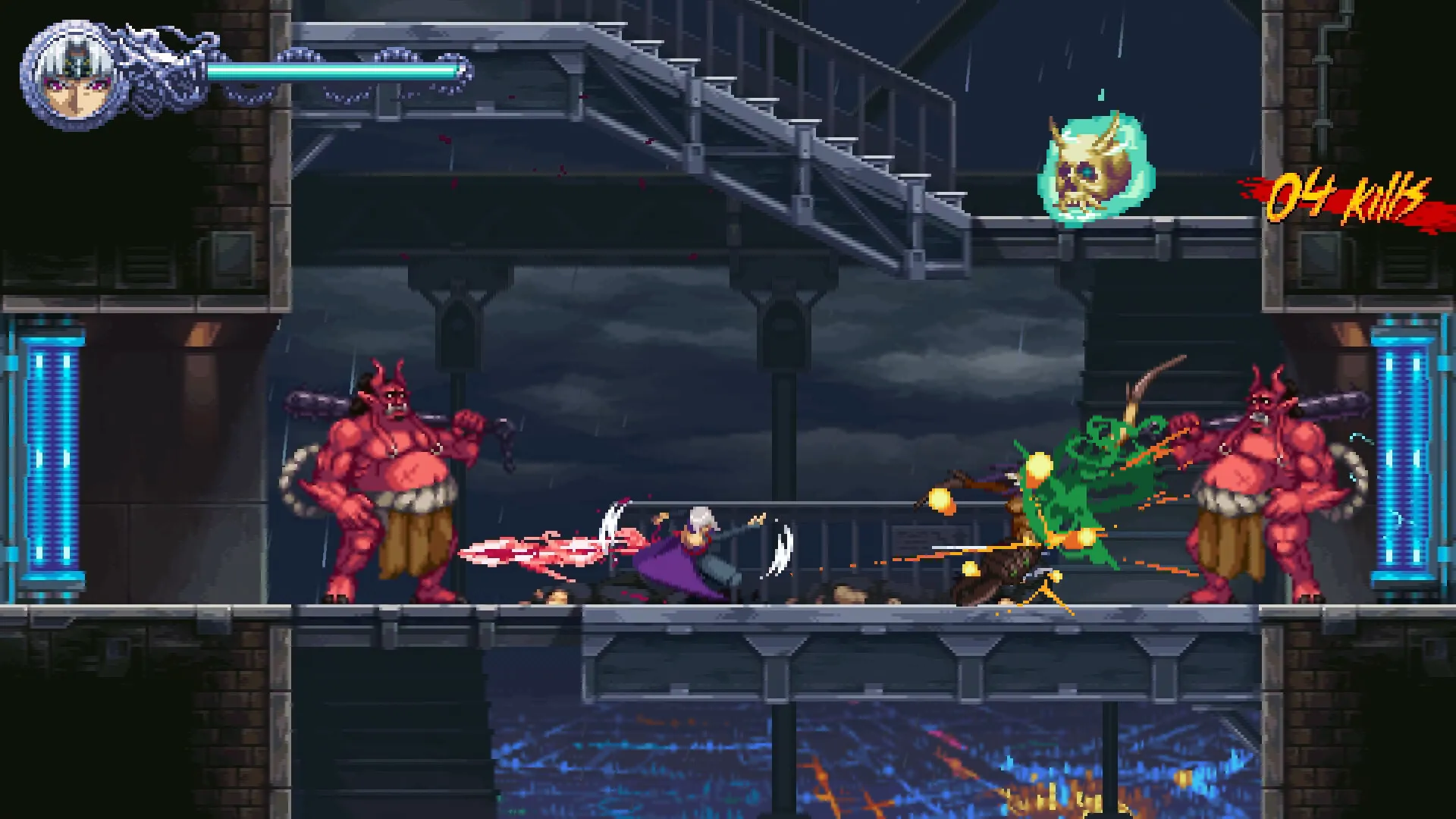
You can see the follow-through on Kenji’s sword swing and the way his scarf whips in the wind as he dashes. Enemies explode into satisfying showers of pixels when defeated. The color palettes are expertly chosen, from the warm oranges and reds of a village ablaze to the cool blues and grays of a moonlit fortress, each evoking a powerful mood. The game’s presentation continues the series’ tradition of being a technical showcase, standing as a high watermark for modern pixel art games.
The aesthetic excellence extends to the audio. The soundtrack is a fantastic collection of new retro-inspired tracks mixed with energetic remixes of classic Ninja Gaiden tunes that will be instantly recognizable to series veterans. The music perfectly matches the on-screen action, swelling during intense boss fights and providing a driving beat for fast-paced levels.
The sound design is just as strong, with every sword slash, shuriken throw, and Guillotine Jump landing with a satisfying, crunchy impact that provides clear, vital feedback for every action. You learn to recognize the specific audio cue an enemy makes just before launching an attack, allowing you to react with a dodge or jump purely on instinct.
The Blade’s True Test
Ragebound strikes an excellent balance with its difficulty. It is far more approachable than its punishing NES ancestors, thanks to modern additions like the upgrade shop and more frequent checkpoints. Make no mistake, this is still a very difficult game. Success requires quick reflexes and a willingness to learn enemy attack patterns through repeated failure.
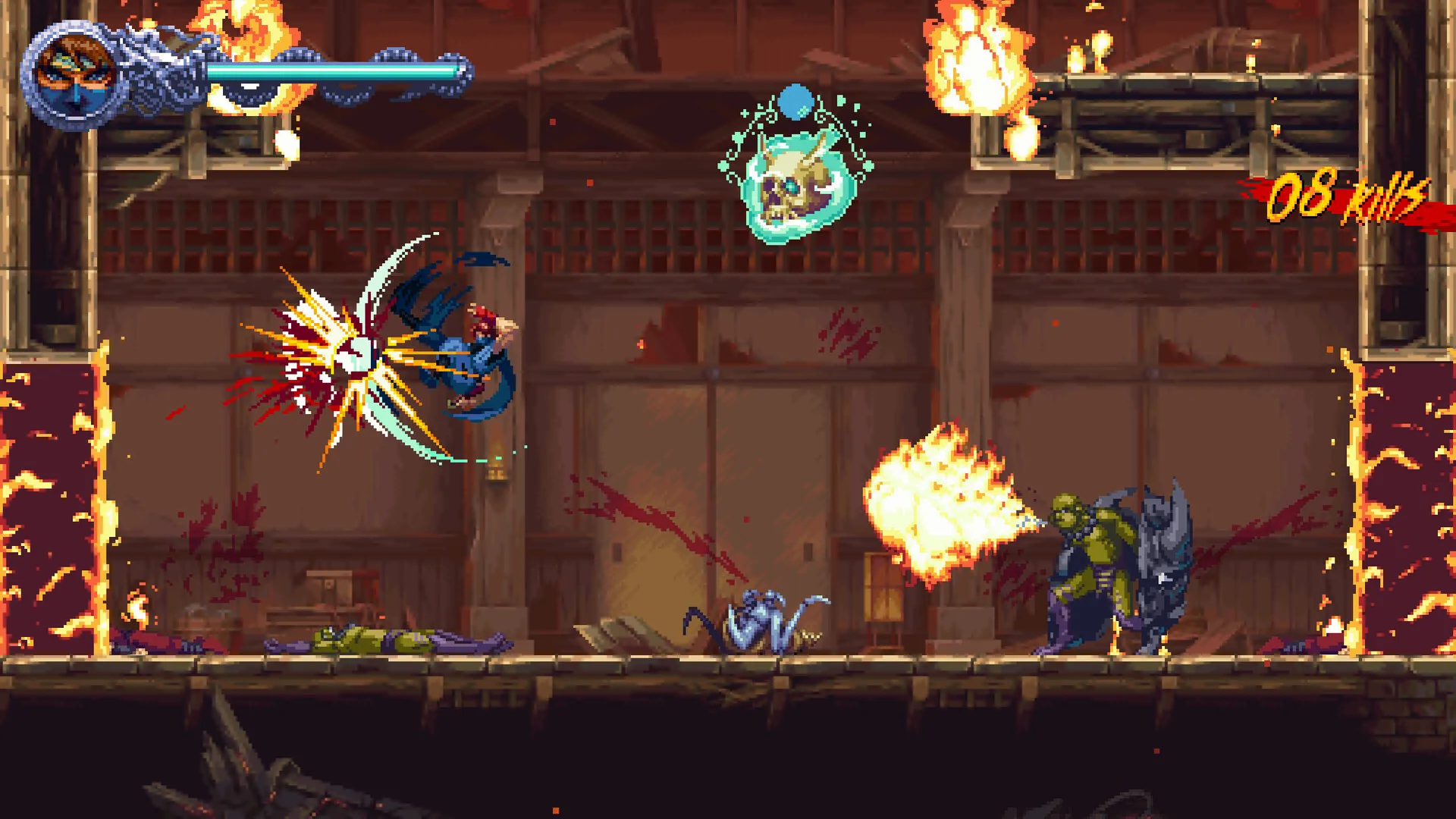
The boss fights are a particular highlight. They are not simple tests of attrition but complex puzzles that require you to use your entire moveset. One boss might demand perfect mastery of the Guillotine Jump to stay off a hazardous floor, while another may require you to skillfully manage your Ki to break through its defenses with special weapons.
The game offers a substantial amount of content for players who wish to do more than just see the credits. Each stage is scored based on your completion time, enemies killed, collectibles found, and highest combo, encouraging repeat playthroughs to achieve perfection. This scoring system, along with online leaderboards, provides a powerful incentive for optimization and mastery, creating an endgame loop that will appeal to the speedrunning community.
Optional in-level challenges, like defeating a boss without taking a hit or killing a certain number of enemies with environmental hazards, offer unique rewards. There are also well-hidden secret levels that contain the game’s most formidable challenges.
For purists, unlocking Hard Mode changes the game completely. It removes the shop and the world map, transforming the experience into a single, grueling gauntlet of stages that must be completed in order. On this setting, the length of certain levels and the sparse checkpointing can feel genuinely punishing, as a single mistake late in a stage can erase ten minutes of flawless play.
A few minor annoyances, like the occasional cheap enemy placement just off-screen or a rare bug where the combo counter fails to appear, can also cause some irritation, but these are small blemishes on an otherwise polished experience.
The Verdict
Ninja Gaiden: Ragebound succeeds by perfectly integrating its movement and combat systems into a seamless whole. Its fast-paced, responsive action is a joy to engage with, and the Guillotine Jump stands out as a brilliant mechanic that elevates every moment of gameplay.
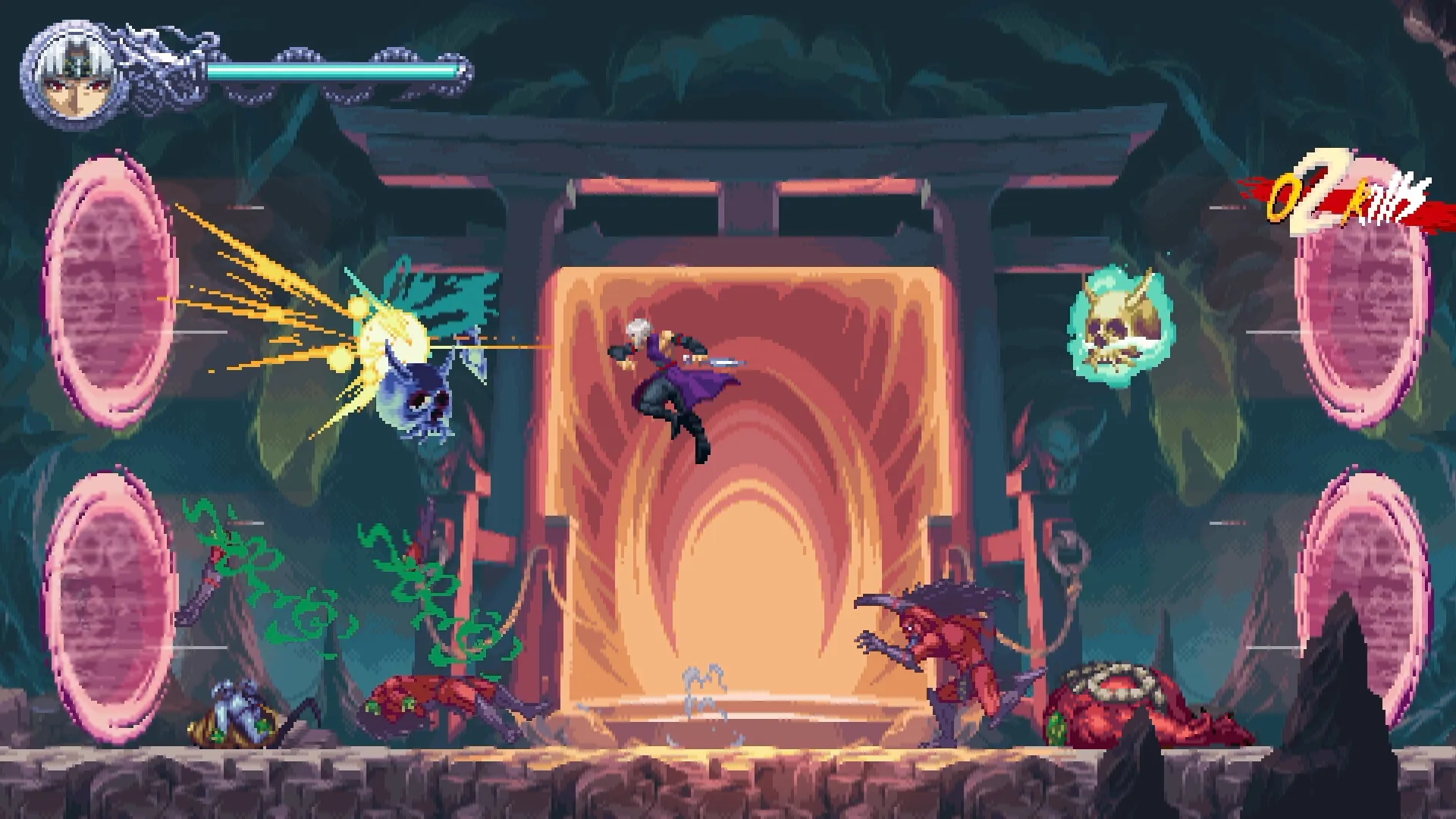
The audiovisual presentation is of the highest caliber, making each stage a pleasure to see and hear. This is a fantastic modern interpretation of a classic formula, one that honors the series’ legacy while feeling entirely new and exciting.
It is an essential playthrough for any fan of the franchise and a strong recommendation for anyone seeking a sharp, stylish, and supremely well-crafted 2D action game. Ragebound is not just a worthy successor; it is a new benchmark for 2D ninja action and a powerful statement that the spirit of the dragon ninja is stronger than ever.
The Review
Ninja Gaiden: Ragebound
Ninja Gaiden: Ragebound is a masterful revival of a classic franchise. Its combat is exceptionally fast, fluid, and satisfying, built around the brilliant Guillotine Jump mechanic that unifies movement and action. Complemented by stunning pixel art and a driving soundtrack, it successfully modernizes the series' legendary challenge without sacrificing its soul. While the story is simple and the highest difficulty can feel punishing, these are minor faults in what is otherwise a benchmark for 2D action games. It’s a must-play for fans and newcomers alike.
PROS
- Exceptionally deep and satisfying high-speed combat.
- The Guillotine Jump mechanic is a brilliant addition that enhances both fighting and platforming.
- Gorgeous pixel art and a fantastic, energetic soundtrack.
- Excellent replay value through scoring, optional challenges, and multiple difficulty modes.
- Successfully modernizes a classic formula, making it accessible yet still deeply challenging.
CONS
- The story is simple and primarily serves as an excuse for the action.
- Checkpointing in the punishing Hard Mode can lead to frustration on longer stages.
- Occasional minor bugs and cheap enemy placements.







