
























![Kingdom Hearts Collection [I-III] Review](https://gazettely.com/wp-content/uploads/2026/10/Kingdom-Hearts-Collection-I-III-1-360x180.webp "Kingdom Hearts Collection [I-III] Review: KHII Holds Steady as Newer Entries Fluctuate 37")



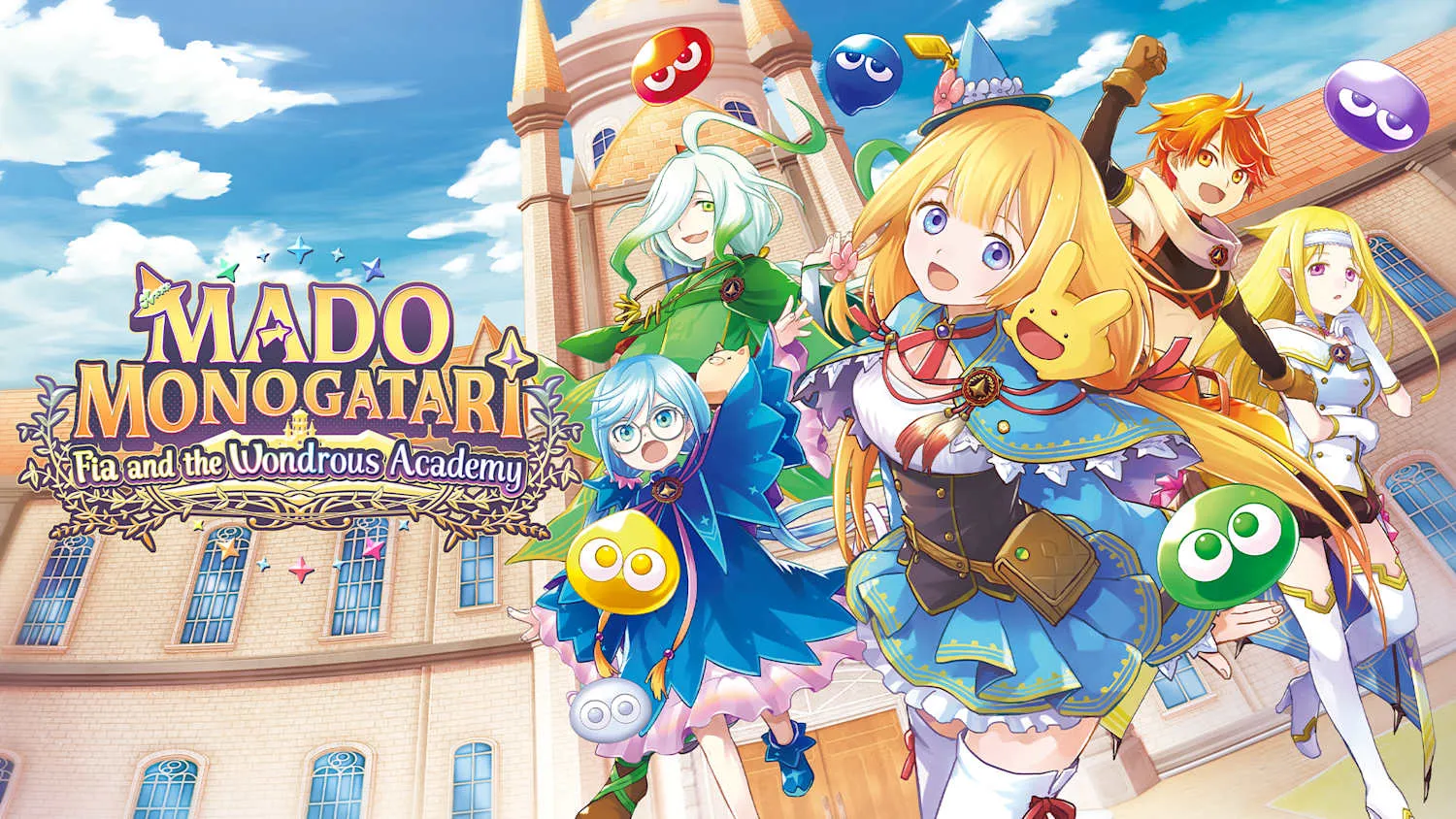

Mado Monogatari: Fia and the Wondrous Academy opens with a familiar scene for any fan of magical school stories. We meet Fia, a cheerful and spectacularly clumsy girl who dreams of studying magic. She arrives at the prestigious Ancient Magic Academy days after the entrance exams have concluded.
Through a stroke of pure luck, a school policy allows the principal to admit her on the spot. Her journey to the school itself was the test, and she passed. With her small, curry-loving companion Carbuncle in tow, Fia begins her new life. This RPG sets a lighthearted, low-stakes tone from the start.
It is a modern revival of a classic Japanese series, one that might be unfamiliar to many Western players. Its main claim to fame is birthing the Puyo creatures, which are now more famous from the puzzle game series that bears their name. Here, they return to their original role as common dungeon enemies.
Class of Misfits
The story quickly establishes its cast by grouping Fia with a collection of the school’s other outcasts. These students form her core party, and their personalities are a grab-bag of well-worn archetypes common to school-life anime and JRPGs. The most developed of the bunch are Will and Leena. Will is the boisterous, red-haired boy with a simple declaration: he wants to become a hero.
While he acts the part of a simpleton, the script occasionally shows he has a sharp mind beneath the heroic bluster. Leena is a direct parallel to characters like Harry Potter’s Hermione Granger; she is a prickly magic prodigy who is initially dismissive of her less-serious classmates. Her gradual warming to Fia and the others is one of the more genuine character arcs, as her tough exterior gives way to a young girl who simply wants friends.
The rest of the main cast is less endearing. Two characters in particular, Eska and Totto, often detract from the group’s chemistry. Totto presents himself as a friendly upperclassman but quickly reveals his true nature, constantly attempting to swindle Fia with overpriced goods or bad deals. His gimmick gets old fast. Eska is more problematic. As a Dragonewt, her behavior is framed as a result of different cultural traditions, but it comes across as bizarre and unsettling.
After being defeated by Fia, she develops an intense infatuation, wanting Fia to either marry her or eat her. Her constant demands for physical attention feel out of place in such a lighthearted game. The story’s weakest point involves these two characters. Late in the game, they betray the group, only to be welcomed back with minimal conflict or justification.
This narrative shortcut damages the credibility of the bonds supposedly being formed. The game’s writing shines brightest in its moment-to-moment humorous dialogue and quirky skits, which define the interactions far more than the overarching plot. The story unfolds across seven main chapters and an epilogue, with large portions playing out like a visual novel where even minor side-quests, called requests, can involve lengthy, random conversations that build out the world’s sillier side.
The Daily Grind of a Mage-in-Training
The game establishes a straightforward and repetitive gameplay structure. From the academy hub, Fia takes on lessons or trials, which are quests that send the party into dungeons to defeat a boss or collect specific items. Once the objective is met, you report back to the classroom to receive credit and unlock the next story beat or ability.
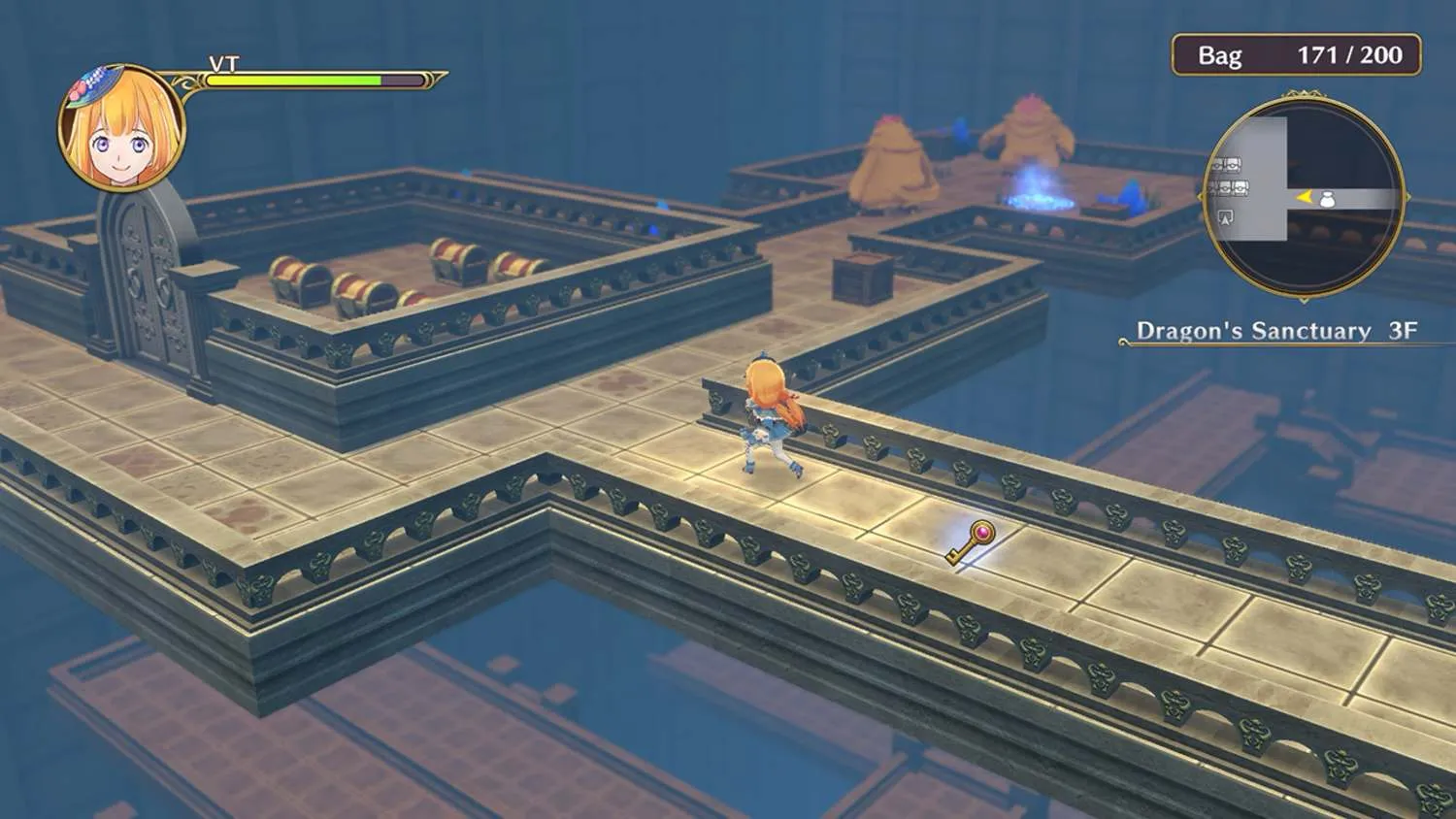
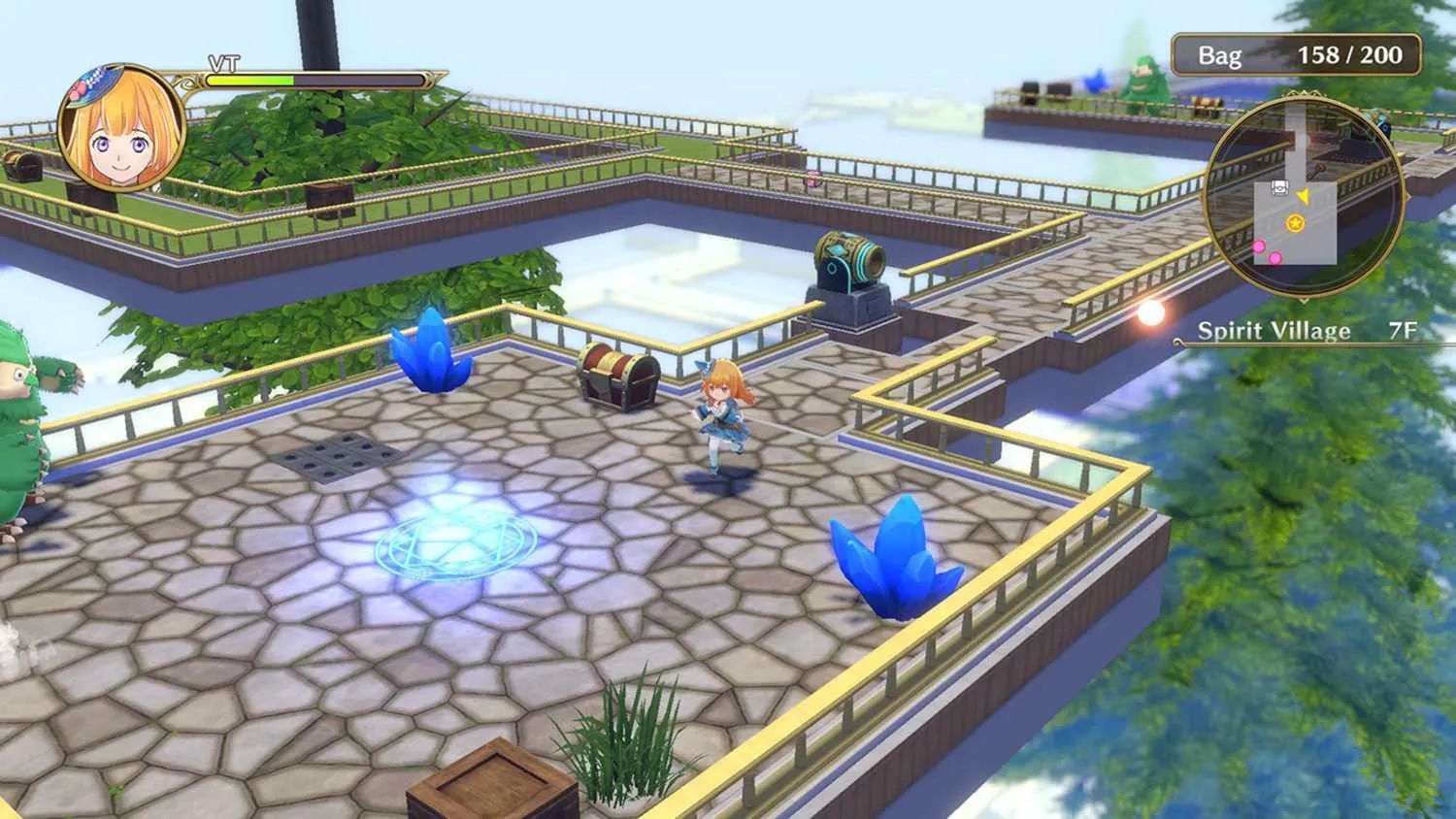
The dungeons themselves are procedurally generated, meaning the layout of each floor changes on every entry. Exploration involves a simple, one-way ascent; blue magic circles transport you to the next floor up, with no option to go back down. This design choice is paired with a vitality meter, a resource that constantly ticks down as you explore.
Taking damage from environmental traps, like swinging blades or floor spikes, depletes it faster. If your vitality hits zero, your character’s health begins to drain, creating a soft time limit that discourages full exploration of every floor.
Where the game diverges most from its dungeon-crawling peers is in its reward system. Players expecting the satisfying loot loop of games like Diablo will be disappointed. Defeating powerful enemies and opening treasure chests does not yield exciting new swords, armor, or powerful magic spells. Instead, dungeons are primarily a source of crafting materials like Steel Ore and seeds for the school’s garden. This makes lengthy dungeon runs feel less like a treasure hunt and more like a resource-gathering chore.
The dungeon design itself is a mixed bag. The inclusion of active hazards adds a welcome layer of challenge to navigation. Visually, however, the dungeons are uninspired. The themes are generic, with one reviewer comparing the aesthetic to a cheap theme park ride with a few fake cacti thrown around to suggest a “Wild West” area. Some quality-of-life features exist, such as pedestals to send excess items back to your storage and teleporters that appear before boss floors.
These are offset by frustrations, like the lack of floor-skipping shortcuts in later dungeons. The first dungeon allows you to bypass early floors once you reach a certain mage rank, but this feature is absent elsewhere. This forces you to trudge through twenty or more repetitive lower levels on subsequent visits, making late-game quests tedious.
Spellcasting without the Spark
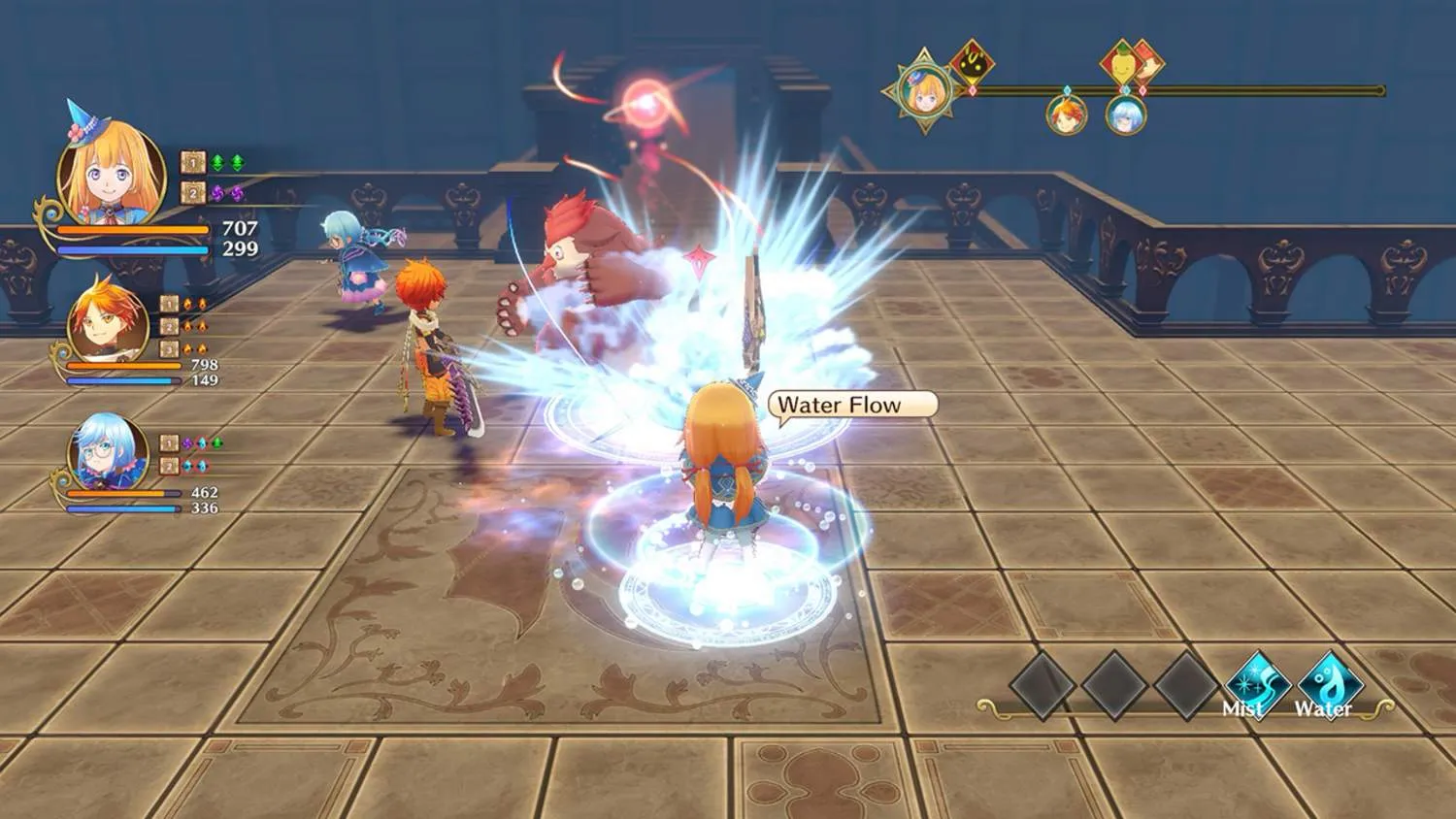
The combat system initially appears complex, presenting the player with many elements to manage at once. Battles occur in real time, with an active time bar at the top dictating turn order. The player directly controls Fia, who must be moved around the arena to dodge incoming attacks while lining up her own.
Party members, who cannot be directly controlled or swapped mid-battle, are handled by a competent AI that follows tactics assigned in a pre-battle menu. Juggling targets, watching enemy area-of-effect indicators, and managing your team’s actions can feel overwhelming at first. However, the system’s perceived depth is mostly superficial. Physical attacks feel weightless and have little impact; one review described them as simply “poking foes.”
Magic is the core of the system. Spells are tied to elemental properties, and enemies have corresponding weaknesses to exploit. When a spell is cast, it leaves behind colored “Remnants” on the battlefield. These are automatically collected and converted into “Elemental Orbs” that fill a five-slot meter at the bottom of the screen.
By combining these orbs in specific ways, Fia can activate “Great Magic Arts” for herself and her teammates. These are powerful attacks accompanied by brief anime cutscenes. This system, while interesting on paper, has its own issues. Aiming spells is cumbersome, as enemies often walk out of the target area before the slow-to-activate spell goes off. The orb combinations can also feel random, with certain elements combining to form different ones based on a chart that the player has no direct control over.
The greatest issue is the game’s low difficulty. Even on its hardest setting, battles pose little threat. You never need to fully master the orb combination system or optimize your tactics to succeed. Because of this, combat quickly becomes a repetitive cycle of exploiting basic weaknesses without any real sense of danger or accomplishment, and the “powerful” special attacks feel anticlimactic.
A Coat of Chibi Paint
It is clear that Mado Monogatari was not produced with a large budget, a fact that is most evident in its presentation. The game uses a bright and colorful anime art style that is pleasant at a glance. In motion, its limitations become apparent. Character models are presented as cute, squat chibis during exploration and combat, while dialogue scenes use large, detailed 2D portraits.
These portraits, while well-drawn, are largely static. The lack of varied animations creates a disconnect between the text and the visuals. For instance, a character like Leena may be saying something kind, but her portrait remains locked in a default moody expression, undermining the emotional weight of the scene. The artists did include a subtle breathing animation for the portraits, but it is a small detail in a sea of static images.
The environment art is similarly basic. Dungeon areas are visually plain, with repeating textures and a generic quality that makes one forest or cave feel much like the last. The main academy hub is given more attention, with locations like the library and the principal’s office featuring more unique assets and interactable objects.
The audio package is serviceable but forgettable. Music during cutscenes and dungeon crawling is pleasant and fits the lighthearted mood, but the main battle theme lacks energy and fails to make an impression. The game includes Japanese voice acting only, with no option for an English dub. This may be an issue for some, as certain performances can be grating.
Fia’s voice is consistently high-pitched, and Carbuncle’s repetitive “gugu gu” sounds can wear on the nerves. On a positive note, developer Compile Heart, a studio known for its liberal use of suggestive character art in other series like Neptunia, shows a great deal of restraint here. The character designs are wholesome, making the game feel appropriate for a wider audience.
The Review
Mado Monogatari: Fia and the Wondrous Academy
Mado Monogatari: Fia and the Wondrous Academy is a charming but ultimately shallow RPG. Its simple, low-stakes approach to dungeon crawling and its quirky character interactions create a relaxing, slice-of-life feel. However, this simplicity is its greatest weakness. The experience is undermined by repetitive combat, uninspired dungeon design, a lackluster reward system, and a story that fails to deliver meaningful development. It’s a pleasant diversion that lacks the depth to be truly memorable, feeling more like a concept than a fully realized adventure.
PROS
- Charming, lighthearted atmosphere and humorous dialogue.
- Simple, low-stakes gameplay is accessible and relaxing.
- Some endearing character moments and dynamics.
CONS
- Combat is repetitive, shallow, and lacks impact.
- Dungeon design is generic and exploration becomes tedious.
- The reward system is unfulfilling, focusing on materials over exciting loot.
- The story is simplistic and some character writing is questionable.
- Presentation is held back by limited animation and basic visuals.







