


























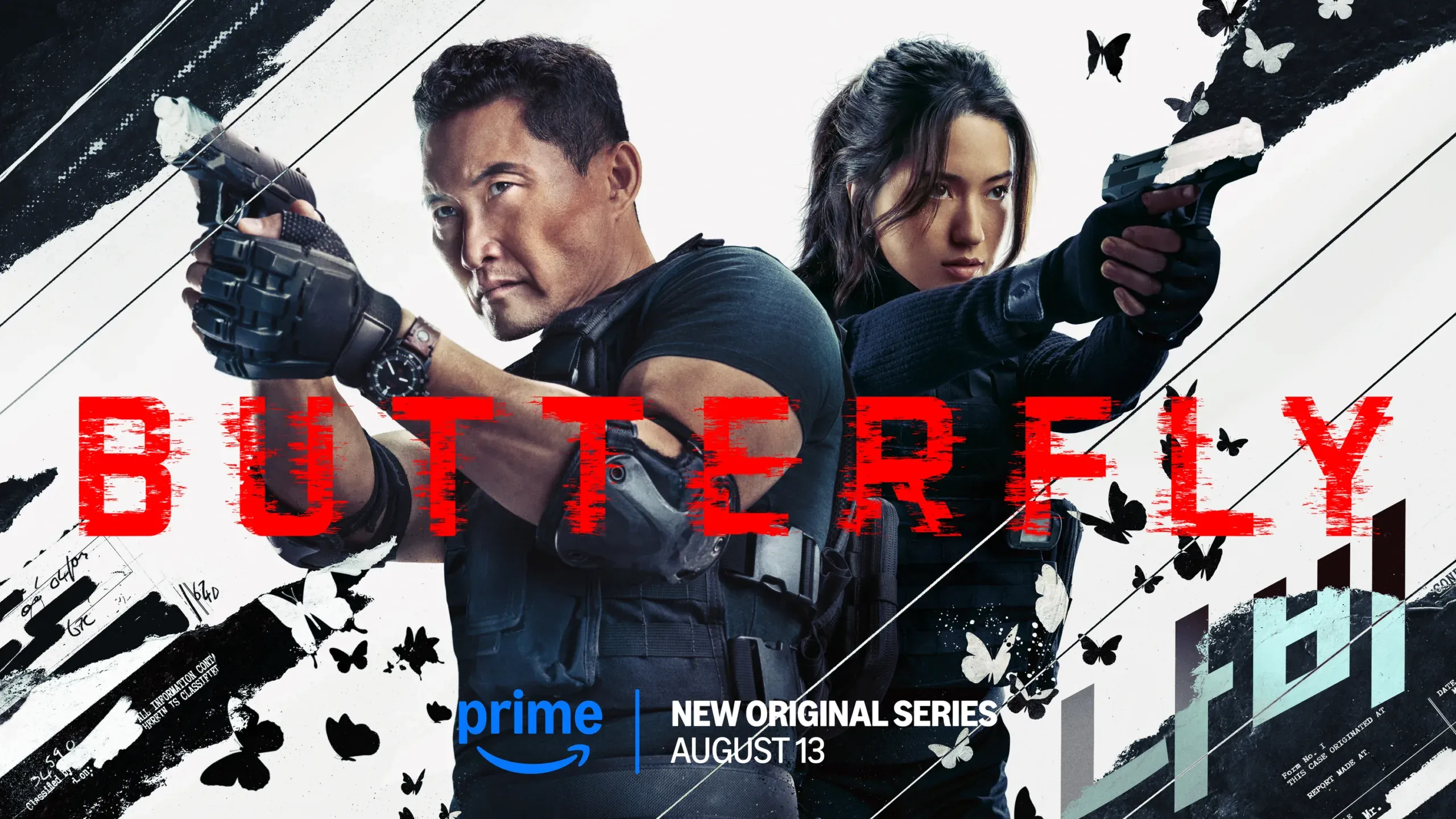

The spy thriller is a well-worn map in television, its landmarks familiar to any seasoned viewer. There is the retired operative, the shadowy organization, and the global conspiracy. Prime Video’s Butterfly begins its story at this familiar starting point, only to veer sharply into more personal and treacherous territory.
We meet David Jung, a former intelligence agent played with weary gravity by Daniel Dae Kim, who has spent nine years presumed dead. He resurfaces not to save the world, but to find his daughter, Rebecca. The mission’s complexity explodes with the revelation that Rebecca, portrayed by Reina Hardesty, is no victim.
She is a highly skilled, sociopathic assassin working for Caddis, the very agency her father co-founded. Her current assignment could be to eliminate the man who abandoned her. Butterfly quickly establishes that its true stakes are not geopolitical. The high-octane world of espionage is simply the battleground for a fractured family’s desperate attempt at reconciliation.
The Espionage of the Heart
Beneath its slick surface of action and intrigue, Butterfly dedicates its runtime to a deep exploration of familial trauma, using genre conventions as a potent metaphor. The dynamic between David and Rebecca is a raw portrait of abandonment and its chaotic aftermath.
David is moved by a profound, gnawing guilt, seeking to reclaim a daughter whose life has been shaped entirely by his absence. He attempts to introduce her to a Korean heritage she never knew, a life of quiet dignity he has built for himself. Rebecca, in contrast, operates within a volatile mixture of white-hot resentment and a fierce professional pride in the deadly skills she acquired.
Their reluctant partnership is constantly undermined by this history. The very skills that make them an effective team in a firefight are born from the trauma that tears them apart personally. He views her as a lost child to be rescued from a life he inadvertently created for her, while she sees him as a ghost who has returned to dismantle the only identity she has ever known.
Their conflict is sharpened and amplified by the presence of Juno, David’s former partner and Rebecca’s surrogate mother. Juno is not a simple villain; she is the architect of Rebecca’s new life, a manipulative matriarchal figure who offers purpose where David left a void. Her methods are cold and her aims are ruthless, yet her affection for Rebecca feels genuine in its own twisted way. This turns the central conflict into a psychological battle of loyalties.
Rebecca is caught between her biological father, representing a past she cannot remember and a culture she does not know, and the woman who raised her to be a weapon in a hyper-individualistic, Westernized world.
This internal struggle, a war for Rebecca’s soul, becomes the narrative’s true source of suspense. The spy genre, with its reliance on deception and hidden motives, becomes a powerful allegory for the secrets inherent to family life. Rebecca’s journey is a search for an authentic self, a desperate attempt to discover if she can exist beyond the definitions imposed upon her by others.
The Weight of Representation
For years, Hollywood has debated the viability of Asian American actors in leading roles, particularly in genres like the action thriller that have long been the domain of white male stars. Daniel Dae Kim’s commanding presence in Butterfly renders that debate obsolete. Having spent years in prominent supporting roles and advocating for greater representation, his turn as David Jung feels like a culmination.
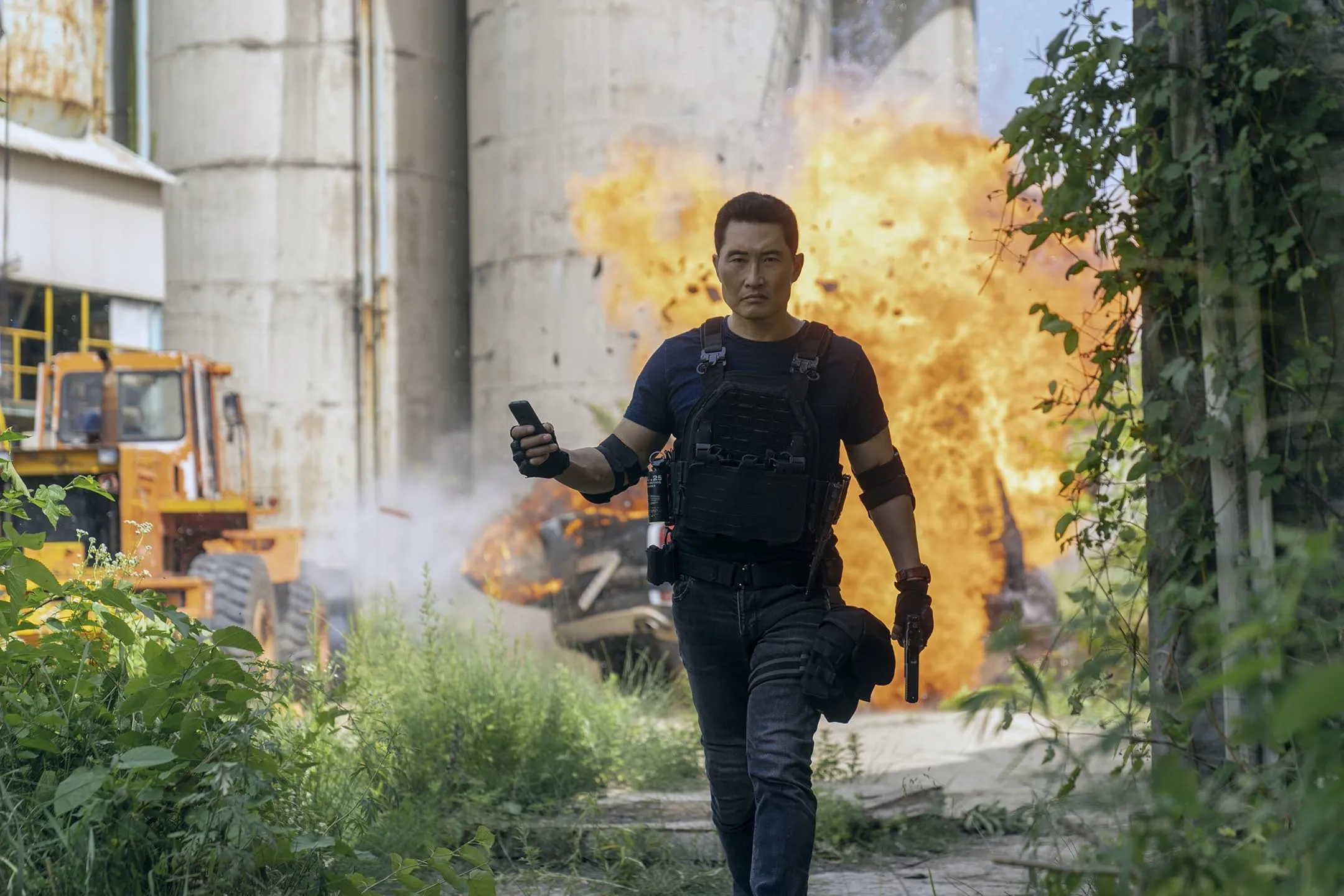
He carries the series with a quiet authority and delivers the required physicality for the role. More than that, he projects a deep vulnerability, capturing years of silent regret in a single glance. Kim’s performance is the show’s anchor, providing the gravitas that grounds the entire story and fulfills the promise of his long career. It is a definitive statement on what the industry has been missing.
The series also serves as a breakout moment for Reina Hardesty. Her portrayal of Rebecca is a revelation of immense talent. She navigates the character’s hairpin emotional turns from manic, unsettling laughter to sudden bursts of raw, childlike grief with astonishing control. Her physicality is just as expressive; in one moment her movements are brutally precise, the next they are reckless, mirroring her internal chaos.
Hardesty makes a potentially unbelievable character feel terrifyingly authentic, ensuring she is always unpredictable and the most compelling figure on screen. Piper Perabo is equally effective as Juno, her calm, corporate demeanor making her manipulative tactics all the more chilling.
The decision to populate the world with veteran Korean actors like Kim Ji-hoon, whose mercenary ‘Gun’ is a soulless predator, and Park Hae-soo in a memorable supporting role, is another significant choice. Their inclusion lends the production an authenticity that deepens its world, signaling a production that respects its cultural setting.
A Blueprint for the Global Streamer?
Butterfly is a product of its time, engineered for the global streaming era where cultural lines blur and content is king. Its brisk, six-episode season encourages binge-watching, with a relentless momentum that mirrors the emotional turmoil of its characters. This structure, while compelling, is also indicative of a larger industry trend where the potential for week-to-week cultural conversation is sacrificed for immediate, contained consumption.
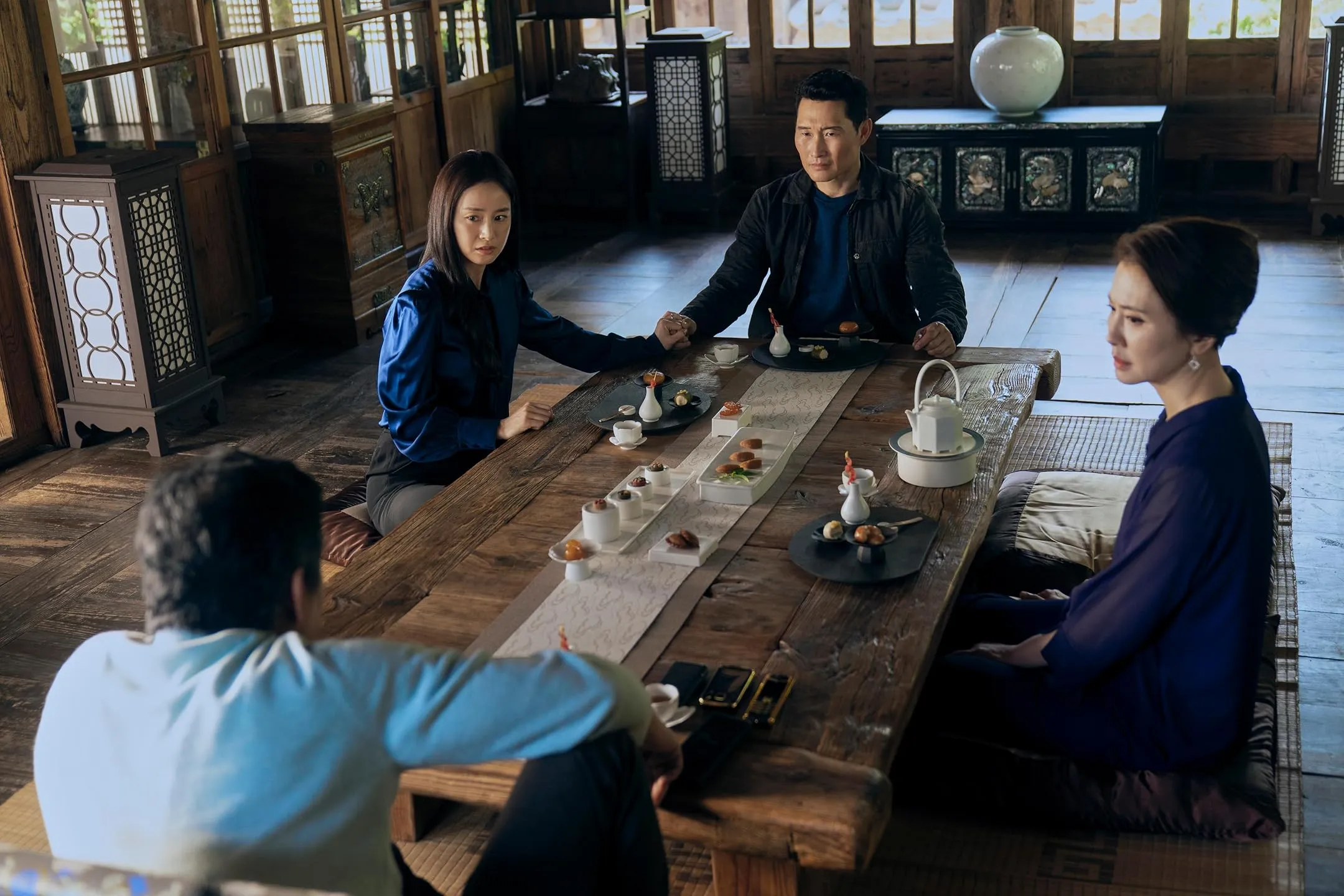
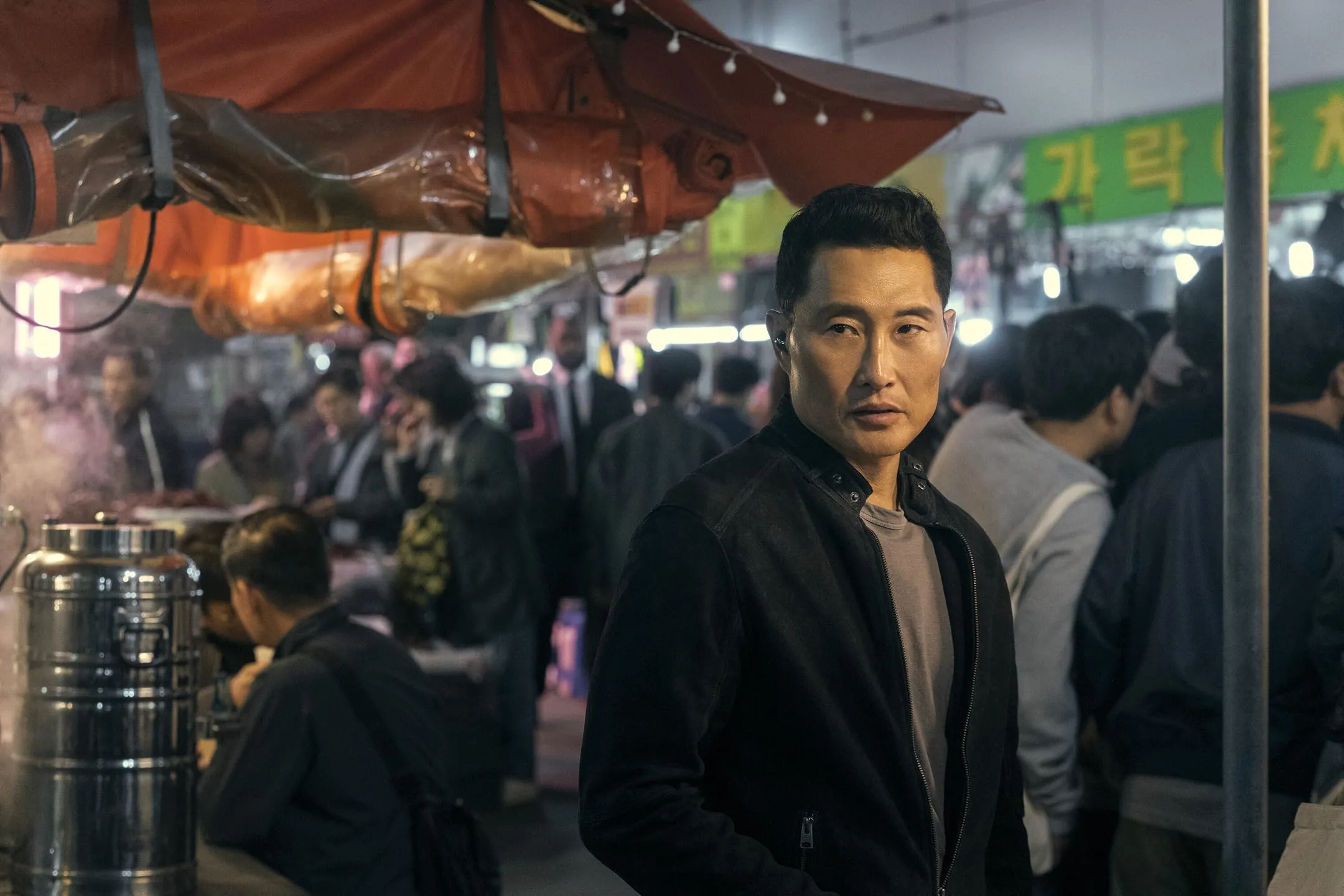
The show’s most interesting innovation is its function as a cultural hybrid. It successfully merges the propulsive mechanics of an American spy thriller with the aesthetic and emotional tenor of a modern K-drama. This is not a superficial choice. The story is deeply rooted in its South Korean locations, from the neon-lit streets of Seoul to the speeding trains crossing the country.
The natural use of bilingual dialogue and specific cultural touchstones, like sharing a bottle of makgeolli, creates a lived-in reality that resonates with a global audience already swept up in the Hallyu Wave.
This blending of sensibilities feels like a deliberate strategy, a template for creating content with both specific cultural roots and broad international appeal. The show uses familiar genre tropes, like the retired agent and the shadowy private firm, but subverts others.
The “damsel in distress” is completely absent; Rebecca is the architect of her own survival and often the most dangerous person in the room. This repositioning of female agency within the action genre is significant. The show’s primary interest is not in reinventing the spy story.
The familiar plot serves as a sturdy framework for a much more unpredictable character drama. By grounding the narrative in the emotional triangle of David, Rebecca, and Juno, the series ensures its suspense comes from character choices, not plot twists. The most pressing question is never about the conspiracy; it is about who Rebecca will choose to be.
An Uneasy Reconciliation
Butterfly succeeds because its powerful emotional core and committed performances overshadow the more conventional aspects of its spy plot. The story of a father and daughter navigating a minefield of past traumas is what lingers long after the gunfire has faded.
The series will appeal to viewers who want substance with their spectacle, offering a thoughtful character study inside a thrilling package. Its fusion of Western plot mechanics and Korean cultural specificity makes it a compelling artifact of our current media moment, a successful experiment in hybrid storytelling.
While it excels at this blend, it also hints at the potential challenges of such models, where cultural specifics risk being sanded down for global palatability. Yet, Butterfly largely avoids this pitfall. It is an effective and resonant series about identity, forgiveness, and the near-impossibility of rebuilding trust. The tense final moments serve as a cliffhanger not just for the story, but for the future of this new model of television.
The TV series Butterfly is a spy thriller that premiered on August 13, 2025, on Amazon Prime Video. It consists of six episodes. The series is based on the graphic novel series by Arash Amel and Marguerite Bennett. It is set in South Korea and was filmed with a largely Korean cast and crew. Daniel Dae Kim, who also serves as an executive producer, described the project as a realization of his dream to bridge American and Korean storytelling.
Full Credits
Directors: Ken Woodruff, Steph Cha (co-creators and co-writers), Kitao Sakurai (directed first two episodes)
Writers: Arash Amel (based on graphic novel), Marguerite Bennett (based on graphic novel), Ken Woodruff, Steph Cha, Sung Rno, Blaize Ali-Watkins, Ashley Darnall, Mason Hsieh, Aaron Lam, Dave Kalstein, Diana Son, Denise Thé
Producers: Daniel Dae Kim, John Cheng, Ken Woodruff, Steph Cha, Stephen Christy, Ross Richie, Arash Amel (Executive Producers); Adam Yoelin (Co-Executive Producer), Nick Laws, O’Shea Read, Michael Ruscio, Kitao Sakurai, Haley Schaeffer, Diana Son, Denise Thé, Sung Rno, Seon Kwon Hwang (line producer)
Cast: Daniel Dae Kim, Reina Hardesty, Piper Perabo, Louis Landau, Park Hae-soo, Kim Tae-hee, Nayoon Kim, Kim Ji-hoon, Charles Parnell, Sean Dulake, Sung Dong-il, Lee Il-hwa
Director of Photography (Cinematographer): Craig Fikse, Kanamé Onoyama
Composer: Curtis Green
The Review
Butterfly
Butterfly uses a familiar spy narrative as a vehicle for a powerful and emotionally resonant family drama. Anchored by outstanding performances from Daniel Dae Kim and a revelatory Reina Hardesty, the series soars when it focuses on the fractured relationship between father and daughter. While the espionage plot itself can feel predictable, the show’s thoughtful exploration of trauma, identity, and its successful blending of American and Korean sensibilities make it a compelling and significant entry in the genre.
PROS
- Stellar lead performances from Daniel Dae Kim and Reina Hardesty.
- The emotionally complex family drama provides a strong, compelling core.
- A successful and authentic blend of Hollywood thriller mechanics with a K-drama aesthetic.
- Fast-paced, stylishly executed action sequences.
- Meaningful representation that advances the conversation around casting in mainstream television.
CONS
- The overarching spy plot relies on familiar and sometimes predictable genre tropes.
- The villainous organization, Caddis, and its motivations can feel underdeveloped.
- Some secondary plot points are less compelling than the central family conflict.