























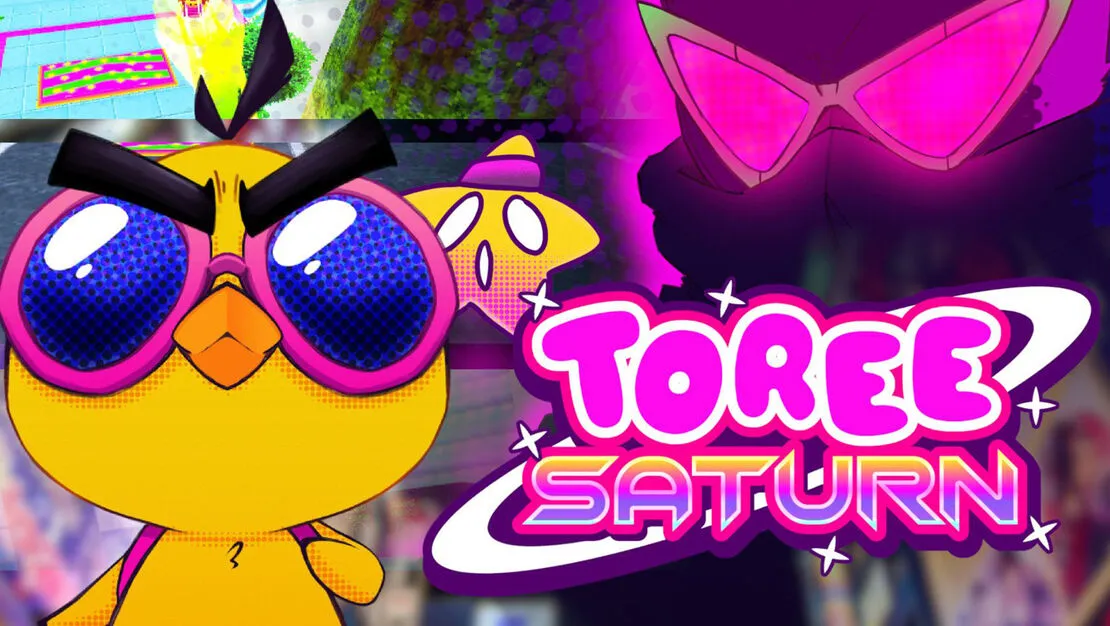

Toree Saturn is less a new game and more a work of media archaeology. It resurrects a specific, globally-influential moment in interactive entertainment: the 32-bit console era pioneered by Japanese hardware. This indie platformer distills the period’s aesthetic into a concentrated dose of speed and momentum.
Players guide Toree, a perpetually moving avian hero, through a series of compact, linear stages. The game’s identity is built upon its tribute to 90s low-polygon graphics and a design philosophy that values quick-fire completion. It is a focused experience that uses a shared visual language, instantly recognizable to a generation of players whose sensibilities were shaped by the dawn of 3D gaming.
Mastering Momentum
The game’s mechanics are a direct and sustained dialogue with its Japanese design lineage, particularly the branch of 3D platforming that Sega championed with Sonic Adventure. This conversation is not one of simple imitation; it is an active engagement with a specific philosophy of movement. Toree’s moveset is an arsenal built for achieving and maintaining a state of flow.
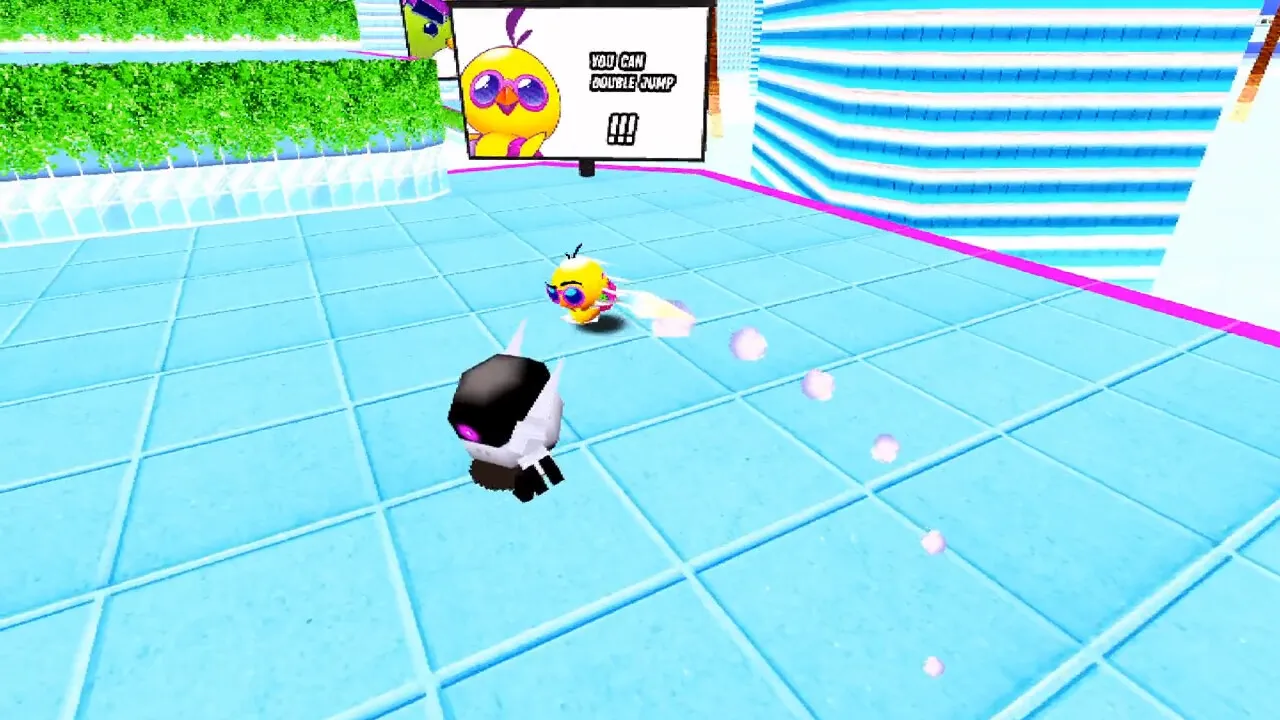
The standard jump is complemented by a double jump for crucial aerial correction, a familiar tool for navigating polygonal space. A ground-pound ability allows Toree to rocket downwards, killing vertical movement to add a burst of forward speed upon landing, a technique essential for linking combos and optimizing routes.
The most prominent ability is the homing attack, a mechanic that lets Toree lock onto and dash between designated targets, creating chains of movement that carry the player across vast chasms. When chained together, these actions push the player toward a trance-like state of pure reaction, where conscious thought gives way to muscle memory and rhythmic input.
This deep reverence for its source material, however, leads the game to inherit a historical design friction. The homing attack is contextually mapped to the same button as the jump. In the heat of a high-speed run, this overlap creates moments of mechanical ambiguity. A player intending to make a precise double jump might instead find themselves launched at a target, breaking their intended line.
This control scheme is a historical artifact, a design choice from an era when developers were still codifying the language of 3D movement. Modern game design has almost universally resolved this conflict by separating core navigation from contextual actions onto different buttons. Toree Saturn’s decision to retain this flaw is telling.
It suggests a design priority that values absolute faithfulness to a specific retro feel over the ergonomic lessons learned in the intervening decades. It is a choice that will feel authentic to purists but may register as an unforced error for others, a point where the game’s deep respect for history clashes with the practicalities of player control. The learning curve is therefore twofold: one must learn not only the game’s physics but also how to navigate the deliberate imperfections of its control scheme.
The Race Against the Clock
Toree Saturn’s structure is a deliberate rejection of the modern ethos of sprawling, content-rich games. It champions an older, arcade-centric design philosophy where brevity and replayability are paramount. The main campaign contains just twelve levels, a collection that can be experienced from start to finish in well under an hour. For a player accustomed to epic narratives and vast open worlds, this might seem slight. Yet, this perspective misinterprets the game’s purpose.
The first playthrough is merely a reconnaissance mission, an introduction to the fundamental patterns of each stage. The true game begins after the credits roll. Its longevity is engineered through a rigorous ranking system that grades performance from a lowly C to a coveted S rank, based on a combination of blistering completion times and the collection of three hidden ice creams. High ranks are the currency used to unlock the game’s bonus content, providing a clear, extrinsic motivation for repeated play.
This structure reframes the very nature of the levels. They are not virtual places to be inhabited or explored; they are meticulously designed race tracks, obstacle courses built for optimization. The repetition of certain design motifs across stages, such as long chains of homing-attack targets, is not a sign of limited imagination. Instead, it functions like a recurring musical phrase or a kata in martial arts.
These are patterns to be internalized and perfected through disciplined practice. Failure is not an endpoint but a data point in a larger process of learning. The inclusion of a “ghost” feature, allowing a player to race against a recording of their own best performance, externalizes this process and creates a powerful feedback loop of self-competition.
This design choice, however, reveals a slight tension within the game’s identity. While the mechanics are tuned for the obsessive pursuit of perfection, the user interface provides minor frustrations for the dedicated speedrunner, such as the inability to instantly restart a level from the pause menu after a mistake. It is a small crack in the otherwise seamless experience, a moment where the game’s support for high-level play falters.
Sights and Sounds of the 90s
The game’s audiovisual presentation is a masterclass in controlled nostalgia, a carefully constructed artifact that summons a very specific cultural moment. The visual style is a faithful and deeply understood recreation of the Sega Saturn aesthetic, a look that defined a generation of 3D gaming before the industry-wide pursuit of photorealism began.
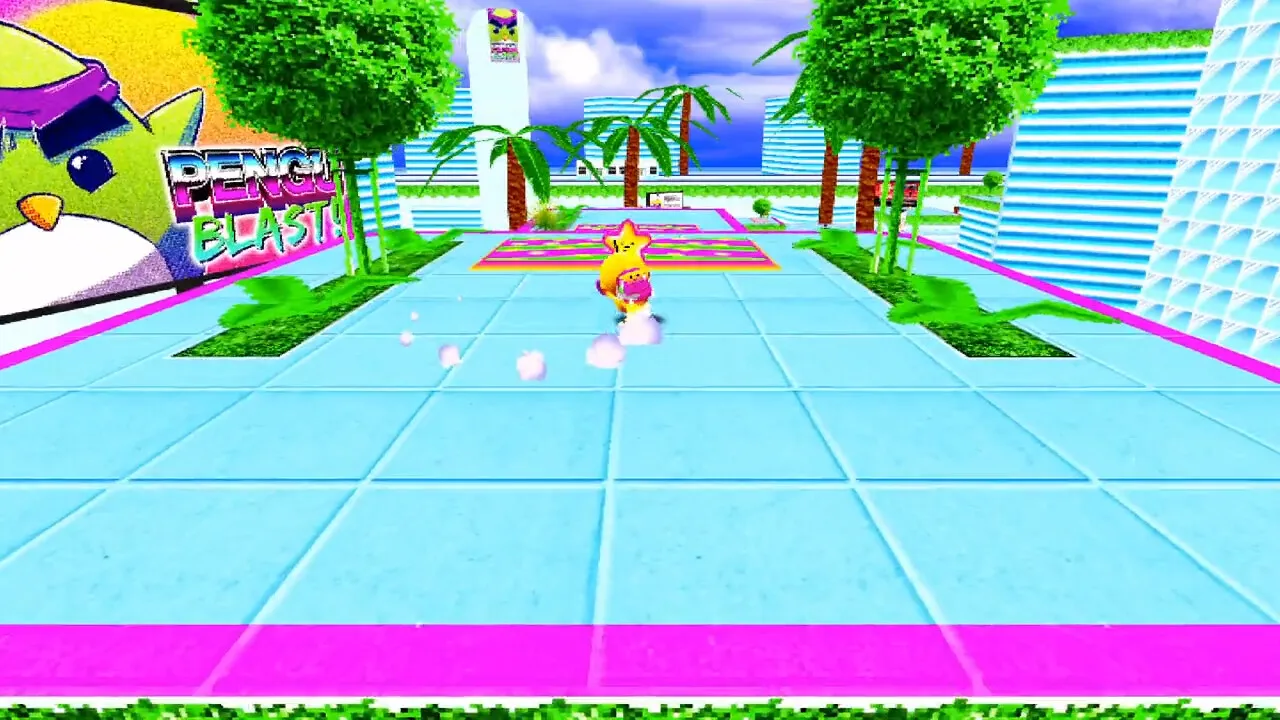
This is not simply a “low-poly” style; it is an archaeology of specific technical fingerprints. The graphics feature the subtle yet characteristic affine texture warping, the use of simple Gouraud shading to define surfaces, and a bright, saturated color palette that prizes clarity and immediate visual impact. These were once the results of hardware limitations, but here they are wielded as deliberate artistic choices.
This abstract visual language offers a powerful alternative to modern hyperrealism, proving that graphical expression is not a linear path toward mimicking reality. The performance is consistently smooth, maintaining the high frame rate that is essential for a game built on precision and rapid response.
The soundtrack is perhaps the most potent element of this nostalgic project. It is an exceptional collection of high-energy electronic music that functions as a cultural bridge, connecting the game directly to the legacy it honors. The tracks are filled with the kind of strong, catchy melodies that defined the era’s game music, a quality often sublimated in favor of atmospheric textures in contemporary scores.
The collaboration with artists like Hyper Potions and singer Johnny Gioeli, both known for their contributions to the Sonic the Hedgehog franchise, is a profound gesture. It is a form of cultural endorsement, an explicit passing of the torch from one generation to the next. The music is not merely an accompaniment; it is a central pillar of the experience, capturing the irrepressible optimism and energy of 90s Japanese arcade culture and proving its sound to be a timeless and global language.
Beyond the Finish Line
The extra content unlocked through skilled play transforms Toree Saturn from a simple game into a developer’s sketchbook, offering fragmented glimpses into a wider sphere of influence. These are not fully-formed features but rather gestures, quotations from other classic titles that reveal the creator’s deep cultural literacy. The unlockable minigames are the most salient examples.
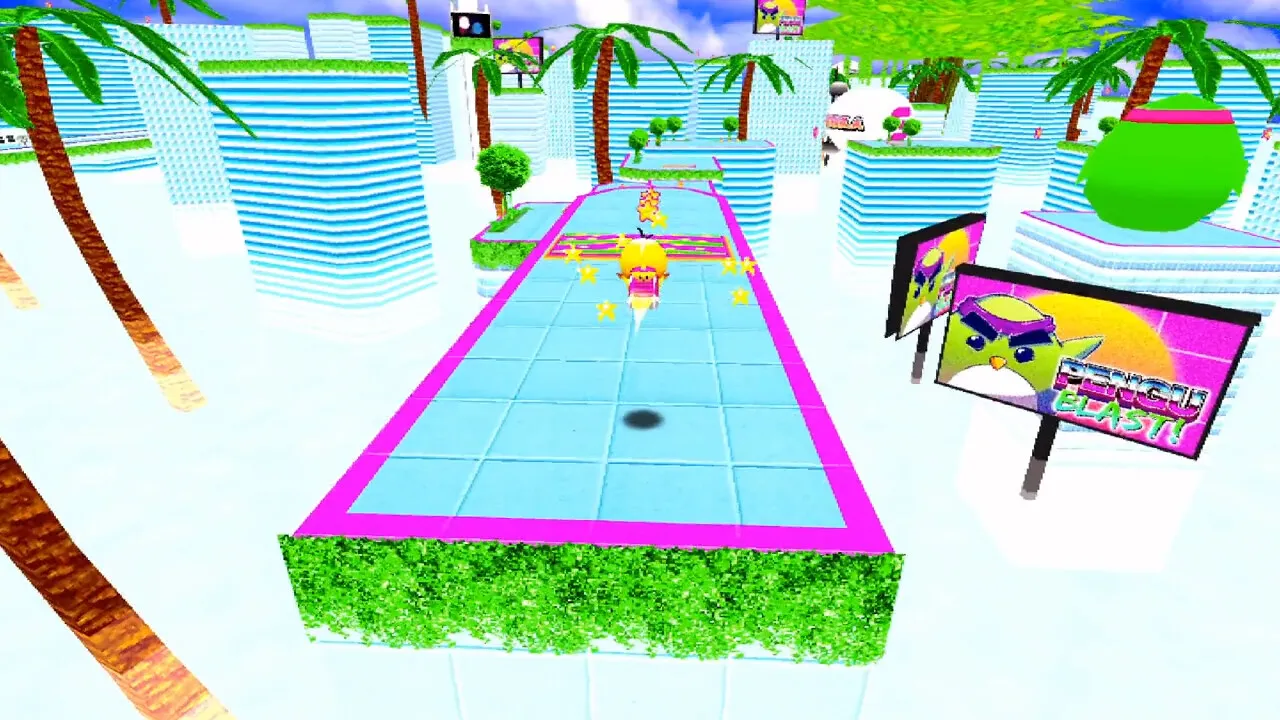
One is a clear homage to the Tony Hawk’s Pro Skater series, a challenge set in a small skate park. Its inclusion is a fascinating cross-cultural statement: a Brazilian developer creates a game inspired by Japanese design, which in turn includes a reference to a landmark American game that itself became a global youth-culture phenomenon. It is a microcosm of the complex feedback loops that define modern global entertainment.
Another minigame is an unmistakable tribute to Sega’s own NiGHTS into Dreams, a title celebrated for its abstract, dreamlike quality. This reference is a “deep cut,” an acknowledgment of the experimental, almost anti-commercial spirit that coexisted with the era’s blockbuster hits. Fittingly, this minigame is presented without tutorial or clear objective, mirroring the esoteric nature of its inspiration. It assumes a high degree of context from the player to be fully appreciated.
This unfinished, almost raw quality extends to the bonus content as a whole. The free-roam hub world is a simple space for practice, and the unlockable costumes are straightforward rewards. But the minigames feel like playable thought bubbles, intriguing what-ifs that are more interesting as design concepts than as polished experiences. This lack of polish does not detract; it enriches the game, framing it as a personal, passionate project—a zine or an indie film—rather than a sterile corporate product.
The Review
Toree Saturn
Toree Saturn is a brilliant and focused work of interactive preservation. It succeeds completely in its mission to resurrect the specific aesthetic and feel of a 32-bit Sega platformer, offering an exhilarating, momentum-based challenge designed for mastery. Its value lies in this singular focus. While its unwavering faithfulness to the era means inheriting minor historical design frictions, and its extra content feels more like a sketchbook than a gallery, the core speedrunning experience is a polished, joyous, and essential piece of retro-inspired design.
PROS
- Pure, exhilarating gameplay focused on speed and momentum.
- A masterful and authentic recreation of the 90s Sega Saturn aesthetic.
- An outstanding, high-energy soundtrack that elevates the experience.
- Excellent replay value built around score-chasing and self-improvement.
CONS
- The main campaign is very short.
- Control scheme faithfully recreates a historical design flaw.
- Bonus content feels underdeveloped and lacks polish.
- Highly specific focus may not appeal to all players.