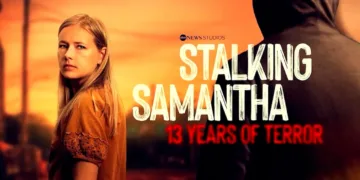

























True crime documentaries often promise a window into the abyss. Stalking Samantha: 13 Years Of Terror locks you in it. This three-part series details the methodical, decade-long obsession of Christopher Thomas with Samantha Stites, a woman he met once in a college church group. The story is presented almost entirely through Stites herself, a narrator whose chilling composure makes the horror of her experience feel intensely immediate.
We are not just watching a story about a crime. We are sitting across from the survivor as she recounts a waking nightmare that began with a simple act of kindness and ended with a soundproofed bunker. The series methodically builds a case, not against its villain, but for the terrifying patience of predatory behavior.
The Anatomy of a Threat
The first episode of Stalking Samantha is a masterclass in the slow burn, a structural choice that mirrors the creeping nature of the threat itself. Director Sara Mast resists the genre’s frequent urge for a kinetic, front-loaded narrative. Instead, the audience is forced to experience the escalating dread in something close to real-time.
The story begins with a familiar, almost banal setup: a socially awkward young man, Christopher Thomas, misinterprets the politeness of a classmate, Samantha Stites. His initial barrage of texts is the kind of behavior often dismissed as clumsy courtship. The filmmakers expertly use on-screen graphics of these messages to show the one-sided, relentless nature of his interest.
What follows is a textbook deconstruction of how persistence curdles into persecution. The series charts Thomas’s evolution with chilling precision. He ambushes Samantha at work with flowers. He appears at her bus stop. When she graduates and moves two hours away, he finds her apartment, a moment that serves as the story’s first major turning point.
The sound design here is particularly effective, employing a low, ominous score that transforms mundane locations like a parking lot or a grocery store into arenas of potential conflict. Samantha’s friends act as a sort of Greek chorus, their interviews reflecting a growing panic that validates the audience’s own unease. Through their testimony, the series critiques a pervasive cultural script that Samantha herself articulates: the idea that a man should “keep trying.” The documentary quietly argues that this notion is not romantic persistence, but the foundation of harassment.
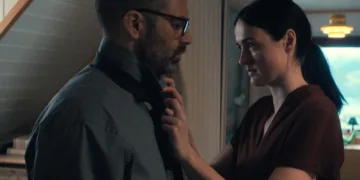
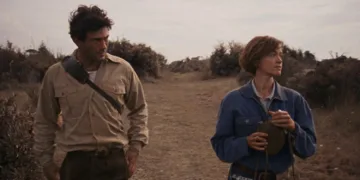
The filmmakers make a crucial choice to keep Thomas a mostly unseen figure for the first two episodes. We hear about him constantly, but rarely see him clearly. The reenactments, which can so often cheapen a documentary, are used here to emphasize his shadowy presence, sometimes showing only the back of an actor’s head. This technique denies him a personality and instead renders him as an archetype of malevolent focus. He is not a character; he is a threat.
This aligns the viewer’s perspective perfectly with Samantha’s. She didn’t know his inner life or his motivations. She only knew the unnerving results of his actions. Even her own language in the interviews, peppered with phrases like “it was like a prisoner,” shows the lingering disbelief of a person still processing an unimaginable reality.
The first PPO she secures feels less like a victory and more like a fragile, temporary shield. The six-year duration, the longest the judge had ever granted, is presented not as a testament to the system’s strength, but as a measure of the extraordinary danger Thomas represented. It is a pause button on a horror film, and the audience knows the monster is just waiting for it to expire.
A Social Worker’s Guide to Survival
The story’s second act begins not with a bang, but with a quiet, terrifying reemergence. When the PPO expires in 2020, Christopher Thomas reappears in Samantha’s life. The series marks this transition with a stark visual beat. The man whose physique was once described as “doughy” has been transformed. He is now muscular and imposing, looking as if he spent six years “training for something.”

This is classic genre storytelling: the villain returns for the final act with a physical upgrade. He joins her gym and her soccer league, his presence a constant, unspoken menace. The documentary captures the systemic breakdown that follows. Samantha’s application for a second PPO is denied, a bureaucratic failure that the series presents as a devastating green light for Thomas’s endgame.
The abduction sequence is a brutal piece of filmmaking, grounded in visceral, sensory detail. We learn of the creaking floorboard that woke Samantha, her desperate reach for a hatchet under the bed, and the speed with which she was overpowered. The description of the ball gag and the layers of duct tape wrapped around her head is unflinching.
From there, the narrative shifts to its primary location: a soundproofed pine bunker in a remote storage unit. It is a space of pure terror, made even more disturbing by the revelation that Thomas was inspired by the Netflix series You. This is a chilling piece of cultural commentary, showing the feedback loop between fictional psychopaths and real-world violence. Thomas watched a show about a killer and saw, it seems, a construction guide.
Inside this “torture chamber,” the documentary transforms into a tense, two-person psychological play. Samantha quickly realizes physical escape is impossible. What follows is a stunning display of professional skill repurposed for survival. A trained social worker, she begins to conduct a high-stakes motivational interview on her own captor. Her calm retelling of these 13 hours is the series’ most powerful element. She describes analyzing Thomas, identifying his core fear of returning to prison, and using that as her only lever.
The narrative she builds for him, a future where he could be free if he just lets her go, is a masterpiece of manipulation born from desperation. The film does not shy away from the harrowing compromises she was forced to make, including agreeing to sex under duress to build a false sense of trust. Her internal conflict is palpable; she feels guilt for “twisting” the skills she learned to help people. Yet her quick thinking and mental fortitude are nothing short of heroic. She did not just endure her captivity. She actively managed it.
The Verdict and The Voice
The series’ final chapter documents the rapid convergence of justice and the slow, uneven process of recovery. Samantha’s escape triggers a swift investigation, and the documentary’s style shifts accordingly. The inclusion of police bodycam footage injects a raw, procedural energy into the narrative. We see officers raid the bunker and find the evidence.

We witness Thomas’s arrest, his defiant claims of consensual roleplay clashing sharply with the truth. Samantha’s detailed recollection of her journey allows police to locate the storage unit within 36 hours, a testament to her clarity even in the aftermath of trauma. The trial brings the story full circle, with the same judge who denied her second PPO now sentencing Thomas to 40 to 60 years in prison.
However, the documentary makes it clear that a legal resolution is not a clean ending. The filmmakers smartly include a critique of their own story’s structure by introducing another of Thomas’s victims, Kelli, late in the third episode. Her brief appearance feels almost like an afterthought, a conscious or unconscious editing choice that raises questions.
It keeps the focus tightly on Samantha’s arc, but it misses an opportunity to fully explore the depth of Thomas’s predatory history. The film is more successful in its critique of the justice system. The fact that a rape charge was dropped in exchange for a plea is presented as a profound failure. But the series gives Samantha the final word. Her victim impact statement, delivered directly to Thomas in court, is a powerful act of reclaiming her own narrative from legal sanitization.
In its final moments, the series widens its aperture. We learn of Samantha’s ongoing recovery, from the crowdfunding needed to survive financially to the exposure therapy for triggers like the smell of bananas and lumber. Her story becomes a platform for advocacy, as she now works to help other stalking victims.
The series ends not with a sense of triumphant closure, but with a grim statistic: one in three women will experience stalking. By grounding this statistic in one woman’s incredibly detailed and harrowing experience, the documentary leaves the viewer with a sharp, unsettling question about the vast gulf between the lived reality of terror and the system designed to prevent it.
Stalking Samantha: 13 Years of Terror is a three-part docuseries that premiered on Tuesday, August 19, 2025, on Hulu and Hulu on Disney+ in the United States. The series details the harrowing experience of Samantha Stites, who was stalked for over a decade before being kidnapped and held captive in a soundproof bunker.
Full Credits
Director: Anton Floquet
Producers: Beth Hoppe, Iain Riddick, David Sloan
Cast: Stephanie Gurnoe, Joe Sbar, Skylar McClure
The Review
Stalking Samantha: 13 Years Of Terror
Stalking Samantha is essential viewing in the true-crime genre. It distinguishes itself from standard procedurals through its unwavering focus on the victim's intelligence and psychological fortitude. Samantha Stites' calm, articulate narration provides a chilling counterpoint to the horror of her story. The series' pacing is masterful and its message is vital, creating a powerful, difficult, and deeply affecting examination of survival. It stands as a testament to one woman's resilience and a sharp critique of the system that failed to protect her.
PROS
- A powerful and compelling narrative driven by Samantha Stites' firsthand account.
- Excellent pacing that masterfully builds suspense and dread over three episodes.
- Intelligent focus on psychological strategy and survival skills.
- Effective use of mixed media, including police footage, to ground the story in reality.
- Provides important social commentary on stalking and the failures of the legal system.
CONS
- The introduction of a second victim feels underdeveloped and structurally awkward.
- The first episode's deliberate slow-burn pace may not engage all viewers immediately.
- Some reenactments, while generally tasteful, can feel slightly intrusive.