














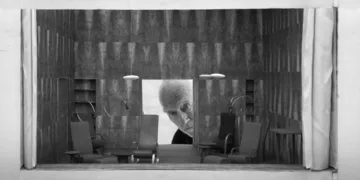













Karin af Klintberg keeps the camera calm while her subjects make themselves look guilty. Joachim Posener, the financier who vanished after the 1997 Trustor affair, first appears discussing his past with the composure of a man explaining an inconvenient career change.
He tells a manicurist that he once worked in finance, then casually admits he spent years hiding from Interpol. The delivery is almost offensively relaxed. That restraint defines Inside the Trustor Scandal. Klintberg resists the frantic cutting and ominous musical punctuation that financial true crime often uses to manufacture menace. Her menace sits upright in a chair.
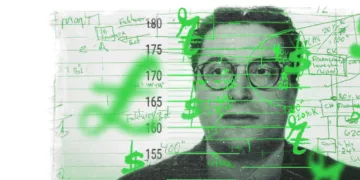
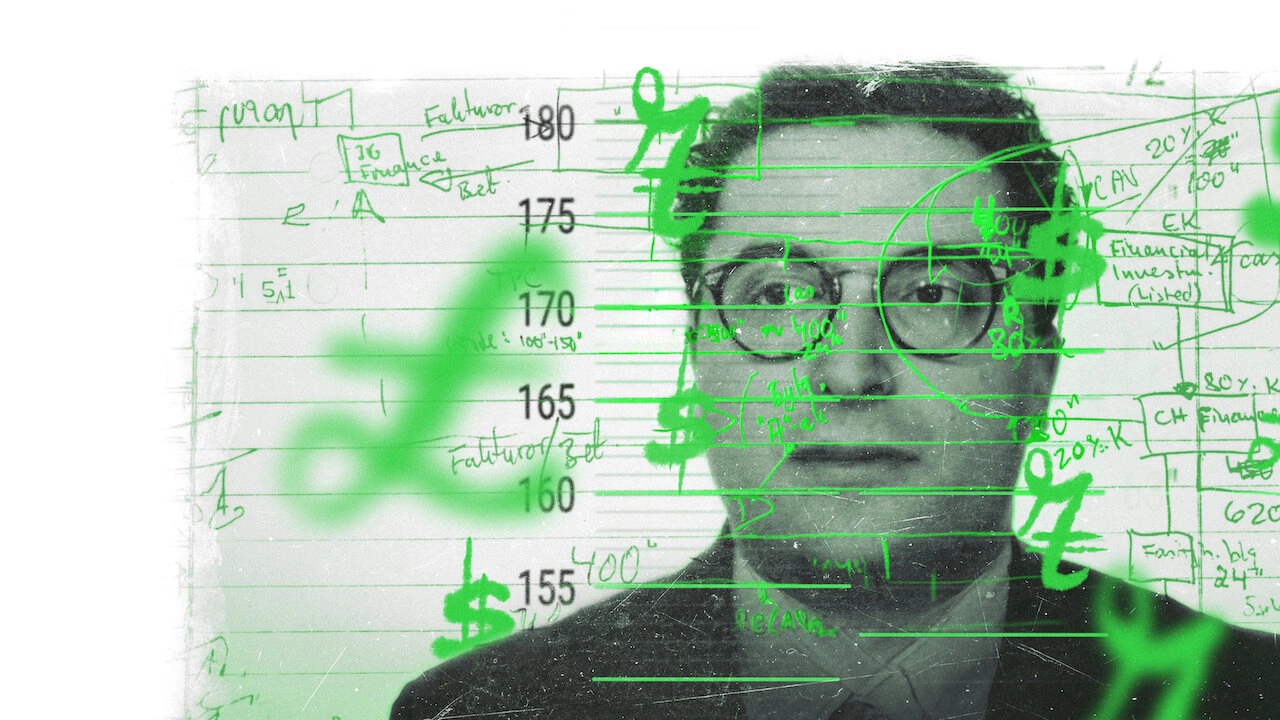
The scandal itself involved Posener and several associates taking control of Swedish investment company Trustor AB, transferring enormous sums from its accounts, then allegedly using company money to help finance the acquisition. It is the sort of circular financial logic that sounds impossible until Posener draws it out himself. Once reduced to lines and arrows, the operation acquires an unnerving simplicity. Money, the film suggests, becomes easiest to steal once everyone agrees to treat abstraction as substance.
Competing Versions of Guilt
Posener agreed to participate under carefully negotiated conditions. His face was initially concealed, questions about his family were restricted, and he promised to tell the truth. That final condition quickly becomes the most interesting one.
Listen to his vocabulary. He distinguishes theft from an “unauthorized loan,” shifting the moral weight of an action through terminology. The camera rarely intervenes. Klintberg understands that a man choosing his nouns can reveal plenty without confessing anything.
Thomas Jisander offers a louder form of self-portraiture. Ferraris, Versace furnishings, champagne and extravagant stories surround him like props left behind after a very expensive stage production. He speaks with the confidence of someone who still regards the period with a trace of admiration. The framing gives him room to perform, and the performance becomes evidence of character.
Richard Djursen operates at the opposite emotional temperature. He cries. He appears wounded by the past. Yet vulnerability does not settle the question of credibility. Tears can illuminate memory, conceal responsibility, or accomplish both within the same close-up.
Klintberg’s editing becomes especially sharp when testimonies collide. One participant makes a claim, another offers a version that quietly damages it, and the cut does the interrogating. No courtroom cross-examination is necessary. The contradiction has already entered the frame.
Journalist Gunnar Lindstedt provides a useful change in visual and rhetorical texture. His account of investigating the suspicious takeover lacks the self-dramatization surrounding the former participants. Beside Posener and Jisander, plain factual recollection starts to feel almost radical.
Diagrams, Champagne and Napoleon’s Desk
Explaining corporate fraud is an ugly cinematic assignment. Accounts move across borders, ownership changes, loans appear, shares are purchased, and eventually every sentence sounds like it requires its own accountant. Klintberg handles the problem through diagrams, archival television reports, newspaper material and photographs, repeatedly converting financial movement into visual movement.

Posener’s own explanation of the scheme becomes especially useful because the alleged architect reduces the machinery to something viewers can actually follow. There is a peculiar ethical discomfort in receiving the clearest lesson from the man closest to the crime.
The film also understands the importance of texture. Lord Jonathan Guinness Moyne fronts the purchasing group. A supposedly historic desk connected to Napoleon enters the story. There are loan sharks, extraordinary renovation costs, extravagant offices and enough champagne to make austerity seem like science fiction.
These details could have been edited into a carnival of criminal eccentricity. Klintberg usually refuses the temptation. She allows absurdity to arrive without flashing a sign announcing that something absurd has happened. The Napoleon desk is funny because the film barely changes expression.
Even the celebratory montages carry a faint visual rot. Disco music, luxury décor and expensive cars construct the fantasy these men purchased for themselves. Look slightly longer and the fantasy begins to resemble evidence storage.
A Crime Without a Stable Truth
Lindstedt’s reporting helped bring scrutiny to Trustor, and the operation eventually collapsed under investigation. Posener disappeared. Authorities pursued participants across jurisdictions. Jisander later received a prison sentence connected to the affair, while legal limits and evidentiary problems prevented the clean distribution of punishment that viewers may expect from retrospective true crime.
That failure of symmetry matters. Crime stories often train audiences to wait for balance: money disappears, investigators arrive, guilt is identified, punishment closes the account. Trustor refuses such arithmetic.
The film grows darker once the financial mechanics give way to questions of motive. These were educated men moving through comfortable social circles, surrounded by status and opportunity. The theft cannot be explained through desperation. Greed is available as an answer, yet the interviews suggest something less tidy: vanity, appetite, competition and the narcotic pleasure of discovering that a rule can be broken.
Posener’s private history sharpens that discomfort. After initially setting boundaries around discussions of his family, he gradually reveals pieces of the personal cost attached to disappearing. The man who speaks so carefully about financial responsibility becomes harder to classify once abandonment enters the same moral ledger. By then, Inside the Trustor Scandal has turned its interviews into a kind of chiaroscuro without darkness or dramatic lighting. Every face is visible. Motive remains half-lit.
Inside the Trustor Scandal premiered globally on Netflix on August 5, 2026. The documentary film explores one of Sweden’s most notorious financial heists, featuring the first-ever interview with fugitive Joachim Posener after decades on the run.
Where to Watch Inside the Trustor Scandal (2026) Online


Full Credits
Title: Inside the Trustor Scandal
Distributor: Netflix
Release date: August 5, 2026
Rating: TV-MA
Running time: 101 minutes
Director: Karin af Klintberg, Teresa Alldén
Writers: Karin af Klintberg, Teresa Alldén
Producers and Executive Producers: Lars Beckung, Martina Bigert, Sofia Lindbladh
Cast: Joachim Posener
Director of Photography (Cinematographer): Erik Vallsten
Editors: Kristofer Hansson, Andreas Jonsson
Composer: Jon Ekstrand
The Review
Inside the Trustor Scandal
Inside the Trustor Scandal finds its sharpest evidence in faces rather than balance sheets. Joachim Posener’s measured phrasing, Thomas Jisander’s vulgar theatricality, and Richard Djursen’s tears create competing performances of innocence, guilt, and self-preservation. Karin af Klintberg’s restrained editing lets those accounts collide without pretending contradiction will reveal a single clean truth. The financial diagrams clarify how Trustor was emptied; the interviews expose something murkier: how comfortably culpability can be rewritten once punishment disappears from view.
PROS
- Remarkable access to Posener
- Revealing contradictory interviews
- Clear financial explanations
- Controlled, darkly comic editing
- Strong archival material
CONS
- Dense financial passages
- Some motives remain unknowable
- Uneven interview credibility