



























Portuguese cinema has often found drama in the spaces where tradition and personal desire collide. From rural communities shaped by family obligations to stories of faith confronting changing identities, the country’s filmmakers frequently examine what happens when private emotions refuse to remain private. David Bonneville’s The Last Bath approaches that conflict through a fragile relationship: a nun returning home to care for a neglected teenager whose presence begins to challenge every certainty she has built her life around.
Josefina’s world is defined by separation. Inside the convent, she has chosen a life of discipline, ritual, and spiritual commitment. Outside it, in the Douro region where her family remains, she discovers a reality that cannot be organized through prayer or routine. Her father has died, her sister Angela has disappeared, and her fifteen-year-old nephew Alexandre is left alone in a large country house. The film’s central tension comes from the collision between two forms of responsibility: the religious commitment Josefina has accepted and the family duty she cannot abandon.
Bonneville creates a story rooted in a specific Portuguese environment while leaving room for different interpretations beyond it. A viewer unfamiliar with this setting may immediately focus on the moral danger surrounding Josefina and Alexandre’s relationship. A viewer more familiar with communities where family responsibility can extend beyond conventional structures may first recognize a story about abandonment, obligation, and care. The film gains its power from existing between these readings.
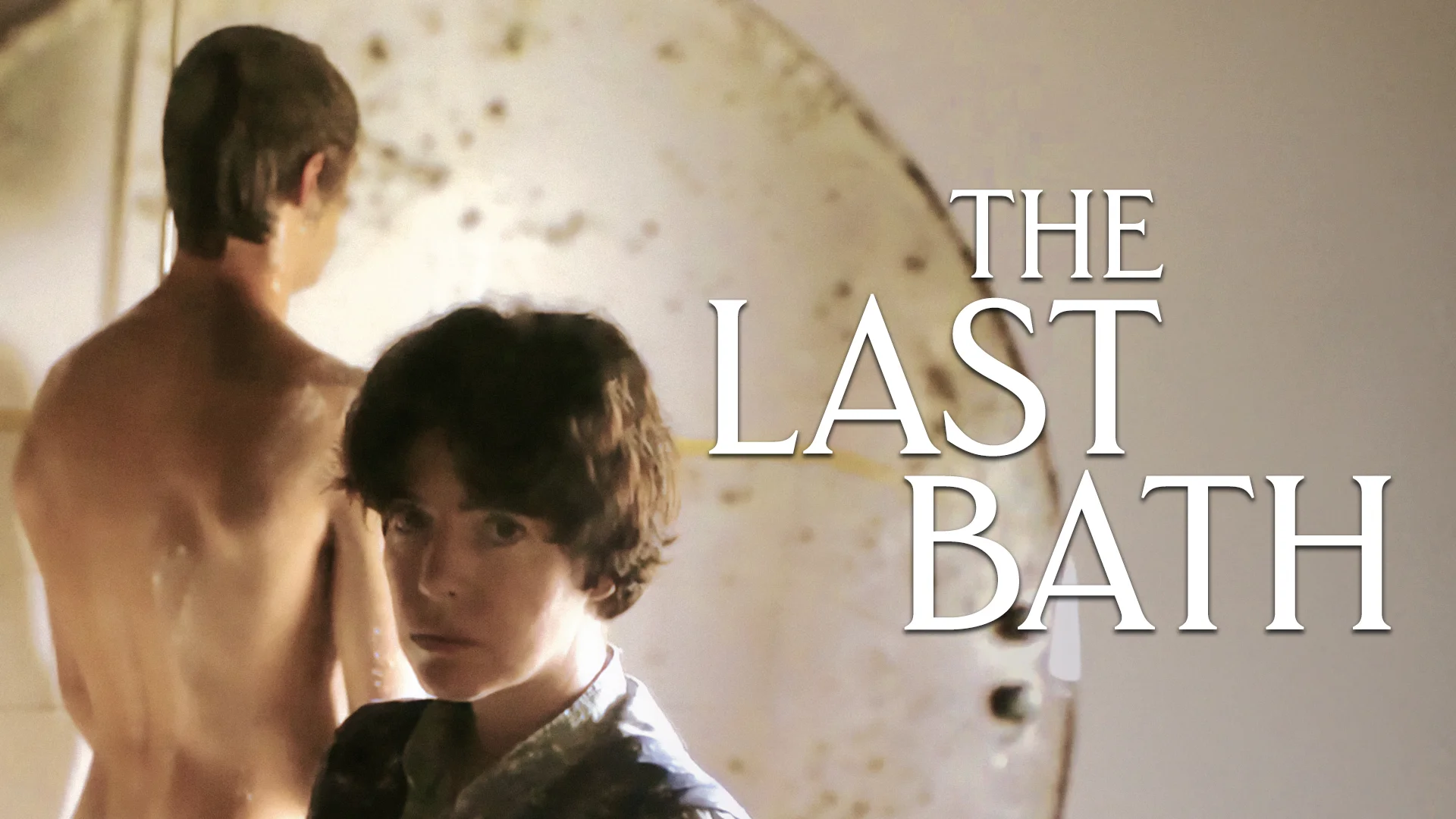
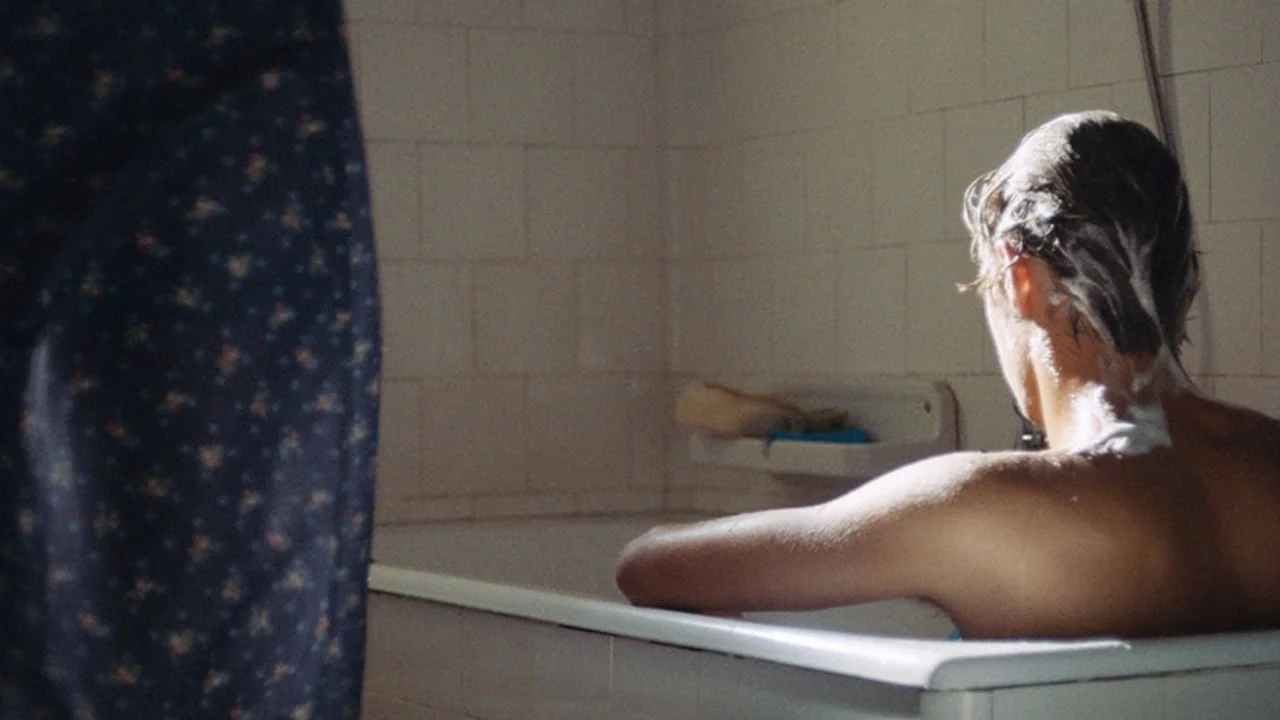
The relationship itself is built through ordinary acts that gradually become impossible to view as ordinary. Alexandre arrives almost feral, with injured feet after running for help when he discovered his grandfather’s body. Josefina responds by taking care of his basic needs, including bathing him herself. The scene is deliberately unsettling because Bonneville refuses to frame the act with a single meaning. It is an expression of compassion, but it also introduces a physical intimacy that creates unease. The same uncertainty continues when Alexandre begins sleeping in Josefina’s bed after nightmares and when she watches over him with an intensity that exceeds simple guardianship.
This ambiguity connects The Last Bath to a European tradition of examining the distance between social roles and private emotions. Josefina is supposed to represent restraint. She is preparing to take perpetual vows, has rejected ordinary romantic life, and even practices self-mortification through a cilice. Yet the film suggests that suppressing desire does not remove it. It changes the way it appears.
Bonneville is especially interested in the body as a place where devotion and instinct compete. The contrast between Josefina’s religious environment and her growing attachment to Alexandre gives the film its strongest cultural dimension. Catholic imagery is not treated as decoration. It shapes how Josefina understands sacrifice, guilt, and responsibility. Her struggle is not presented as a simple rejection of faith, but as a conflict between different forms of love and commitment.
The visual language reinforces this contradiction. Cinematographer Vasco Viana captures the Douro landscape with extraordinary beauty, filling the film with vineyards, sunlight, and open spaces. Yet the soundtrack introduces anxiety into these images, using discordant strings that suggest danger beneath the surface. The opening image of Alexandre running through the terraced landscape looks almost like a postcard version of Portugal, until the sound transforms it into something far less comfortable.
This contrast between beauty and unease reflects the film’s larger cultural argument. The rural landscape represents continuity, tradition, and history, but Bonneville also finds the tensions hidden inside those qualities. The old family house, with its shadows and creaking sounds, becomes a place where memories and unresolved emotions remain trapped. Portugal appears both familiar and mysterious.
The performances give this conflict a human center. Anabela Moreira plays Josefina with remarkable control, allowing small gestures to reveal the character’s changing emotional state. Her performance avoids turning Josefina into either a victim of repression or a figure of pure wrongdoing. Martim Canavarro, making his feature debut, gives Alexandre a vulnerable intensity that makes his loneliness believable while maintaining the uncertainty surrounding his relationship with Josefina.
The film becomes less assured when Angela returns and forces the story toward resolution. Her arrival introduces a direct conflict over Alexandre’s future, but the careful ambiguity that defined the earlier sections begins to weaken. The questions Bonneville raises are more interesting than the answers he eventually provides. The final movement feels less like the natural consequence of the characters’ emotional journeys and more like an attempt to close a story that was strongest when it remained unresolved.
Still, the film’s uncertainty is also its greatest achievement. The Last Bath is a specifically Portuguese story that refuses to stay within Portuguese borders. Its themes of family, faith, and personal responsibility can be understood differently depending on the viewer’s cultural framework. Bonneville does not offer an easy translation of this world for international audiences. He allows the contradictions to travel with the film.
The Last Bath is an imperfect but memorable debut. Its final steps may struggle to carry the weight of everything that comes before, yet its portrait of a woman caught between devotion, obligation, and forbidden emotion remains striking. Like many films shaped by a particular place, its power comes from the fact that it cannot be completely separated from where it was made.
The Last Bath originally premiered at the Tokyo International Film Festival on November 2, 2020, and is available for streaming on platforms like Amazon Prime Video. The drama follows a novice nun preparing to take her final vows who returns to her rural hometown after her father’s death and is forced to care for her rebellious teenage nephew.
Where to Watch The Last Bath (2020) Online

Full Credits
Title: The Last Bath
Distributor: NQV Media, C.R.I.M., Bocalupo Films, Amazon Prime Video
Release date: November 2, 2020 (Tokyo International Film Festival), April 13, 2022 (United States)
Rating: TV-14
Running time: 1 hour 35 minutes (95 minutes)
Director: David Bonneville
Writers: David Bonneville, Diego Rocha
Producers and Executive Producers: Joana Ferreira, Isabel Machado
Cast: Anabela Moreira, Martim Canavarro, Margarida Moreira, José Manuel Mendes, Miguel Guilherme, Nuno Fernandes, Filomena Gigante, Ivo Bastos
Director of Photography (Cinematographer): Vasco Viana
Editors: Nicolas Desmaison
Composer: Jonatan Blati, José Alberto Gomes
The Review
The Last Bath
The Last Bath finds powerful tension in the collision between religious devotion, family duty, and suppressed emotion. David Bonneville creates a visually striking Portuguese drama that trusts ambiguity, even when its final movement cannot fully sustain the questions it raises. Anabela Moreira’s performance gives Josefina’s conflict a quiet intensity, making the film linger beyond its uneven resolution.
PROS
- Anabela Moreira’s controlled, layered performance
- Beautiful Douro landscapes and unsettling sound design
- Complex exploration of faith, care, and desire
- Strong cultural identity within a universal conflict
CONS
- The ending feels less assured than the buildup
- The final resolution simplifies some earlier ambiguity
- Some character motivations remain deliberately distant