





























A family dinner is usually where television characters reveal who they really are. In Line of Fire, it is also where some of the most highly trained federal agents in America completely lose control. The series has a wonderfully strange premise: combine the machinery of a government procedural with the emotional chaos of relatives who know exactly which buttons to push. The result should feel overloaded. Somehow, it mostly feels like a family argument with a security clearance.
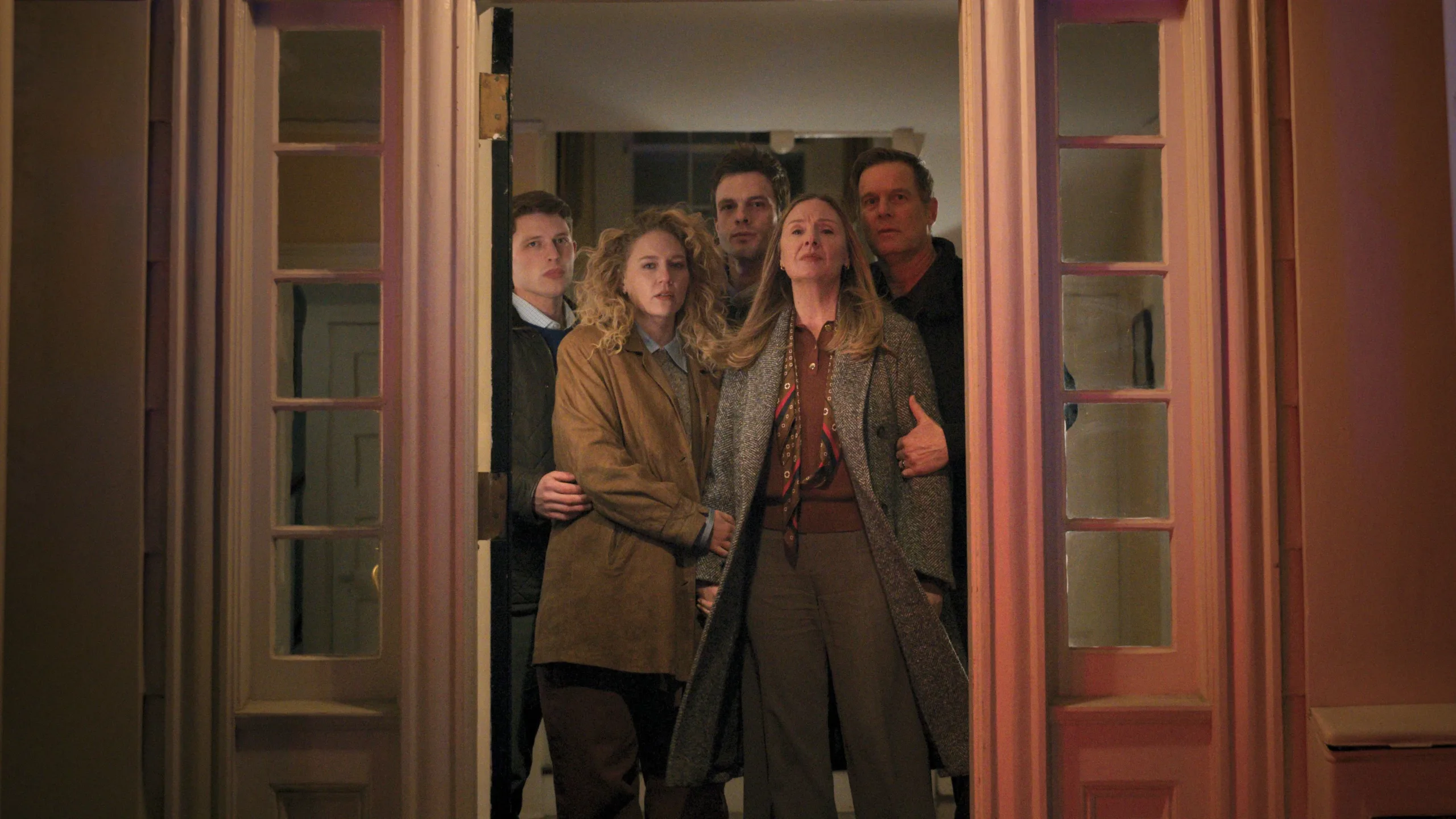
The Hollingsworths are a walking conflict of interest. Mike (Peter Krause) is a Secret Service agent preparing for retirement, Jane (Hope Davis) works as a U.S. Marshal, Clare (Kat Cunning) is an FBI agent, Micah (Tommy O’Brien) followed his father into the Secret Service, and Russ (Taylor Bloom) works at the Department of Justice. They are all trained to read danger, protect people, and keep secrets. They are also terrible at communicating with each other. That contradiction gives the series its strongest engine.
The pilot has a lot of characters to introduce, along with multiple agencies, personal conflicts, and a larger mystery waiting in the background. A weaker version of this show could drown under its own introductions. Instead, Line of Fire finds its rhythm when the family stops acting like professionals and starts acting like a family. The dinner sequence at Jane’s house is the clearest example.
Clare’s attempt to introduce her boyfriend becomes a carefully timed collision of interruptions, old grudges, and uncomfortable silences. The scene works because the comedy comes from behavior. These people are not funny because the script tells them to be funny. They are funny because even their arguments have years of history behind them.
That is also where the cast becomes the show’s biggest advantage. Krause and Davis create a believable tension between two people who are separated but still connected by decades of shared experiences. Their conversations carry the feeling of people who already know the ending of every argument before it begins. Cunning gives Clare a sharpness that fits someone trying to escape the shadow of a famous family profession, while O’Brien and Bloom create an entertaining sibling dynamic built around competition and frustration.
The series understands a useful television trick: the bigger the job, the smaller the personal problem can feel. A federal investigation carries life-or-death stakes, but a parent criticizing a career choice can hit harder at a family dinner. Line of Fire gets a lot of mileage from placing these two worlds beside each other. A conversation about jurisdiction can suddenly become an argument about respect. A professional disagreement can expose a decades-old family wound.
The procedural side is where the show has a harder task. The first episodes introduce cases involving government agents and a larger threat targeting people connected to federal agencies. Homeland Security agent Nia Wallace (Antoinette Crowe-Legacy) helps connect those events, while the mystery surrounding Jack, a missing member of the Hollingsworth family, creates the season-long question. The silver origami cranes appearing around the investigation give the mystery a visual clue trail and a reason to keep watching.
The challenge is that the family material arrives with immediate personality, while the conspiracy needs time to build. The cases function best when they force the Hollingsworths into the same room and make them confront problems they would rather avoid. When the thriller elements move away from the family, the series loses some of its spark. The investigation is useful because it pushes these characters together. The characters are what make the investigation matter.

That balance is familiar territory for network dramas, but Line of Fire understands something many procedurals forget: a weekly case is only as interesting as the people forced to deal with it. The series has echoes of older family-centered dramas, yet it gives that format a different energy by making every relationship a potential security risk. Dinner conversations can expose secrets. Romantic choices can create professional problems. A family member can be the person you trust most and the person who knows exactly how to hurt you.
The show’s tone is another tricky piece. It moves between danger, comedy, and emotional drama without treating those shifts like separate modes. A scene can involve national security one moment and a petty sibling complaint the next. That could have produced tonal whiplash. Instead, the contrast becomes the joke. The Hollingsworths are impressive in the field and ridiculous at home. Many families will recognize that feeling, even if most families do not have FBI files sitting around the kitchen table.
Line of Fire arrives with a lot of moving parts, but its best scenes come from the simplest idea: people who protect strangers for a living are often the worst at protecting their own relationships. The mystery gives the show a reason to continue, the cases give it a weekly structure, and the family gives it a reason to care. The Hollingsworths may be capable of protecting everyone except themselves.
Line of Fire premiered on NBC on September 21, 2026. The action thriller series follows a family of law enforcement agents spanning multiple federal branches who must navigate a deadly conspiracy.
Where to Watch Line of Fire Online





Full Credits
Title: Line of Fire
Distributor: NBC
Release date: September 21, 2026
Rating: TV-14
Running time: 43 minutes per episode
Director: Rebecca Thomas
Writers: Joshua Safran
Producers and Executive Producers: Joshua Safran, Jenna Bush Hager, Ben Spector, Rebecca Thomas
Cast: Peter Krause, Hope Davis, Kat Cunning, Tommy O’Brien, Taylor Bloom, Charlie Barnett, Sam Waterston, Chris Chalk
Composer: Ariel Rechtshaid, Will Canzoneri
The Review
Line of Fire
Line of Fire works because it understands that the most dangerous conflicts are often the ones waiting at home. The federal cases provide the structure, but the Hollingsworth family gives the series its personality. The mystery needs time to prove itself, yet the cast and sharp family dynamics make the early episodes easy to invest in. It is a familiar broadcast formula with enough personality to keep the machine running.
PROS
- Strong ensemble chemistry
- Smart mix of procedural and family drama
- Effective comedic timing
- Compelling season-long mystery setup
CONS
- Thriller elements need more development
- Some external storylines lack the family’s energy
- The premise risks becoming overloaded