









![Kingdom Hearts Collection [I-III] Review](https://gazettely.com/wp-content/uploads/2026/10/Kingdom-Hearts-Collection-I-III-1-360x180.webp "Kingdom Hearts Collection [I-III] Review: KHII Holds Steady as Newer Entries Fluctuate 33")







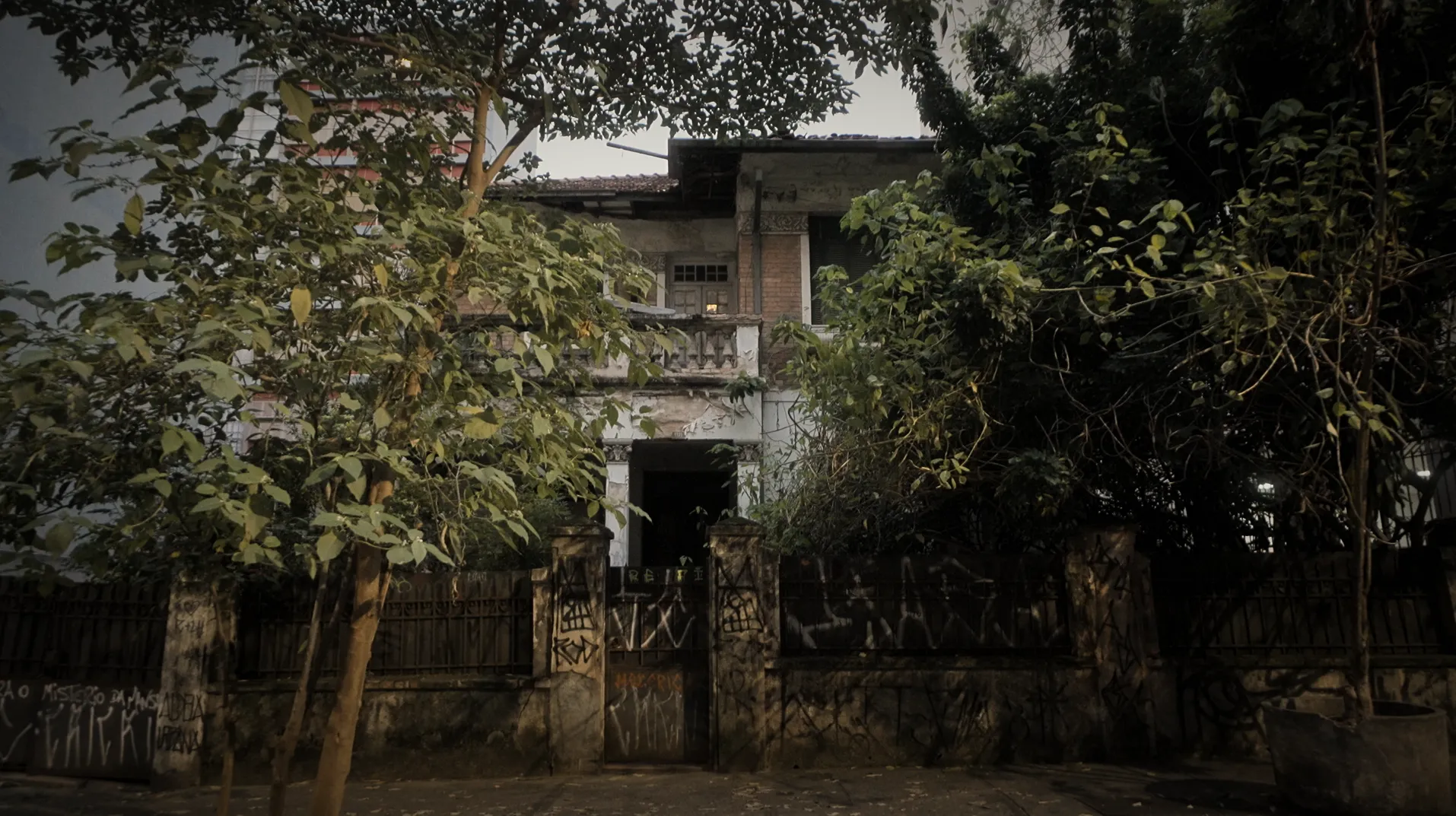
Some houses just have a story. In my old neighborhood, there was a Victorian place on the corner where the curtains were always drawn. We kids used to invent all sorts of tales about who lived inside. Abandoned: The Woman in the Decaying House begins with that same feeling of local mystery, focusing on a dilapidated mansion oddly situated in a wealthy São Paulo neighborhood.
The initial hook is the woman who lives there, Margarida Bonetti, a figure of local lore who occasionally appears with a thick, white cream smeared across her face. This image alone is enough to start the mind racing. What starts as a journalist’s investigation into a neighborhood curiosity soon unpeels layers of a dark, forgotten history.
The 3-part docuseries, born from Chico Felitti’s podcast, follows a trail that leads from this strange Brazilian house back in time and across continents to a quiet suburb in the United States. It masterfully sets up a premise where the greatest horrors are not found in remote, scary places, but hidden behind a crumbling facade in plain sight.
A Tale of Two Timelines
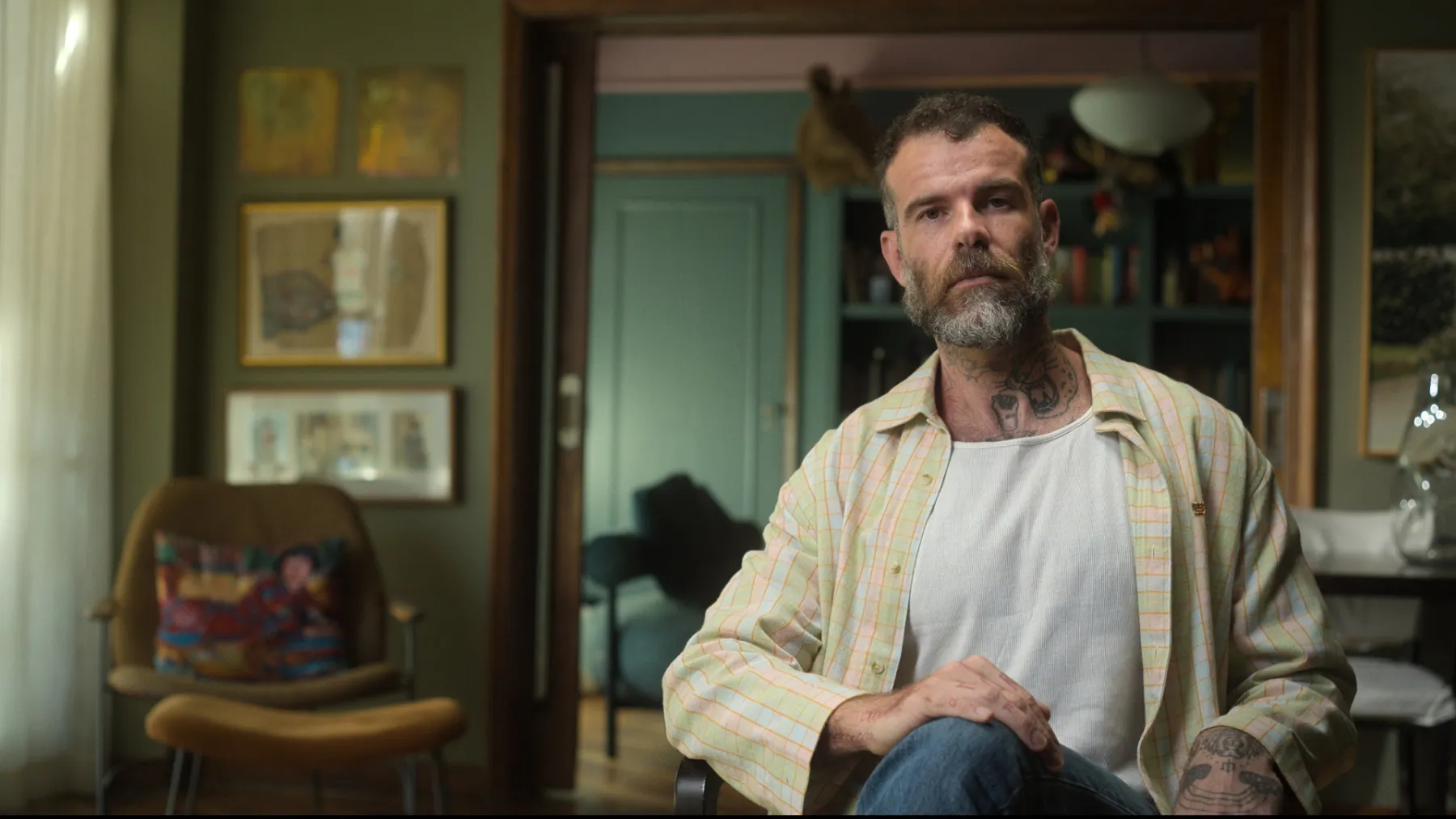
The series builds its narrative on a constant geographic and chronological jump, a structure that could easily become confusing, but the execution here is nearly flawless. With journalist Chico Felitti as our guide, we shuttle between his present-day attempts to understand Margarida in São Paulo and the grim events that unfolded decades earlier in Montgomery Village, Maryland.
The documentary’s origin as a podcast is evident in its DNA; it possesses an audio-first sensibility where listening is as important as watching. Felitti is not a detached, all-knowing narrator. He is an active participant, and his journey of discovery becomes our own. This dual-timeline approach creates a potent artistic tension, cross-cutting between the humid, overgrown decay of the São Paulo mansion and the unnerving, manicured perfection of the American suburb where the crimes occurred. The visual contrast is stark and meaningful, suggesting that evil can fester anywhere.
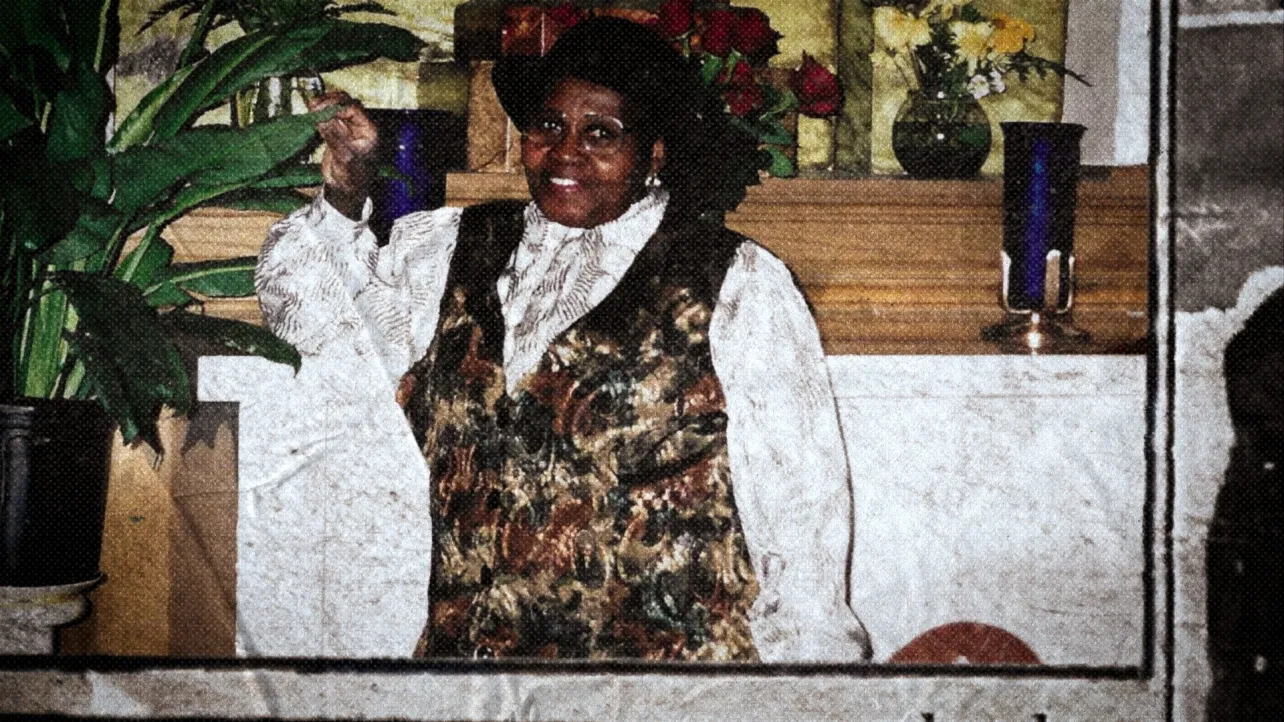
We are quickly introduced to the key figures: Margarida, the enigmatic and defensive heiress; her husband, Rene Bonetti, who emerges as a figure of quiet menace; and most importantly, their former housemaid, Hilda Rosa dos Santos, the victim at the story’s center. The crime they are accused of is nothing less than modern-day slavery, a shocking accusation for a couple living an upper-middle-class American life. Hilda’s servitude was absolute and meticulously enforced.
She was denied pay, a fundamental theft of her labor and independence. She was confined to a damp, dusty basement, segregated from the family and the world. Her starvation was a calculated act of cruelty, with the Bonettis padlocking the refrigerator and pantry to control her access to food. An intercom system transformed the entire house into a prison, making her perpetually available for their every whim, day or night.
The physical cruelty is underscored by the profound medical neglect she suffered, specifically an untreated leg injury and a growing abdominal tumor that her captors refused to have treated to avoid the expense. The brisk pacing, with episodes clocking in around 35 minutes, is a choice tailored for the streaming era. It makes the series incredibly accessible, but also risks making the deep horror of the story feel like a quick binge.
The production mixes standard documentary elements, like interviews and archival footage, with dramatic reenactments. These scenes, showing a stand-in for Hilda limping through the house, feel like a stylistic misstep. They are a concession to a true-crime formula that this story simply does not need, slightly cheapening the profound power of Hilda’s own direct testimony.
The Anchor in the Storm: Hilda’s Story
While the mystery of Margarida is the hook, the testimony of Hilda Rosa dos Santos is the series’ soul and its moral center. Her lengthy, detailed interview provides the narrative’s anchor, a firsthand account of unimaginable suffering that grounds the entire production in a stark reality. There is a powerful dissonance in watching her calmly and methodically recount the horrific details of her life with the Bonettis. Her composure is not a lack of feeling; it is the quiet strength of a survivor.
This refusal to perform overt trauma for the camera lends her story an unimpeachable authenticity. It is through her words that the series makes its most significant turn. It shifts from being a procedural crime story about a weird house to a profound and deeply human study of resilience, dignity, and survival. The “woman in the decaying house” is no longer the central subject; the true subject becomes the life that woman helped to destroy.
This focus on authentic voice is amplified by the brilliant use of primary audio from Felitti’s original podcast. Hearing his recorded conversations with Margarida is a chilling and essential experience. Her voice, steeped in resentful denial, stands in stark, irreconcilable contrast to Hilda’s quiet dignity. Margarida’s recorded words, full of indignation and self-pity, offer no hint of remorse.
This technique creates a portrait of two conflicting realities, and it places the viewer in the uncomfortable but necessary position of listening in. The raw audio closes the distance between the audience and the events, creating an intimacy that makes the story’s difficult truths impossible to ignore.
It functions as the series’ primary evidence, removing any filter between us and the principal figures. We are not just being told a story; we are hearing the evidence for ourselves, forced to weigh the calm, consistent account of the victim against the heated, evasive denials of the accused. This is a bold and effective choice that elevates the documentary far beyond its peers.
The Silence of the Suburbs
The series leaves you asking a lot of hard questions, chief among them: “Why didn’t she just leave?” It’s a question that feels natural to ask from the safety of a couch, but the documentary skillfully and patiently addresses it without resorting to simple psychological labels. It paints a devastating picture of how years of isolation, fear, economic control, and systematic manipulation can erode a person’s spirit.
The invisible cage can be the most effective one. The documentary builds this understanding gradually through Hilda’s own anecdotes, allowing the viewer to grasp the immense psychological barriers she faced. The story then turns its focus outward, to the American neighbors in Montgomery Village. Their role is one of the most unsettling aspects of the entire affair.
They saw Hilda doing strenuous yard work late at night. They saw her obvious physical decline and her isolation. Their prolonged inaction speaks to a familiar suburban phenomenon, the deep-seated reluctance to get involved in what seems like a neighbor’s private business. This examination of bystander apathy becomes a powerful critique of a culture that often prizes privacy over community responsibility.
This theme of complicity extends to the massive failures of the legal system. Margarida Bonetti evaded American prosecution with shocking ease, simply buying a plane ticket and flying back to Brazil, a country whose constitution does not allow for the extradition of its own citizens. This legal loophole allowed her to live without facing consequences for her alleged crimes for more than two decades.
The documentary denies the audience the catharsis of a big courtroom finale where justice is served. This lack of a neat resolution is a deliberate subversion of the true-crime genre’s typical structure. It’s a frustrating and honest reflection of reality, making a powerful statement about how easily justice can be thwarted by borders and legal technicalities.
The Horror Next Door
You will not finish Abandoned with a feeling of satisfaction. There are no clean resolutions here, no moment where justice is cleanly served and the credits roll. The series’ greatest strength is its commitment to this unsettling reality. It presents the facts, the testimonies, and the messy aftermath, then leaves you to sit with the deep discomfort.
As a piece of true-crime documentary filmmaking, it is incredibly effective because it avoids sensationalism for something much more disturbing: the unvarnished truth. It succeeds by forcing a confrontation with difficult ideas about societal indifference, the quiet mechanics of cruelty, and how easily a person’s freedom can be systematically erased.
The story is a potent reminder that the most terrifying evil isn’t always loud, monstrous, and obvious. Sometimes, it is quiet, methodical, and living right next door in a house you pass every single day. The documentary’s lasting power is that it implants a question in your mind, making you look at the world around you with a new, more searching kind of awareness.
Abandoned: The Woman in the Decaying House is an Amazon Original series that premiered globally on Friday, August 15, 2025, exclusively on Prime Video. The three-part docuseries continues the investigation started by journalist Chico Felitti in his podcast, exploring the chilling story of Margarida Bonetti, a woman accused of assaulting and illegally holding a domestic worker captive for nearly two decades in the United States.
Full Credits
Director: Katia Lund, Livia Gama, Yasmin Thayná
Writers: Tainá Muhringer, Fernanda Polacow, Henrique dos Santos, Mari Paiva, Karolina Santos
Producers: Gil Ribeiro, Márcia Vinci, Margarida Ribeiro
Executive Producers: Chico Felitti, Katia Lund
Cast: Chico Felitti, Margarida Bonetti
Director of Photography (Cinematographer): Miguel Vasilskis, Janice D’Avila
Composer: Gui Amabis, Rica Amabis
The Review
Abandoned: The Woman in the Decaying House
This docuseries is a chilling and essential piece of filmmaking. It powerfully centers the victim's testimony to tell a horrifying story of modern slavery hidden in a quiet suburb. Its use of raw audio and refusal of a neat resolution create a profoundly unsettling experience. The series is a stark, unforgettable look at cruelty and societal indifference, making it a must-watch for anyone interested in serious true-crime stories.
PROS
- Hilda Rosa dos Santos's direct testimony provides a powerful and authentic core to the narrative.
- The use of primary audio recordings from the original podcast creates an intimate and chilling effect.
- The dual-timeline structure effectively builds suspense and connects past events to the present.
- It thoughtfully examines difficult themes of psychological abuse, bystander inaction, and systemic failures.
CONS
- The dramatic reenactments feel conventional and slightly detract from the story's raw power.
- The fast pacing of the short episodes might not allow the full weight of the decades-long ordeal to sink in for all viewers.
- The realistic lack of a clean legal resolution can leave the audience feeling frustrated.