
















![Kingdom Hearts Collection [I-III] Review](https://gazettely.com/wp-content/uploads/2026/10/Kingdom-Hearts-Collection-I-III-1-360x180.webp "Kingdom Hearts Collection [I-III] Review: KHII Holds Steady as Newer Entries Fluctuate 40")

The Lost Princess begins not with an action sequence or a dramatic monologue, but with a spiritual quest that dissolves the barrier between worlds. The film introduces Alec Touati, an American billionaire whose search for meaning leads him to an Ayahuasca ritual.
The resulting vision, a hallucinatory flash of a forgotten battle, propels him toward an old, haunted castle in Morocco. This sets the stage for a story that melds genres, feeling at once like a historical drama, a supernatural romance, and a mystical exploration of self. The sun-soaked Moroccan landscapes and the ancient castle walls become active participants in the narrative.
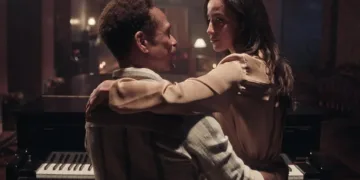
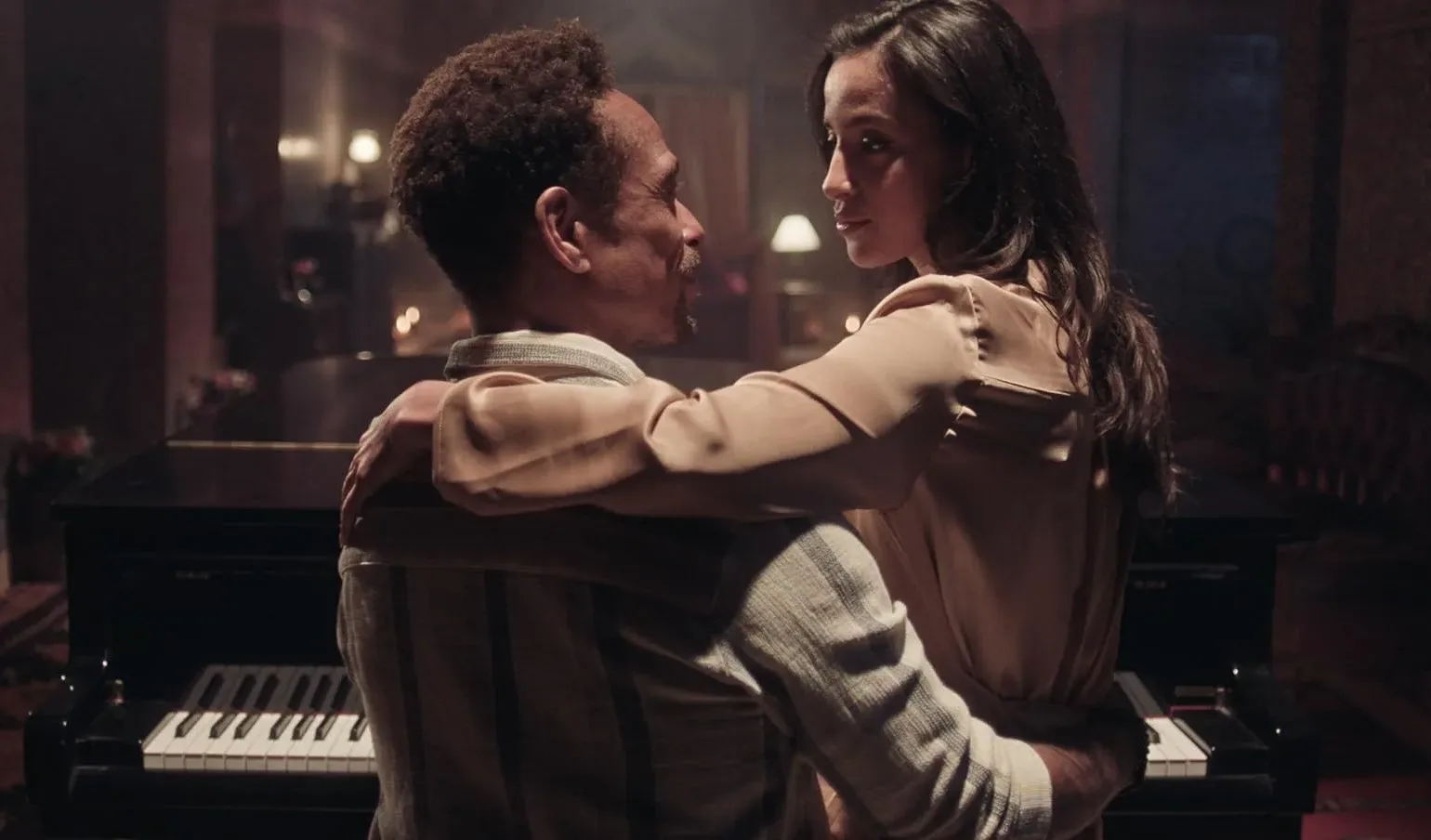
They hold the secrets of a past timeline involving Princess Nour, a woman caught in an arranged marriage, and her forbidden love for a charismatic pianist. Alec’s journey is to uncover how these echoes of the past are intertwined with his own destiny, creating a premise that values atmosphere and spiritual discovery over conventional plot mechanics. The film invites the audience into a dreamlike state from its opening moments, suggesting that the path to understanding lies in surrendering to the unknown.
Crafting a Gilded Frame
Visually, the film is meticulously crafted with a polish that suggests a much larger production. Director Hicham Hajji’s experience in commercial filmmaking is evident in the sharp, cinematic quality of every frame, where each shot is composed with an artist’s eye for balance and beauty.
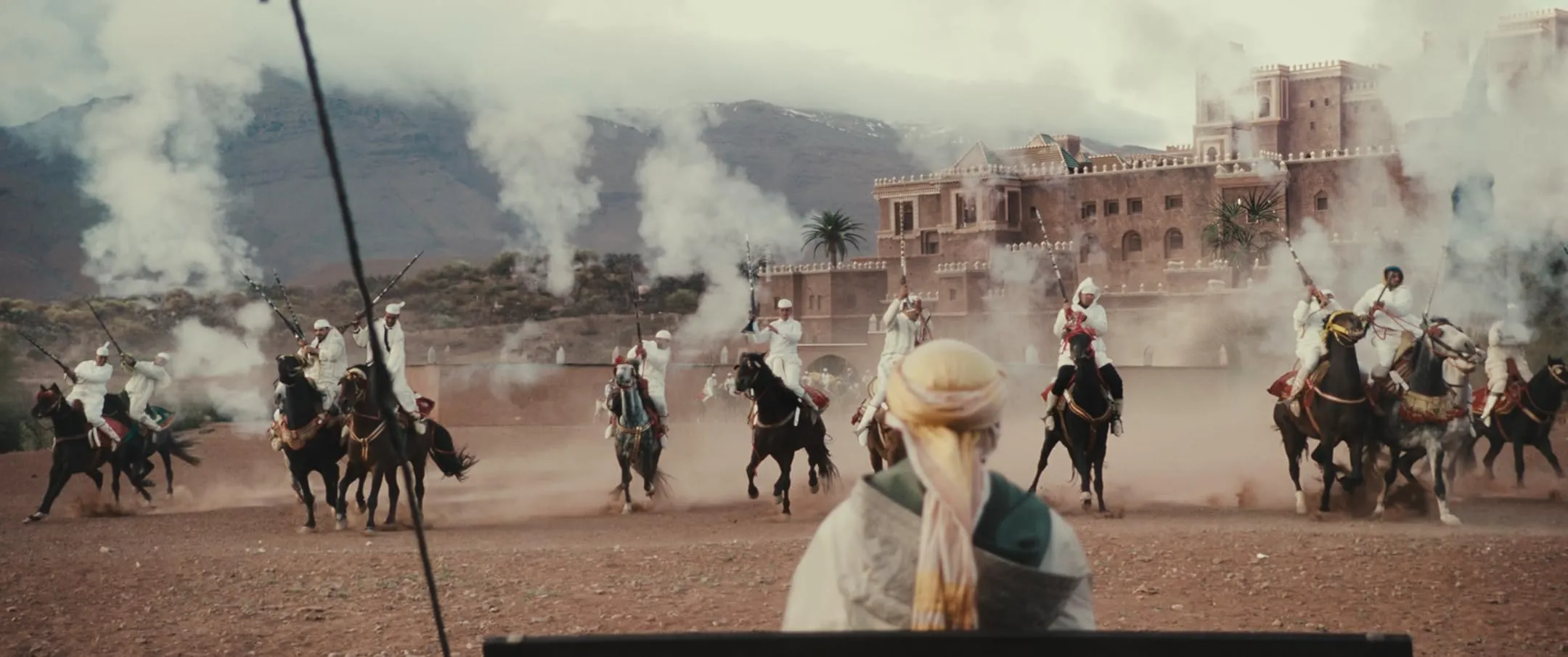
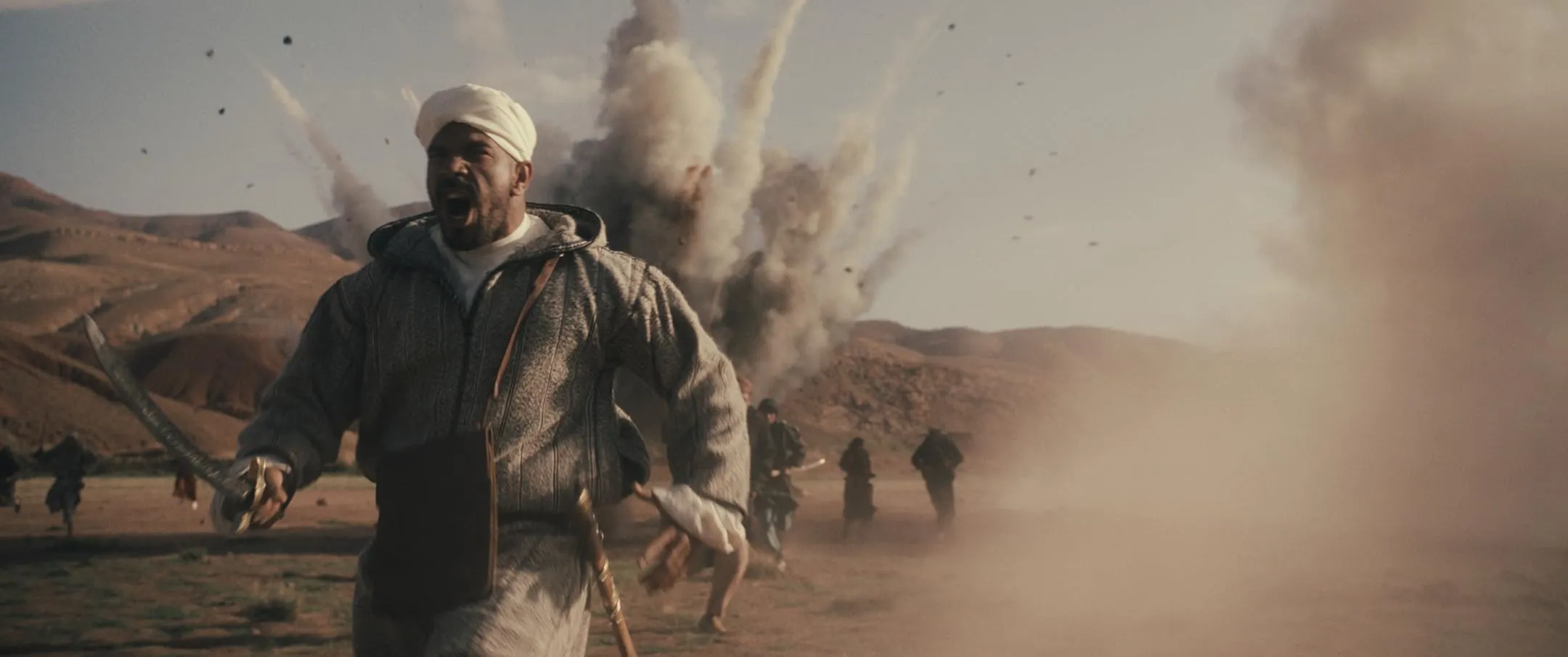
The cinematography by Ayoub Lamrani captures the rugged beauty of the Moroccan desert with an epic grandeur, using sweeping aerial shots that give the story an impressive sense of scale. This approach is reminiscent of how many Indian epics use vast landscapes to amplify their narrative ambitions, making the setting a reflection of the characters’ internal states.
The visual language distinguishes between timelines; the historical romance is bathed in a warm, nostalgic glow, while Alec’s present-day search is rendered in crisp, realistic tones. The lighting works to create distinct moods, from the harsh glare of the sun on open plains to the soft, mysterious shadows of candlelit castle corridors.
Costume design further grounds the story, with attention to detail that defines the characters’ separate worlds, moving from a modern Wall Street suit to period-accurate military attire. This careful selection of wardrobe helps build the world and provides immediate visual cues about each character’s background.
The musical score is equally effective and varied, shifting from gentle orchestral arrangements that swell during moments of historical romance to contemporary country-pop that accompanies Alec’s journey. This auditory contrast reinforces the film’s central idea of connecting two different eras, using music to bridge the emotional gap between them.
Portraits of Love and Longing
The performances give the story a sincere and human anchor, preventing its more mystical elements from feeling detached. Cillian O’Sullivan is convincing as Alec, portraying the billionaire’s confusion and curiosity with a grounded performance that keeps his unusual quest relatable.
He excels in the difficult task of playing a character who is often an observer, reacting to visions and stories from the past. O’Sullivan ensures Alec’s internal transformation feels earned, showing his gradual shift from a disoriented tourist to a man with a deep personal stake in the castle’s history. Gary Dourdan is magnetic as both the mysterious caretaker and the charming pianist.
His presence adds a layer of quiet charisma and tragic weight to the historical romance, conveying a deep well of emotion through subtle glances and gestures. Soraya Azzabi as Princess Nour and Melodie Casta as her daughter Hana both deliver strong portrayals of women marked by circumstance. They convey a deep resilience and vulnerability that makes their story impactful and emotionally resonant.
The chemistry between the lovers, both in the past and the present, feels genuine and gives the film its emotional foundation. The entire cast commits to the story’s authentic, heartfelt tone, treating the supernatural premise with a seriousness that allows the audience to invest in the intertwined fates of the characters. Their collective work makes the film’s exploration of love and legacy feel both personal and significant.
A Grand Tale in a Small Frame
The film’s narrative is built on a rich and ambitious foundation, blending history, romance, and supernatural mystery. The concept itself is strong, with compelling backstories ripe with dramatic potential.
The story’s execution, however, is constrained by its 95-minute runtime. An Indian filmmaker, for instance, might see this premise as the perfect material for a two-and-a-half-hour epic, allowing ample time for musical interludes and deep dramatic development. Here, the pacing feels rushed, moving through crucial moments too quickly for the romance to blossom organically or for the stakes to mature fully.
The narrative could have benefited from more substantial conflict; it sometimes relies on extended conversations to convey plot points where showing the events would have been more effective. This tendency to tell instead of show lessens the tension.
The final act uses time jumps to speed toward a resolution that feels somewhat predictable and unearned, leaving one to wonder what a longer, more patient telling of this story could have achieved. The film presents a beautiful and heartfelt idea, but its grand design feels underserved by the limited space it has to unfold.
“The Lost Princess” is a 2025 action-adventure film with elements of romance and drama. It was directed by Moroccan filmmaker Hicham Hajji and premiered on digital platforms and VOD on May 13, 2025. The film is set against the backdrop of a Moroccan castle and was shot entirely in Morocco. It explores themes of cultural identity and feminism within the Muslim world. The movie is available to rent or purchase on digital platforms such as Prime Video and Apple TV+. It is distributed by Gravitas Ventures.
Full Credits
Director: Hicham Hajji
Writers: Jean-Daniel Camus, Hicham Hajji, Jonathan McConnell
Producers & Executive Producers: Hicham Hajji, Irma Lake, Souheil Ben-Barka (executive), Jean-Daniel Camus (executive), Gary Dourdan (executive), David Zilberberg (executive)
Cast: Eric Roberts, Cillian O’Sullivan, Robert Knepper, Gary Dourdan, Luka Peros, Kacey Mottet Klein, Irma Lake, Yousra Bouhmouch
Director of Photography (Cinematographer): Ayoub Lamrani
Editors: Luka Stemberger
Composer: Sacha Chaban
The Review
The Lost Princess
The Lost Princess is a visually stunning film with sincere performances and a beautiful, heartfelt idea at its center. Its grand narrative ambitions, however, are let down by a restrictive runtime that rushes the story, preventing its emotional core from fully developing. The result is a gorgeous cinematic journey that feels more like a promising sketch for a grander epic than a complete story in its own right. It is worth watching for its atmosphere and artistry, though its storytelling falls short of its potential.
PROS
- Stunning cinematography and beautiful Moroccan landscapes.
- Polished, high-quality visual presentation.
- Sincere and grounded performances from the entire cast.
- An ambitious and interesting blend of romance, history, and mysticism.
CONS
- The story feels rushed due to a short runtime.
- Key emotional moments and relationships are underdeveloped.
- A lack of substantial conflict lessens the dramatic tension.
- The plot becomes predictable, especially in the final act.