
























![Kingdom Hearts Collection [I-III] Review](https://gazettely.com/wp-content/uploads/2026/10/Kingdom-Hearts-Collection-I-III-1-360x180.webp "Kingdom Hearts Collection [I-III] Review: KHII Holds Steady as Newer Entries Fluctuate 37")



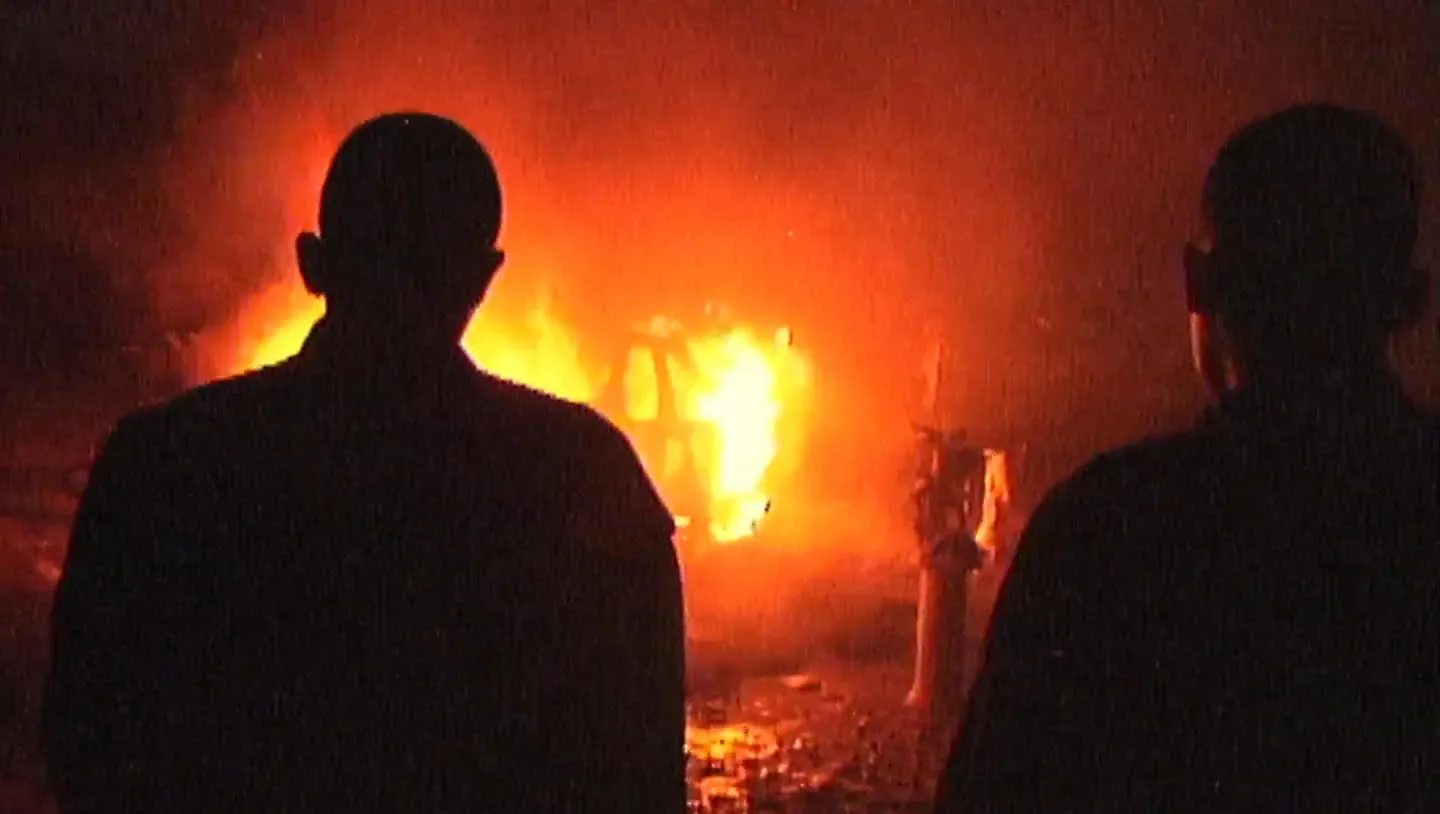

Every found-footage film asks its audience to accept a premise: that what we are watching is not a movie, but an artifact. It is a recording of events that happened, discovered later. Barrio Triste presents us with such an object, a videotape from 1980s Medellín. The story it contains is simple and brutal. A group of teenage boys, adrift in a city that has forgotten them, steals a news camera and turns it on themselves.
The resulting document is not a story in the conventional sense. It is a raw feed of existence, a fractured signal from a place of deep social decay. The film immediately plunges the viewer into a state of unease, presenting a world seen through a stolen lens, where the act of recording is less about creation and more about bearing witness to an ongoing collapse.
The Grammar of a Stolen Image
The film’s absolute devotion to its found-footage conceit dictates its entire narrative structure. The cheap video camera is not merely a filter; it is the narrator, and an unreliable one at that. Its operators are bored, frightened teenagers, and their impulses shape what we are permitted to see. The camera’s gaze is often cast downwards, suggesting a perspective of shame or utter despondency.
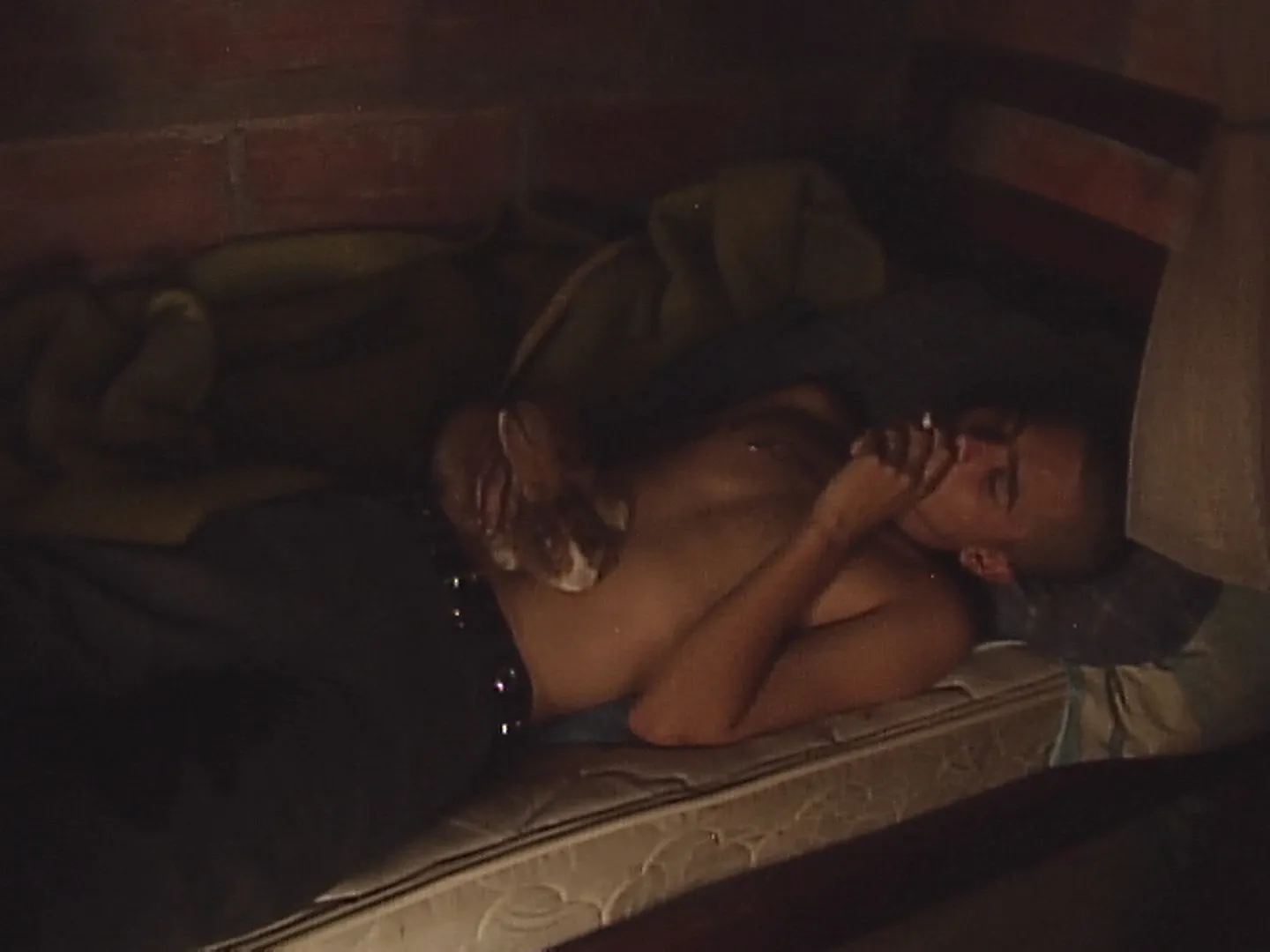
This is not lazy filmmaking; it is a visual articulation of the characters’ inner state. During the film’s central set piece, a frantic jewelry store robbery, the technique is brutally effective. The frame whips around in a panic, capturing little more than blurs of motion and shattered glass, placing the viewer in a state of sensory overload that mirrors the characters’ terror.
This chaos is then contrasted with long, almost meditative periods of aimless wandering. The film’s pacing is intentionally erratic, reflecting the reality of lives defined by bursts of violent activity followed by crushing boredom. Director Stillz uses this aesthetic to deny the audience a stable viewpoint. We are never allowed to feel like objective observers.
Instead, we are implicated in the boys’ actions, seeing only what they see, with all the limitations that entails. The visual language is one of claustrophobia and confusion, successfully communicating the suffocating nature of their environment.
Arca’s Ghosts in the Machine
Where the visuals document a gritty reality, the soundscape introduces a layer of psychological horror. Arca’s electronic score is a constant, invasive presence. It is not music that supports the action on screen; it is an entity that actively reinterprets it. The sound is metallic, dissonant, and industrial, functioning as a form of non-diegetic narration that imposes dread onto even the most mundane scenes.
The score gives voice to the boys’ unspoken trauma, articulating a level of anxiety they lack the words to express. It is the sound of a system breaking down, both inside their heads and in the streets around them.
This sonic dread finds its visual counterpart in the film’s surreal elements. Whispers of strange lights and extraterrestrial visitors are woven into the boys’ recorded life. These sci-fi intrusions are a narrative rupture, a break from the relentless realism.
They function as a kind of modern folklore born from desperation. In a world without social safety nets or spiritual comfort, the boys latch onto this new mythology to make sense of their suffering. The possibility of aliens is a hypothesis for their pain, an explanation more fantastic and perhaps more tolerable than the simple, brutal truth of their abandonment by society. This subtle thread of magical realism suggests that when reality becomes unbearable, the human mind will invent new ones.
Confessions to an Empty Lens
The film would remain a harrowing but distant exercise in style were it not for a crucial structural device: a series of direct-to-camera interviews. In these moments, the found-footage conceit is formally broken. Individual boys sit in a starkly lit room, speaking into the lens as if being interrogated. The context is never explained, which gives the scenes the unsettling quality of a post-mortem examination.
These confessions are the soul of the film. They dismantle the image of the boys as an anonymous pack and reveal the individuals within, each carrying his own weight of sorrow. One speaks of his absent father; another tearfully recounts his desire to be reunited with his daughter.
These segments force the audience to re-evaluate all the chaotic footage that surrounds them. The anonymous figures from the heist now have names and histories. Their aimless violence is re-framed as a symptom of deep, personal pain.
Barrio Triste is an indictment of the social structures that allow such pain to fester. The “barrio” is more than a location; it is a closed system that perpetuates despair. The film is a demanding and unflinching work, offering no catharsis or easy resolution. Its power lies in this refusal, presenting a stark portrait of lives on the margin and finding a profound, disturbing humanity in the static.
“Barrio Triste” is a found-footage crime movie that premiered at the Venice Film Festival on September 2, 2025. It also had its North American premiere at the Toronto International Film Festival (TIFF) and its US premiere at the New York Film Festival. The movie is not currently available for streaming, but it is seeking US distribution.
Full Credits
Director: Stillz
Writers: Stillz
Producers: Harmony Korine, James Clauer, Esteban Zuluaga, Eric Kohn
Cast: Juan Pablo Baena, Samuel Velázquez, Tomás Tinoco Higuita, Samuel Andrés Celis, Brahian Acevedo, Estiven Salazar, Brayan Erlín García, José Arley Marín González, Samuel Ruiz
Director of Photography (Cinematographer): Stillz
Editors: Adam Robinson
Composer: ARCA
The Review
Barrio Triste
Barrio Triste is a difficult, abrasive film that refuses to offer comfort. Its raw found-footage style and jarring score create a powerful sense of despair. While its unpolished nature can test patience, the film's unflinching look at youth abandoned by society is unforgettable. It is a demanding piece of filmmaking that succeeds through its brutal honesty, anchored by moments of profound human sadness that pierce through the static. A haunting and essential piece of work that lingers long after it ends.
PROS
- An uncompromising and bold directorial vision.
- The found-footage aesthetic creates a powerful sense of immediacy and realism.
- Arca's score is atmospheric and effective in building a mood of dread.
- The direct-to-camera confessional scenes provide a devastating emotional anchor.
CONS
- The deliberately raw and unpolished style can be alienating.
- A sparse, meandering narrative structure may frustrate some viewers.
- The pervasive bleakness is unrelenting and offers little catharsis.







