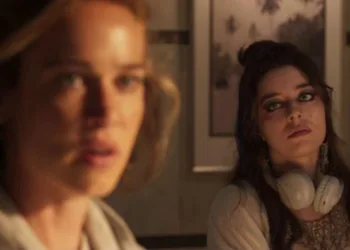



















Julia Roberts said her new film After the Hunt is “about love and forgiveness” and cautioned against “what about” framing in questions around the movie’s themes, arguing that such prompts can sidestep the story’s human stakes. Speaking during the film’s New York press push, Roberts described the project as a conversation-starter rather than a verdict on real-world debates, and urged audiences to engage the characters’ choices on their own terms. Her remarks followed weeks of attention on the cast’s festival press appearances and the online flare-ups that trailed them.
The conversation arrives in the wake of a viral exchange at the Venice Film Festival, where an interviewer asked Roberts and Andrew Garfield what comes “after #MeToo and Black Lives Matter,” initially excluding co-star Ayo Edebiri from answering. Edebiri intervened to say the work those movements address is not “done,” and later called the moment “very human” while reiterating her preference to keep focus on the film. Roberts’ New York comments were read as an attempt to steer discourse back to the drama’s interpersonal core.
After the Hunt, directed by Luca Guadagnino, centers on a university professor whose protégé accuses a colleague of sexual assault, pulling her into a moral and professional crisis with reverberations beyond campus. Early coverage and festival screenings have emphasized that the film balances thriller mechanics with debates over accountability, memory, and institutional response—territory Roberts previously linked to a broader worry that the “art of conversation” is fraying.
The release plan positions the film to keep momentum from the festival circuit into October, with a limited opening slated before a wider U.S. rollout and subsequent streaming window. At the New York events, the cast leaned into process over polemic: Roberts highlighted collaboration with Guadagnino and her scene partners; Garfield referenced the story’s shifting power dynamics; Edebiri stressed that students’ voices and ongoing activism should not be treated as a closed chapter. For a production that has had to navigate publicity squalls as well as praise, the latest round of remarks frames the film as an invitation to argue in good faith rather than a referendum on headlines.