
























![Kingdom Hearts Collection [I-III] Review](https://gazettely.com/wp-content/uploads/2026/10/Kingdom-Hearts-Collection-I-III-1-360x180.webp "Kingdom Hearts Collection [I-III] Review: KHII Holds Steady as Newer Entries Fluctuate 37")



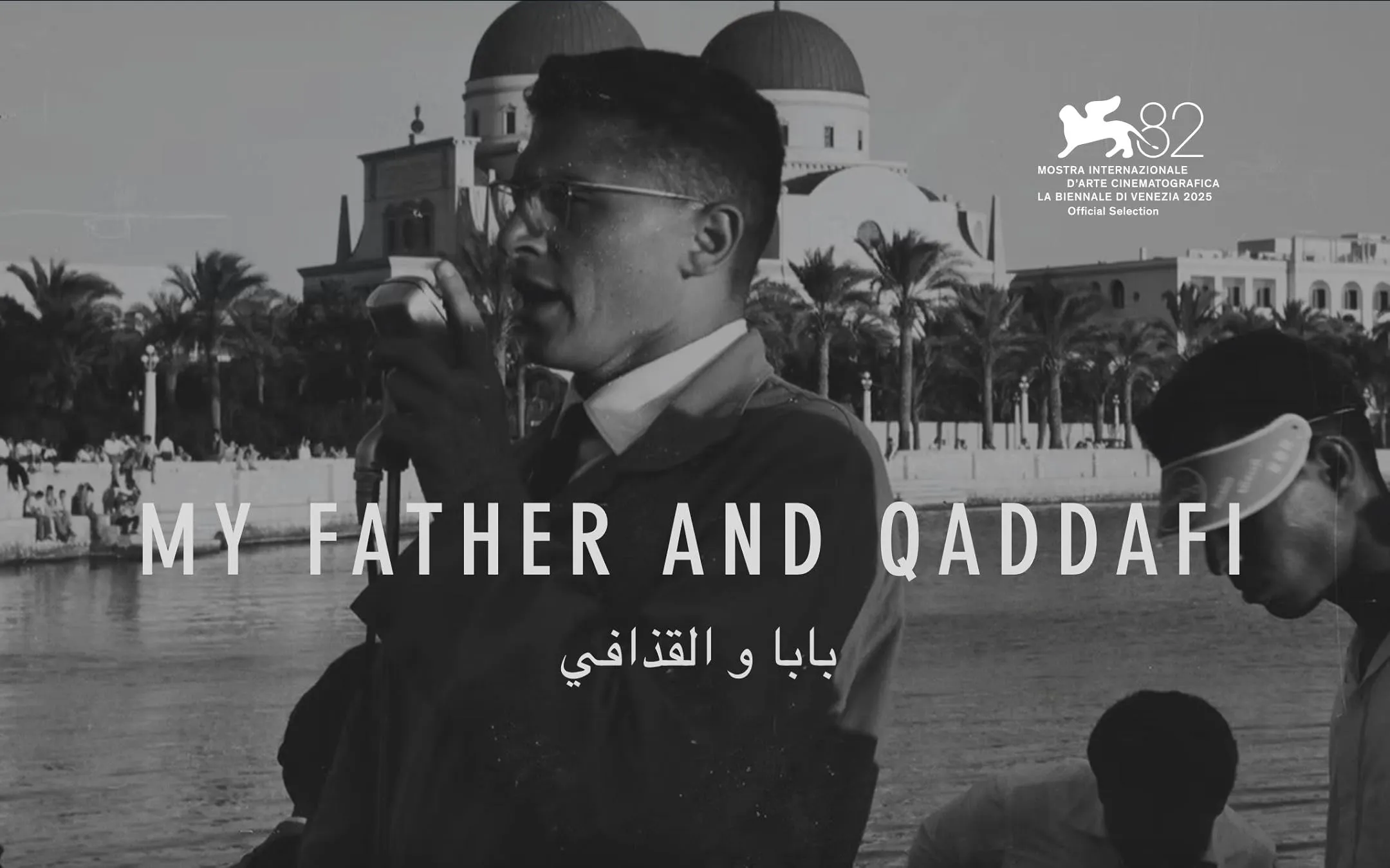
Documentaries built around a personal quest risk collapsing into therapy sessions on film. The challenge is structuring a private story so it speaks to a public audience. In My Father and Qaddafi, filmmaker Jihan K attempts this delicate balancing act. The film is her investigation into the 1993 disappearance of her father, Mansur Rashid Kikhia, a former Libyan diplomat turned opposition leader.
Jihan was six when he vanished from a Cairo hotel, leaving behind a silence she now attempts to fill with images and interviews. Her project operates as two distinct narratives running on a single track. One is the intimate reconstruction of a father she cannot remember. The other is a condensed history of Libya under Muammar Qaddafi, the man whose regime is the source of her family’s loss.
The film’s tension arises from this braiding of a national tragedy with the empty space in a family photograph. It asks if a country’s memory can be used to build a person. The film sets for itself the difficult task of mapping a nation’s history onto a family’s empty spaces, a structural choice that is both its greatest strength and its most significant challenge.
The Architecture of Memory
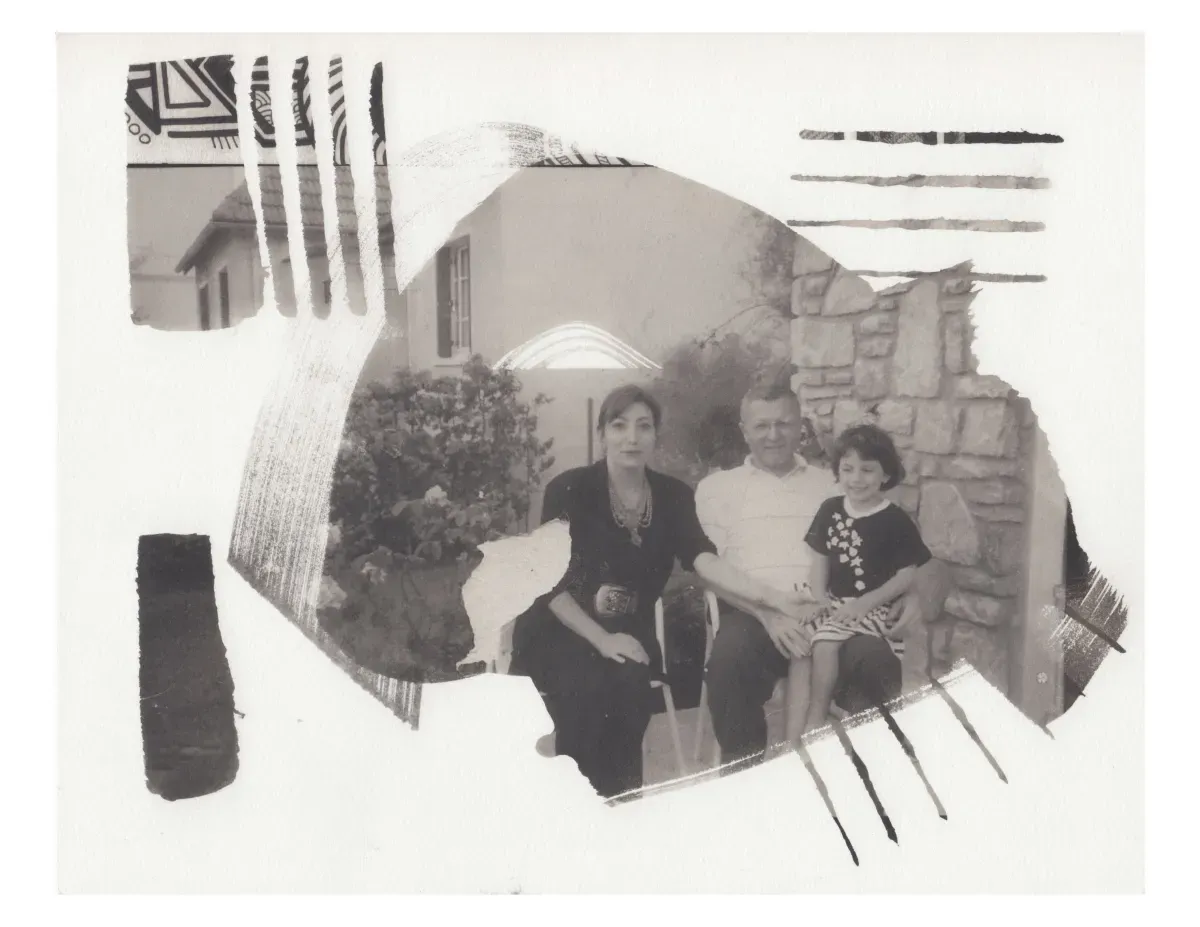
A filmmaker who admits “I still rely on other people’s memories” immediately establishes the story’s central mechanic. Jihan K positions herself not as an omniscient narrator but as an active investigator, piecing together a mosaic of her father from secondary sources. The film’s emotional weight is carried almost entirely by her mother, Baha Al Omary.
A Syrian-American artist, she is the primary witness and archivist of her husband’s life. Her interviews provide the narrative with its spine, her recollections sharp and her presence formidable. She speaks of her husband’s political courage and personal charm with a clarity that shapes our entire perception of him. The film grants her the role of primary storyteller, a choice that grounds the narrative but also funnels it through a single, loving perspective.
This oral history is layered with archival materials: photos of Mansur as a dapper statesman, home videos capturing fleeting domestic moments, and grainy news reports announcing his disappearance. The home video footage, in particular, performs a curious function. It offers a simulated intimacy, allowing the audience a glimpse into a happy past that the filmmaker herself cannot access.
We watch a father with his children, but we are always aware that the person behind the camera is also the person searching for him. The effect is a portrait assembled by committee, a man defined by his wife’s memories, his colleagues’ respect, and the celluloid ghosts he left behind. The film becomes an examination of how a life is mythologized after it ends, and how a daughter grieves for an idea more than a person.
History as the Antagonist
The film wisely understands that the Kikhia family’s story is incomprehensible without its political backdrop. A significant portion of the runtime is dedicated to a necessary history of 20th-century Libya. It charts the nation’s path from Italian colony through the 1969 coup that brought a young Colonel Qaddafi to power. This historical primer serves a critical narrative function: it establishes the antagonist.
Qaddafi’s regime is not an abstract evil; it is the force that directly shapes Mansur Kikhia’s life and precipitates his death. The film’s structure sometimes stumbles here, occasionally pausing the deeply personal search for segments that feel like dutiful exposition.
The pacing can lag as we shift from an emotional interview with Baha to a broader explanation of pan-Arab politics. These history lessons are vital, yet their integration is not always seamless. We follow Mansur’s career from within the government as Foreign Minister to his principled resignation and exile. His personal choices are shown to be direct responses to the regime’s escalating brutality.
By laying this political groundwork, the film argues that this is not simply a family tragedy. It is a political assassination whose full story is embedded in the larger story of a nation held captive by a dictator. The Kikhia family becomes a microcosm, their loss representing a type of suffering inflicted upon countless others who dared to oppose the government.
The Verdict of the Empty Freezer
A story that begins with a question must eventually provide an answer. The film’s final act delivers the grim details of Mansur’s fate, discovered after the fall of Qaddafi. The truth is grotesque, a final, undignified punctuation mark on a life of principle. The narrative structure shifts here, moving from a reflective tone to something closer to a thriller, as the final pieces of the puzzle are put into place.
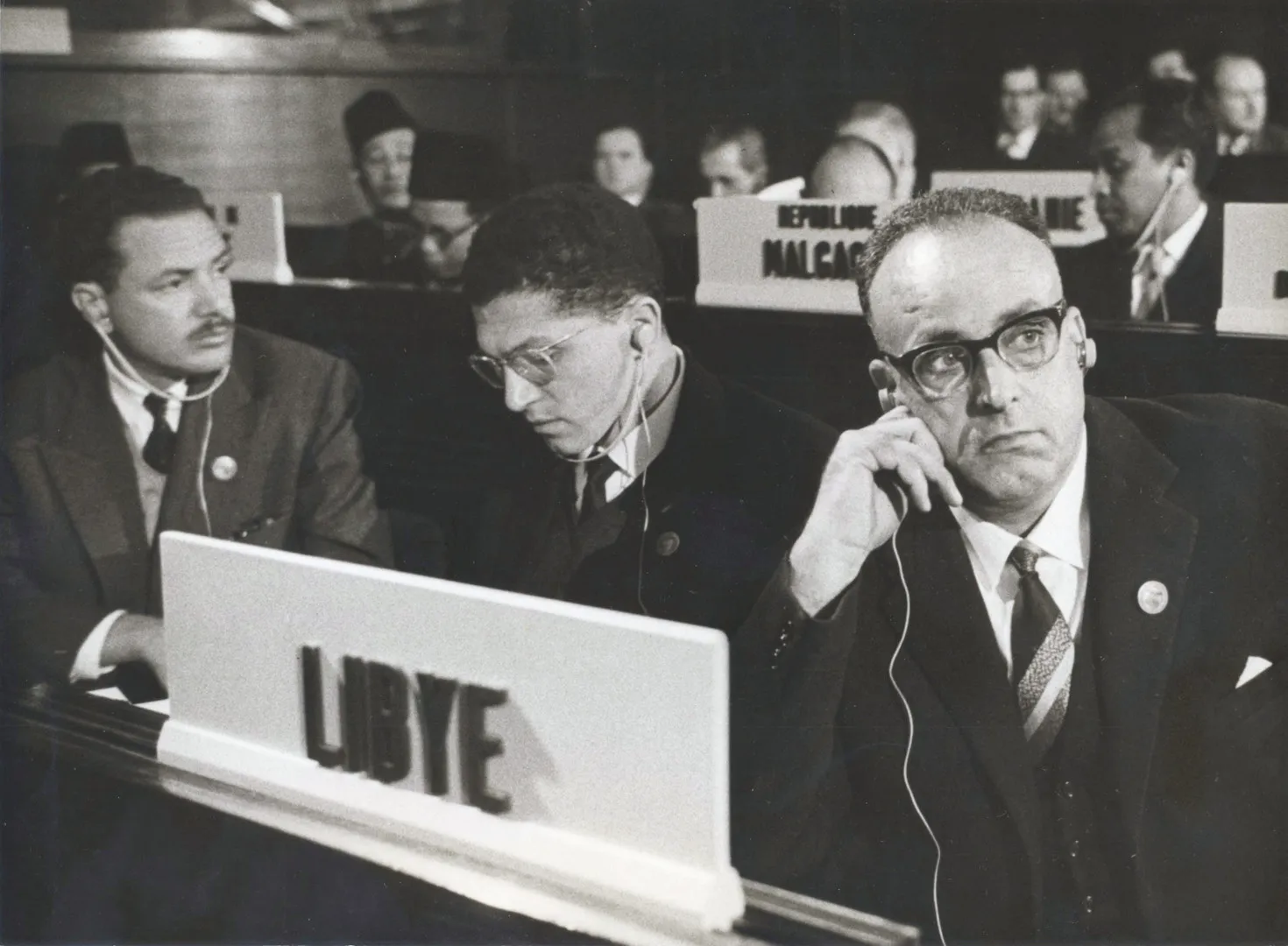
Its revelation forces a difficult question about the nature of narrative closure. Is this brutal knowledge preferable to the haunting ambiguity that preceded it? The film does not offer a simple answer. Instead, it reframes itself as an act of reclamation. By telling her father’s story, Jihan K refuses to let his narrative be controlled by his murderers.
The documentary itself becomes a form of resistance against the erasure of both a man and a period of history. Because the filmmaker is so close to her subject, the portrait of Mansur at times borders on hagiography; his flaws, whatever they might have been, are absent from this account. This is an understandable, even necessary, choice for a daughter, but it does limit the film’s critical distance.
It succeeds more as a powerful personal testament than as a detached piece of journalism. It is a work of filial devotion, a historical document, and a meditation on the strange mechanics of grief. The film succeeds in making a private loss feel significant by tying it to the history of a nation, demonstrating how the search for one man can illuminate the struggles of many.
My Father and Qaddafi premiered in Italy on August 29, 2025, at the Venice Film Festival. It is a co-production between the United States and Libya. The documentary is seeking U.S. distribution. As of the current date, it is not available for streaming.
Full Credits
Director: Jihan K
Producers and Executive Producers: Jihan K, Andreas Rocksén, William Johansson Kalén, Dave Guenette, Mohamed Soueid, Sol Guy
Cast: Jihan K, Baha Sobhi Al Omary, Rashid Mansur Kikhia
Director of Photography (Cinematographer): Micah Walker, Mike McLaughlin
Editors: Alessandro Dordoni, Chloë Lambourne, Nicole Hálová
Composer: Aleksander Pankowski vel Jankowski, Barna Zsolt Szoke, Bisan Toron, Dominik Svoboda, Didier Monge, Fryderyk Lutyński, Grzegorz Łapiński, Kristjan Ruus, Magda Szczebiot, Magdalena Sowul, Michał Ostrowski, Salka Valsdóttir, Simone Giuliani, Tiago Correia-Paulo, Zuzanna Ossowska
The Review
My Father and Qaddafi
My Father and Qaddafi is a deeply moving documentary that succeeds as a daughter's personal act of remembrance. While its close perspective creates an idealized portrait of its subject and the pacing between family history and Libyan politics can be uneven, the film's emotional core is undeniable. It powerfully connects a private grief to a public crime, making it a valuable account of a family's resilience and a nation's painful past.
PROS
- Effectively links a personal family story to the broader history of a nation.
- Features a strong, compelling central figure in the filmmaker's mother, Baha Al Omary.
- Emotionally powerful and resonant in its exploration of grief and memory.
- Provides valuable historical context on the Qaddafi regime in Libya.
CONS
- The filmmaker's personal connection results in a lack of critical distance.
- Pacing can feel uneven, with shifts between the personal narrative and historical exposition.
- The portrait of Mansur Kikhia feels incomplete, bordering on hagiography at times.







