









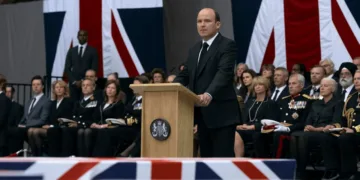



















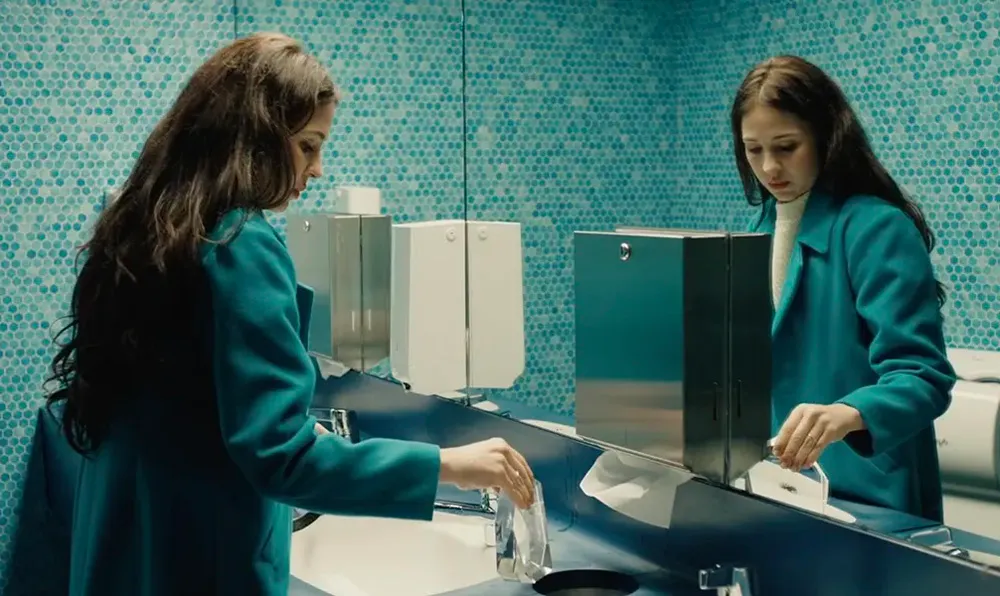

A quiet, unsettling act in a distant city ignites The Currents. In wintry Geneva, an Argentinian fashion designer named Lina accepts a prestigious award. Moments later, the glass trophy is in a bathroom bin. She walks through cobblestone streets until, without ceremony, she steps off a bridge and into the churning river.
Director Milagros Mumenthaler’s camera observes from afar, rendering this desperate plunge as a small, silent event in a vast, indifferent landscape. This choice of perspective establishes the film’s distinct language, one that privileges cold observation over dramatic catharsis. The story is not about the splash, but the ripples that follow.
When Lina returns to her seemingly perfect life in a sun-drenched Buenos Aires apartment with her husband Pedro and daughter Sofia, she brings the river’s icy chill with her. The film becomes a hypnotic study of a woman’s internal world fracturing behind a façade of impeccable success, exploring a psyche that has become alien to itself.
An Allergy to the Self
Lina’s return to Argentina is marked by a peculiar affliction: a paralyzing fear of water. This hydrophobia is the film’s central physical manifestation of a deeper, unspoken trauma. Water, a symbol of cleansing and life, becomes a source of terror. Her inability to bathe has tangible consequences; a rash blossoms on her neck and her lustrous hair turns greasy and limp.
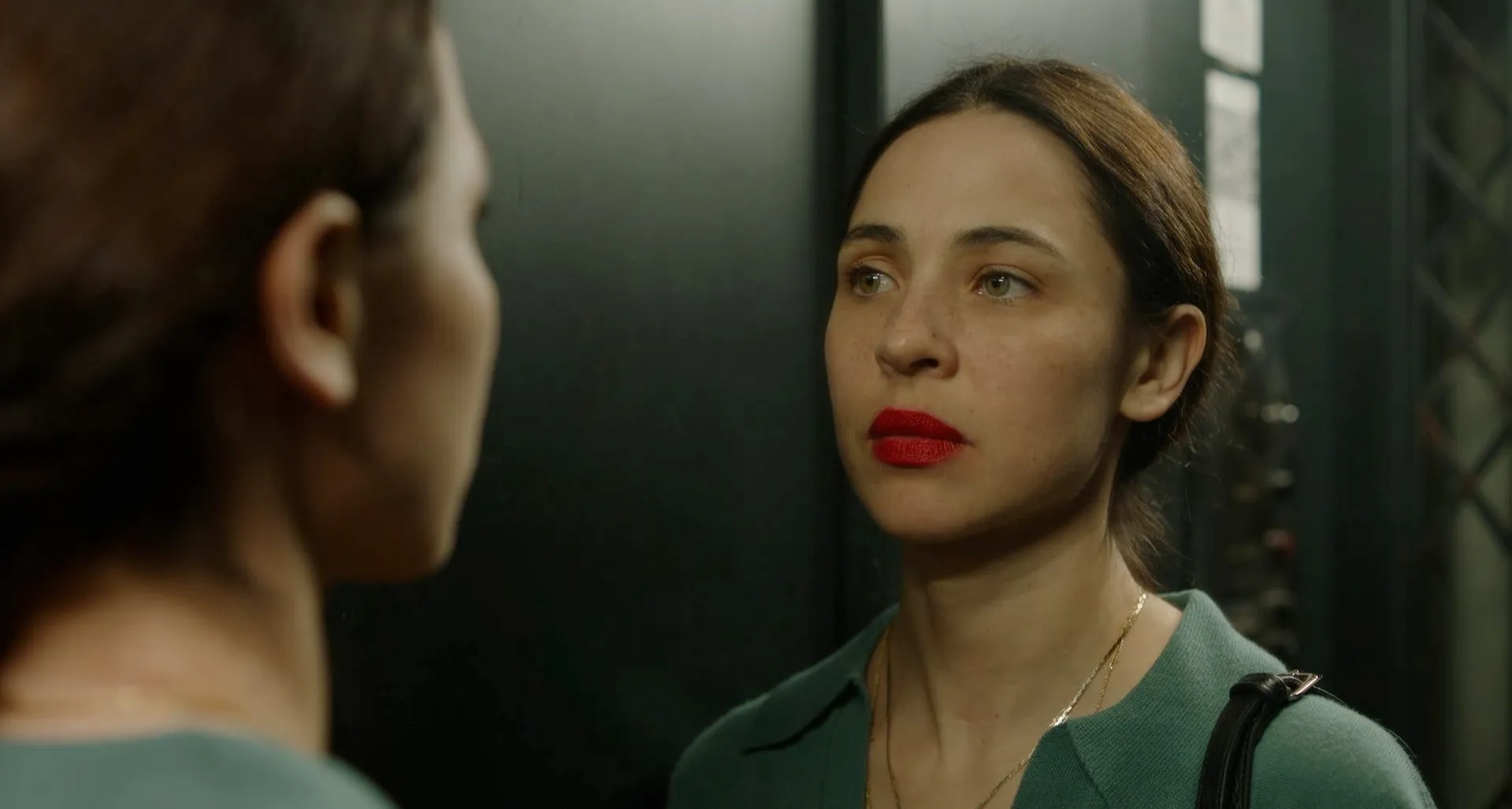
These are not just symptoms, but a visual record of her inner decay, an allergy to the very self she has so carefully constructed. Isabel Aimé González-Sola’s portrayal of Lina is a masterclass in quietude, conveying a universe of anxiety through a watchful, fractured serenity. Her performance avoids the expected tics of mental distress. Instead, she moves through her pristine home as if she were a ghost, her placid expression a mask for the chaos within.
She continues to manage her fashion studio and perform the duties of a wife and mother, but it is a hollow imitation. This exhausting performance of normalcy is a central concern, particularly in her interactions with her husband. Pedro’s worry over her withdrawal feels tinged with a subtle possessiveness, a desire to restore the version of Lina that complemented his own life, rather than an attempt to understand the stranger she has become.
The Grammar of a Fractured Mind
The film’s aesthetic is the architecture of Lina’s mind. Mumenthaler, with her Swiss-Argentinian background, merges a European formal precision with a turbulent emotional core. The cinematography is exacting, its elegant compositions and smooth, gliding camera movements creating a dreamlike state that constantly threatens to become a nightmare.
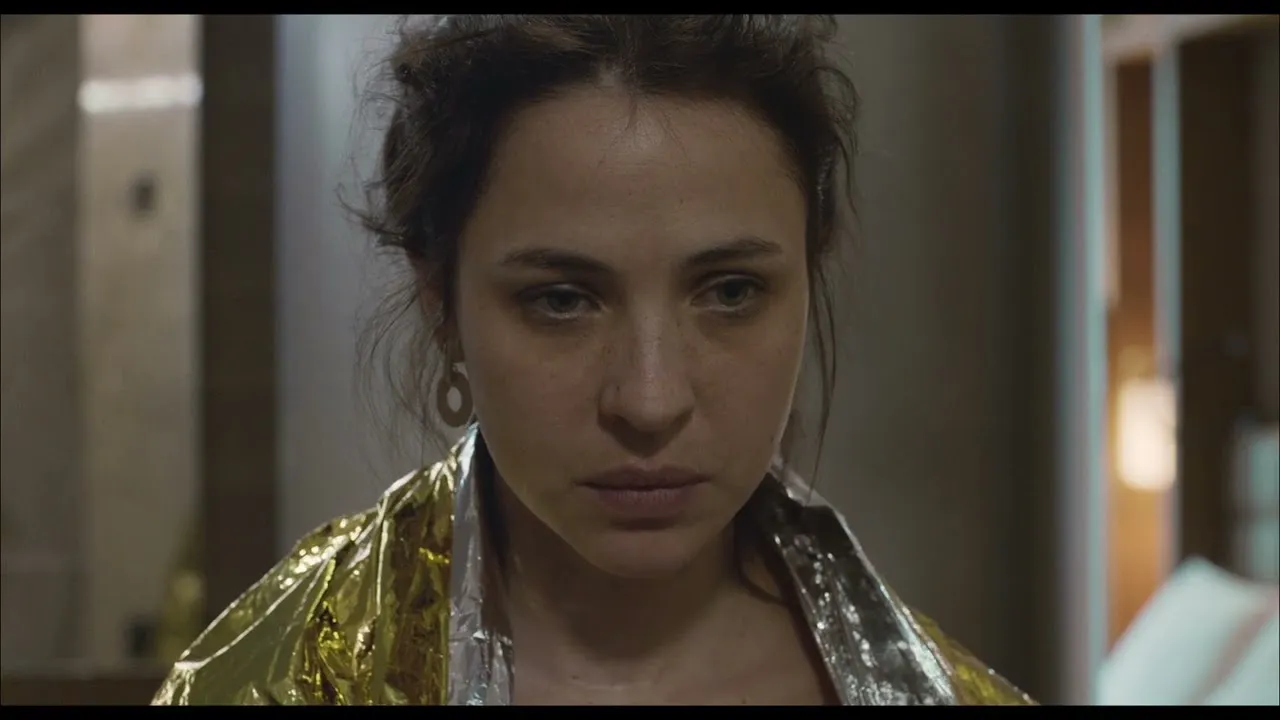
The cold, impersonal long shot of Lina’s jump in Geneva stands in stark contrast to the intimate, suffocating close-ups used in Buenos Aires, which trap the viewer within her claustrophobic headspace. The visual world is one of rich, tactile surfaces—the texture of fabric, the sheen of hair, the coldness of glass—that feel both sensuous and alienating.
This visual grammar is intensified by a meticulous sound design. Mundane, ambient sounds are amplified into a hostile chorus: the insistent whine of a hairdryer, the percussive clatter of a sewing machine, the digital chirps of a video game. These noises invade Lina’s consciousness, reflecting a nervous system that has lost its ability to filter the world.
This sensory assault is punctuated by the strategic use of classical music. Gustav Holst’s “Venus, the Bringer of Peace,” is deployed with potent irony, its serene, cosmic grandeur accompanying moments of profound personal dissociation, creating a powerful rift between an ordered universe and a single, disordered mind.
A Labyrinth of Selves
The Currents examines identity as a fragile performance, shaped by the pressures of class and gender. Lina’s past is a country from which she has emigrated; her different names—Cata, Catalina, Lina—are markers on a journey of reinvention, of shedding a humbler background for a place in Buenos Aires’ sophisticated elite.
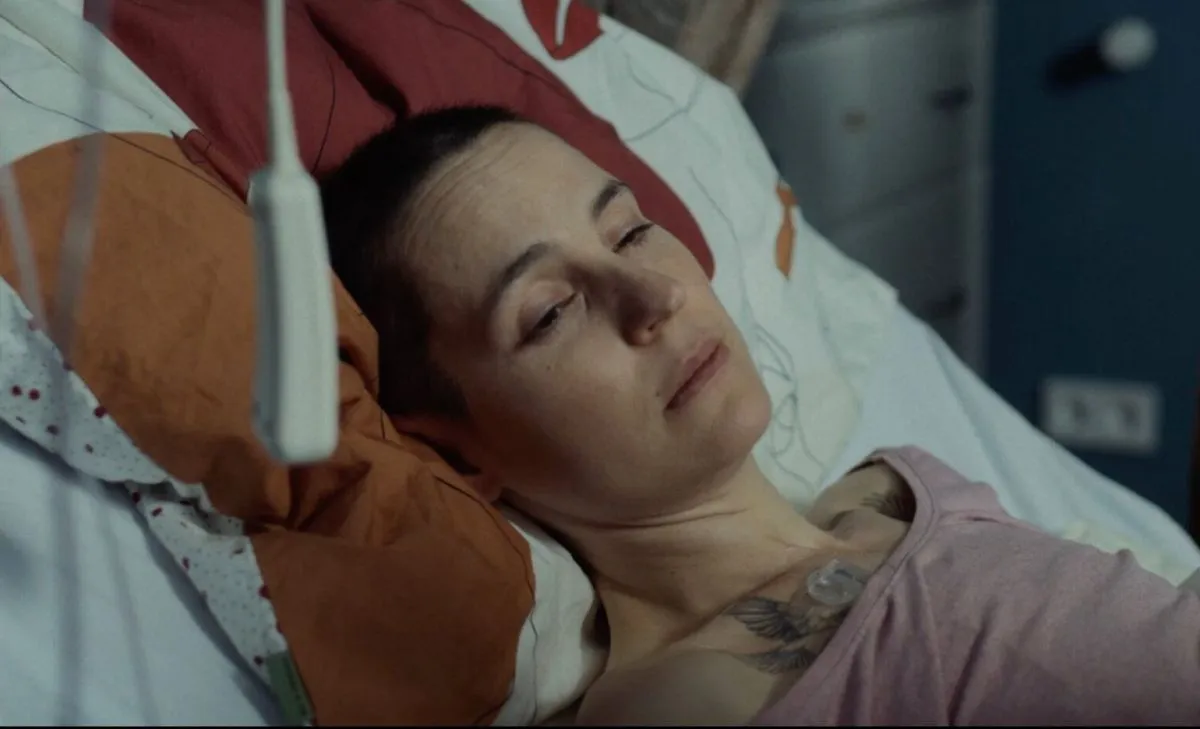
Her sleek, modern life is her greatest design, and the small judgments of others feel like devastating critiques of her work. The film visualizes her psychological fragmentation through surreal and dissociative episodes. She has a fleeting vision of her assistant calmly stepping from a balcony; in another scene, she stands on the street and sees her exact double staring back at her from a shop window. This is not just a breakdown but an unsettling expansion of consciousness.
In a pivotal sequence, Lina’s perspective seems to float free of her body, allowing her to witness the private lives of other women: a wealthy client at a museum, an elderly seamstress at choir practice. This moment of profound empathy, of seeing others with a clarity she cannot afford herself, suggests a yearning for connection. The narrative eventually moves toward a more explicit explanation for her trauma, rooted in family history. This choice provides a kind of psychological closure, yet it feels like a concession, an attempt to solve a mystery that was more powerful in its unnerving ambiguity.
The Currents (Original Title: Las Corrientes) is a 2025 psychological drama directed and written by Swiss-Argentinian filmmaker Milagros Mumenthaler. The film premiered at the Toronto International Film Festival (TIFF) in September 2025 as part of the Platform section and was also screened at the San Sebastián International Film Festival and the New York Film Festival.
Director: Milagros Mumenthaler
Writers: Milagros Mumenthaler
Producers and Executive Producers: Eugenia Mumenthaler, David Epiney, Rosa Martínez Rivero, Violeta Bava
Cast: Isabel Aimé González Sola, Esteban Bigliardi, Sara Bessio, Jazmín Carballo, Emma Fayo Duarte, Ernestina Gatti, Claudia Sanchez
Director of Photography (Cinematographer): Gabriel Sandru
Editors: Gion-Reto Killias
The Review
The Currents
The Currents is a masterfully controlled and sensorially rich exploration of a woman's psyche coming undone. Director Milagros Mumenthaler uses a precise visual language and an immersive soundscape to create a hypnotic, unsettling experience. While its final act leans toward a somewhat conventional explanation, the film remains a transfixing portrait of dissociation and the fragile performance of identity. It is a work of impressive assurance that lingers long after the credits.
PROS
- Milagros Mumenthaler’s filmmaking is elegant, controlled, and psychologically potent.
- Isabel Aimé González-Sola delivers a restrained and powerful performance, conveying deep anxiety through quietude.
- The cinematography and sound design are expertly employed to create an immersive, subjective, and unsettling atmosphere.
- A nuanced exploration of identity, memory, and the pressures of modern womanhood.
CONS
- The shift toward a more explicit explanation in the end slightly diminishes the power of the film's sustained ambiguity.
- The slow, observational style may be challenging for some viewers.