





















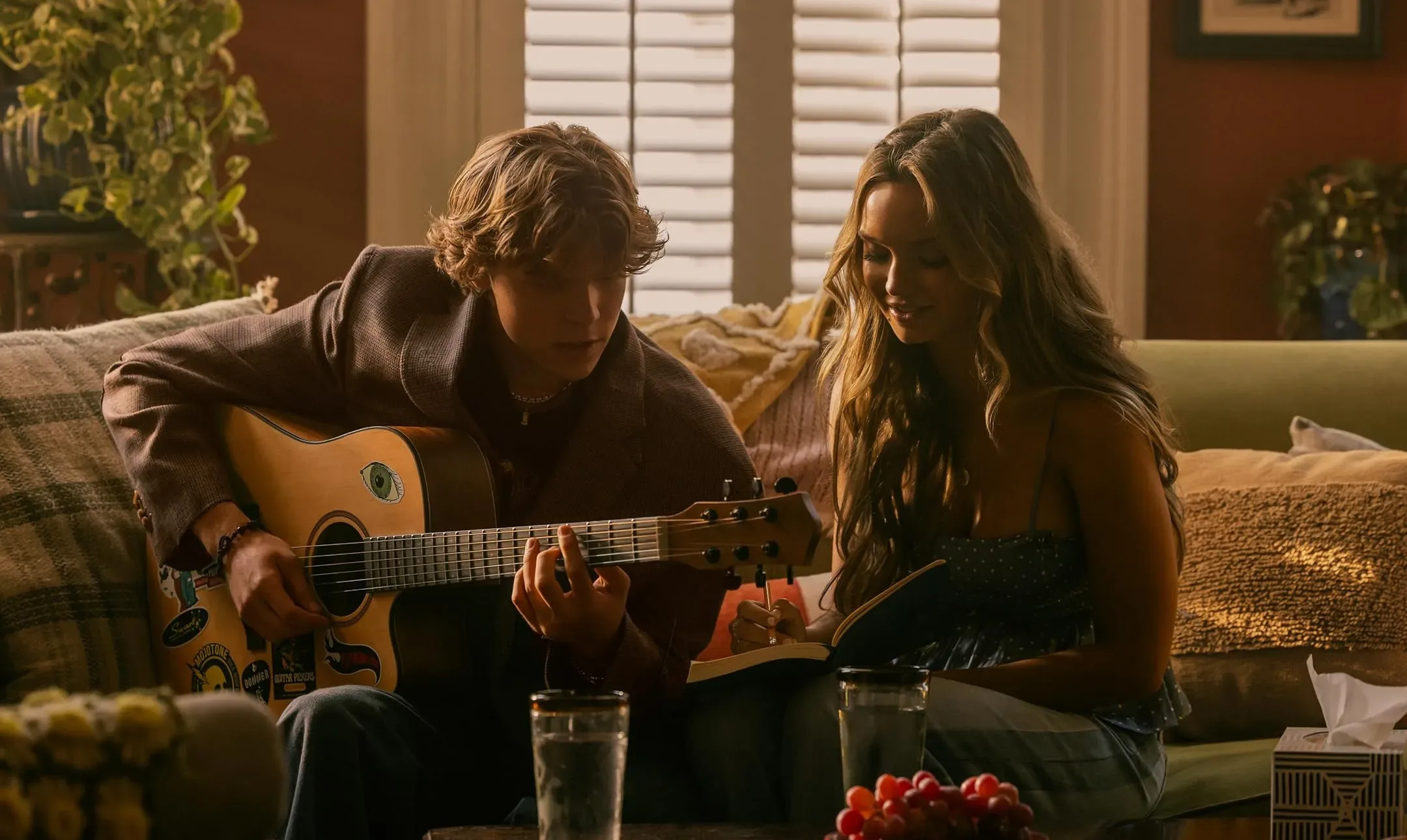

The summer after high school graduation exists in a specific cultural space, a liminal zone of infinite potential and imminent pressure. It is the setting for countless coming-of-age stories, and Prime Video’s The Runarounds spins another track on this familiar album. The series follows a fledgling rock band in Wilmington, North Carolina, as they spend these fleeting months trying to land a record deal.
Frontman Charlie Cooper leads his friends in a desperate race against the looming specter of college and responsibility. The show hits the expected notes of youthful ambition, parental friction, and the powerful bonds forged in a garage rehearsal space. Its most interesting feature, however, is a meta-textual one. The actors playing the band are the real-life musicians of The Runarounds.
This casting choice positions the series as an experiment in authenticity, a direct line from the performers to their fictional counterparts, blurring the line between character and creator in a way that feels distinctly modern. This decision speaks to a larger trend in streaming television, where the search for “authentic” content often leads to hybrid projects that are part drama, part documentary, and part brand extension.
The Show’s True Voice
The music in The Runarounds is the show’s undeniable center. The original pop-rock soundtrack provides the story with its heartbeat, offering an emotional depth that the script often struggles to find on its own. These songs articulate the characters’ feelings of frustration, desire, and defiant hope with a clarity the dialogue rarely achieves.
When Charlie sings about unrequited love, the lyrics possess a sincerity that his spoken words, often laden with clichéd pronouncements, cannot match. The choice of pop-rock is itself a statement, a nostalgic nod to the sound of early 2000s teen dramas, creating a sense of comforting familiarity. The music functions as a narrative engine, pushing the story forward when the plot stalls.
The series is at its most potent during its performance sequences. These scenes are shot with a kinetic energy that sets them apart from the rest of the show. The camera work becomes more dynamic, capturing the sweat and concentration on the musicians’ faces and the euphoric reaction of the crowd. It is in these moments that the show’s premise feels fully realized. Whether playing at a backyard party or a county fair, the band’s energy is palpable.
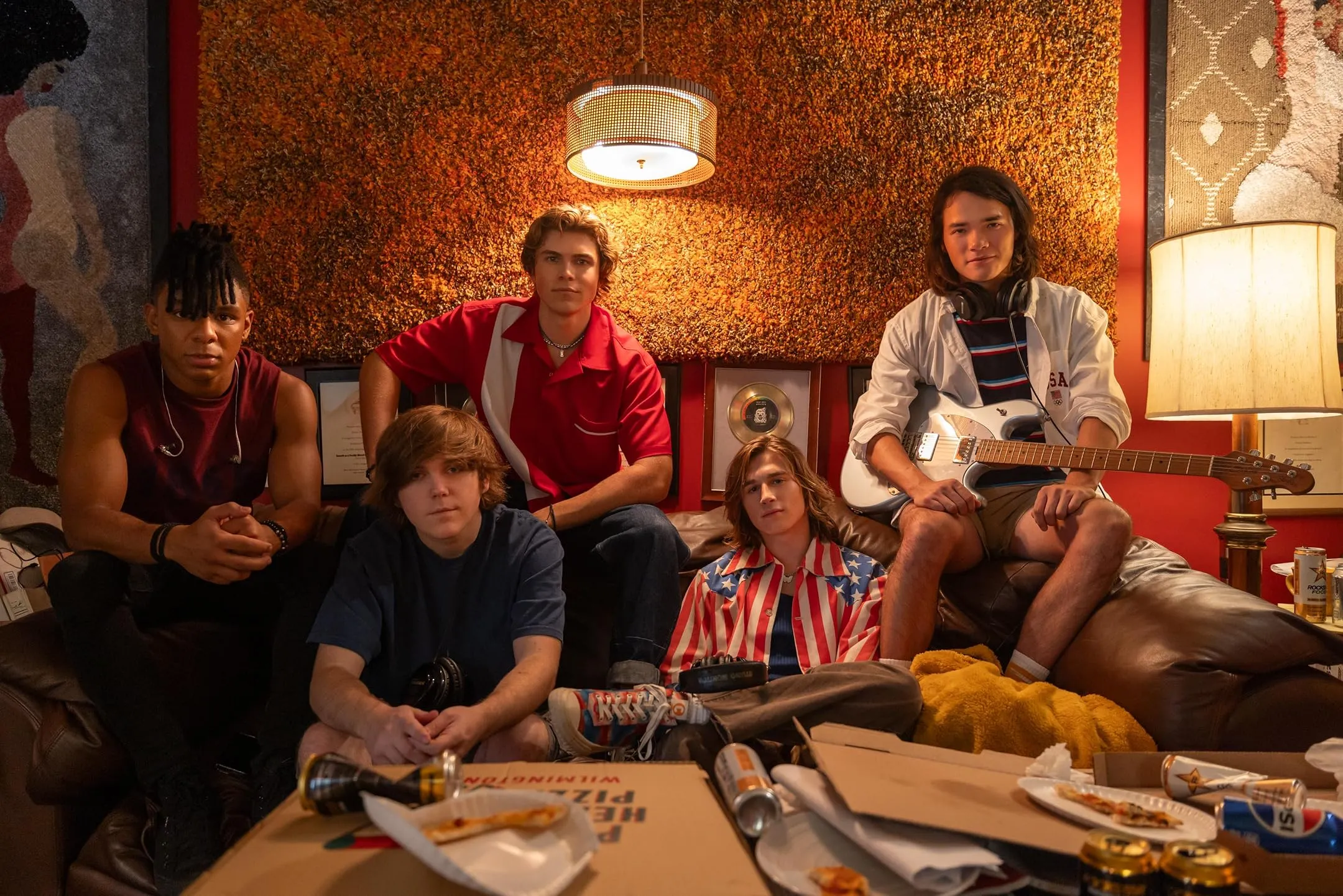
These scenes feel less like staged events and more like captured lightning, brief flashes of the raw talent that supposedly inspired the show’s creation. This vitality comes from the genuine synergy between the five leads. Charlie (William Lipton), Neil (Axel Ellis), Topher (Jeremy Yun), Wyatt (Jesse Golliher), and Bez (Zendé Murdock) share a comfortable, convincing rapport that only a real band could possess.
A shared glance between guitarist and drummer or a subtle nod from the bassist carries more weight than pages of scripted dialogue. Their shared history as musicians translates into an on-screen chemistry that papers over many of the narrative’s deficiencies. Their collective determination feels real because, for them, it is.
Reality’s Unscripted Riff
The Runarounds operates on a central contradiction between its authentic core and its artificial frame. Casting the real band was a clever move, yielding a raw, unpolished sincerity that traditional acting might have missed. The band members are not performing so much as existing within a scripted reality, and they often feel more grounded than the professional actors surrounding them.
An interesting paradox emerges with William Lipton, the frontman and the only band member with significant prior acting experience. At times, his performance can feel more constructed than that of his peers, a reminder of the artifice the show otherwise tries to conceal. This dynamic highlights the unique challenge of such hybrid projects: balancing raw presence with the demands of a fictional narrative.
This genuine spark, however, is contained within a deeply conventional script. The plot is a pastiche of rock-and-roll clichés, borrowing heavily from decades of underdog stories. We see familiar tropes deployed without irony: the sensitive musician, Wyatt, who channels his pain into his art; the ambitious leader, Charlie, whose ego threatens the group’s unity; and the external offer that tests a member’s loyalty.
The narrative feels less like a story and more like a checklist of expected beats. Charlie’s frequent voiceover narration is a particularly telling weakness. It feels like a failure of confidence, a tool used to stitch together a choppy and disjointed story that cannot stand on its own. The show rarely trusts its audience to interpret events, instead opting to explain the characters’ feelings directly. The show’s temporal setting is also a strange void.
By avoiding almost any mention of modern technology or social media, the story feels untethered. This choice seems to aim for timelessness but lands on placelessness. It represents a significant failure to engage with the world its characters supposedly inhabit. For a young band today, the path to success is intrinsically linked to online presence. The absence of this reality makes the show feel like a fantasy of a bygone era, one that misunderstands the very generation it aims to portray.
Stories Left Unplugged
For a show about finding your voice, The Runarounds leaves many of its own stories underdeveloped. The narrative gestures toward serious personal struggles without committing to their exploration, using trauma as a superficial character trait rather than a formative force. Wyatt’s painful home life with his addict mother is a prime example.
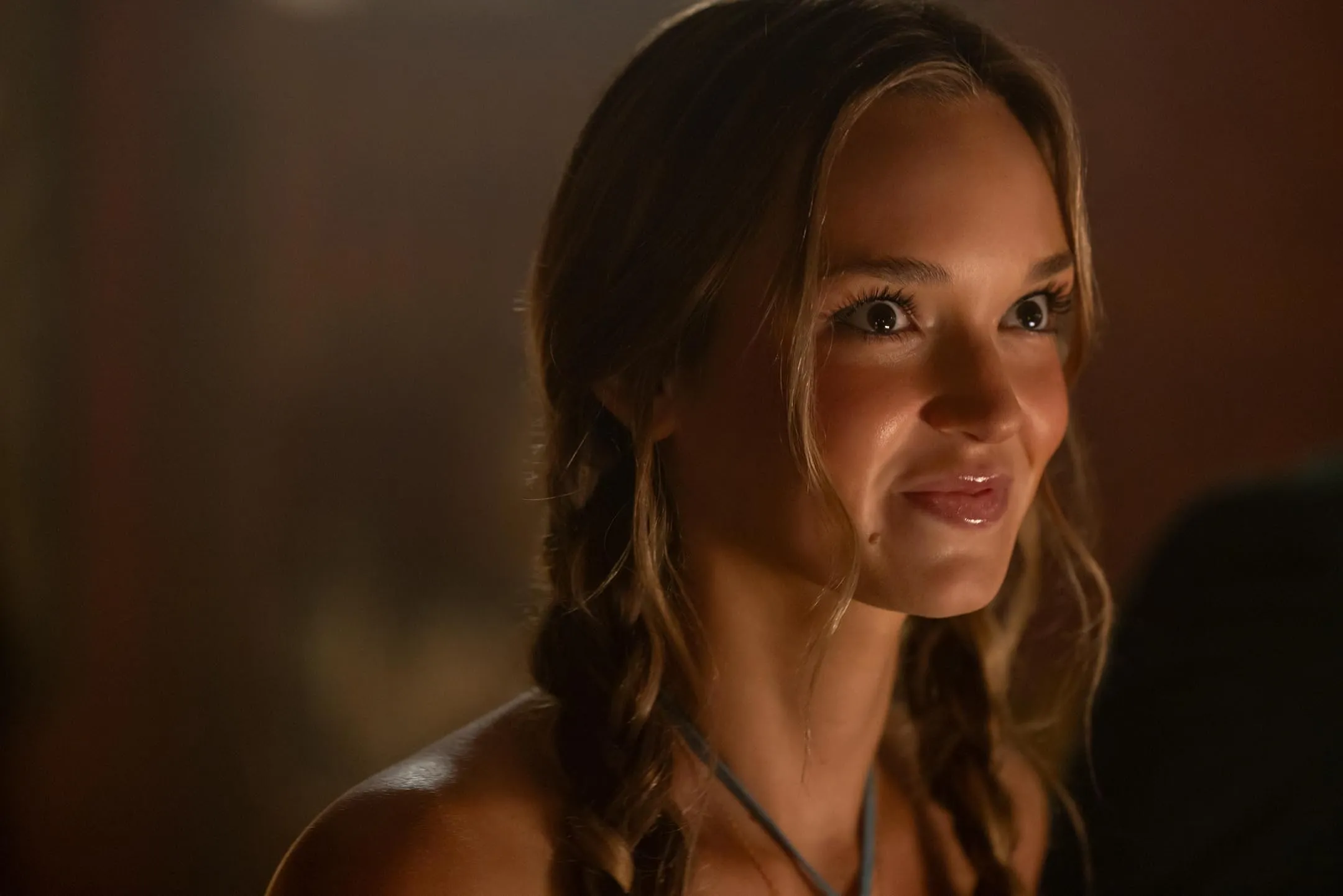
The show presents his situation as a source of quiet angst, but it never delves into the complex psychological effects of such an upbringing. We are told he is burdened, but we are rarely shown the depth of that burden or how it truly informs his relationships and his art. A deeper story would have explored how that experience shapes his view of trust and family within the band.
Similarly, the sudden revelation of Charlie’s true parentage feels like a plot twist dropped in for dramatic effect rather than a meaningful exploration of identity. The emotional fallout is minimal, and the storyline is resolved with a tidiness that feels entirely unearned. This aversion to complexity extends to the show’s conflict resolution.
Major disagreements and personal betrayals are smoothed over with remarkable speed. Charlie’s theft of Sophia’s lyrics, a serious ethical breach, is forgiven within an episode with little lasting friction. A band-splitting argument about a wedding gig dissolves after a few encouraging words. This frictionless world, where consequences are temporary and apologies are always enough, lowers the stakes to almost nothing.
The adult characters are of little help, functioning as one-dimensional obstacles. They are incompetent, unsupportive, or absent, a tired teen drama trope that sidesteps the more difficult work of depicting complex family dynamics. This portrayal avoids the more resonant and truthful conflicts that arise from generational misunderstanding, not just from outright parental failure.
For the Playlist, Not the Prestige
The primary appeal of The Runarounds is its energetic soundtrack and the charismatic sincerity of its musical leads. These strengths create a breezy, enjoyable experience for viewers seeking a light drama with a strong musical pulse. The show’s weaknesses, however, are rooted in its very structure.

The predictable plot, thin characters, and lack of meaningful conflict make it a forgettable entry in the teen genre. It seems engineered for a specific, younger audience that values charm and good tunes over narrative substance, offering a form of low-stakes escapism.
This series is a fascinating case study in modern media synergy. It recalls manufactured bands of the past like The Monkees, but updates the model for the streaming age. The television show is not the final product; it is a central piece of a larger commercial enterprise. It is a marketing tool for the band’s album, their merchandise, and their concert tours.
This approach has profound implications for television as a storytelling medium. When a show’s primary goal is to sell something else, the narrative can become secondary to the needs of the brand. Plotlines may be designed to showcase a new single, and character development can be sacrificed for moments that will create shareable clips.
The Runarounds exemplifies this trend. Its best moments feel like excellent music videos, while its dramatic scenes often feel like filler. The result is an experience that is pleasant but ultimately hollow. The series proves that while a real band can bring authenticity to a fictional story, that authenticity cannot save a weak script. It is a record with a few great singles, but its B-sides are best left skipped.
The Runarounds, an eight-episode musical teen drama series created by Jonas Pate, premiered on Amazon Prime Video on September 1, 2025. The series is inspired by the real-life band of the same name and all episodes were released simultaneously. The show is set and was primarily filmed in Wilmington, North Carolina.
Full Credits
Directors: Jonas Pate, Kyra Sedgwick, Steven Tsuchida
Writers: Jonas Pate, David Wilcox, Nora Kirkpatrick, Ilana Wolpert, Corey Dashaun, JuCoby Johnson, John Jeremiah Sullivan
Producers and Executive Producers: Jonas Pate, Josh Pate, David Wilcox, Shannon Burke, Joon Yun, Lisa Mae Fincannon, Scott Lambert, David Ellison, Dana Goldberg, Matt Thunell
Cast: Key cast members include William Lipton, Axel Ellis, Jeremy Yun, Zendé Murdock, Jesse Golliher, Lilah Pate, and Kelley Pereira, among others.
Director of Photography (Cinematographer): Brad Walker
Editors: Ashley Spillane, Jon Hensen, Paul Sitler, Erin Polich
The Review
The Runarounds
The Runarounds is a fascinating experiment that is more successful as a concept than as a television series. The show is a fantastic promotional vehicle for a genuinely talented band, with an excellent soundtrack and charismatic leads whose chemistry is undeniable. Its narrative, however, is a hollow collection of tired clichés, underdeveloped characters, and frictionless conflicts. The music soars, but the story falls flat. It is an enjoyable listen that struggles to be a compelling watch, making it a perfectly pleasant but ultimately forgettable piece of brand synergy.
PROS
- An energetic and engaging original soundtrack.
- Authentic, palpable chemistry between the real-life band members.
- Performance sequences are the show's most vibrant and compelling highlights.
- A charming and lighthearted tone makes for an easy watch.
CONS
- The plot is generic, predictable, and relies heavily on clichés.
- Character arcs and emotional storylines are underdeveloped and feel surface-level.
- Major conflicts are resolved too quickly and without meaningful consequences.
- The script is weak and uses voiceover narration as a narrative crutch.